Kids interview Amenhotep III
by Charactorium · Amenhotep III (1399 av. J.-C. — 1350 av. J.-C.) · Politics · Visual Arts · Spirituality · 5 min read

Two young visitors, on a school trip, step through the gates of a vast palace whose walls are painted with birds and fish of the Nile. On a golden throne, a pharaoh welcomes them with a smile. He sets down his scepter and gestures for them to come closer.
—How old were you when you became pharaoh?
You know, my child, I was about ten years old. Imagine: a boy your age, barely, sitting on the throne of the Two Lands. Around me, priests, viziers, scribes writing down every word I spoke. At first, a crown is heavy. The double crown, the pschent, unites the red of the North and the white of the South — a whole country on a single child's head. But Egypt was rich and at peace. I was taught to open the sanctuary of the god Amun every morning, before sunrise. That's how I grew up: half child, half son of the gods.
A boy of ten, a whole country on a single head.
—Is it true that your wife wasn't a princess?
It's true, and I'm proud of it! My Great Royal Wife was named Tiye. Her father Yuya and mother Tuya were provincial nobles, not a royal family. Many pharaohs married their sister to keep the blood royal. I chose Tiye, and I proclaimed it to the whole world! I had her name and her parents' names engraved on hundreds of little blue faience scarabs. Imagine good-luck charms shaped like scarabs, engraved with an official announcement, sent as far as Syria. A queen from an ordinary family, honored by the entire empire. That had never been seen before.
I chose Tiye, and I proclaimed it to the whole world.
—They say you dug an entire lake for her. Why?
For love, simply. For Tiye, I had a huge lake dug near my palace at Malkata, on the bank of the Nile. As big as a small town: thousands of cubits long — a cubit is the length of the arm, from my elbow to my fingertips. They say my workers dug it in just fifteen days! On opening day, I sailed on it in my royal barge, the Aton-Gleams. Imagine the calm water, the reeds, the queen at my side, and all the people watching. I had a scarab made specially to tell of that day. Some joys, my child, deserve to be engraved forever.
Some joys deserve to be engraved forever.
—What were those little scarabs you sent everywhere?
Ah, my scarabs! They are my stone messengers, my child. The scarab, you know, is that little beetle that rolls its ball before it — for us, it represents the sun reborn each morning. I had more than two hundred made, in blue-green faience, engraved with my great news. One for my marriage to Tiye, one for the lake, one for my hunts. Then I distributed them to temples and foreign kings, all the way to Nubia. Imagine a letter that fits in your hand, kept as a treasure and bringing good luck. Neither before nor after me did any pharaoh tell his reign this way.
My scarabs are my stone messengers.
—And is it true you hunted a hundred lions?
One hundred and two, exactly! One of my scarabs says it: the lions my hand has slain, from year one to year ten of my reign, one hundred and two fierce lions. Do you think that's a lot? It wasn't just for sport, my child. The lion, for us, is wild strength, the chaos that lurks at the borders of the world. By slaying it, the pharaoh shows he pushes back chaos, as the god Ra pushes back the night each morning. My bow and arrows were not just weapons: they said I was protecting Egypt. Hunting the lion meant protecting my people.
Slaying the lion was pushing chaos away from my people.
—Did you really write letters to other kings? What were they about?
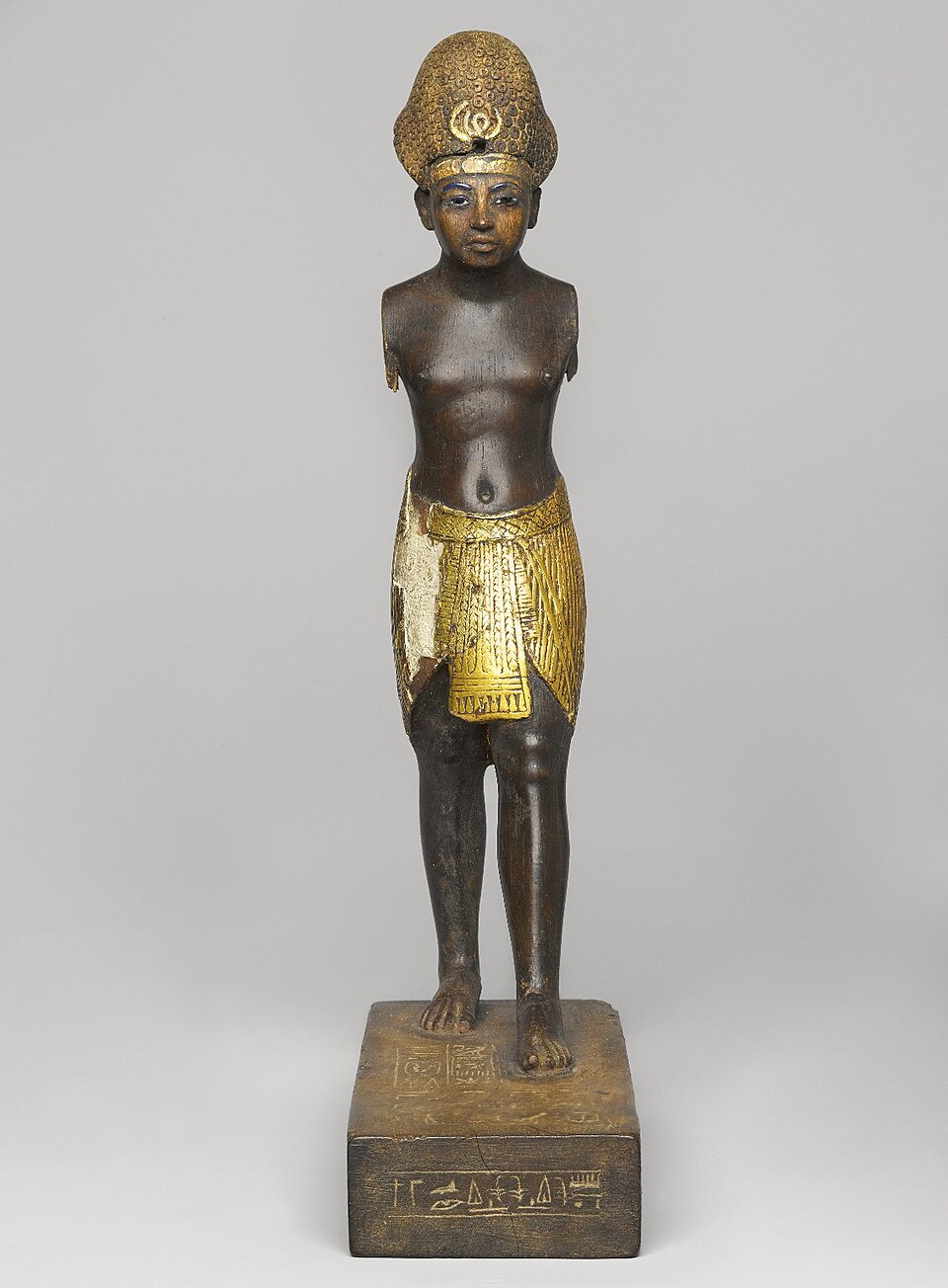
Yes, and often! Far, far away, other great kings ruled: the king of Babylon, the king of Mitanni. We wrote to each other on clay tablets, calling each other "my brother." One day, the king of Babylon, Kadashman-Enlil, complained: why hadn't I sent him one of my daughters in marriage? He offered to send me a lot of gold in exchange for a princess! You see, between great kings, we exchanged gold, gifts, and even daughters to stay friends. It wasn't war, it was diplomacy. Ruling isn't always fighting. Sometimes, it's knowing how to write a good letter.
Ruling isn't always fighting: sometimes, it's writing a good letter.
—Why did you exchange gold for princesses? That's weird!
I understand that surprises you, my child. In my time, a marriage between two royal families was like a promise of peace. If the daughter of the king of Mitanni lived in my palace, our two countries became relatives — and relatives don't make war. Egypt was so rich that kings said gold here was "as common as dust." So I sent it, and I received princesses and gifts. Each marriage was a living treaty. Imagine families united so that armies stay at rest. That's how I kept peace almost my entire reign.
Each royal marriage was a living treaty.
—What's the biggest thing you built?
Ah, hard to choose! I had the temple of Luxor built, at Thebes, with its columns tall as palm trees, topped with capitals shaped like open papyrus flowers. But my greatest work was my mortuary temple, the largest ever built in Egypt. Before it stood two statues of me, carved from red quartzite, eighteen times the height of a man, or nearly. Today they are called the Colossi of Memnon. Imagine two stone giants seated, guarding the entrance to a vast temple. Building, for a pharaoh, is writing his name in stone for eternity.
Building is writing one's name in stone for eternity.
—They say one of your statues sang in the morning. Is that a joke?
It's no joke, but it happened long after my death! An earthquake cracked one of my two quartzite colossi. From then on, every morning, at the first ray of sun, the statue gave off a strange sound, like a moan or a song. Travelers from Greece, long afterward, thought they heard a hero named Memnon greeting his mother, the Dawn, as she woke. They came from far away to listen to the stone sing at dawn. You see, my child: I had those giants carved to last, and they started talking on their own.
I had those giants carved to last, and they started singing.
—Is it true you had yourself worshiped as a god?
It's true, and few pharaohs before me had dared it. Far south, in Nubia, at Soleb, I built a temple. It was dedicated to the great god Amun-Ra... and to myself, become a god in my lifetime. On the walls, sculptors showed me making offerings before my own divine statue. Imagine: I bow and pray before an image of myself! That may seem strange to you. But for us, the pharaoh was already the son of the gods, the bridge between heaven and men. At Soleb, I simply made that visible in stone.
At Soleb, I bowed before my own image become god.
—What does it feel like, in the heart, to feel like a living god?
What a beautiful question, my child. It doesn't make one proud — it weighs. My coronation name was Nebmaatra: "the lord of maat is Ra." Maat is the order of the world, justice, harmony among things. Being a living god was above all an immense responsibility: to maintain that maat, every day, so that the Nile rises, the sun rises, the people eat. Three times I celebrated the great Heb-Sed festival, which renews the king's strength after thirty years of reign. A god, you know, is not the one who commands. It is the one who must hold the world upright.
A god is not the one who commands, it is the one who holds the world upright.

This imaginary interview was generated by artificial intelligence from sources documented in Amenhotep III's profile. It dramatises what the figure might have said based on what we know about them, but does not constitute attested historical testimony. For primary sources and factual documentation, refer to the full profile.