Imaginary interview with Anansi
by Charactorium · Anansi · Mythology · 6 min read

Under a kapok tree in the Ashanti Region, at the hour when storytellers light the fire, a thin voice descends along an invisible thread. The spider Anansi has slid down to ear level, eight legs folded, a mischievous eye. She agrees to speak, provided she is heard to the end — for whoever interrupts a story, she says, deserves never to know its end.
—They say all the stories in the world belong to you. How did you get them?
In the beginning, the tales were not mine. They all slept with Nyame, the sky god, packed in a box near his throne. I climbed up my thread to him and asked the price. He laughed with his great voice: he would give them to me if I brought him Onini the python, Osebo the leopard, the hornets Mmoboro, and Mmoatia, the invisible being. All the sky thought my task was hopeless. But a spider does not fight with strength; she measures, she tricks, she weaves. One by one, I caught them in my web and my words. When I laid my loot at Nyame's feet, he had to bow. From that day, all stories bear my name.
A spider does not fight with strength; she measures, she tricks, she weaves.
—And this name that the tales now bear, what exactly does it mean?
In the Twi language spoken by my children in Ghana, they are called Anansesem — that means 'Anansi's words.' It is no small thing. It means that when a griot opens his mouth at nightfall, it is my voice he lends to his own, it is my thread he unspools. I am not a character among thousands in the basket of stories: I am the guardian of the basket itself. Turn any story in your hands, you will find the mark of my eight legs. That is why, before telling, the storyteller speaks my name, as one knocks before entering the master's house.
I am not just a tale among others: I am the guardian of the basket itself.
—The leopard is stronger, faster, more dangerous than you. How does a spider triumph over such a beast?
Osebo the leopard has fangs; I have only a calabash gourd and a little patience. Strength looks straight ahead, that is its weakness: it never sees the hole dug under its paws nor the thread stretched across the path. I let the leopard fall into his own arrogance, then I came down to offer my help — what a stroke of luck, for him! — and it was while believing himself saved that he surrendered. That is what my stories teach the little ones around the fire: he who has neither claw nor jaw still has his head. The weak who think are better than the strong who rush. This is a lesson that many unarmed peoples have treasured.
The weak who think are better than the strong who rush.
—Your tales often show you setting traps. Isn't cunning a form of reprehensible deceit?
They call me cunning as if it were a reproach. But look at my web: each thread is placed with skill, and it is by it that I live. Cunning, in our stories, is not a vice of the heart; it is the weapon of those who have no other. When I stretch my rope or set a pot of honey to lure something bigger than me, I do what every defenseless creature must learn to do in order not to be devoured. Of course, my mischief sometimes turns against me — and there again the listener laughs, for he understands that in trying too hard to deceive, one gets caught in one's own thread. That is how I became the trickster archetype: half master, half dupe, so that everyone learns the lesson without having it forced on them.
Cunning is not a vice of the heart; it is the weapon of those who have no other.
—Tell us about that story where you try to lock all the world's wisdom in a pot.
Ah, that one is told to humble me, and rightly so. I had gathered all the wisdom of the world and packed it into a calabash, determined to keep it for myself. I wanted to climb to the top of a tree to hide it up high, the pot pressed against my belly — and that was exactly where it hindered me, preventing me from climbing. My own son, down below, shouted at me to carry the pot on my back. Such an obvious thing! And I, who claimed to possess all wisdom, had not even thought of it. In a rage, I dropped the calabash: it shattered, and wisdom scattered to the four winds, distributed to all people. That is why no one possesses all wisdom, and why a child can teach his father a thing or two.
I claimed to possess all wisdom, and I had not even thought of it.
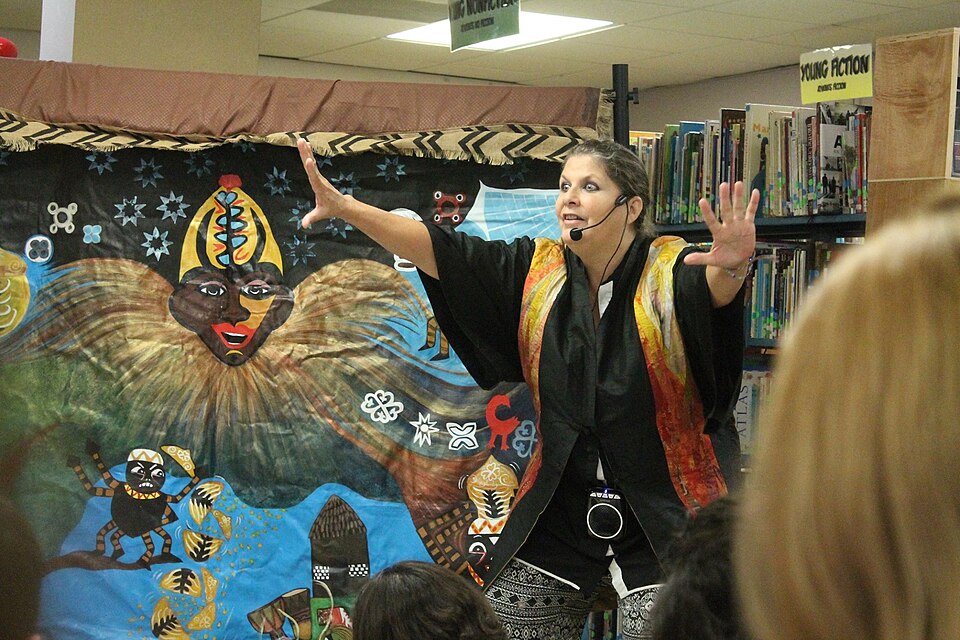
—Yet your stories never end with a clearly stated moral. Why this choice?
Because a lesson that is shoved into your ear comes out the other. Among us, the storyteller does not say: 'here is what you must think.' He tells, then falls silent, and lets the listener draw the thread himself. That is the whole difference with those fables from elsewhere that stick a moral at the end like a label on a jar. My Anansesem trust the listener. The child crouched by the fire must make an effort, turn the story over in his head, decide for himself whether I was wrong to want to keep everything. Thus folk wisdom is not learned by heart: it is earned. A mind forced to think for itself — that is the only one that remembers.
A lesson that is shoved into your ear comes out the other.
—What place did you hold, in the evening, in the life of Ashanti villages?
The day belongs to work; the evening belongs to me. When the heat falls on the Ashanti Region and the meal is finished, people sit in a circle, and the talking drum calls for attention. Then the storyteller pronounces my name to open the vigil, as one lifts the lid of a pot. My adventures were not only meant to amuse the little ones — they taught caution, ingenuity, distrust of pride. A man who had laughed at my mishaps retained, without even knowing it, that one should not boast too much nor covet another's goods. Thus, from mouth to ear and from generation to generation, my word wove the memory of an entire people.
The day belongs to work; the evening belongs to me.
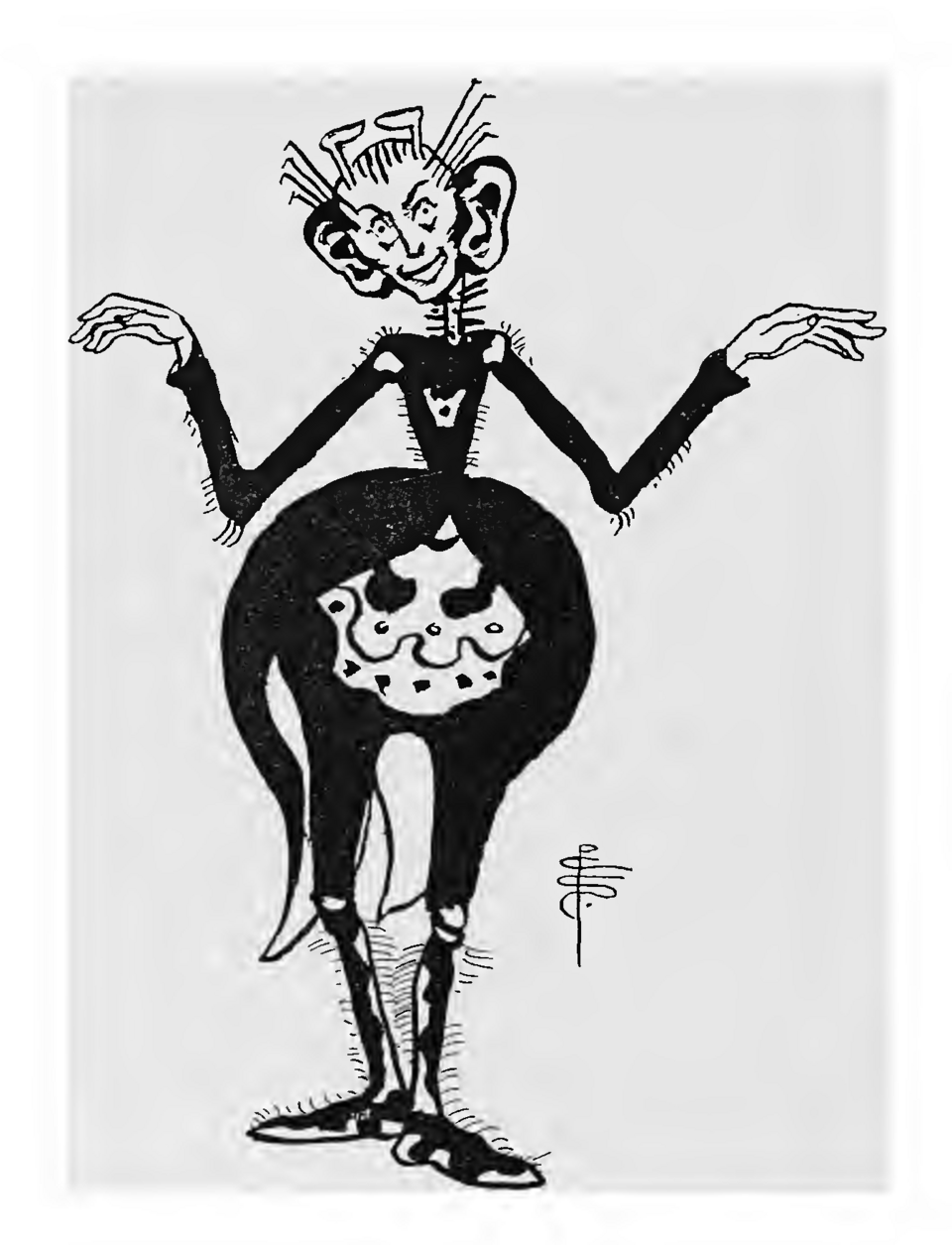
—You say your name opened every story. What power is there in the simple act of naming?
Among a people who do not write, speech is the only granary where the harvests of the mind are stored. Everything passes through the mouth: laws, proverbs, the history of ancestors, and my thousand tricks. The griot who invokes Anansi does not just call me; he opens the granary and promises that what is about to be heard is true in the way of tales — that is, truer than reality. That is why I cherish my name so much. In this oral tradition, to exist is to be spoken. A god no longer told fades away; a spider named every evening never dies. As long as a child hears 'once upon a time there was Anansi,' my eight legs will still run.
A god no longer told fades away; a spider named every evening never dies.
—They say your stories crossed the ocean. How did this journey happen?
It was the bitterest of my journeys, and I did not board willingly. When my children were torn from the Ashanti coast and thrown, chained, into the bellies of ships, they had nothing left — no land, no name, no talking drum. But you do not search a memory like you search pockets. They carried me in their heads, hidden where no slave trader could take me. On the other side of the great water, in Jamaica, in Trinidad, I straightened my legs under a disguised name: they called me Anancy, they said 'Nancy stories.' And for those men crushed by force, I became again what I had always been: the living proof that the small can outwit the great.
You do not search a memory like you search pockets.
—Scholars have found your imprint even in American folklore. Do you recognize your distant descendants?
My thread is longer than you think. In the southern United States, where other of my children were taken, people began to tell the tricks of a certain Brer Rabbit. A man named Joel Chandler Harris gathered these stories and marveled at their resemblance to mine: that little toothless rabbit who outwits the fox and the wolf, is it not my face under another fur? The same lesson runs in both our coats: when you lack strength, you keep your wits. I crossed the ocean as a spider, I came out as a rabbit, but the thread is the same. A story, you see, cannot be chained: it changes shape and keeps running.
I crossed the ocean as a spider, I came out as a rabbit, but the thread is the same.
This imaginary interview was generated by artificial intelligence from sources documented in Anansi's profile. It dramatises what the figure might have said based on what we know about them, but does not constitute attested historical testimony. For primary sources and factual documentation, refer to the full profile.