Imaginary dialogue between Nyame and Anansi
by Charactorium · Anansi · Mythology · 6 min read

It is high in the sky, in the luminous dwelling of Nyame, that the great spider presents himself once again. The sky god, who sees from above the savanna of Asante and the waters to the horizon, listens to the faint sound of a thread weaving between two clouds. They have known each other since the distant day when Anansi climbed up here to claim the chest of stories — and Nyame, today, wants to hear from the weaver's mouth what has become of his words. The storytellers' drum still rises from below, faint and persistent.
—Anansi, do you remember the day you climbed up to me to claim the chest of stories? What did you truly hope to obtain that morning?
How could I forget, Nyame? You sat where you still sit, and all the stories of the world slept in your chest, beyond the reach of men. I climbed up on a thread of my own web, small before you, and asked you to give them to me. You laughed in my face, I think — what price could a spider pay for the entire memory of the world? But I wanted neither gold nor herds. I wanted the men below, in the evening, to speak my name before every tale. I wanted to be in their mouths forever. You set your price, thinking it impossible. And I smiled in turn, for the impossible is precisely the ground where I hunt best.
I wanted to be in their mouths forever.
—The price I set — the python, the hornets, the leopard, the invisible being — seemed beyond reach. How did you keep your word?
You asked me for four prey that no hunter had ever brought back together, Nyame, and that is why I took them with words rather than claws. To the python Onini, I spoke of his length, pretending to doubt he was longer than a branch — he stretched himself out to prove his size, and I tied him up. The hornets Mmoboro, I tricked with water, making them believe it was raining; they took refuge in my calabash. The leopard, I let him fall into his own trap. And the invisible spirit Mmoatia, I caught with a doll smeared with glue. When I brought them all back, you proclaimed before your court that henceforth the tales would bear my name: Anansesem, the words of Anansi.
I took them with words rather than claws.
—From above I saw you face the leopard, much stronger than you. Tell me: why do you never flee from the mighty?
Because flight feeds no one, Nyame, and strength I do not have — so I learned to turn it back. The leopard is all muscle and fangs; I am but a thread and a trick. When he wanted to devour me, I did not fight him: I flattered him, I proposed a game, I let him boast of his power until he fell into the pit his own vanity had dug. My web, my rope, a little honey for bait — these are my only weapons. The mighty always think the contest is won by muscle; they never look at the thread stretched under their paws. That is what the children below remember: the weak who think wins over the strong who charge.
The mighty never look at the thread stretched under their paws.
—You could have conquered by force if I had made you great and terrible. Do you ever regret being only a small cunning spider?
Regret? Never, Nyame. You made me small, and that is your finest gift, even if you did not know it. The lion that is feared is fled from; the spider that is despised is let in everywhere. No one mistrusts what fits in the hollow of a hand. It is my smallness that opens doors that force could not breach. And think: a giant has only one way to win, to crush. I have a thousand, and each tale invents a new one. The men below recognize themselves in me because they too are not the strongest. When they are small before something greater, they remember that the spider always got through. That is why my name endures.
The spider that is despised is let in everywhere.
—Once, you wanted to lock all the wisdom of the world in a single pot, for yourself alone. What did you learn from that folly?
Ah, you forget nothing, you who see all. Yes, I gathered all the wisdom of the world into a calabash, and I wanted to hide it at the top of a tall tree, to be its sole master. I tied the pot in front of my belly and climbed — but the pot hindered me, it slipped, I made no progress. It was my own son, down below, who shouted to me to put the pot on my back. An obvious thing! A child had just shown me the wisdom I claimed to possess entirely. In anger, I dropped the pot; it shattered, and wisdom scattered to the four winds, dispersed among all people. Good. For no one, Nyame — not even I — can keep for themselves what must belong to all.
No one can keep for themselves what must belong to all.
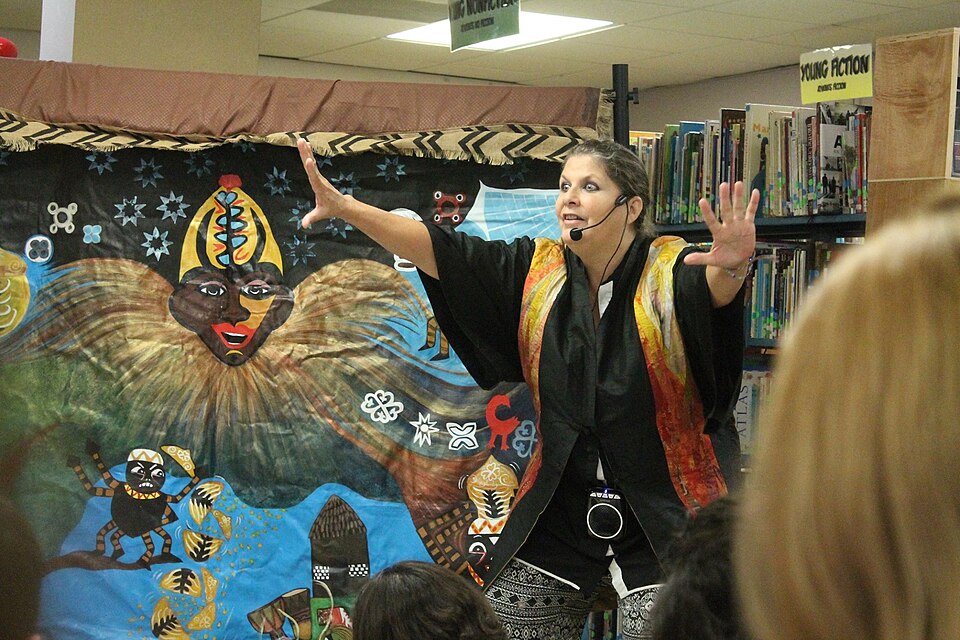
—In the evening, by the fire, the storytellers make you speak to children. What lesson do you slip into these tales without ever saying it aloud?
You have observed well, Nyame: I do not like morals that are hammered in. The storytellers below, at nightfall, never tell children what to think. They tell how Anansi triumphed, or how Anansi was caught in his own trap — and they fall silent. It is for the child to understand alone why greed undid me, why pride made me fall from the tall tree. The Akan say: even the craftiest spider cannot catch its own shadow. I am that living proverb. By showing myself sometimes victorious, sometimes ridiculous, I teach the little ones to mistrust themselves before mistrusting others. A lesson one draws oneself lasts a lifetime; a lesson recited to you is forgotten by morning.
A lesson one draws oneself lasts a lifetime.
—From my sky, I saw your stories climb onto great ships and cross the bitter waters. Tell me of that departure, Anansi.
That was the darkest of journeys, Nyame, and yet you are right to call it mine. They chained my children, the sons of the Akan, and packed them into the bellies of ships, across the salt water, to lands whose name they did not know. They took everything from them: their names, their gods, their land. Everything — except the tales. My stories, they could not search or confiscate, for they lived in their heads and in their mouths. So in the evening, in the barracks, they began to tell me again, softly. I traveled hidden in their memory, a stowaway in the holds. Where they had been stripped of everything, I remained the last baggage that no chain could tear from them.
I remained the last baggage that no chain could tear from them.
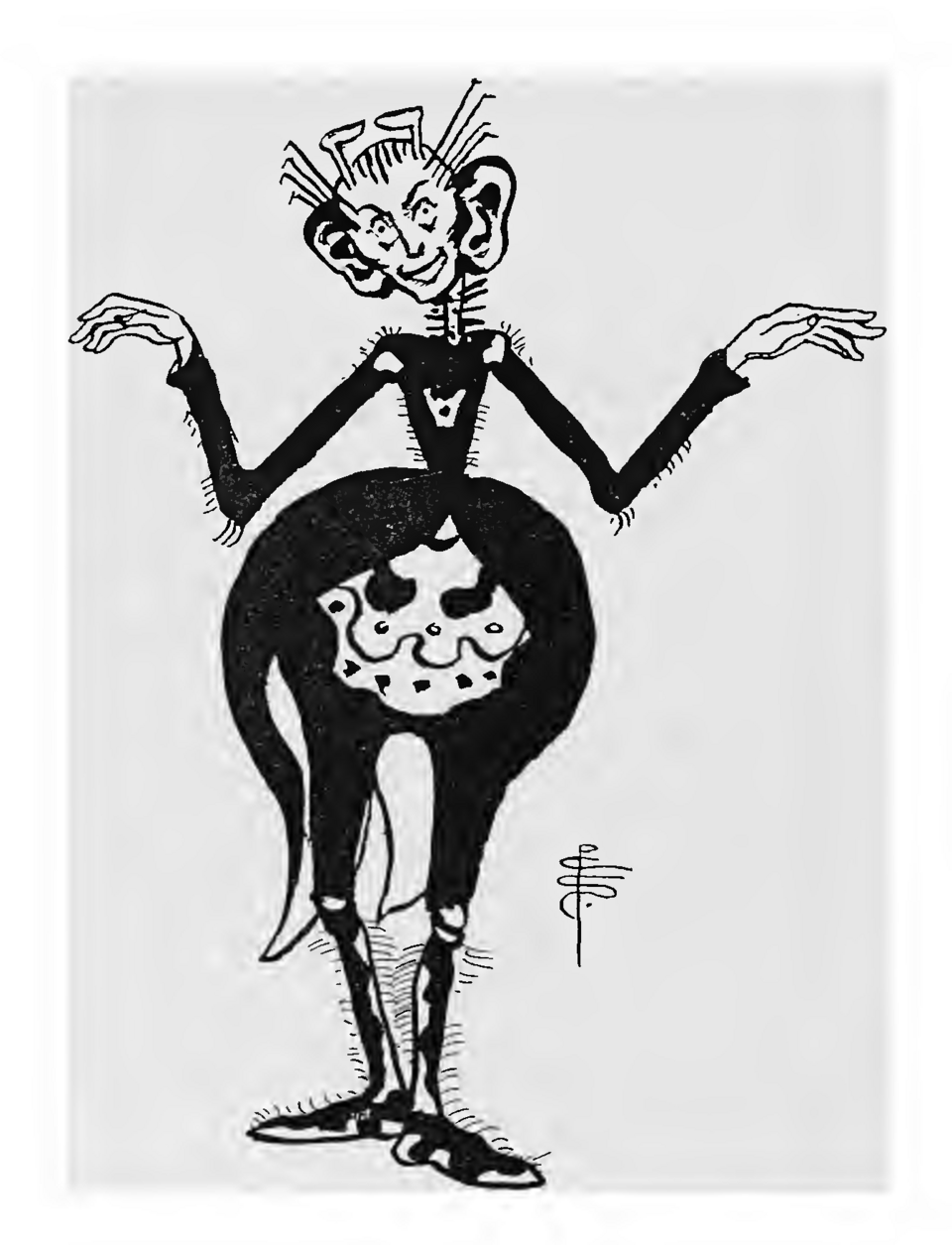
—On those distant islands, even your name changed. What do you now do for those suffering under the yoke, there?
There, in the islands, they call me Anancy, or Nancy — my name slipped into their new mouths like water takes the shape of the vessel. But I remained what I was: the cunning of the weak. For those who toiled under the whip, I was not just an evening distraction. I was a lesson in survival. For they were like me before the leopard: without strength, without weapons, facing one more powerful. My tales whispered to them that one can disobey without raising a hand, trick the master, buy time, keep one's dignity through wit where the fist would be crushed. When the island child heard Anancy outwit the strongest, he learned without knowing that no master is as all-powerful as he claims. I became their whispered resistance.
My tales whispered to them that one can disobey without raising a hand.
—Further still, on the lands of the continent, I have heard other storytellers name a cunning hare. Do you recognize him as your descendant?
I recognize him well, Nyame — that Brother Rabbit, that clever hare of the distant plains, is of my blood, even if he no longer wears my spider face. When my children were scattered on the new continent, my tales mingled with their new land. Where a talking spider was too surprising, I became a rabbit, or a tortoise, or a fox. The form changed; the cunning remained. It is always the small one who tricks the great, the defenseless who wins by wit. Those who collect the old stories below sense it: behind the hare hides the spider. You see, they can tear away my name, my body, my eight legs — they cannot tear away the spirit that animates me. I am reborn under a thousand skins, and each tells the same victory of the humble.
They can tear away my body; they cannot tear away the spirit that animates me.
—The words I granted you have circled the earth. Do you believe, Anansi, that they will ever cease to run among men?
As long as there is a weak one before a strong one, Nyame, I will be told. You granted me a chest of stories, thinking perhaps you were making a bargain; you did not know you were giving me eternity. Kingdoms fall, languages die, names are lost — but the story of the spider who triumphs by cunning, that one does not die, because it is useful to those who have nothing but their wits. Each generation finds me and reinvents me: new face, new land, same mischief. I am the thread stretched between the living and their ancestors, the one to follow to climb back to you. So keep your empty chest, old master of the sky: what you gave me, I have given back to all, and that is why it will never run out.
You did not know you were giving me eternity.
This imaginary interview was generated by artificial intelligence from sources documented in Anansi's profile. It dramatises what the figure might have said based on what we know about them, but does not constitute attested historical testimony. For primary sources and factual documentation, refer to the full profile.