Imaginary dialogue between Menahem Begin and Anwar Sadat
by Charactorium · Anwar Sadat (1918 — 1981) · Politics · 5 min read
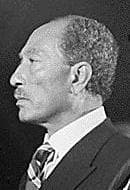
It is under the arbor of a presidential residence on the banks of the Suez Canal, on a mild evening in the winter of 1980, that Menachem Begin meets Anwar Sadat. Tea steams in the glasses, a pipe rests on the low table, and the air smells of the silt from the nearby river. The two men have clashed, then sat face to face at Camp David for thirteen days; they now know each other better than many allies. Begin, combative and curious, has come to press his former enemy to explain the gambles he dared to take.
—Anwar, when you stepped off the plane in Jerusalem in November 1977, I was waiting on the tarmac. What were you really hoping for that evening?
Menachem, you were there, and I saw in your eyes the same astonishment as the rest of the world. I hoped to break down a wall, not of stone but of fear, erected for thirty years in the hearts of my people. Before your Knesset, I told you bluntly: I have come to you so that together we can build a lasting peace founded on justice. Neither of us should shed or cause the shedding of a single soldier's blood. They called me mad, a traitor. But a head of state who has sent men to die knows the cost of every grave. I wanted my grandchildren and yours never to know the trenches again.
I hoped to break down a wall, not of stone but of fear, erected for thirty years.
—Your Arab brothers accused you of betrayal; Egypt was expelled from the Arab League. Did that price never make you doubt?
Doubt, Menachem, is the companion of every man who walks alone. They shut the doors of the Arab Cairo on me, they struck me from the map of the brothers. But I ask you: what use is a leader if he only dares what the crowd approves? I have seen too many fiery speeches and too little bread on Egyptian tables. Perpetual war feeds slogans, never children. I preferred today's isolation to tomorrow's ruin. History, that patient judge, will tell whether the peasant from Mit Abu al-Kum was right to extend his hand to the one he was taught to hate.
Perpetual war feeds slogans, never children.
—Before peace, there was war. In October 1973, you struck during Yom Kippur. Why that holy day, precisely?
Do not think I chose that date to offend your faith, Menachem. A general chooses the hour when the adversary lowers his guard; that day, your ranks were at rest, your synagogues full. The crossing of the Suez Canal, where we sit this evening, was the work of my engineers and the pride of a people humiliated since 1967. We did not win the battle, I know. But we shattered the myth of your invincibility and gave the Arab the right to hold his head high. Understand this: without that restored pride, I could never have come to you four years later as a man standing upright, not as a vanquished foe.
Without that restored pride, I would have come to you as a vanquished foe, not as a man standing upright.
—The world trembled under the oil shock triggered then. Did you realize, as you crossed the canal, the jolt you were about to give the planet?
A man who lights a fuse rarely sees the entire powder trail. I knew that oil was my brothers' weapon, sharper than our tanks. But my horizon that October day was the width of the canal and the faces of my soldiers. The rest — the lines in your Western cities, the panic on the stock exchanges — I learned afterward. It confirmed one thing: Egypt counted again, we could no longer be ignored. And it was strengthened by this regained weight that I dared to sit at the table, no longer as a beggar, but as a partner to be listened to.
A man who lights a fuse rarely sees the entire powder trail.
—In 1972, you expelled the Soviet advisors, turning your back on Moscow for Washington. Wasn't that a huge gamble in the midst of the Cold War?
The Soviets gave me weapons, yes, but in dribs and drabs, and never the ones that win wars. They wanted a client Egypt, not a free Egypt. Expelling them was a gamble, Menachem, a huge one on the chessboard of the two superpowers. But I sensed that no peace, no recovery of the Sinai, would come through Moscow: only the American held the key, because he held your trust. So I bet on Washington, on that Jimmy Carter who later locked us in his mountains for thirteen days. They thought me reckless. I was simply lucid: he who wants peace must address those who can guarantee it.
They wanted a client Egypt; I wanted a free Egypt.
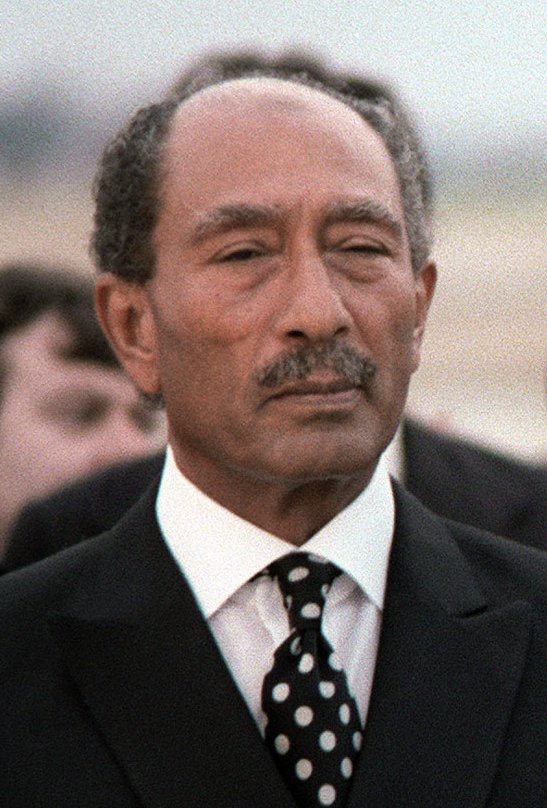
—At Camp David, we nearly broke down more than once. Do you remember the moment you wanted to pack your bags?
How could I forget? You were stubborn, Menachem, on settlements, on every comma, and I found you impossible! I had ordered my departure prepared; Carter came to see me, his face gray with fatigue, begging me to stay in the name of our two peoples. What held me back was not diplomacy, it was the memory of the widows of 1973, yours and mine. I told myself that a man does not travel ten thousand kilometers and face the anger of the Arab world to flee before a final obstacle. So I stayed. And from that shared obstinacy was born the peace framework that earned us both that prize in 1978.
What held me back was not diplomacy, it was the memory of the widows.
—You often speak of your years in prison under the British. What did that famous cell 54 leave in you?
Prison, my friend, was my true school, more than the Military Academy. The English locked me up because I conspired for my country's independence, and in cell 54, alone, stripped of everything, I made a discovery that never left me: true freedom is inner, and no jailer can chain it. I recounted that in In Search of Identity. It was there that I learned not to depend on the gaze of others, nor on their hatred, nor on their applause. You who have known the underground and struggle know that a man tempered by hardship fears the judgment of the crowd less. Without cell 54, I would never have had the courage for Jerusalem.
Prison was my true school, more than the Military Academy.
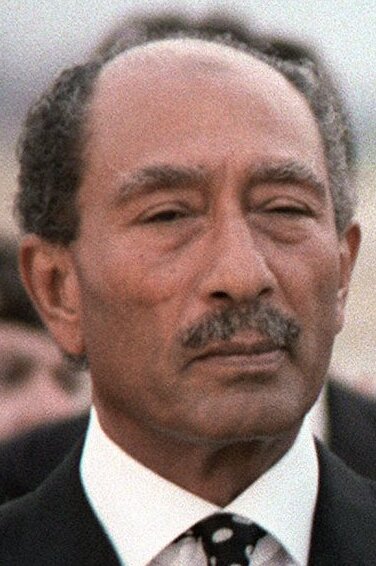
—You are a man of faith, one can feel it. Did that religious conviction guide you in your most solitary decisions?
It is the foundation on which everything rests, Menachem. In the evening, when the state files are closed, I withdraw to pray and meditate, as I learned to do behind bars. My faith does not dictate politics, but it gives me the calm to decide alone when no one can decide for me. To believe is to accept that the final judgment belongs to God, not to the newspapers or the Arab congresses. This peace we signed, I believe it is willed by the Most Merciful, for our three religions descend from Abraham. A man who prays every evening is not afraid to extend his hand to his enemy brother.
My faith gives me the calm to decide alone when no one can decide for me.
—You are photographed in uniform covered with decorations, but they say that in the village you shed all that. Is that true, Anwar?
That is the truest part of me, Menachem. In Mit Abu al-Kum, where I was born in 1918, I put away the field marshal's uniform and don the galabeya, that long tunic of the fellahs. I walk at dawn between the fields, I greet the peasants by name, I eat the ful and simple bread of my childhood. There, I am not the rais, I am the son of the Delta's soil. A leader who forgets the smell of his village ends up no longer hearing his people. These peasant roots gave me a strength that neither the palaces of Cairo nor the honors of the West could ever give me.
A leader who forgets the smell of his village ends up no longer hearing his people.
—After so many battles and treaties, what do you wish to leave to that village, and beyond, to your people?
I would like to leave a land where one can sow without fear that war will reap the harvest. To my village, a little shade and clear water; to my people, the dignity of a country that has recovered its Sinai without ever again burning its youth in the trenches. We men of power pass quickly, Menachem; what remains is what we have spared the living. I have been a war leader, they have called me a peacemaker: I far prefer that second title. May one day they say, in the fields of Mit Abu al-Kum, that the son of the Delta restored pride to his people without stealing their sons. That would be my finest decoration.
We men of power pass quickly; what remains is what we have spared the living.
This imaginary interview was generated by artificial intelligence from sources documented in Anwar Sadat's profile. It dramatises what the figure might have said based on what we know about them, but does not constitute attested historical testimony. For primary sources and factual documentation, refer to the full profile.