Imaginary interview with Anwar Sadat
by Charactorium · Anwar Sadat (1918 — 1981) · Politics · 6 min read
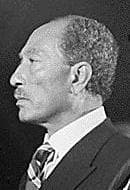
Cairo, an evening in the late 1970s. In a presidential residence where the scent of pipe tobacco still lingers, Anwar Sadat receives, a galabeya thrown over his shoulders and his uniform put away for the night. The rais agrees to reflect, without pretense, on the ruptures of a life spent surprising the world.
—Do you remember what prison did to you, in your youth?
The British threw me in jail more than once — I was a restless young officer, guilty of conspiring against their occupation. Cell 54 was my true university. Within those walls, deprived of everything, I understood something no guard ever took from me. In my memoirs, In Search of Identity, I wrote: "I discovered in prison, in cell 54, that true freedom is inner and no jailer can chain it." They think they imprison a man, but they only return him to himself. There I read, prayed, meditated, and I emerged not broken but strengthened. It was there, in destitution, that I learned to fear nothing — neither death nor the opinion of the powerful.
—How did this experience nurture the man of faith that you are?
My faith did not come to me in a palace but in the silence of a cell. In the evening, even today, I like to withdraw, pray, reflect alone — this habit I owe to the long nights of captivity when I had nothing left but God and my conscience. A believer who has made peace with death becomes strangely free in his decisions. When I made the most perilous resolutions of my life, it was not through cold calculation but because I had learned, between four walls, that a man only belongs to himself when he stops trembling. My adversaries think me reckless; they do not know that I have already lost everything once, and that cures fear forever.
—What does your native village mean to you, far from the palaces of power?
I was born in 1918 in Mit Abu al-Kom, a village in the Nile Delta, into a family of fellahs. You can cover a man with decorations and marshal's uniforms, he remains what childhood made him. There, I become myself again: I shed the finery, put on the galabeya, that long tunic my father and grandfather wore, and I walk at dawn in the fields. I eat simply, foul — those fava beans — bread, the peasant's table. This land gave me my endurance and my farmer's patience: you do not reap before you sow, and you get nothing from the soil by rushing it. Politics, deep down, is just another season to wait for.
—Why did you dismiss the Soviet advisors in the middle of the Cold War?
In 1972, I sent home the thousands of Soviet military advisors that Nasser had brought in. The world thought I had lost my mind: to dismiss your protector in the middle of the Cold War, what madness! But I could no longer tolerate that tutelage. An ally who arms you sparingly and decides for you is not an ally, he is a master. I wanted to regain my freedom of maneuver and, yes, turn to Washington, the only capital capable of truly pressuring Israel. I was not understood at the time. But every great decision of my life first seemed like a provocation before becoming obvious. Egypt had to be taken out of a game where it was only a pawn on someone else's chessboard.
—What did you expect from the economic opening you launched?
The statism of my predecessor had numbed Egypt. In 1974, I launched the Infitah — the word means "opening." Open the doors, the windows, let in air, capital, initiative. Nasser was a giant, I will never deny him, but his socialism had built a fortress without wealth. A people does not live on pan-Arab slogans; it needs bread and work. I wanted Egyptians to once again be able to undertake, trade, breathe. Some accused me of betraying the revolution of the Free Officers, the one we made in 1952 to overthrow King Farouk. But a revolution that does not feed its children ends up devouring itself. I chose the future over nostalgia.
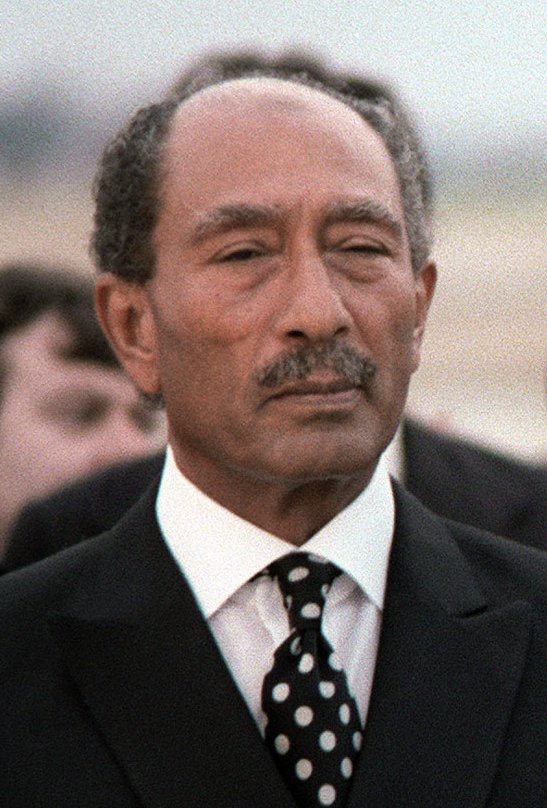
—How do you explain choosing Yom Kippur to attack in 1973?
October 1973. I chose the day of Yom Kippur, the holiest of Jewish holidays, when Israel was drowsy in prayer. Our soldiers crossed the Suez Canal under water cannons and shattered that Bar-Lev Line that was said to be impassable. Understand me well: I never believed I could throw Israel into the sea; that was not my aim. Since 1967, an entire people had carried their heads low, crushed by the shame of defeat. I had to restore the Arab's dignity before I could speak to him of peace. You do not negotiate on your knees. This crossing, even if the battle remained undecided, lifted an entire world. I needed that pride to dare, later, the reverse gesture.
You do not negotiate on your knees.
—Is there not a paradox in making war to prepare for peace?
Paradox has never frightened me. Strike in order to then extend a hand, yes. As long as the enemy thinks you weak, he does not listen to you; he dictates. The Yom Kippur War was not an end; it was the key to a door locked for thirty years. Once the myth of invincibility was broken, once honor was restored in the sands of the Sinai, I could finally offer something other than rancor. The oil shock that same year showed the world that the Middle East would no longer be ignored. Many of my Arab brothers wanted to prolong the war indefinitely; I knew that a victory not turned into peace is only a reprieve before the next mourning.
A victory not turned into peace is only a reprieve before the next mourning.
—What drove you to board that plane for Jerusalem?
I had announced before our Assembly that I would go to the ends of the earth to spare a single soldier — even to the Knesset itself, in Jerusalem. They thought it was a figure of speech. I meant every word. On November 19, 1977, I boarded the plane. No Arab leader had ever set foot on that soil, ever shaken those hands. My advisors were ashen, the whole world held its breath. But I had long ago, in a cell, made peace with my own death; I could well risk my reputation for the sake of the living. Thirty years of hatred are not dissolved by communiqués. It took a body, a face, a man to cross the line and look the adversary straight in the eye.
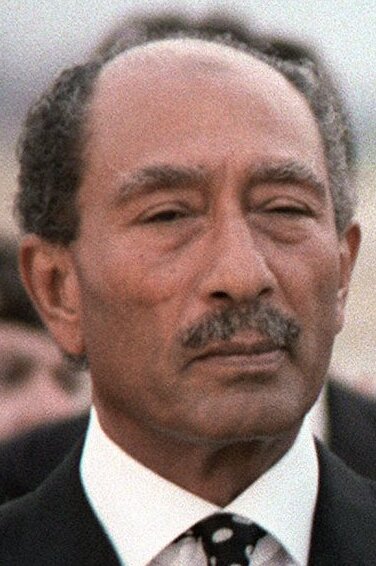
—What did you say to them, once standing before that parliament?
Standing before that parliament, in that hall where I was not expected, I spoke plainly. I told them: "I have come to you so that together we can build a lasting peace founded on justice. None of us should shed or cause to be shed the blood of a single soldier." There was neither triumph nor surrender in those words, only the truth of a man weary of coffins. I also demanded justice for the Palestinians, because a peace that forgot them would not hold. That speech cost me dearly: the Arab world turned its back on me, Egypt was expelled from the Arab League. But I prefer a lucid isolation to solidarity in misfortune.
—You are always imagined with a pipe in your mouth: what lies behind that image?
You often see me with a pipe in my mouth, don't you? It is not a pose. Smoking slowly forces me to think slowly, and a leader who thinks quickly often makes war thoughtlessly. I love silence, reflection, returning to essentials. Deep down, I have never stopped being the son of the Nile Delta disguised as a statesman. The palaces of Cairo, the processions, the international summits — all that passes. What remains is a man who, come evening, removes his decorations and asks himself if he has been just. Greatness is not measured by the honors received but by the weight one dares to carry alone. I have always preferred a solitary truth to a lie in good company.
A leader who thinks quickly often makes war thoughtlessly.
—How do you feel toward those who do not forgive you this peace?
The Nobel Peace Prize, received in 1978 with Menachem Begin under Carter's auspices at Camp David, honors me, but I harbor no illusions. You do not embrace your former enemy without fanatics on both sides crying betrayal. I know it: men in my own country do not forgive me this peace and dream of striking me down. Let them. A leader who does not accept to die for his people does not deserve to live at their head. I signed the treaty of 1979, Egypt recovered its Sinai, and if my blood must be the price of those years without war for my grandchildren, I already accepted it at the bottom of a cell, long ago.
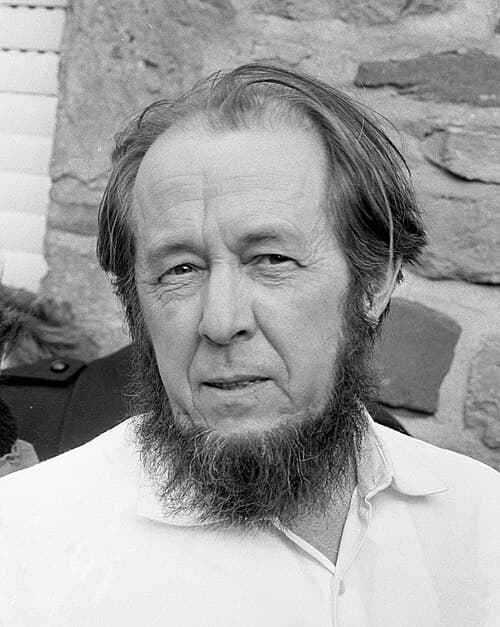
This imaginary interview was generated by artificial intelligence from sources documented in Anwar Sadat's profile. It dramatises what the figure might have said based on what we know about them, but does not constitute attested historical testimony. For primary sources and factual documentation, refer to the full profile.