Kids interview Anwar Sadat
by Charactorium · Anwar Sadat (1918 — 1981) · Politics · 5 min read
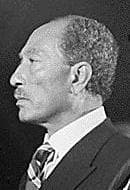
Two twelve-year-old students visit an exhibition on the Middle East. In front of an old portrait, a man in uniform, pipe in hand, suddenly begins to speak to them. It is Anwar el-Sadat, and he wants to tell them everything.
—Where were you born? What was your village like when you were little?
I was born in 1918 in Mit Abou el-Kôm, a small village set in the Nile Delta. Imagine mud houses, green fields, and the river flowing nearby. We were peasants, my child. There, I wore the galabeya, that long light tunic that keeps you cool under the sun. All my life, even as president, I came back to walk there, between the fields, early in the morning. You can become the leader of a great country and still keep in your heart the smell of the land where you ran as a child. That's what kept me simple.
You can lead a great country and keep in your heart the smell of your village.
—What did you eat at home when you were a child?
Oh, nothing fancy! In the morning, bread and foul: slowly cooked fava beans, a peasant dish that everyone ate in our country. It was warm, filling, and cost almost nothing. All my life, I remained simple at the table, you know. Even in the palaces of Cairo, I preferred plain food. Imagine: on one side a man covered in decorations, on the other the same man happy with a bowl of fava beans. Both were me. You can love honors and stay true to the taste of your childhood.
—Is it true you went to prison? Were you afraid?
Yes, several times! When I was young, Egypt was occupied by the British, and I was fighting for its freedom. They didn't like that, so they locked me up. Of course I was afraid, at first. Imagine a small cell, the endless night, the silence. My harshest prison had a number: cell 54. But you know what? That's where I did the most thinking. Far from the noise, I matured my ideas, I prayed, I decided what kind of man I wanted to become. A cell can imprison your body without imprisoning your mind.
—What did being locked up for so long teach you?
One thing I never forgot, my child. In cell 54, I understood that true freedom is not outside: it is inside you. The guards held the key to the door, sure. But my thoughts, my dreams, my faith — no one could take those away. Later, I wrote a book about my life, In Search of Identity, to tell that journey: from the rebellious young prisoner to the statesman. I believe that without those years of solitude, I would never have had the courage, later, to make choices that no one dared to make.
A cell can imprison your body, never the inside of your mind.
—Why did you attack Israel on a holiday?
Think with me. In 1973, part of my country, the Sinai, had been occupied by the Israeli army for years. My soldiers were ashamed, heads hung low. I chose to attack on Yom Kippur, the great Jewish holiday, because on that day the enemy did not expect it. Imagine thousands of my men crossing the Suez Canal in boats, under fire. We didn't win the whole war, that's true. But that crossing restored pride to my soldiers and to the entire Arab world. Sometimes you have to prove you can stand up before you can extend your hand.
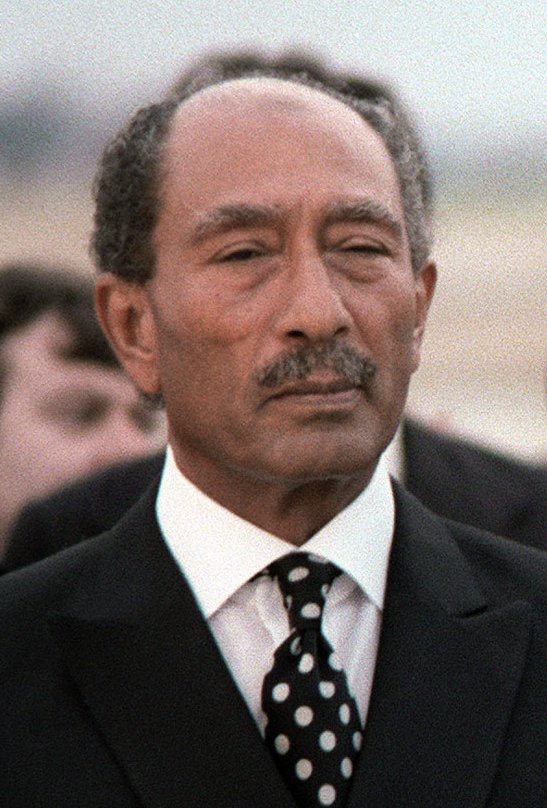
—Were you afraid during the war?
Of course. A leader who says he is never afraid is lying to you, my child. During the October War in 1973, I spent hours and hours at headquarters, bent over maps, my heart tight. Every name on those maps was young people who could die. Imagine the distant sound of cannons, the messages coming in, good or terrible. But I'll tell you something: that war, I did not wage it to destroy. I waged it so that I would be respected enough, afterward, to dare talk about peace. Force only served to open a door.
A leader who says he is never afraid is lying to you.
—Why did you expel the Soviets from Egypt?
Good question! In my time, the world was split into two camps that hated each other: on one side the Americans, on the other the Soviets, the huge eastern country. It was called the Cold War: no real battle between them, but a constant rivalry. Egypt was on the Soviet side, and their military advisers were everywhere in our country. In 1972, I expelled them all. It stunned the world! Imagine changing friends on the day everyone least expects it. I wanted to turn toward America, because I felt that peace, one day, would come through it.
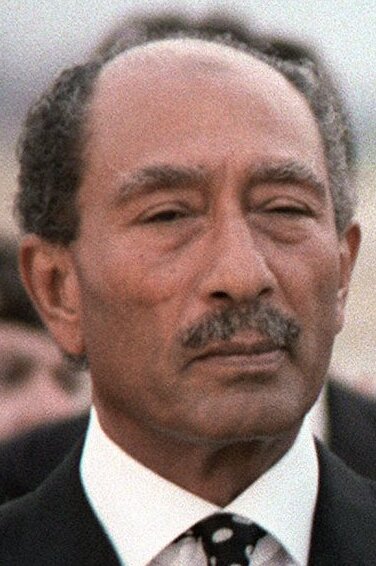
—Is it true you went to speak among your enemies?
Yes, and nobody believed it! On November 19, 1977, I got on a plane and went to Jerusalem, to those I had been taught to see as the enemy. There, before their parliament, the Knesset, I spoke of peace. No Arab leader had ever done that before. The whole world held its breath. I told them: “I have come to you so that together we may build a lasting peace based on justice.” Imagine the courage it takes to extend your hand to the one you have fought. But I believed enough blood had been shed.
It takes more courage to extend your hand than to clench your fist.
—Weren't you afraid people would resent you after that?
I often thought about it, you know. After Jerusalem, I negotiated peace with Israel for thirteen days in America, at a residence in the woods called Camp David. In 1978, I received the Nobel Peace Prize, along with Israeli leader Begin. It was a great honor. But at home, many resented me: other Arab countries isolated Egypt, like you shun a friend who has disappointed. Some hated me for making peace. I knew it, and I continued anyway. When you truly believe in a just cause, you accept that it will cost you dearly.
—If we could see you in person today, what would we notice first?
Ah, you would make me smile! In the morning in my village, you would see an old man in a galabeya, walking slowly between the fields, a pipe in his mouth: they always photographed me that way, looking thoughtful. But on ceremonial days, you would see another man: the uniform covered in medals, straight as a soldier. These two images are my whole life: the peasant of Mit Abou el-Kôm and the president. If I had to leave you with one thing, it would be this: you can be born in a tiny mud village and change the course of the world. So never be afraid of your dreams.
You can be born in a small mud village and change the world.
This imaginary interview was generated by artificial intelligence from sources documented in Anwar Sadat's profile. It dramatises what the figure might have said based on what we know about them, but does not constitute attested historical testimony. For primary sources and factual documentation, refer to the full profile.