Imaginary interview with Ares
by Charactorium · Ares · Mythology · 5 min read
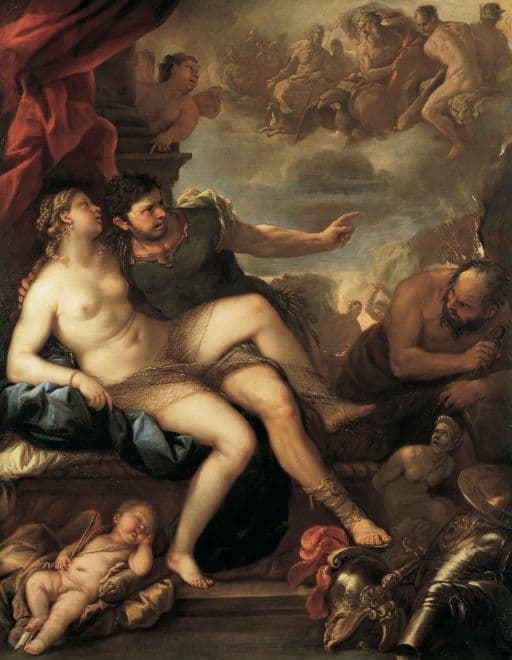
On Mount Olympus, away from the palace where the twelve feast, the god of war wipes the dried blood from his spear. He agrees to speak, but his gaze remains fixed on the plain of mortals, where shields clash. We sit near his unyoked chariot, and he begins in a low voice, like the rumble of an army on the march.
—How did you come into the world, among the deities of Olympus?
I was born from the womb of Hera alone, without any god touching her — Hesiod's Theogony says it well: a dreaded son, who equaled his mother in strength. Zeus recognizes me as his blood, but he has never loved me; he reproaches me for my fury as one reproaches a spear for being sharp. Yet I sit among the twelve, at the table where ambrosia and nectar flow, and it is my right. The others look down on me, call me the most hateful of the Immortals. So be it. One does not choose to be war as one chooses to be harvest or the sea. One becomes it, from the first cry.
One does not choose to be war as one chooses to be harvest.
—Why do the Greeks constantly set you against your sister Athena?
Because they want to believe that war can be ordered, calculated, disciplined. Athena whispers to them cunning, the order of phalanxes, the moment to strike. I am what remains when the plan collapses: carnage, blood rising to the eyes, the dark joy of slaughter sung in the Odyssey. They accuse me of taking pleasure in spilled blood — it's true. But tell me, what battle was ever won by wisdom alone, without a man throwing himself, blind, into the fray! Athena draws victory; I make it possible, in the mud and the rattle. They love me less. They fear me more.
Athena draws victory; I make it possible, in the mud and the rattle.
—It is said that a mere mortal managed to wound you beneath the walls of Troy. What happened?
Diomedes. A single man, guided by Athena's hand, who had opened his eyes to distinguish gods in the melee. His spear struck me in the lower belly. I screamed — a cry such that nine thousand, ten thousand warriors together could not have raised an equal, and the plain of Troy trembled from it to the ships. I fled to Olympus like a child, to show my wound to Zeus, who dismissed me with contempt. That is what the poets love to recall: that even the god of battle bleeds, screams, and knows humiliation. They are right. We are not invulnerable. We are merely harder to bring down.
Even the god of battle bleeds, screams, and knows humiliation.
—And this story of a bronze prison where you were supposedly locked up?
The Aloadae, those two giants swollen with pride, surprised me and threw me into a bronze jar. Thirteen whole months I remained there, compressed in metal, unable to stretch my arm or grasp my spear. Imagine: war itself, imprisoned, mute, reduced to silence by two oversized brats. I would have died of exhaustion if I had not eventually been freed. When one is what I am, immobility is the worst of tortures — not pain, no, inaction. The Greeks tell this laughing, to belittle the god they dare not love. Let them laugh. I know what thirteen months in the dark weigh, hearing no clash of arms.
When one is what I am, immobility is the worst of tortures.
—You seem to be received very differently depending on the region of Greece. How do you explain that?
In Athens, they tolerate me more than they venerate me. Their poets drag me onto the stage to portray me brutal, ridiculous, clumsy; they prefer their dear Athena, helmeted and reasonable. But go north to Thrace, among the peoples with long spears and swift horses: there they call me a noble god, honor me as a lord, sacrifice to me without hesitation. The Spartans too, in Sparta, understand what I am, because they live sword in hand. One must be a warrior people not to hate war. Those who despise me are those who owe me their survival but do not want to admit it.
One must be a warrior people not to hate war.
—Does it hurt you to be less worshipped than the other Olympians?
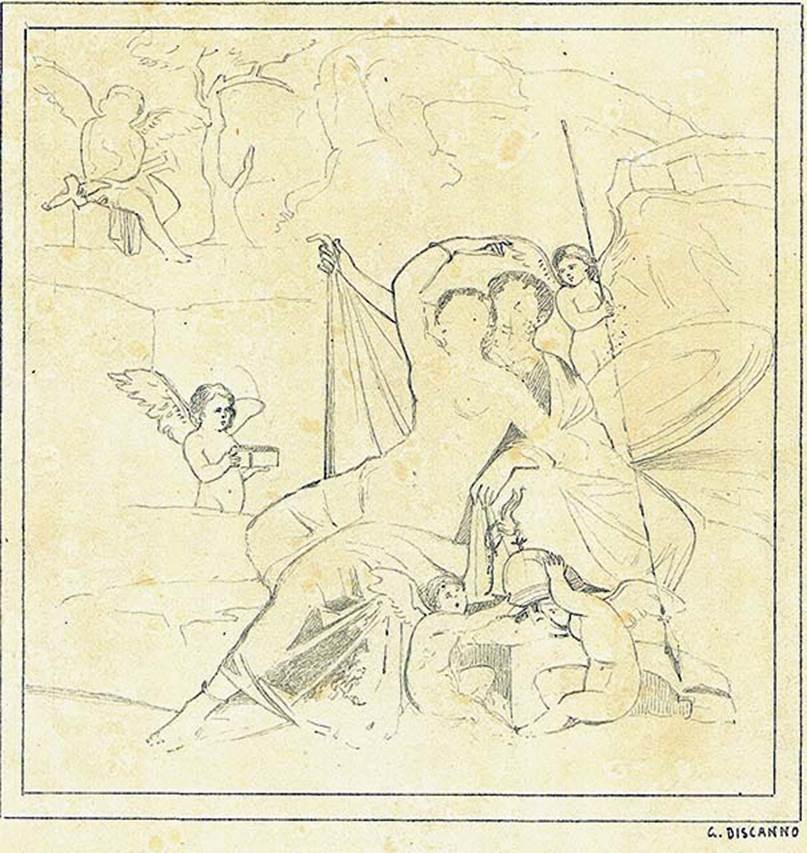
Few temples are raised in my name. Pausanias and the ancients note it: my altars are rare, my priests sparse. Apollo has Delphi, Athena her sacred rock, and I a few scattered stones, a sanctuary barely, where they fear me too much to ignore me. Do you think that touches me? Mortals do not invoke the plague when they are well. They think of me only on the threshold of battle, when death is near and they suddenly need someone to supplicate. I am the god they call only as a last resort — but then, they call me with all their soul. That suffices me. The fervor of the desperate is worth a thousand tepid processions.
I am the god they call only as a last resort, but then they call me with all their soul.
—Describe the gear with which you descend onto battlefields.
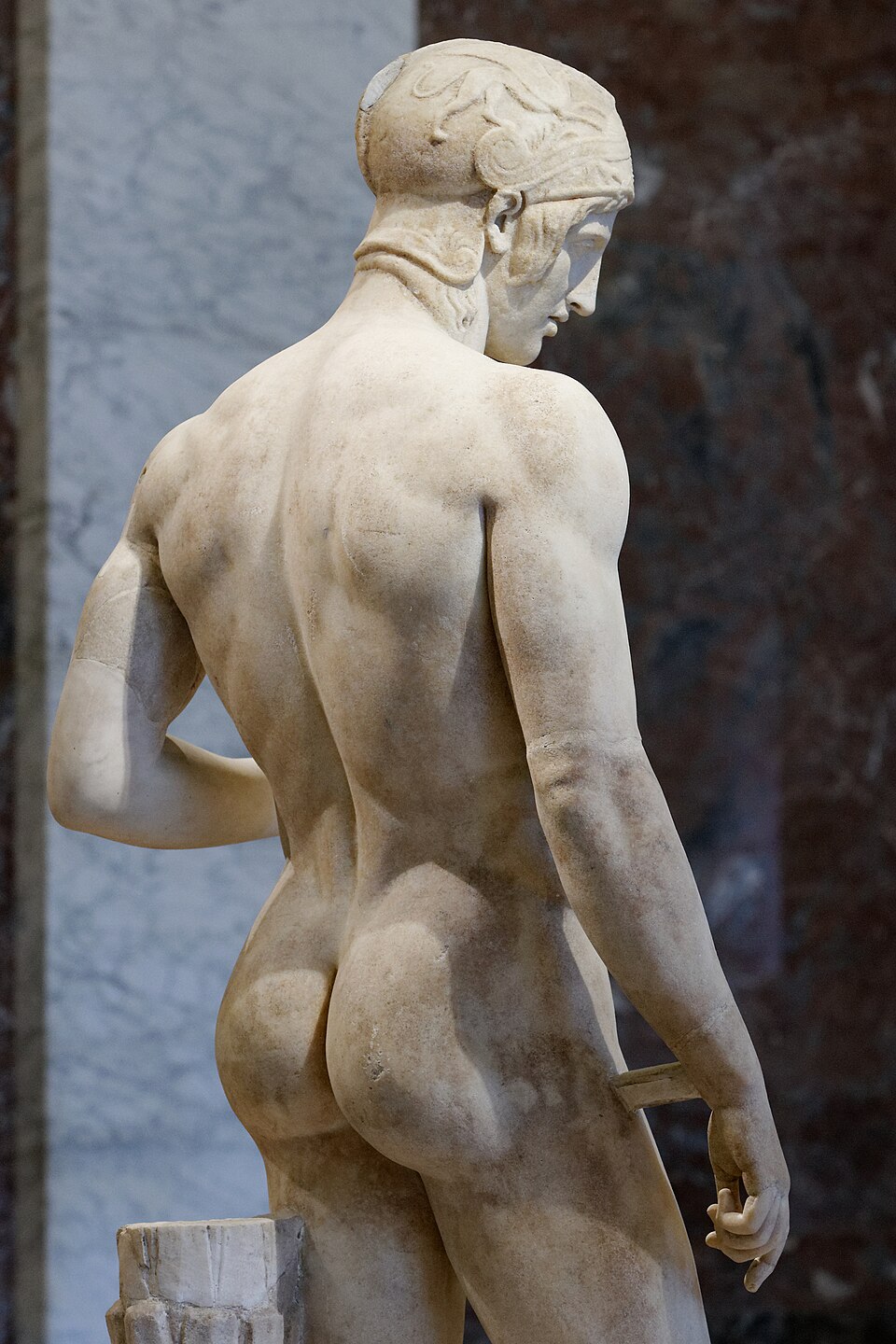
I don the Corinthian helmet of bronze, which covers the entire face and leaves only two slits for the eyes — the enemy must not see a man, but faceless war. The cuirass on the chest, the greaves, the large round shield on the arm, and the hoplite spear in hand: that is the weapon that decides everything, the one that kills even before one draws. Over my shoulders flows a scarlet cape, red like what flows from wounds. When the hand-to-hand tightens, I drop the spear and draw the xiphos, the short sword, for the intimate work of blood. Thus arrayed, I mount my chariot and swoop into the fray.
The enemy must not see a man, but faceless war.
—What offerings do you expect from men who wish to win your favor?
Let them slaughter a red rooster for me, the quarrelsome bird that fights at dawn without reason or truce — that is the beast that resembles me, standing on its spurs, ready for blood as soon as it opens its eye. They burn its flesh on the altar and I breathe its essence, as all Immortals feed on the smoke of sacrifices. I ask for neither honey nor wheat cakes, those sweets good for hearth goddesses. To me, the animal of combat, iron, bronze. The warrior who wants my favor does not bring me flowers: he brings me his fury and the oath not to retreat. The rest is indifferent to me.
The rooster fights at dawn without reason or truce: that is the beast that resembles me.
—How do you feel when poets call you 'the most hateful of gods'?
Homer threw it in my face, in the Iliad: the most hated of the Immortals, who constantly changes sides and never holds the same feeling. They reproach me for betraying my word, supporting now the Trojans, now abandoning them. But is war faithful? Does it know constancy? I am reversal, the chance of iron, the arrow that comes from nowhere. They would want a loyal god, predictable, like a magistrate. I will never be that. My brother Apollo punishes from afar, cleanly, with an arrow in the plague. I am in the melee, covered in dust, and it is dirty, and it is me.
Is war faithful? Does it know constancy?
—At dusk, when you return to the Olympian palace, how do the other gods receive you?
I return covered in the dust of the plains, and already I feel the looks. At the table where nectar is poured, the others exchange knowing smiles when I recount the day's battles. Zeus turns away; he once told me he hates me more than any of his children, because I love only strife and combat. My mother Hera, who bore me alone, is the only one who sometimes defends me. The Olympian evening is no rest for me: it is the other battlefield, that of words and contempt, where I have neither spear nor shield. So I drink, I fall silent, and I wait for the plain of mortals to call me again.
The Olympian evening is the other battlefield, where I have neither spear nor shield.
This imaginary interview was generated by artificial intelligence from sources documented in Ares's profile. It dramatises what the figure might have said based on what we know about them, but does not constitute attested historical testimony. For primary sources and factual documentation, refer to the full profile.