Imaginary dialogue between Diomède and Ares
by Charactorium · Ares · Mythology · 5 min read
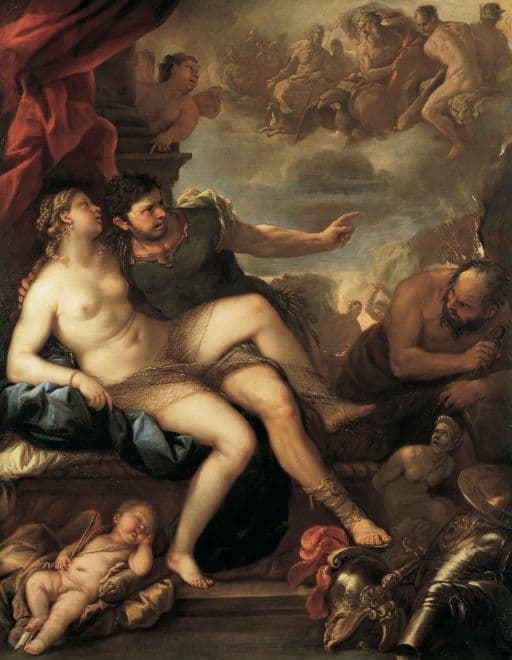
It is on the plain of the Scamander, beneath the walls of Troy, that Diomedes meets again the god he himself struck with his spear. The dust is still settling, and the smell of hot bronze hangs over the field emptied of its fighters. The hero and Ares clashed here, one guided by Athena, the other carried by his fury. Today, without weapons raised, Diomedes comes to demand answers from the one he made cry out.
—Ares, you remember: my spear pierced your flank on this plain. You cried out like ten thousand men. What did you feel?
I remember it better than you, Diomedes. Your point would never have found my flesh without Athena guiding your arm — you know it, you who stood there. The pain? A burn that mortals do not know, for it does not kill, it humiliates. I let out that cry not from suffering, but from rage at being touched by a man. I climbed back to Olympus to complain to Zeus, and he, my own father, called me the most hateful of gods. That is my true wound: not your iron, but the contempt of my own. They think me invincible. That day, on this very ground, I learned that even a god can bleed.
They think me invincible. That day, I learned that even a god can bleed.
—That was not your only humiliation, they say. The giants Aloadae supposedly locked you in a bronze jar. Thirteen months. Is it true?
Do not think I hide it. Otus and Ephialtes, those two brutes born of the earth, seized me and sealed me in a bronze jar. Thirteen moons I languished there, I the god of carnage, without battle, without cry, without blood — that is the true torment for one who lives by the clash of arms. It was Hermes who pulled me out, half-suffocated, emaciated. You see, hero: men paint me sometimes invincible, sometimes ridiculous. The truth lies between. I am a force, and any force can be chained for a time. But I am never chained forever — war always returns, and I with it.
Without battle, without cry, without blood: that is the true torment for the god of carnage.
—On this plain, Athena fought you. You as rage, she as cunning. Why do the Greeks always prefer her over you?
Because men love to think themselves wise, even when they kill each other. Athena offers them the comfortable lie of a clean, orderly, reasoned war — the strategist who weighs his lines, arranges his phalanxes. I hold up the mirror they refuse: war is slaughter, fury, chaos. When your spear enters a belly, Diomedes, there is no more strategy, only blood and a cry. That is what I embody, and that is why I am hated. Athena is the thought of combat; I am combat itself. One can admire her and tremble before me. But without me, her fine maneuvers would be only drawings in the sand.
Athena is the thought of combat; I am combat itself.
—You were fighting for the Trojans when I faced you. But they say you swore to Thetis to support the Greeks. Did you betray?
Betray? The word of men who keep records of their oaths. I go where blood calls. Homer says of me that I constantly change my mind, that I never hold the same feeling — he is not wrong. I had promised Thetis, yes, then the Trojan clamor seized me and I charged for Hector and his men. It is not treachery, it is my nature: I do not serve a side, I serve battle. Where it roars loudest, I rush. You found me among the Trojans that day; another day you would have had me at your side. War has no loyalty — and I am war.
I do not serve a side, I serve battle.
—This plain of Troy where we stand, what was it to you? A playground, or something more?
Look at it, Diomedes: not a clod that has not drunk Greek or Trojan blood. For me, this plain was a ten-year intoxication. I descended from Olympus when the chariots clashed, I breathed fury into the fighters' chests, I delighted in every charge. Mortals call it a war; I saw it as my true home, far more than my palace up there. Here, no one mocked me, no one judged me — I was feared, I was invoked. It is also here that you struck me, I do not forget. But even wounded, I returned. You cannot keep the god of war away from the greatest battlefield men have ever opened.
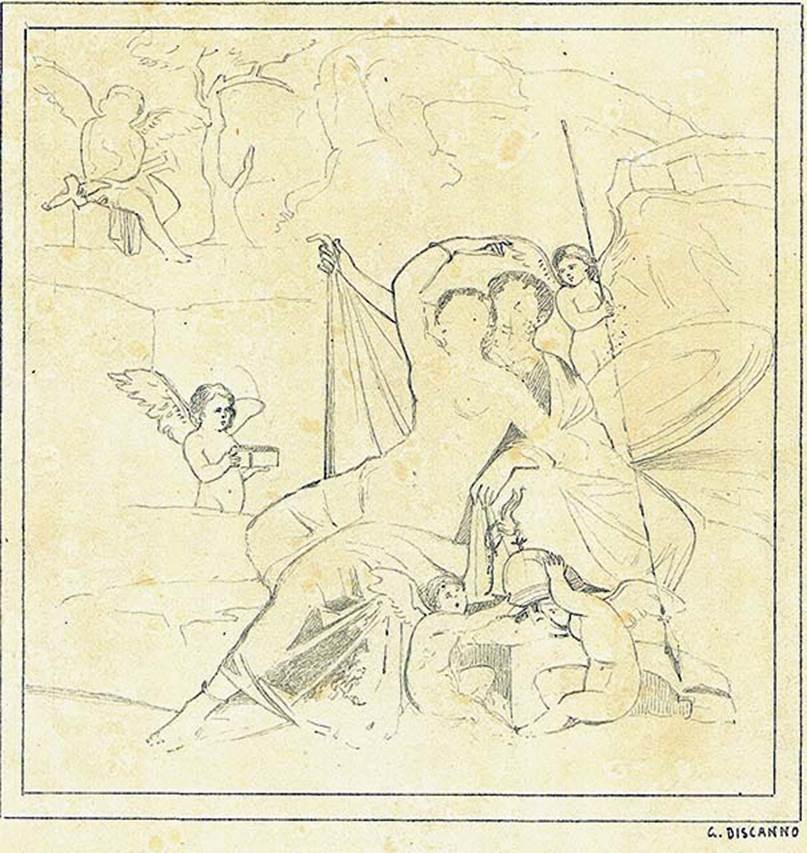
—You speak of contempt in Athens. Yet up in Thrace, they worship you as a noble god. How do you explain this gap?
Because the Thracians do not lie about what they are. They are warriors, hard, frank, and they honor me for what I truly am, without averting their gaze. They do not ask me to be wise or measured: they love me violent, for they are violent themselves. In Athens, they do build me a temple, but they worship me half-heartedly, preferring Athena, and on their theater stages they mock me, a brutish, stupid god. Polished cities are ashamed of the war they nevertheless wage constantly. Thrace, on the other hand, owns it. That is why I prefer its rough altars to all the Athenian marbles.
Polished cities are ashamed of the war they nevertheless wage constantly.
—And Sparta? Those warriors do not look away either. Did you find men there worthy of you?
Sparta, yes. There is a city that does not deceive itself. They raise children for combat, they live weapon in hand, and they recognize me in every virtue they teach: courage, endurance, contempt for flight. The Spartans do not recite pretty speeches to me like the Athenians — they prove their faith on the field, spear in fist. That is the worship that moves me: not incense smoke, but blood spilled without trembling. You, Diomedes, are of that mettle, even if Athena guides you. A man who dares to bear iron against a god deserves my respect, even as my adversary. Sparta would have made you a king.
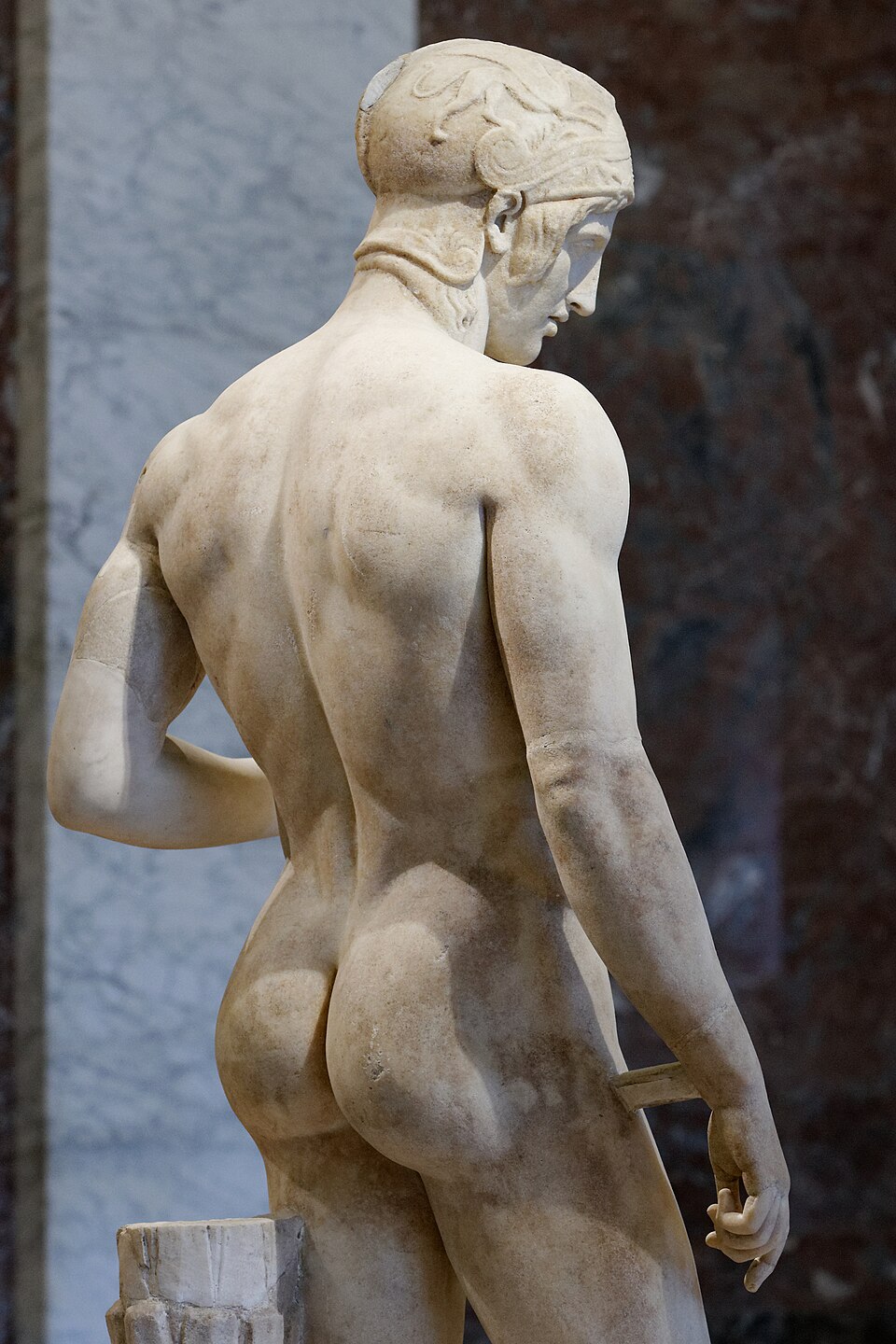
—When I saw you swoop down on me, your helmet and spear shone like fire. What are these weapons to you?
They are not ornaments, hero, they are my very being. The Corinthian helmet that covers my face is not there to protect me — who would wound a god, except you and your Athena? — but so that the enemy sees only a bronze mask bearing down on him. The spear is the hoplite's weapon, the straight weapon, the one that pierces before the sword cuts: I carry it because it is the killer's primary tool. The bronze thorax, the round aspis, the short xiphos for close combat — all this composes the ideal warrior that Greeks dream of being. When I don this gear in the morning on Olympus, I become what every fighter would want to be: war made flesh.
When I don this gear, I become what every fighter would want to be: war made flesh.
—At your altars, I've heard they offer you a red rooster. Why this animal, and not the bull of the great gods?
The red rooster, yes. Look at it, Diomedes: no other animal is so quick to fight. Two roosters face to face, and it is immediately spur, blood, death of one — without cause, without calculation, by pure instinct for combat. That is me entirely. Its scarlet comb is the color of my cape and of spilled blood, its fury is mine. They do not offer me the placid ox of harvests, but the beast that knows only how to fight. And when they sacrifice that rooster to me, it is not to buy my clemency — I have none — but so that a little of its rage passes into the warriors' arms. On my chariot yoked, I descend to receive this gift, and I return in exchange the intoxication of carnage.
—One last thing, Ares. After all this — your wound, your bronze jar, the mockery — do you regret being the god you are?
Regret? That word has no place in my mouth, hero. I am what men carry within them and dare not name: the thirst to destroy, the dark joy of combat. I am hated, mocked, wounded — you first — and yet no one can do without me. As long as two peoples dispute a plain like this one, I will be invoked. My brothers on Olympus disdain me, but let them try to wage a war without me: they will have only maneuvers without fire. I prefer to be the hated god who is feared than the pleasant god who is forgotten. You made me cry out, Diomedes — but it is my name, not yours, that soldiers will shout before they die.
I prefer to be the hated god who is feared than the pleasant god who is forgotten.
This imaginary interview was generated by artificial intelligence from sources documented in Ares's profile. It dramatises what the figure might have said based on what we know about them, but does not constitute attested historical testimony. For primary sources and factual documentation, refer to the full profile.