Imaginary dialogue between Socrate and Aspasia
by Charactorium · Aspasia (469 av. J.-C. — 399 av. J.-C.) · Literature · Philosophy · 5 min read
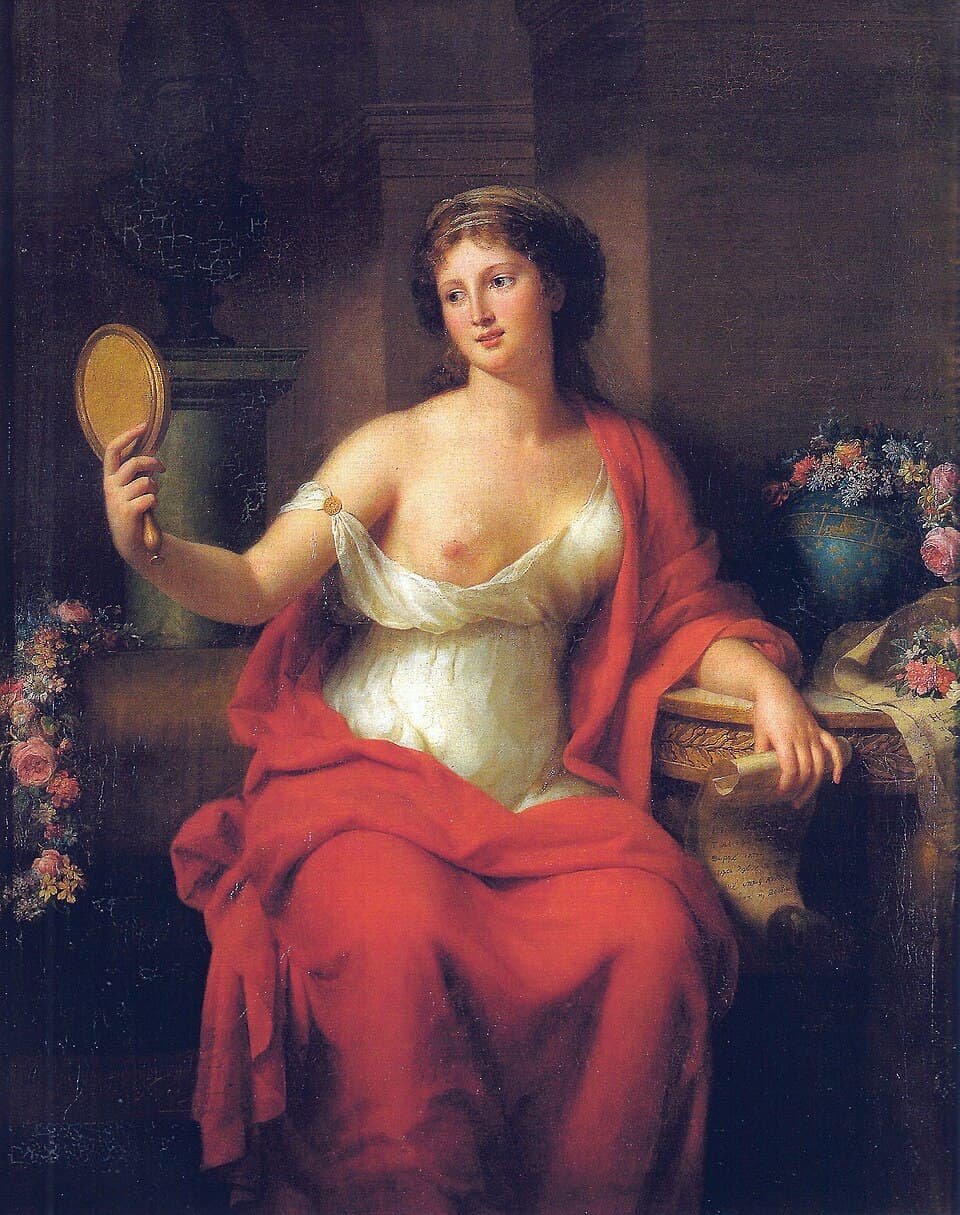
It is in the home of Pericles, not far from the Agora, that I find Aspasia on this late afternoon of the year 440 BC. The oblique light falls on the papyrus rolls lined up along the wall, and the smell of wine cut with water still lingers, remnants of yesterday's symposium. For years I have come to listen to her, sometimes with my disciples; today I come alone, not to debate, but to understand the woman of whom I dare say she taught me the art of speaking well.
—Aspasia, you who come from Miletus and whom the law considers a foreigner, how did you open your door to men like me?
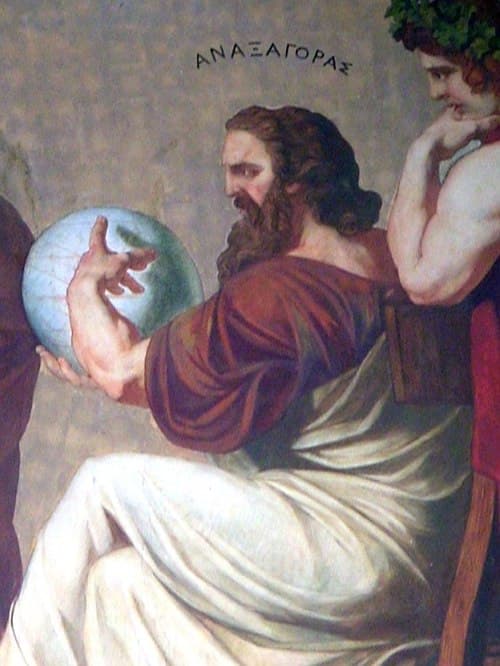
You know better than anyone, Socrates, since you have crossed this threshold for years with your young men. As a metic, I never had to bear the weight that crushes the Athenian wife, cloistered in the gynaeceum. This exclusion, I turned into my freedom. People come here because one speaks without a mask: Anaxagoras questions the heavens, Phidias the marble, and you others the soul. I preside over nothing; I listen, I prompt, I force each one to clarify his thought. Born in Miletus, I grew up in a city that did not fear ideas from elsewhere. Athens received me with suspicion, but Athens came to sit in my home.
This exclusion of women, I the foreigner, turned into my freedom.
—It is whispered that Pericles' funeral oration came from your mouth. You who taught me so much, tell me: what is true?
You set a trap for me, dear Socrates, you who repeat to your disciples that I trained you in rhetoric. Let us say this: Pericles and I shape his words together, phrase after phrase, like the potter reworks the clay. When the city mourns its dead, it is not enough to express grief; it must be transformed into pride in being Athenian. That is what I seek: that the logos consoles and elevates at the same time. Is it he who speaks, or is it I? The word belongs to the one who dares it before the ekklesia, and that honor, forever, will remain his. But if you ask me who weighed each word in the night, then you already know my answer.
It is not enough to express grief; it must be transformed into pride in being Athenian.
—You speak of logos as an instrument. For you who wield speech, what does it truly mean to persuade a man?
Persuasion is not deception, Socrates — I know you are watching for that confusion. Persuasion is leading the other along a path he believes he is tracing himself. You proceed this way with your questions: you give nothing, you bring forth. I believe that rhetoric is a power as real as that of the strategist, and more lasting, for armies disperse but a speech remains in memories. The danger is that a beautiful speech can serve truth as well as falsehood. That is why I repeat to those who come here that the art of speaking without concern for justice is mere flattery. You see: we are not so far apart.
Armies disperse, but a speech remains in memories.
—There is one thing your freedom did not give you: marrying Pericles. The law of 451 prevents it. Does this weigh on you?
The irony does not escape you, I see it in your smile. This law of 451, reserving citizenship for children of two Athenian parents, was passed by Pericles himself — before he loved me. Now he is caught in his own net. Our union will never be sealed by the city, and our son, Pericles the Younger, does not bear the name of citizen. This pains me for him, not for myself; the child pays for a rule he did not write. But I do not weep over a contract. What binds us is recorded in no archon's registry. He consults me on the city, he listens to me about men — what husband offers that to a confined wife?
This law was passed by Pericles himself — now he is caught in his own net.
—The comedians do not spare you. Aristophanes names you in the theater, the crowd laughs at you. How do you endure these taunts?
Ah, the comic poets! They make me the cause of all wars, as if a woman from Miletus held the fleets and hoplites in her hand. When they want to strike Pericles without daring to attack him head-on, they strike me. It is an indirect tribute: one mocks only what one fears. They call me hetaira to defame, and the word, on the lips of the public, becomes an insult. Yet I bear it without shame: I am a cultivated companion, not a silent wife. You, Socrates, know the price of public mockery; they also laugh at you on the stage. We share this fate: being too visible for a city that prefers silent women and sages.
One mocks only what one fears; their taunts are an indirect tribute.
—You were dragged before the Heliaia, accused of impiety. I heard that Pericles wept before the judges. What was at stake there?
That trial had nothing to do with the gods, Socrates, as you suspect. Asebeia, impiety, was merely a cloak thrown over political hatred: to strike Pericles by hitting those close to him — me, then Phidias, then Anaxagoras. Before the court, I saw a statesman, the first of Athens, stoop to plead, tears in his eyes, for a foreigner. That is not done; a strategist does not weep. And yet he did it, and I was acquitted. I confide this to you alone: that day I was afraid, not of dying, but of seeing him break for me. Beware, dear friend, of the city when it dresses its vengeance as piety.
Impiety was merely a cloak thrown over political hatred.
—When you received me with my disciples, you also admitted women to listen to you. Was that not defying the whole city?
You remember those afternoons when your intimates brought their wives, an unheard-of thing in Athens. Yes, I received them. What use is paideia, this education meant to form the whole person, if it stops at the threshold of the gynaeceum? I do not preach revolt; I merely show that a woman can reason, argue, hold her own. The husbands grumbled at first, then came back — because their wives returned sharper, better advisers. I do not overturn the order, I crack it open. A door left ajar lets in more light than one thinks. And you who question the powerful on the agora know that a simple question, well posed, shakes more than an army.
I do not overturn the order, I crack it open — a door left ajar lets in a lot of light.
—You are admitted to the symposia, those men's drinking parties. What do you seek there that the salon does not offer?
The symposium is another theater, Socrates — you shine there more than I, I must admit. Wine loosens tongues and reveals men as they are, once the mask of the public square falls. There, between the kylix that circulates and the lyre that accompanies verses, one speaks of love, justice, death, without the caution of the day. A woman never has a place there; I am tolerated because I know how to hold a conversation and give as good as I get. What do I seek there? The truth of beings when they think themselves free. One learns more from a man in an evening of wine than in ten days of public affairs.
One learns more from a man in an evening of wine than in ten days of public affairs.
—Your own treatises on the art of persuasion, they say, circulate. What do you wish to bequeath to those who will read you after the banquet?
Bequeath is a big word for a few papyrus rolls that are lent and poorly copied. I note what I observe: how a speech grips a crowd, why one argument carries and another slips. These are not fixed rules, but remarks, like a physician recording his patients. What I would like to transmit is less a method than a demand: never separate the beauty of speech from the correctness of thought. You write nothing, you trust the living word — and perhaps you are right, for writing solidifies while the question remains alive. No matter who keeps my name: let the idea remain that a woman, born in Miletus, thought about the logos.
Never separate the beauty of speech from the correctness of thought.
—One last thing, Aspasia: in the evening of your days, between the hearth and the public glare, where do you feel most yourself?
A philosopher's question, that one, seeking the soul beneath the roles. In the morning, I manage the house, the slaves, the rolls; in the afternoon, I discuss with you; in the evening, I shine at the banquet. But do you ask where I truly breathe? It is in the fragile moment when a thought forms between two minds, when neither you nor I yet know where it leads. Neither wife, nor courtesan, nor schoolmistress — nothing of what the city would assign me. I am a voice that seeks, like yours. That is why you return, I think: we are two strangers in our own city, you by your questions, I by my birth.
We are two strangers in our own city: you by your questions, I by my birth.
Read further
This imaginary interview was generated by artificial intelligence from sources documented in Aspasia's profile. It dramatises what the figure might have said based on what we know about them, but does not constitute attested historical testimony. For primary sources and factual documentation, refer to the full profile.