Imaginary interview with Aspasia
by Charactorium · Aspasia (469 av. J.-C. — 399 av. J.-C.) · Literature · Philosophy · 6 min read
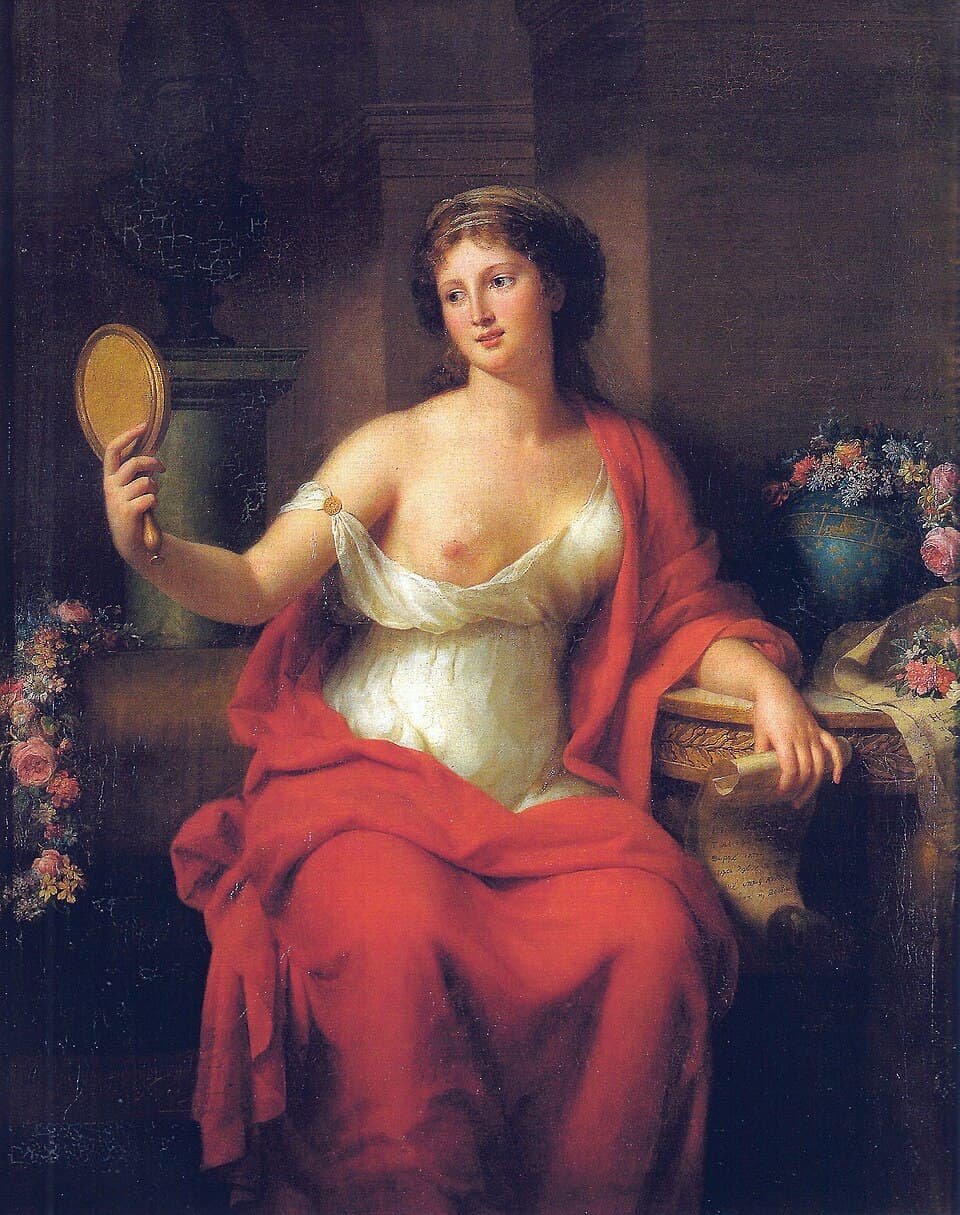
Evening falls on Athens. In Pericles' house, by the peristyle where an oil lamp burns, a woman unrolls a volumen on her lap. She comes from Miletus, said to be an advisor to the powerful and a master of rhetoric; she agrees, for once, to speak of herself.
—How did a woman born far from Athens find herself at the center of its intellectual life?
I was born in Miletus, a city of Ionia where girls are taught to read the poets and follow a line of reasoning without blushing. In Athens I am only a metic, a tolerated foreigner, without citizen rights, without the right to marry the man I love. But this exclusion, you see, was my freedom: citizen wives stay in the gynaeceum, while I, freed from conventions, receive men from early morning in this house. I am called hetaira, a word meaning companion and not what gossips imply. I wear the himation of respectable women, I hold a scroll rather than a distaff, and by this sole anomaly I stand where no Athenian woman can stand: in the midst of the conversations that decide the city's fate.
This exclusion was my freedom: I stand where no Athenian woman can stand.
—It is said that Socrates himself consulted you. How was that possible?
Socrates came here with his young men, and sometimes his friends brought their wives to listen to me. He did not pretend to flatter me: when a man sought advice on the art of persuasion or on the affairs of the city, he said he knew a woman who would instruct him better than himself, and that woman was me. He loved this irony, the wisest man in Athens calling himself the pupil of a Milesian woman. But behind the play, there was a truth he defended seriously: rhetoric has no sex. Speaking well, ordering one's arguments, measuring the logos — the word, reason — as one measures a portion of wine in the cup, that can be learned, and I had learned it. That such knowledge should pass from a woman to powerful men — that is what scandalized more than anything.
The wisest man in Athens calling himself the pupil of a Milesian woman.
—Pericles delivered a famous funeral oration. What do you say to those who attribute its composition to you?
It was in 431, at the beginning of the war against Sparta, when Athens buried its first dead. Pericles had to speak before the assembled people, to celebrate our dead and the democracy that had made them free. I will not say before you: here are my words in his mouth. I will say that a speech is not born alone in a man's head, that it is worked out loud, that one tries an image, rejects it, seeks the right word as the sculptor seeks the gesture. Phidias carved the marble of the Parthenon; I carved the words. That tradition later credits me with this entire masterpiece touches and amuses me: people always want a single hand to have done everything. The truth is more modest and more beautiful: we thought together.
Phidias carved the marble of the Parthenon; I carved the words.
—Plato, a generation after you, puts your name in Socrates' mouth. How do you receive this echo?
I am told that in one of his dialogues, the Menexenus, he has Socrates say that I taught him the art of speech, and that I had prepared Pericles' oration. Think of the strangeness of it: long after my death, a philosopher will make my ghost speak to show that a woman could compose the greatest of funeral eulogies. Is it a tribute? A mischief? With Plato, one never quite knows. But if I could imagine being read thus a century later, I would rejoice: my voice, which was never allowed to ascend the speaker's platform of the ekklesia, will resonate through the cunning of a dialogue where women do not enter. Men closed the assembly to me; they opened their books to me, unwittingly.
Men closed the assembly to me; they opened their books to me, unwittingly.
—What did those men's banquets where you were admitted mean to you?
The symposium is the secret heart of the city: around wine mixed with water, the kylix passing from hand to hand, men speak of politics, love, and virtue with a freedom they have nowhere else. No decent woman appears there — except flute girls who are hardly consulted on justice. I, however, was listened to. I could correct a poorly tied argument, turn an image, push a young man into his defenses until he discovered what he thought he already knew. This place at the cup, understand it well: it was not a diversion offered to a pretty foreigner, it was a breach in a wall. Every time I spoke among these men, I proved that the wall was not made of stone, only of habit — and habit can be undone.
The wall was not made of stone, only of habit — and habit can be undone.
—Comic poets made you their target. How did you experience these attacks on stage?
Athens laughs at itself every year at festivals, and its poets spare no one — especially not the powerful. Since Pericles could not be attacked head-on, I was attacked, his foreign companion: the Milesian who leads the first general by the tip of the logos, the woman who rules where only men should rule. Aristophanes and his ilk turned me into an intriguer, a leader of men, a cause of all evils. It hurts, I will not hide it. But I eventually understood what these mockeries admitted despite themselves: one only caricatures what one fears. If I had been a silent wife in the depths of her gynaeceum, no poet would have wasted a verse on me. Their mockery was the admission of my influence.
One only caricatures what one fears.
—In one of those comedies, you are even accused of starting the war. What do you say to that?
Ah, that fable! On stage they tell how drunken young men kidnapped a courtesan from Megara, how the Megarians in turn kidnapped two of my daughters, and how from these abductions arose the great Peloponnesian War — a war, they say laughing, for three whores. That is how a comic poet explains the greatest misfortune of Greece: by a brothel quarrel with me as the madam. It is grotesque, and it is calculated. Reducing Athens' decisions to my supposed intrigues is to deny that Pericles, the assembly, the interests of the League weighed anything at all. I am made to bear the war as a woman is made to bear everything one does not want to admit. I started no war. I only had the misfortune of being visible.
I am made to bear the war as a woman is made to bear everything one does not want to admit.
—You were brought to trial for impiety. Do you remember that moment?
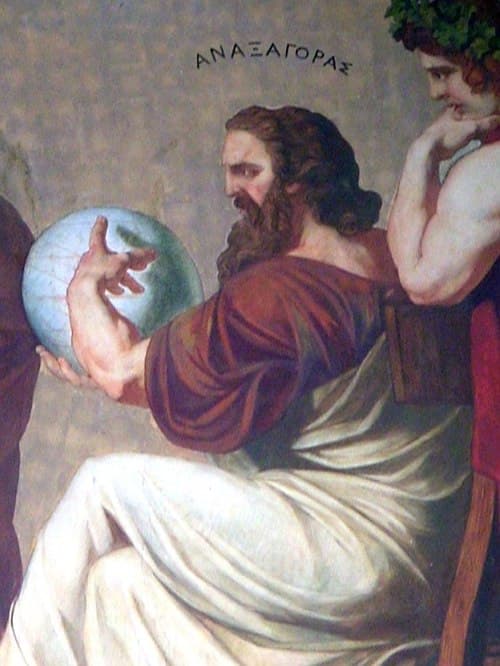
In 432, I was dragged before the Heliaia, the people's court, on the charge of asebeia — impiety toward the city's gods. The word is heavy: it can lead to exile or death. But everyone knew the gods were only a pretext. It was Pericles they aimed at through me, his politics, his friends, his circle where they discussed matters of heaven a bit too freely, as Anaxagoras did. Strike the companion to shake the man: old tactic. I stood before those lot-chosen judges, I the foreigner without citizen rights, knowing that my word alone would weigh little against rumor. It is a strange thing to hear one's name spoken as a threat by men one has never met.
—How did this accusation resolve?
Pericles came to plead my cause himself. That man whom the city always saw master of his face, cold as a general must be at the speaker's platform, he is said to have wept before the judges to save me from condemnation. Tears! For a man of his rank, it was almost another scandal. I was acquitted. But I never forgot what that moment revealed: my life depended on the emotion of a single powerful man, not on law. Years later, Socrates was accused of the same crime, that same asebeia, and he had no one to weep in time; he drank the hemlock. We were of the same century, he and I, born in the same Athens that adored free speech and always ended up wanting to silence it.
My life depended on the emotion of a single powerful man, not on law.
—If you were to pass on a single lesson from all that you have taught, what would it be?
That the logos — reasoned speech — is the instrument of power more sure than the spear. Look at this house: a papyrus scroll, a wax tablet, a stylus, and a few men who listen. From these little things are born the speeches that move the assembly, the laws that hold the city, the wars and the peaces. I learned this in Miletus and taught it in Athens: he who masters the word has no need of a sword to be feared. That is why a woman holding this knowledge was so disturbing — not because she chattered, but because she touched the very source of authority. If I am remembered, let it not be as the companion of Pericles, but as she who showed that a scroll, in the right hands, weighs more than a shield.
He who masters the word has no need of a sword to be feared.
Read further
This imaginary interview was generated by artificial intelligence from sources documented in Aspasia's profile. It dramatises what the figure might have said based on what we know about them, but does not constitute attested historical testimony. For primary sources and factual documentation, refer to the full profile.