Imaginary interview with Audre Lorde
by Charactorium · Audre Lorde (1934 — 1992) · Literature · Philosophy · 6 min read
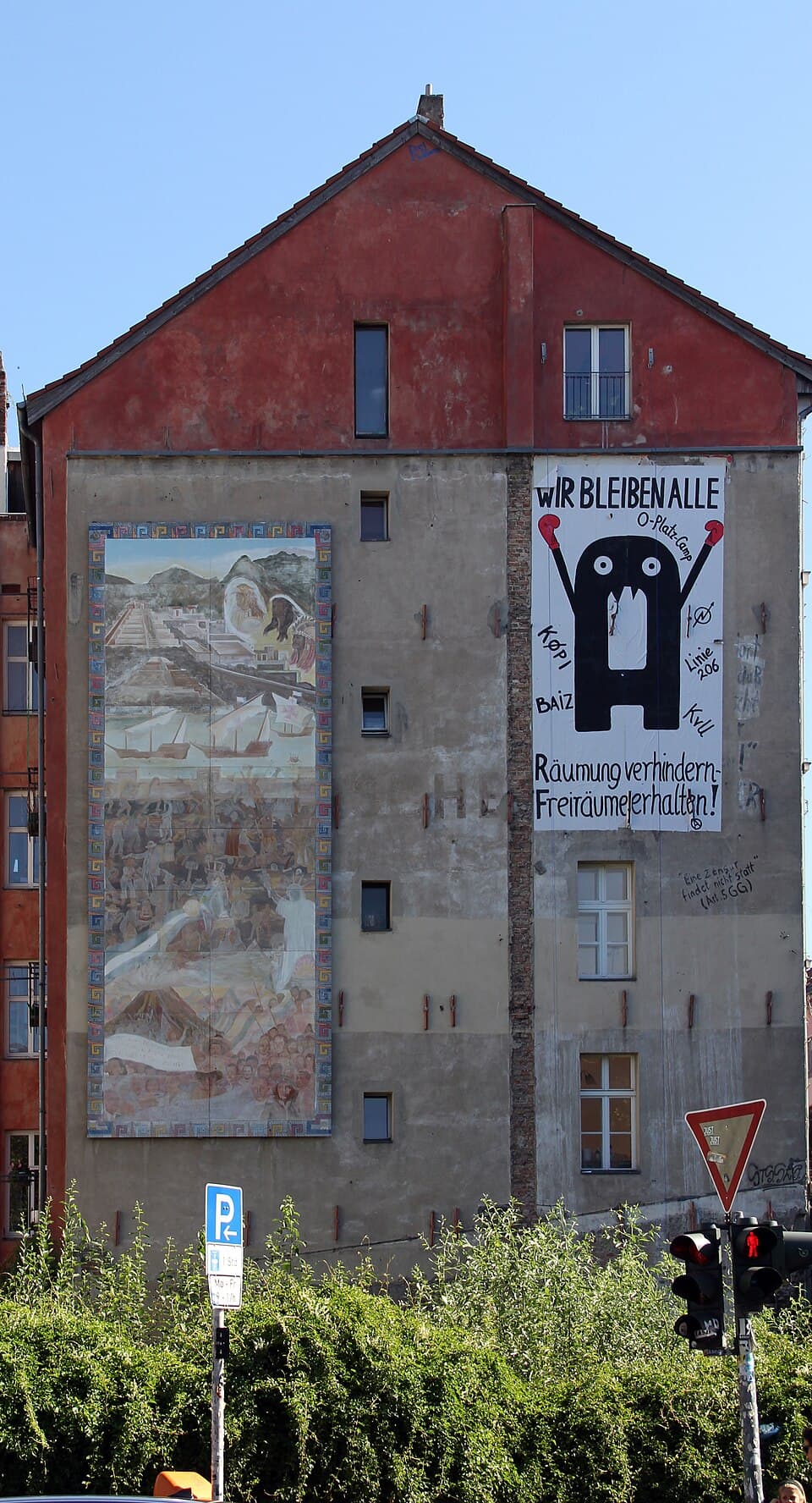
Late afternoon in Staten Island, in an apartment where books spill off the shelves and West African masks watch over the typewriter. Audre Lorde greets us, cup in hand, voice deep, eyes sharp. Outside, the light fades over New York; she speaks like someone lighting a fire.
—You keep saying that poetry is not an ornament. How did this conviction arise in you?
It arose even before I had my own words. My mother had very poor eyesight, and it was by showing me words in picture books that she taught me to read, here in New York, in a family from Grenada. As a child, I didn't know how to say what I felt, so I recited memorized poems — I spoke through others' mouths before I had my own. That is why I wrote, in 1977, these words in Poetry Is Not a Luxury: “For women, then, poetry is not a luxury. It is a vital necessity of our existence.” For a Black woman, naming one's life is not a parlor pastime. It is breathing. It is survival.
I spoke through others' mouths before I had my own.
—Why do you place so much importance on breaking silence?
Because silence has never protected me, and it will not protect you either. I brought this idea to the podium of the Modern Language Association, in The Transformation of Silence into Language and Action: “I have come to believe over and over again that what is most important to me must be spoken, made verbal and shared, even at the risk of having it bruised or misunderstood.” People think that by keeping quiet they keep safe; they only die a little each day, inside. I have seen too many women swallow their anger until it made them sick. Writing in my journals, in the morning, before the house wakes up, was my way of refusing that slow disappearance. Speech may be bruised, so be it. Silence, on the other hand, is already a small death.
Silence has never protected me, and it will not protect you either.
—You coined a word for your most personal book. What does that term, biomythography, tell us?
Zami, in 1982, did not fit into any box, so I made the box myself. It is not quite an autobiography, not quite a novel: it is my life woven with myth, my childhood in Harlem stitched to the goddesses I carry inside me. I call it biomythography, because a human being is not just a series of dates; she is also the figures that haunt her, the real mothers and the legendary mothers. Already in The Black Unicorn, in 1978, I had gone to draw from the Yoruba goddesses, from that African spirituality that connected me to a lineage larger than my own biography. Telling one's life, for me, is refusing to have it reduced to a civil status.
A human being is not just a series of dates; she is also the figures that haunt her.
—You were born to a Grenadian family in Harlem. How does this dual belonging nourish your writing?
At home, on the shelves, there are photographs of my Caribbean parents, and I do not look at them as mere memories: they are the bridge between two shores. I am a daughter of Harlem and a daughter of Grenada, American and islander at once, and for a long time I was asked to choose. I refused. It is this very tension that I explore in Zami — how a woman can be several things without betraying herself. I wore West African fabrics, wax prints, boubous, not as a disguise but because clothing, too, says where you speak from. Diaspora is not a loss for me: it is a multiplied inheritance, a way of belonging to several worlds at once.
Diaspora is not a loss: it is a multiplied inheritance.
—What did you mean by that famous phrase about the master's tools?
In 1979, at a feminist conference in New York, I stood up before a room of mostly white women who talked about sisterhood while forgetting Black women, poor women, lesbians. I told them: “For the master's tools will never dismantle the master's house. They may allow us temporarily to beat him at his own game, but they will never enable us to bring about genuine change.” You do not undo a system of oppression with the very instruments that built it. If your feminism reproduces the exclusions of the world it claims to fight, it builds only a new prison, better furnished. I collected this text and others in Sister Outsider, in 1984, because these ideas needed to circulate, to be discussed, not remain at the threshold of a single room.
If your feminism reproduces the exclusions of the world it fights, it builds only a new prison.
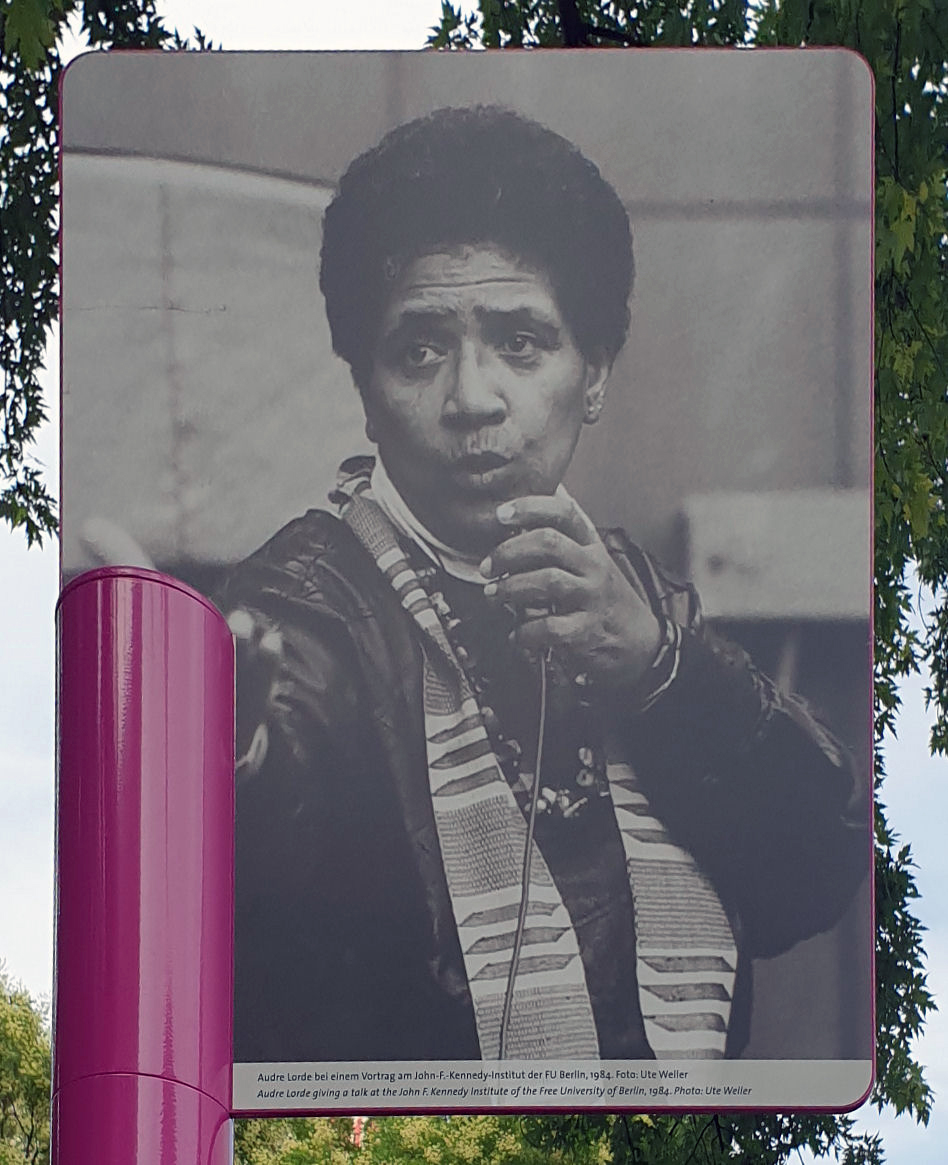
—They say you thought about the intersection of oppressions long before a word existed for it. How did you experience that?
I had no scholarly term, I only had my life. I was Black, woman, lesbian, mother, poet — and I was constantly asked to slice this person into pieces, to fight for race one day and for women the next. But I do not wake up Black on Monday and woman on Tuesday. Racism and sexism intertwine in a single day of my life, and it is this intertwining that I speak of in Sister Outsider. What a legal scholar would later call intersectionality, I lived in my flesh, in the biased looks, in the silences of rooms where I was half-welcomed. Naming only one of my belongings always meant betraying another.
I do not wake up Black on Monday and woman on Tuesday.
—In 1984, a trip to Germany took an unexpected turn. Do you remember that encounter?
Yes, very well. In West Germany, I met Afro-German women who, for some, did not know that a Black community existed around them in their own country. They lived scattered, each believing she was the exception, the only one. I recognized a loneliness I knew all too well. I told them what I always tell myself: your history matters, write it, do not let anyone else tell it for you. From these conversations was born a movement, the one they called Afro-Deutsch, and a collective book, Farbe bekennen, in 1986. I did not create anything; I only held up a mirror. The rest, these women did themselves, with a courage that moved me deeply.
I did not create anything; I only held up a mirror.
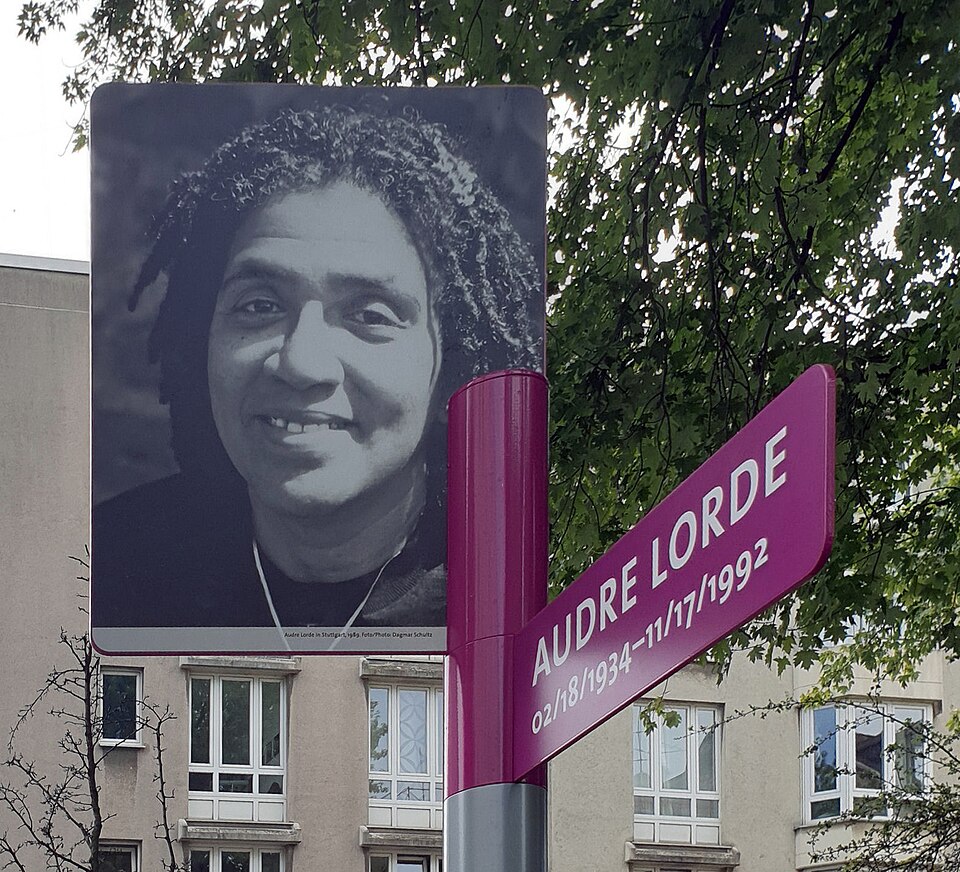
—You travel, you teach, you bring people together. Would you say your struggle goes beyond American borders?
It always has, even when I did not know it. Oppression does not stop at customs, and liberation does not either. When I encouraged those women in Berlin to write, when I receive activists at my home in Staten Island, for a conversation that spills late into the night, I do the same thing: I connect solitudes. The microphone on a podium, at a conference, is no different from my kitchen where we talk and eat together — both serve so that voices never heard can finally hear each other. I deeply believe that our differences, if we dare name them, become a strength rather than a wall.
Oppression does not stop at customs, and liberation does not either.
—In 1980, illness struck. How did you decide to put it into words?
The diagnosis hit like a slap: breast cancer, mastectomy. I had kept diaries since adolescence, and I turned to them, not to console myself, but to understand. I wrote down what I later published in The Cancer Journals: “I had to examine, in my dreams as well as in my immune-function tests, the devastating effects of overextension.” The illness forced me to look squarely at how far I had exhausted myself. Turning my illness notebooks into a book was a refusal to let this body, this struggle, remain shameful and hidden. I turned a hospital room into a workshop. Writing was, once again, my act of survival.
I turned a hospital room into a workshop.
—You refused to hide your mastectomy under a prosthesis. Why this choice, which brought you criticism?
Because upon leaving the hospital, I was offered a little pink prosthesis, like giving a bandage to a child — so that others would not have to see, so that I could become 'presentable' again. I refused. My marked body was not an obscenity to hide; it was proof of a battle fought and, for now, survived. I was criticized for this choice, called exhibitionist, even aggressive. But hiding my scar meant accepting that women's suffering remain invisible, individual, mute. In The Cancer Journals, I wanted other women, alone before the mirror, to know they had the right to exist whole, scars included. Silence, again, would have saved no one.
My marked body was not an obscenity to hide; it was proof of a battle survived.
This imaginary interview was generated by artificial intelligence from sources documented in Audre Lorde's profile. It dramatises what the figure might have said based on what we know about them, but does not constitute attested historical testimony. For primary sources and factual documentation, refer to the full profile.