Imaginary interview with Augustus
by Charactorium · Augustus (62 av. J.-C. — 14) · Politics · 6 min read
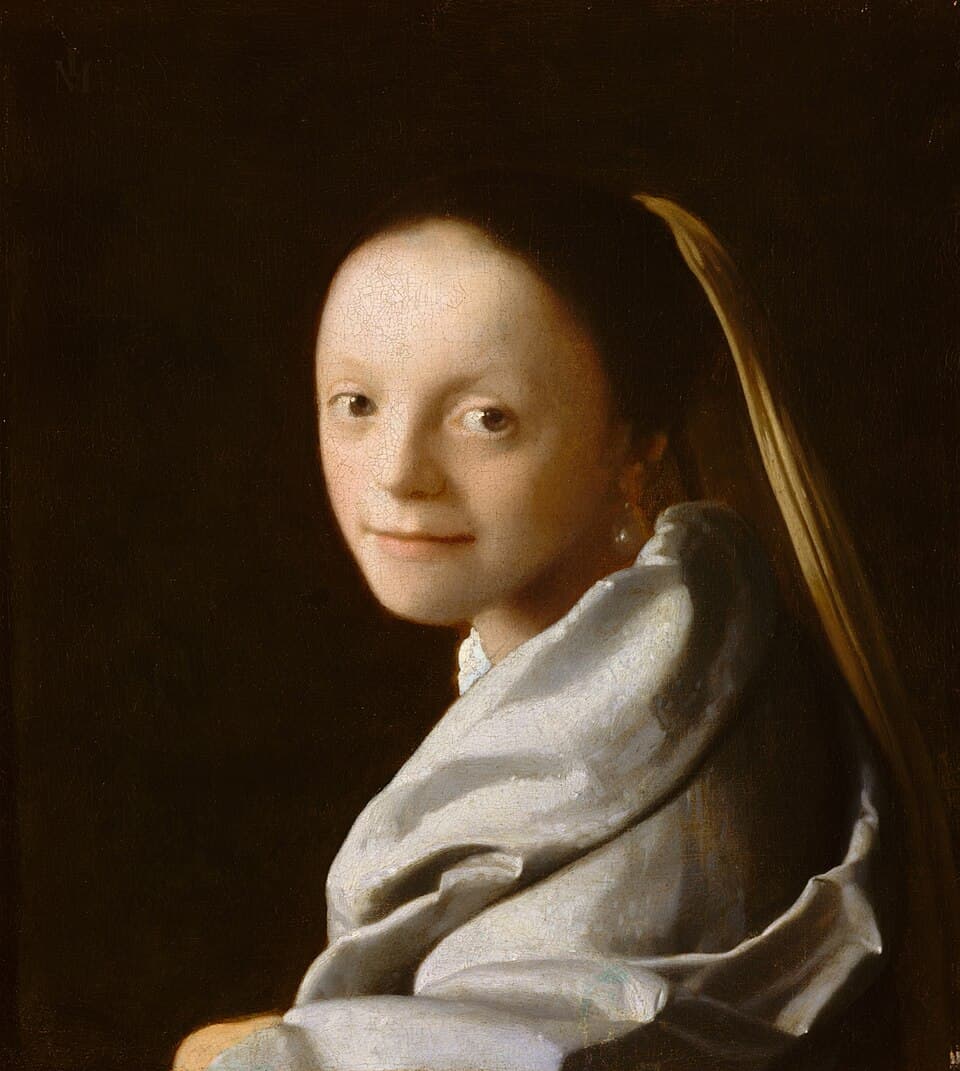
Rome, year 12 of our era. On the Palatine hill, in a brick house that could pass for an ordinary senator's, an old man receives, dressed in a white toga spun by his wife. The evening light falls on a ring engraved with a sphinx. Augustus, first among citizens, agrees to speak — not of the god they will make him, but of the man who saw Rome bleed and then be reborn.
—How did a nineteen-year-old youth, scrawny and inexperienced, dare to throw himself into the Roman fray after the Ides of March?
They thought me a child they could brush aside with a wave of the hand. My great-uncle Caesar had just been struck twenty-three times, and his name fell on my shoulders like an oversized suit of armor. I put it on. As I had it engraved: "At the age of nineteen, I raised an army at my own expense and on my own initiative." Many saw it as the audacity of a boy; it was above all a blood debt. My father's veterans followed me because they followed his memory. And when the Second Triumvirate was sealed in 43 BC with Antony and Lepidus, I quickly learned that proscription is not an archival word: it is a list where you inscribe men you greeted the day before.
His name fell on my shoulders like an oversized suit of armor. I put it on.
—Do you remember Actium, the battle that decided everything?
31 BC, off the Greek coast. The fleet of Antony and Cleopatra was heavier, more gilded, more self-assured. Mine was lean and patient. When their sails unfurled in flight, I understood that Rome would have only one master, and that master would have to answer for all the blood shed to achieve it. The following year, Egypt fell into my lap like an overripe fruit. They think I am proud of that day; I am proud as one is of recovery after a long fever. The Senate later gave me a golden shield, the clipeus virtutis, engraved with four virtues: courage, clemency, justice, piety. Clemency — that is the word I took the longest to deserve, I who had signed proscriptions.
I am proud of Actium as one is of recovery after a long fever.
—Why did you refuse the titles of king or dictator, when you held all the power?
Because Rome killed those who wanted to be kings, and the memory of a people is a grudge-bearing beast. I preferred the name of princeps, the first among citizens — one among others, simply placed in front. I kept the appearances of the Republic as one keeps an old temple whose foundations are discreetly redone: the Senate sat, the consuls carried their fasces, and I governed. In 27 BC I divided the provinciae between those of the Senate and my own, and this framework lasted generations. The title of imperator, which soldiers once shouted to a victorious general, I made my own forever. You can get anything from a free man, provided you never tell him he has ceased to be free.
I kept the Republic as one keeps an old temple whose foundations are discreetly redone.
—What do you wish to convey through this long text you are having engraved, the Res Gestae?
Men forget quickly, and rumors live longer than facts. So I wanted my deeds to be written in bronze, before my Mausoleum, where the passerby cannot pretend not to read. The title of Pater Patriae, which the Senate awarded me in 2 BC, and that of Pontifex Maximus received earlier, are worth nothing if no one remembers what I did with them. They will call it pride; I call it prudence. A poorly informed heir is more dangerous than an enemy. Let my successors read what peace costs: armies, roads, money, and a patience that is engraved nowhere.
Rumors live longer than facts; so I wrote mine in bronze.
—You are credited with that famous remark about the transformation of the city. What exactly did you mean by it?
That I had "found Rome of brick and left it of marble" — yes, they will have me repeat it for a long time. But it is not a builder's vanity. A city of dry mud tells its people: be ready to flee. A city of marble tells them: you are home, for centuries. My Forum and the temple of Mars Ultor, inaugurated in 2 BC after forty years of construction, were not raised for my eyes but for those of generations not yet born. Stone is the only speech that does not fall silent when the speaker dies. And I confess a childlike pleasure in seeing a column rise where there was only dust.
A city of marble tells its people: you are home, for centuries.
—Among all your monuments, which one best carries the meaning you wanted to give your reign?
The Ara Pacis, the Altar of Peace, consecrated in 9 BC on the Campus Martius. Other monuments shout victory; this one murmurs what comes after victory. You see families in procession, children, ears of grain, a nourishing land — not a single sword. That was my whole purpose: to show that war is not an end but a door, and that behind it you can cultivate fields without fear of an army trampling them. Nearby, my great sundial casts the shadow of an obelisk brought from Egypt; on certain dates, I am told, the shadow touches the altar. Peace and time, reconciled on marble: I could not dream of a better lesson.
Other monuments shout victory; the Ara Pacis murmurs what comes after.
—Why did you so insist on surrounding yourself with poets like Virgil?
An empire is won by legions, but it is kept by stories. Maecenas, my friend, knew how to spot pens as others spot horses, and he brought them to me without my ever having to command a single verse. Virgil sang of Aeneas fleeing Troy to found Latium, and in his sixth book he wrote what you know: "Augustus Caesar, son of the Divine, who will again found a golden age in Latium." Believe me, I did not dictate that line. When he died in 19 BC leaving the Aeneid unfinished, he wanted it burned; I ordered it saved. A poem is sometimes worth more than a statue: the statue breaks, the verse is passed from mouth to mouth.
An empire is won by legions, but it is kept by stories.
—You are described as a man of absolute power. Yet what fears inhabited your nights?
Lightning, I admit without shame. Since a bolt struck near me in camp and killed a slave walking at my side, I can no longer bear storms. I wear a sealskin, said to ward off fire from the sky, and I hide in a vaulted room as soon as thunder rumbles. There is the master of the world: a man who hides underground from a cloud. I also kept tastes of a simplicity that drives my cooks to despair — coarse bread, a few green figs, some fish, wine cut with water. Purple is on my shoulders on ceremonial days; the rest of the time, I eat like a Campanian peasant. Power does not change the stomach.
There is the master of the world: a man who hides underground from a cloud.
—What failure have you never been able to erase from your memory?
Teutoburg, year 9 of our era. Three legions — the Seventeenth, Eighteenth, Nineteenth — swallowed up in the forests of Germania by Arminius, a man we ourselves had trained. They say I beat my head against the walls crying: "Varus, give me back my legions!" It is true. I let my beard and hair grow for months, like a man in mourning for his own children. Those three numbers, I never again assigned to any legion; they died with their men. Since then, I have held the Rhine frontier without crossing it. A wise empire knows the limit beyond which conquest is only an abyss.
I let my beard grow for months, like a man in mourning for his own children.
—At the end of such a long public life, how do you view the role you have played?
A role, that is the word. I played the first among citizens before a people who wanted to believe they remained free, and I put into it all the art that a long play requires. When my last breath comes — perhaps at Nola, in the room where my father died — I think I will ask my loved ones if I played my part well, and I will say to them, in the manner of Greek comedians: "If the play has pleased you, applaud!" For governing Rome was that: holding a pose without ever letting it drop, under the laurel crown, for decades. Tiberius will then mount the stage. Let him find his text. Mine, I have engraved in bronze so that it is not whispered to me wrongly.
Governing Rome was that: holding a pose without ever letting it drop.
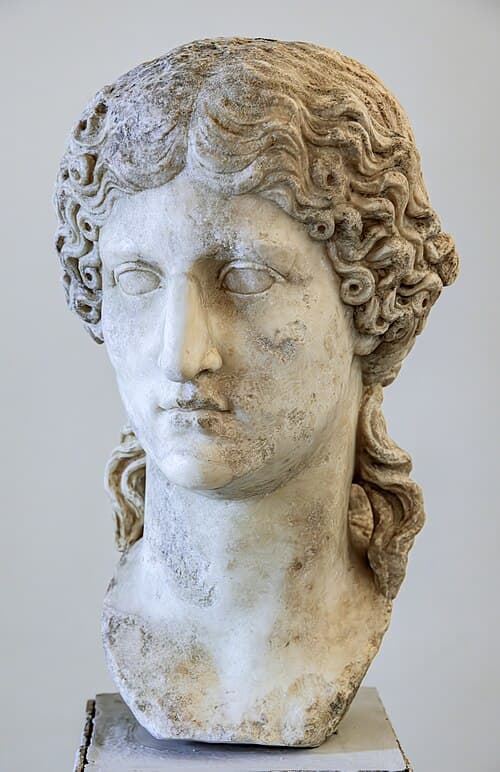
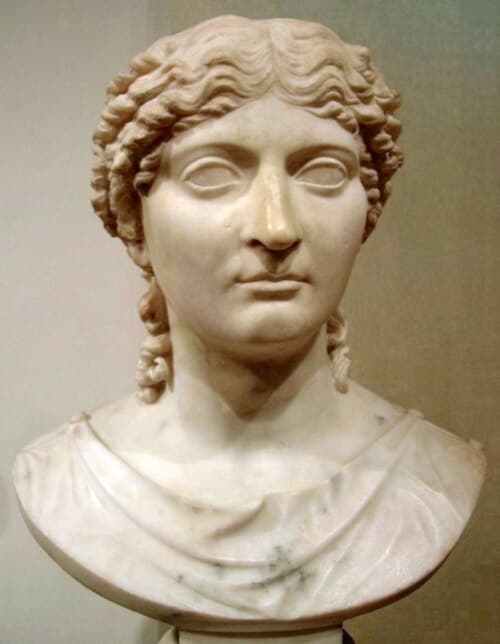
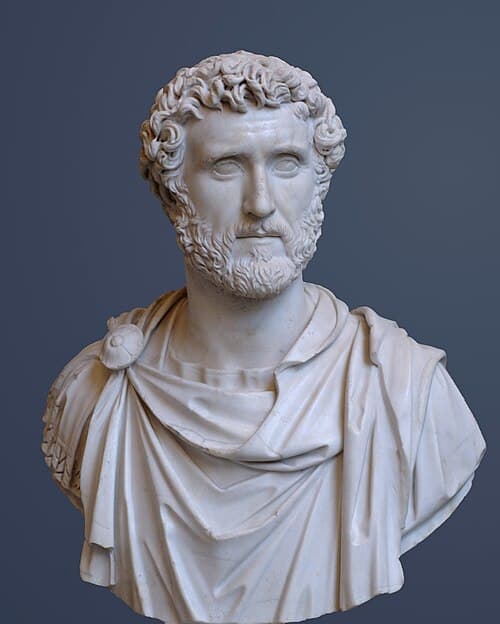
This imaginary interview was generated by artificial intelligence from sources documented in Augustus's profile. It dramatises what the figure might have said based on what we know about them, but does not constitute attested historical testimony. For primary sources and factual documentation, refer to the full profile.