Imaginary dialogue between Suétone and Augustus
by Charactorium · Augustus (62 av. J.-C. — 14) · Politics · 5 min read
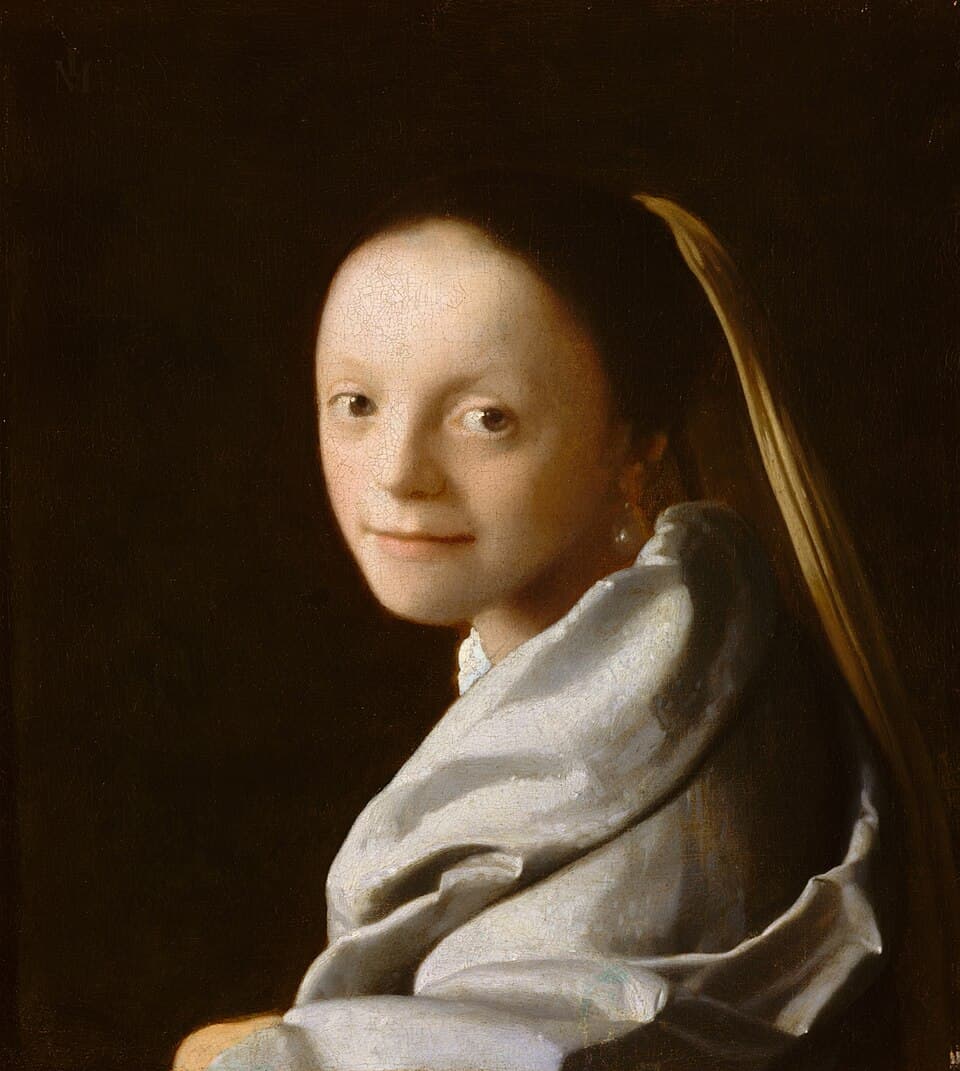
It is on the Palatine hill, in the study with vegetable frescoes of the house of Augustus, that Suetonius is received one summer evening. The oblique light illuminates a ring engraved with a sphinx lying on the wooden table. The biographer has spent years collecting the private papers and words of the prince, and tonight he comes to seek the man behind the marble statue. Augustus, tired but affable, pushes aside a basket of green figs to listen better.
—Prince, you who opened your Res Gestae with your youth, tell me: at nineteen, what drove the fragile child you were to raise an army?
The news of the Ides of March found me in Apollonia, still a teenager. Caesar had just been assassinated, and his will bequeathed me his name and fortune. Believe me, Suetonius, no one was betting on that often sickly boy. But I understood that if I did not raise an army at my own expense, I would be crushed. I marched on Rome, I took what was owed to me. I was thought naive because I was young; it was my best mask. You who will one day read my memoirs will see that I wrote the truth: I restored freedom to an oppressed Republic. Strength I did not have. I had only the legitimacy of a name and the audacity not to wait.
I was thought naive because I was young; it was my best mask.
—After Philippi, then Actium in the year 31, you stood alone against Antony and Cleopatra. Did you ever doubt, that night, off the coast of Greece?
Doubt I left on land. Agrippa commanded the ships far better than I — I always knew to entrust the sword to a more skilled hand. Antony had lost himself in the East, in the arms of a queen and the pomp of Alexandria; the Roman people did not forgive him for forgetting Rome. I presented myself as the defender of Italy and its gods. When his fleet broke and Cleopatra fled, I knew the world would have only one master. The following year, all of Egypt became a province. I did not triumph over a rival: I triumphed over disorder. That is what I wanted the Romans to remember.
I always knew to entrust the sword to a more skilled hand.
—In 27, the Senate awarded you the name Augustus. Why did you refuse the title of king, which your power nonetheless allowed?
Because the word 'king' killed Caesar, and I had learned the lesson. Rome had hated kings for five centuries; uttering that word would have been my death warrant. I preferred to call myself princeps, the first citizen — nothing more than a Roman among Romans, in appearance. I returned its provinces to the Senate, discreetly keeping those where the legions were stationed. The Senate offered me a clipeus virtutis, that golden shield engraved with my four virtues: courage, clemency, justice, piety. I left the old institutions standing, and behind them I held everything. The secret, Suetonius, is not to seize power: it is to make it forgotten by those you govern.
The secret is not to seize power: it is to make it forgotten by those you govern.
—In the year 2, you were named Pater Patriae, Father of the Fatherland. Of all your honors, is this the one that touched you most?
More than the triumph, more than the laurel, yes. Imperator I was by arms; Pontifex Maximus, by religion. But Father of the Fatherland, that was the people and the Senate recognizing me not as a conqueror, but as a protector. A father does not rule over his children: he is responsible for them. I took that very seriously, perhaps too much. I wanted to reform morals, encourage marriages, repopulate the old families. My laws were found severe, and my own daughter made me pay the price for it — but that I entrust only to you. Receiving that title was the only day I felt that Rome loved me without my having to convince her.
A father does not rule over his children: he is responsible for them.
—You who liked to repeat that you found Rome in brick and left it in marble — show me: what did you want to carve into the stone of this city?
Everything, Suetonius. A people judges its prince by what it sees each morning when leaving home. I erected the Forum of Augustus and its temple of Mars Ultor, after forty years of work, so that Caesar's vengeance might have its sanctuary. I consecrated the Ara Pacis, the Altar of Peace, on the Campus Martius, and had the obelisk brought from Egypt planted as the gnomon of a giant sundial. Marble is not vanity: it is a language. Each temple tells the Romans that the gods have returned, that the age of civil wars is over. I myself lived in a modest house, here on the Palatine. Magnificence I reserved for Rome, not for my person.
Marble is not vanity: it is a language.
—Speaking of which, in this unpretentious house, they say Livia herself spins the wool for your togas. Why does this master of the world cling so to simplicity?
Because ostentation is a trap, Suetonius — it separates the prince from the citizen, and that separation is what ruined kings. I wear the white toga of an ordinary Roman, I eat dark bread, fresh cheese, a few small fish, and I cut my wine with water. Livia weaves my domestic clothes like a matron of olden times: it is an example as much as a habit. I nibble between meals, my appetite is capricious, and I sometimes fall asleep in the middle of a dinner because affairs exhaust me. You will note all this, I know. Let them paint me frugal: it is not a pose, it is a policy. A frugal prince reassures a people that has seen too many tyrants devour its goods.
Ostentation is a trap: it separates the prince from the citizen.
—Do you allow a more intimate question? It is whispered that you, the most powerful of men, tremble at storms. Should we believe it?
You should, and I do not blush for it before you. A lightning bolt once grazed me during a campaign; the slave walking before me was struck dead. Since then, whenever the sky thunders, I take refuge underground, and I always carry on me a sealskin — it is said to be spared by lightning. You may smile, but remember: I observe the auspices every morning before any decision. A man who has survived so many battles knows how heavily chance and the gods weigh. My enemies thought me as cold as the marble of my statues. The truth is that no cuirass protects against thunder, and the master of Rome remains a man who is afraid.
No cuirass protects against thunder, and the master of Rome remains a man who is afraid.
—Let us come to what gnaws at you. In the year 9, Varus lost three legions in Germania. It is reported that you beat your head against the walls. What did that disaster cost you?
It cost me sleep, Suetonius, and more. Arminius trapped us in the forests of Teutoburg; three legions, their eagles, thousands of men — swallowed up. I let my beard and hair grow for months, in mourning. Yes, I knocked my head against the stone, demanding that Varus give me back my legions, as if the dead could return. I had built an army of twenty-eight permanent legions, created the aerarium militare to secure soldiers' retirement, and now the German forest swallowed my work. That day I understood that the Empire had limits, and that the Rhine would be one of them. A wise man knows where to stop; I learned it in blood.
That day I understood that the Empire had limits.
—Under your principate, the Senate still sits, consuls are elected. Is it a true Republic, or only its carefully preserved appearance?
Ask the question differently, Suetonius: what does the name matter, if peace lasts? The Senate deliberates, magistrates climb their cursus honorum, the old forms stand. I wanted a Roman from ancient times, returning among us, to recognize his city. But I will not lie to you, you who dig through archives: it is I who hold the legions, the treasury, the provinces that count. The principat is that subtle balance between what you show and what you hold. Call it Republic if that reassures; call it otherwise if you are lucid. What I know is that for forty years no citizen has seen Rome burn in civil war. That is my only argument, and it is worth all titles.
The principate is that subtle balance between what you show and what you hold.
—One last, prince. On your deathbed at Nola, what will you want to be said of what you leave behind?
That I played my role well to the end. All my life, Suetonius, I played a character — the modest citizen, the frugal prince, the restorer of peace — and that character saved Rome. I am currently drafting my Res Gestae, those achievements I want engraved on bronze before my mausoleum, so that everyone may read them after me. I do not put my fears or my griefs in it; that I entrust to you tonight, to you alone. To those who have seen me live, I will ask if they liked the play. And if they liked it, let them applaud. The rest — the lightning, Varus, my daughter — belongs to the man, and the man fades while the marble remains.
All my life I played a character, and that character saved Rome.
This imaginary interview was generated by artificial intelligence from sources documented in Augustus's profile. It dramatises what the figure might have said based on what we know about them, but does not constitute attested historical testimony. For primary sources and factual documentation, refer to the full profile.