Imaginary dialogue between Camille Claudel and Auguste Rodin
by Charactorium · Auguste Rodin (1840 — 1917) · Visual Arts · 5 min read
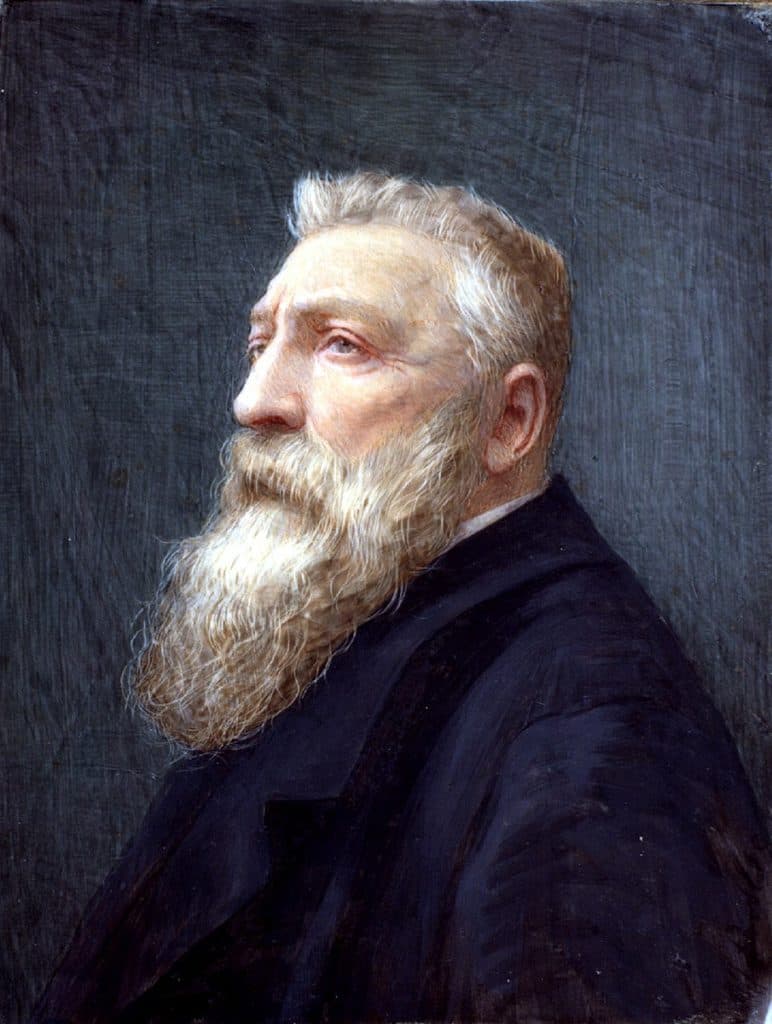
It is in the oblique light of a late afternoon in 1916, at the Villa des Brillants in Meudon, that Camille Claudel finds Auguste Rodin, aged, among dusty plaster casts and unfinished Gates. The smell of wet clay still lingers, as in the days when she carved marble at his side. They have hardly spoken for years, yet every tool on the turntable reminds them of a shared past. She comes not to judge, but to understand the man behind the master she so loved and fought.
—Auguste, even before I pushed open your studio door, all Paris was already talking about you: tell me about that scandal of 1877.
Ah, Camille, you arrive after the storm, but what a storm! I had modeled L'Âge d'airain in Brussels from that Belgian soldier, Auguste Neyt, a superb body I studied for weeks. When I exhibited it, critics cried direct casting from life — as if I had poured plaster directly onto his flesh! They accused me of cheating, I who had only my thumbs and my modeling tool. I had to write to the Under-Secretary of State, protest, show my studies, have colleagues testify. The irony, you see: this infamy made me known. They no longer saw me as an obscure ornamentalist, but as a man whose sculpture disturbed. Calumny was my first pedestal.
They accused me of cheating, I who had only my thumbs and my modeling tool.
—Do you still feel bitterness, or do you think this unjust accusation served you in spite of yourself?
Bitterness? At the time, a dull rage, I admit. Imagine: they take the very life you captured in clay as proof of your deceit! They could not conceive that a man could make flesh so vibrant without cheating. That was precisely where I wanted to go: to make matter breathe. In hindsight, I think this quarrel toughened me. It taught me that the truth of a work always disturbs the guardians of taste. You, who later knew committees and rejections, know how much hide is needed to endure it. I preferred to be called infamous than to be found lukewarm.
—When I entered your studio in 1884, you had already been working on that Gate for four years. Why did you never finish it?
Because it could not be finished, Camille — you saw it grow under our hands. The State commissioned it in 1880 for a museum of decorative arts that never saw the light. I wanted to contain all of Dante's Inferno in it, those damned souls twisting, embracing, thinking. But every figure I modeled tore itself from the gate to live its own life. The Thinker, The Kiss — they were born there, on that door, before leaving me to become whole works. Thirty-seven years I have been retouching it, adding, removing. A truly living work is never finished; it transforms as long as the hand that shapes it still breathes.
Every figure I modeled tore itself from the gate to live its own life.
—You say The Thinker and The Kiss were born from that gate. Where does this way of making the whole emerge from the fragment come from?
From the Dépôt des marbres, Camille, that official studio on the rue de l'Université where I piled up my plasters. I had hundreds of fragments there — hands, torsos, feet that I kept as a painter keeps his colors. I assembled them, recombined them, placed an arm on another body until a new truth was born. The Thinker was simply meant to crown my Gate, overlooking the damned and meditating on their fate. Then I saw him alone, enlarged, and he became that man who thinks with his whole body, down to his clenched toes. Sculpture, you see, is not the addition of pieces: it is the life that circulates among them.
—Remember our mornings: you drew your models without even looking at your paper. Explain what you were seeking in those sketches.
Movement, Camille, nothing but movement! I made my models walk naked in the studio, freely, without a fixed pose, and I traced without taking my eyes off their bodies. If I looked down at the paper, I lost the life that passed. What I sought was not the outer truth, the exact contour — it was the inner truth, the emotion that lifts the flesh. I told Gsell when he recorded my words: the artist worthy of the name must express all the truth of nature, and first of all the inner truth. The clay then fixes what the eye has captured. You know this better than anyone, you whose hand knew how to listen to the living as mine does.
If I looked down at the paper, I lost the life that passed.
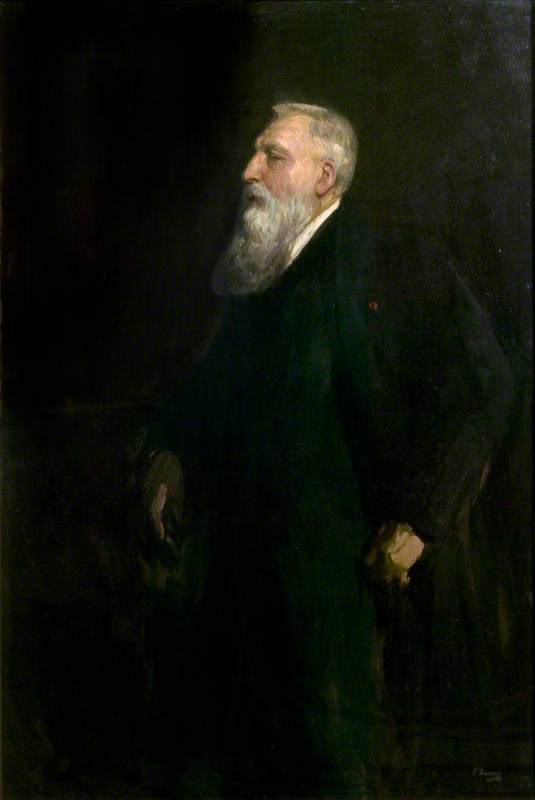
—In the studio, you entrusted much to your practitioners. How did you keep your hand in a work passed through so many other arms?
That is a question only a true sculptor asks, Camille. Yes, I employed practitioners, those assistants who translated my plasters into marble, and you yourself carved for me stones whose ownership I can no longer untangle. But the decision, the life, the breath, I first put into the clay, with the modeling tool, on the turntable, turning constantly to see from all angles. Marble is only a translation; the original breathes in the clay. And when I left a figure half-emerged from the block — that non finito — it was not laziness, but a desire to show the struggle of form against matter. The master's hand is in the choice, not just in the chisel.
—With The Burghers of Calais, you placed your figures directly on the ground, without a pedestal. Why refuse to elevate them?
Because heroism, Camille, is not a statue perched on a column for people to look up to! Those six notables of Calais surrendered to the English in 1347, ropes around their necks, to save their city. I did not want to make them bronze gods on a pompous pedestal. I wanted them at human height, in the street, among the living, each grappling with his fear, his doubt, his courage. So that one can walk around them, meet their anguish, feel they are our equals. Academicism demands ideal proportions and noble poses; I wanted the truth of men trembling as they go to die. Sacrifice is greater when seen as human.
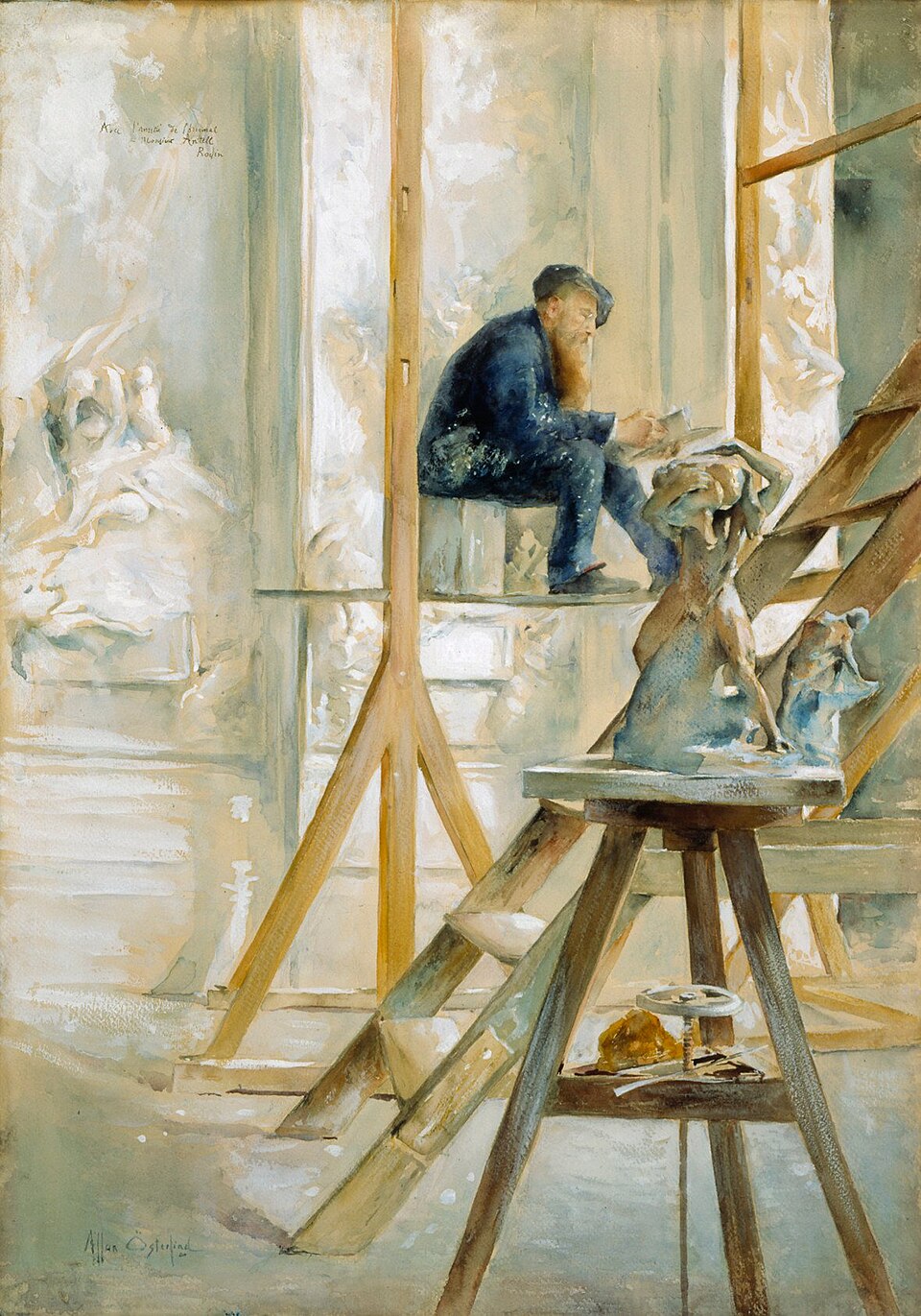
—It is whispered that your Balzac was refused last year as a formless thing. Did that hurt you, who are so proud of it?
Hurt? One does not hurt a man who knows what he has done, Camille. The Society of Men of Letters wanted a neat, resembling Balzac in a waistcoat. I gave them the writer whole, wrapped in his dressing gown as in the night of his vigils, a mass, a force, a presence. They judged it formless, unworthy, and refused it. So be it! I brought it back home to Meudon. I firmly believe I captured not the man of the day, but the genius working within him. Today's public is not ready; tomorrow's may understand. I prefer a rejected masterpiece to a crowned mediocrity. This is my highest sculpture, even lying on the floor of my studio.
I prefer a rejected masterpiece to a crowned mediocrity.
—You gave all your work to the State this year. You who so hated committees, why entrust them with your entire life?
Not to committees, Camille — to France, and to the eyes that will come. This year I bequeathed everything I have made: my sculptures, my drawings, my collected antiquities, on the sole condition that the Hôtel Biron be dedicated as a Rodin Museum. That old mansion in the Faubourg Saint-Germain where I have worked for eight years, with its gardens and light, must remain standing to house it all. I do not want my work to be scattered at auction, dispersed among drawing rooms. I want it to remain gathered, alive, offered. An artist owns nothing: he returns what nature lent him. This is my way of not dying entirely.
—And here, in Meudon, you told me you wish to rest under The Thinker. What do you seek near this house and Rose?
Peace, Camille, simply peace. This Villa des Brillants has been my true haven for twenty years; here I model, pile up my plasters, live with Rose Beuret, my faithful lifelong companion. I wanted my tomb to be in this garden, surmounted by The Thinker, so that he may meditate still when I no longer think. I am growing old; war rages, I had to flee for a time to England and then Rome. But it is here that I wish to end, among my works and my trees. Is it not right that a man who spent his life giving form to earth should return to it under the gaze of his creature?
This imaginary interview was generated by artificial intelligence from sources documented in Auguste Rodin's profile. It dramatises what the figure might have said based on what we know about them, but does not constitute attested historical testimony. For primary sources and factual documentation, refer to the full profile.