Imaginary dialogue between Alan Clements and Aung San Suu Kyi
by Charactorium · Aung San Suu Kyi (1945 — ?) · Politics · 5 min read
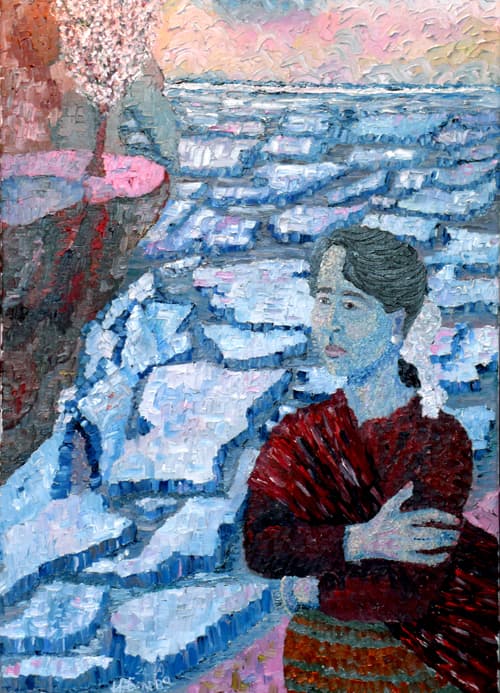
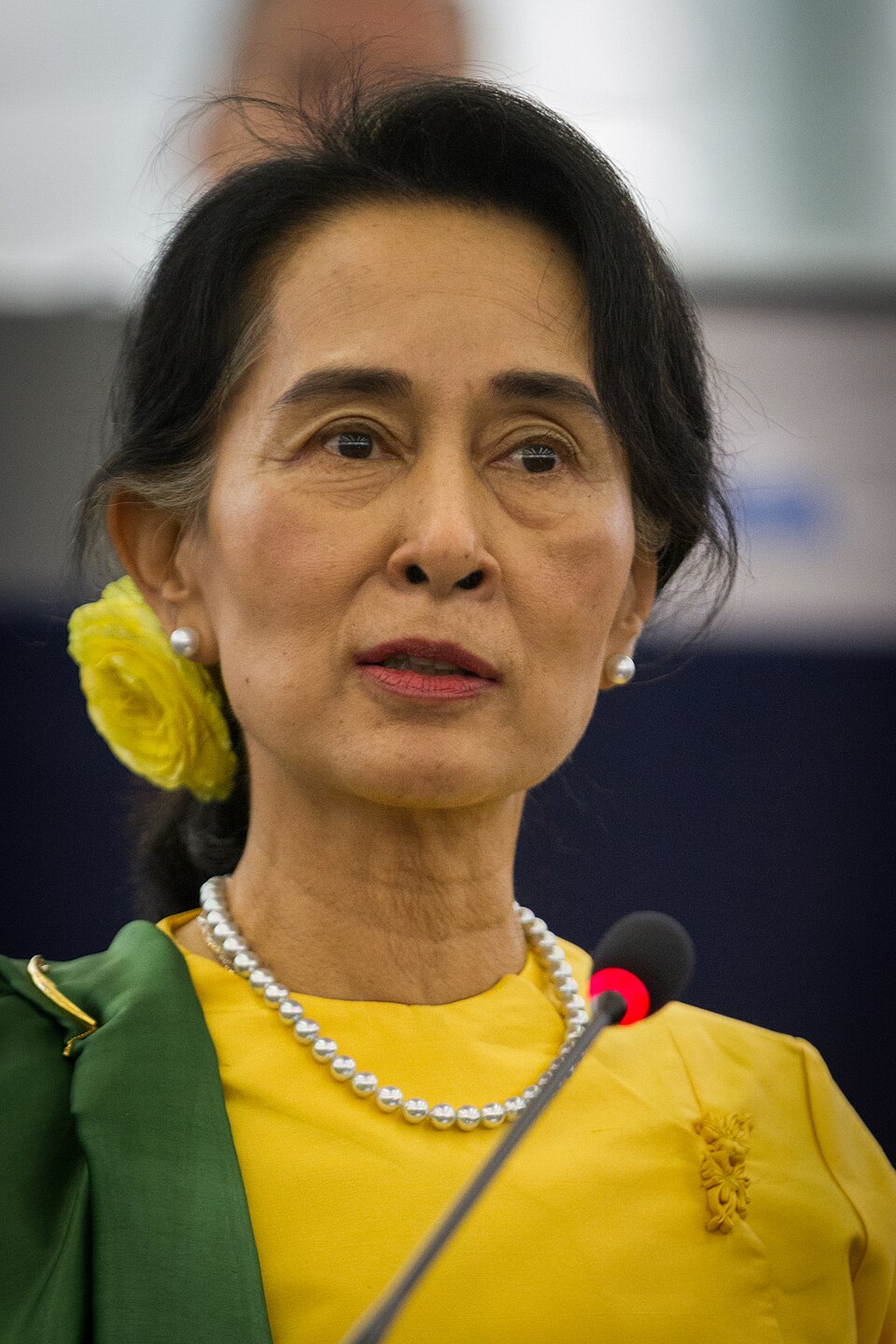
It is in the dilapidated villa at 54 University Avenue, on the shores of Inya Lake, that Alan Clements meets Daw Suu in this January 2013. The late afternoon light falls on the old upright piano and the fresh flowers she still wears in her hair. They have known each other for nearly twenty years: it was right here, in 1995, that Clements secretly recorded the interviews for Voice of Hope, when she had just emerged from her first house arrest. Now free, recently returned from Oslo, she welcomes her old Buddhist confidant to pick up the thread of their conversations.
—Daw Suu, when I was recording our interviews in 1995, soldiers were still guarding this gate. What do you feel, free, in this house?
You who slipped through this gate in secret, Alan, know better than anyone what these walls were. For more than fifteen years, this house was both my refuge and my prison. The garden sloped down to Inya Lake, and yet I could not leave. I learned to empty my mind here, to transform isolation into discipline rather than despair. Freedom today does not intoxicate me: I know how fragile it remains in this country. What I gained behind these bars is not patience — it is the certainty that no one can take away what I carry within me.
—It is said that in 1989, on a road in Rangoon, you walked straight toward rifles ready to fire. Where does one find such calm?
That day, the soldiers had orders to shoot. I thought it better to advance alone than to expose those walking behind me. I would not say I was not afraid — I wrote later that it is fear, not power, that corrupts man. But I had meditated long enough to know that fear, like everything else, is temporary. Gandhi had taught me through his writings that an unarmed force could disarm the adversary. The commander eventually lowered the weapons. It was not my courage: it was proof that nonviolence is not a weakness, but the most demanding of strengths.
Nonviolence is not a weakness, but the most demanding of strengths.
—In our recordings for Voice of Hope, you described your days to me. How did you endure, alone, morning after morning?
I rose before dawn to meditate — that was the backbone of my days. Then came reading: Buddhist philosophy, the writings I could obtain, sometimes the foreign press. In the afternoon, I sat at the piano; Bach especially, whose rigor calmed me, even when humidity had warped the keys. In the evening, I listened to the BBC World Service: that little radio was my only window to the world. People think captivity is measured in years; in reality, it is measured in mornings that must be filled with meaning. Without that discipline, the mind would have collapsed long before the body.
—Your essay Freedom from Fear circulated worldwide. Why did you place fear, rather than freedom, at the heart of the text?
Because fear is the true substance of tyrannies. I wrote that it is not power that corrupts, but fear: the fear of losing power in those who hold it, and the fear of power in those who are subject to it. As long as a people is afraid, no law truly protects them. The first revolution is therefore not in the streets: it is the day one stops letting fear dictate one's actions. That is why I wanted that title to be a program as much as a book — to free oneself from fear before claiming to free oneself from a junta.
—And those Letters from Burma, the chronicles you smuggled out — what did you hope for from them, deep down?
I wrote them every week for a Japanese newspaper, and they left the country by routes I preferred not to know. I did not only write about politics: I described the monsoon, the markets, the festivals, the ordinary life of the Burmese. I wanted the world beyond our borders to see not just a junta and an opposition leader, but a living people, with their seasons and their laughter. A regime thrives on the world's forgetfulness; every letter that reached somewhere broke that silence. As long as we were read, we were not entirely alone.
—In 1991, the Nobel Prize was awarded to you while you were imprisoned here. Your son Alexander received it in Oslo, didn't he?
Yes. I was behind these walls, and it was Alexander, still a teenager, who stood in my place in Oslo. I learned of the ceremony much later. At first, I felt the prize as both a burden and an honor: it shone a light on Burma, but it also bound me even more tightly to a cause I could no longer turn away from. The hardest part was not being absent from the ceremony — it was being absent from my sons. My husband, Michael, raised our children in Oxford while I stayed here. One never measures the price a struggle exacts from those one loves.
One never measures the price a struggle exacts from those one loves.
—You have just returned from Oslo, twenty-one years later. What did you feel when you finally delivered that acceptance speech?
Strange feeling to thank, two decades later, for an honor that seemed from another age. In Oslo, I spoke the truth: during my years cut off from the world, this prize was like a ray of light piercing my solitude. It reminded me that I was not forgotten, that our small country was not alone. Finally receiving the medal in person was to close a circle that had remained open so long. But I left immediately: my place is not in the salons of Europe, it is here, where almost everything remains to be done.
—You were two years old when your father, General Aung San, was assassinated in 1947. What remains of him in you?
I did not know him — I was two in 1947. I discovered him through the stories of others, in archives, in the gaze the people cast upon his daughter. He gave independence to Burma and died for it. For a long time, I wanted to live my life far from that shadow, in Oxford, with my family. But when I returned in 1988 to my dying mother's bedside, the country was rising, and I understood that I could not be Aung San's daughter and remain silent. His legacy is not a throne: it is a debt to those who had hoped in him.
—Many now expect you to lead this country. Do you fear what power might one day demand of you?
Power is not a reward owed to me; it is a burden, and one must be wary of it. I have always believed that democracy is the only system that takes into account human fallibility and provides for correcting the mistakes of rulers. If one day I bear responsibilities, it will be within that framework, never above it. What I fear? Disappointing those who risked everything for this cause. Governing forces compromises that the opposition spares itself. But refusing responsibility out of fear of dirtying one's hands would be another form of cowardice.
Refusing responsibility out of fear of dirtying one's hands would be another form of cowardice.
—Before you turn off your tape recorder as before, Alan — this gate where the crowd used to gather to listen with me, what will you do with it now?
This gate... Every weekend, people would crowd there, and I spoke to them over the fence, in both senses of the word: me inside, them outside, and yet so close. This barrier that was meant to isolate me became a meeting place, almost a pilgrimage site. Today I can open it, go out, walk in Rangoon — but I will not forget what this threshold meant. So many doors and windows remain closed in this country. Turn off your tape recorder, my friend: our conversations, like the first time, will be worth more once they leave this place.
This imaginary interview was generated by artificial intelligence from sources documented in Aung San Suu Kyi's profile. It dramatises what the figure might have said based on what we know about them, but does not constitute attested historical testimony. For primary sources and factual documentation, refer to the full profile.