Imaginary interview with Aung San Suu Kyi
by Charactorium · Aung San Suu Kyi (1945 — ?) · Politics · 6 min read
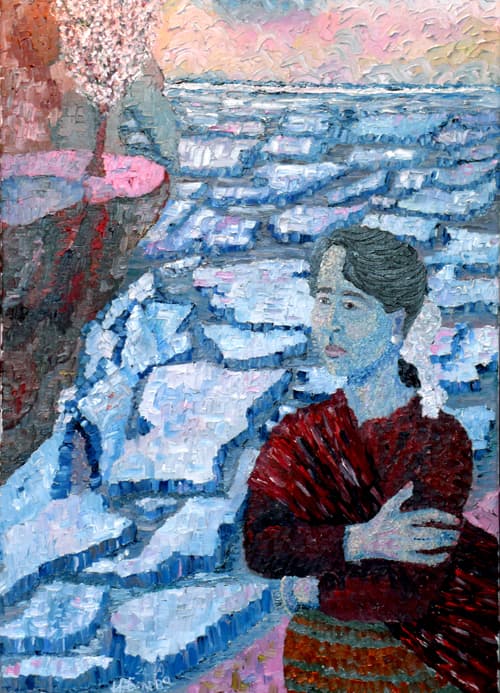
A humid late afternoon on the shores of Inya Lake, in Rangoon. Behind the rusty gate of 54 University Avenue, a woman with flowers in her hair receives, for the duration of an imaginary conversation, what was so long denied her. The radio crackles in the distance; she speaks softly, slowly, like someone who has learned to make silence a language.
—Before being an activist, you were first a daughter. What does your father's figure represent to you?
I was only two years old in 1947 when General Aung San was gunned down. I have no physical memory of him — only a photograph, and the weight of a name. In Burmese, Aung San Suu Kyi means something like a sum of brilliant victories; one does not choose to be born into such a phrase. My father had wrested Burma's independence from the United Kingdom, and he fell before seeing its dawn. All my life, people saw in me his extension, his unfinished debt. For a long time I lived far away, in Oxford, a mother among books. And then I returned in 1988 to care for my dying mother, and the country rose up beneath my windows. One never really comes home: one inherits a field of ruins and a ghost waiting for you to carry on.
One does not choose to be born into a phrase like "sum of brilliant victories."
—They say that in 1989, in Rangoon, you walked straight toward soldiers aiming their rifles at you. What was going through your mind at that moment?
It was an ordinary street, supporters around me, and suddenly the order to fire. I asked the others to step aside and continued alone, down the middle of the road, toward the rifles. I don't think it was courage in the heroic sense — rather the certainty that retreating would have given them everything. Nonviolent resistance, as Gandhi conceived it, is not the absence of fear: it is refusing to let fear decide for you. The commander hesitated, then he lowered the weapons. A man had, that day, chosen to disobey brutality. I understood then that even a junta soldier still has somewhere a conscience that can be reached, if one is willing to advance unarmed.
Retreating would have given them everything; so I continued alone, toward the rifles.
—Your most famous essay is titled "Freedom from Fear." Why did you make fear, rather than courage, the heart of your thought?
Because fear is the raw material of all tyranny. I wrote in Freedom from Fear that it is not men who corrupt power, but fear. When I was awarded the Sakharov Prize in 1990, I wanted to say it plainly: "Fear of losing power corrupts those who wield it, and fear of the power of the state corrupts those who are subject to it." The tyrant trembles as much as his victim, you see — he trembles at losing what he has stolen. A junta governs by terror precisely because it is terrified. To free oneself, therefore, is not to defeat the other: it is to detoxify one's own heart, to stop bending the spine out of habit. A people that is no longer afraid has already, in a sense, ceased to be governed by force.
The tyrant trembles at losing what he has stolen.
—You spent more than fifteen years under house arrest in this house. How did you not succumb to such isolation?
One learns to inhabit time like a cell one furnishes. I rose before dawn for vipassana meditation — Buddhism taught me that the mind, well tended, becomes a space vaster than any house. I had an old upright piano; I played Bach, until the humidity of Inya Lake made its strings crack. And then that little radio, the BBC World Service, my only window onto the world, in the evening. Discipline is not a saintly virtue: it is survival. Without a schedule, without rules one imposes on oneself, one dissolves. On weekends, my supporters would gather on the other side of the gate, and I would speak to them over the grille. That wall the junta had erected, I turned into a platform.
The mind, well tended, becomes a space vaster than any house.
—You could have left, rejoined your family in Oxford. Why did you stay behind that gate?
Because leaving would have meant never returning. The junta was waiting for exactly that: a one-way ticket, and they would tell the people that the general's daughter had abandoned them. My husband, Michael Aris, and my two sons lived in England; every day I knew that letting them go might mean never seeing them again. When Michael fell ill, they refused him a visa to come and die beside me — they hoped I would break, that I would fly to him. I did not. That is the heaviest price I paid, heavier than the bars. I wrote to my supporters then: one must "advance with gentleness but with determination." The gentleness was for them. The determination I kept for those nights when I would have given anything for an airplane ticket.
Leaving would have meant never returning — the junta was waiting for exactly that.
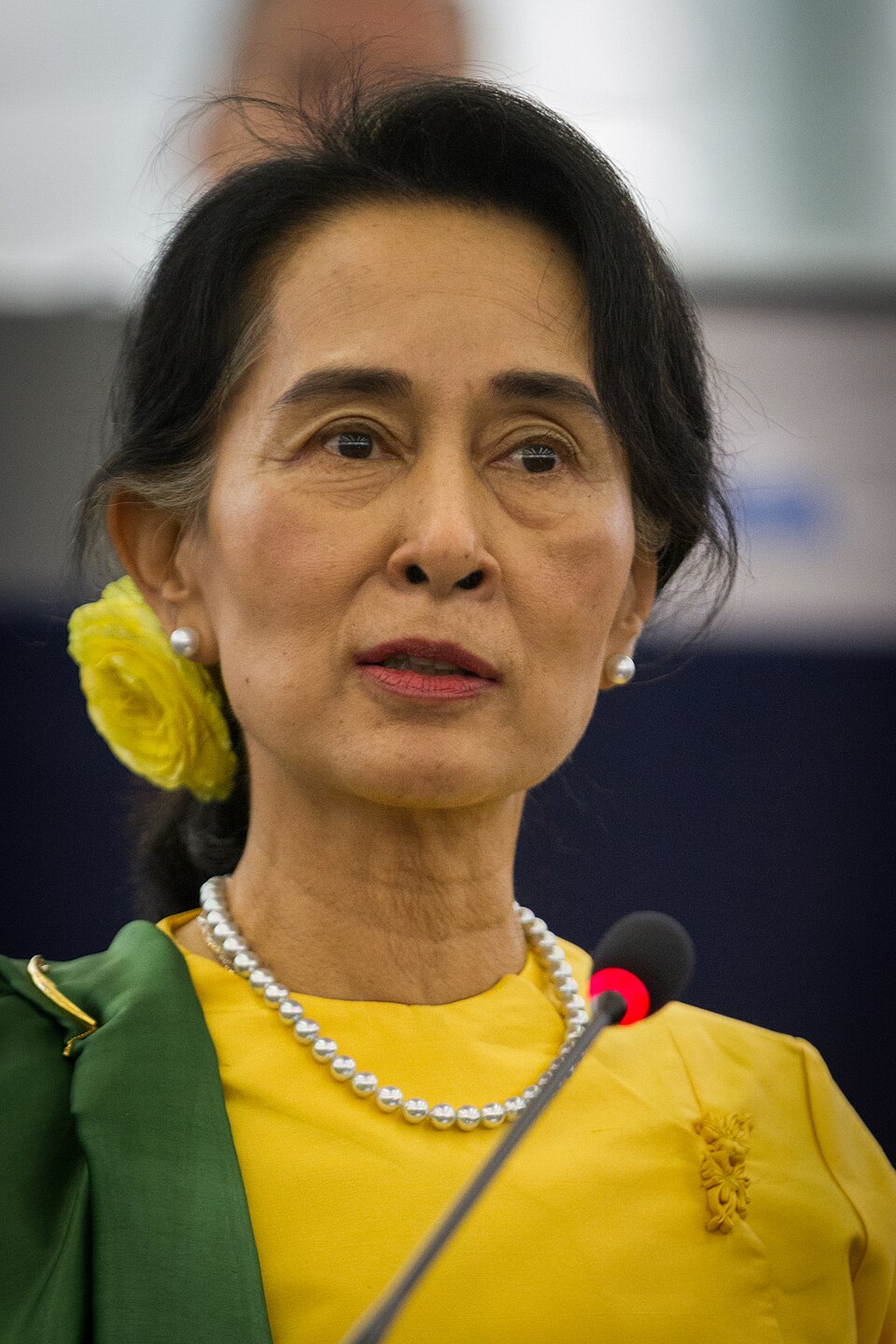
—In 1991, the Nobel Committee awarded you the Peace Prize, but you were a prisoner. How does one learn such news while locked up?
By radio, as it happens, in the silence of this house. I was here, behind the gate, and history was unfolding in Oslo without me. It was my son Alexander who went up to the podium at City Hall to receive the prize in my name — a teenager bearing the medal of an absent mother. I could set foot on Norwegian soil only twenty-one years later, in 2012. And there, I said what I had ruminated for two decades: during those years of separation from the world, "the Nobel Prize was like a ray of light penetrating my solitude." A prize does not set you free. But it prevents you from being forgotten, and for a prisoner, oblivion is the true death. The world suddenly knew my name — and the junta, for its part, had to contend with that gaze.
For a prisoner, oblivion is the true death.
—You often mention Gandhi. What, concretely, does your struggle owe to nonviolence?
Everything, and nothing automatic. I read Gandhi during my years of seclusion, among my Buddhist books; but an imported idea saves no one until one makes it one's own. Nonviolence is not passivity — it is the most demanding form of action. During the 8888 Uprising in 1988, I spoke before half a million people at Shwedagon Pagoda, and I begged the crowds not to answer bullets with stones. It was almost unreasonable: we were asking unarmed people to bare their chests. But the blood shed by the oppressed always becomes, sooner or later, the weapon of the oppressor. The discipline of metta, Buddhist loving-kindness, and political strategy converge here: you deprive the adversary of the chaos he needs to justify his baton.
Nonviolence is not passivity — it is the most demanding form of action.
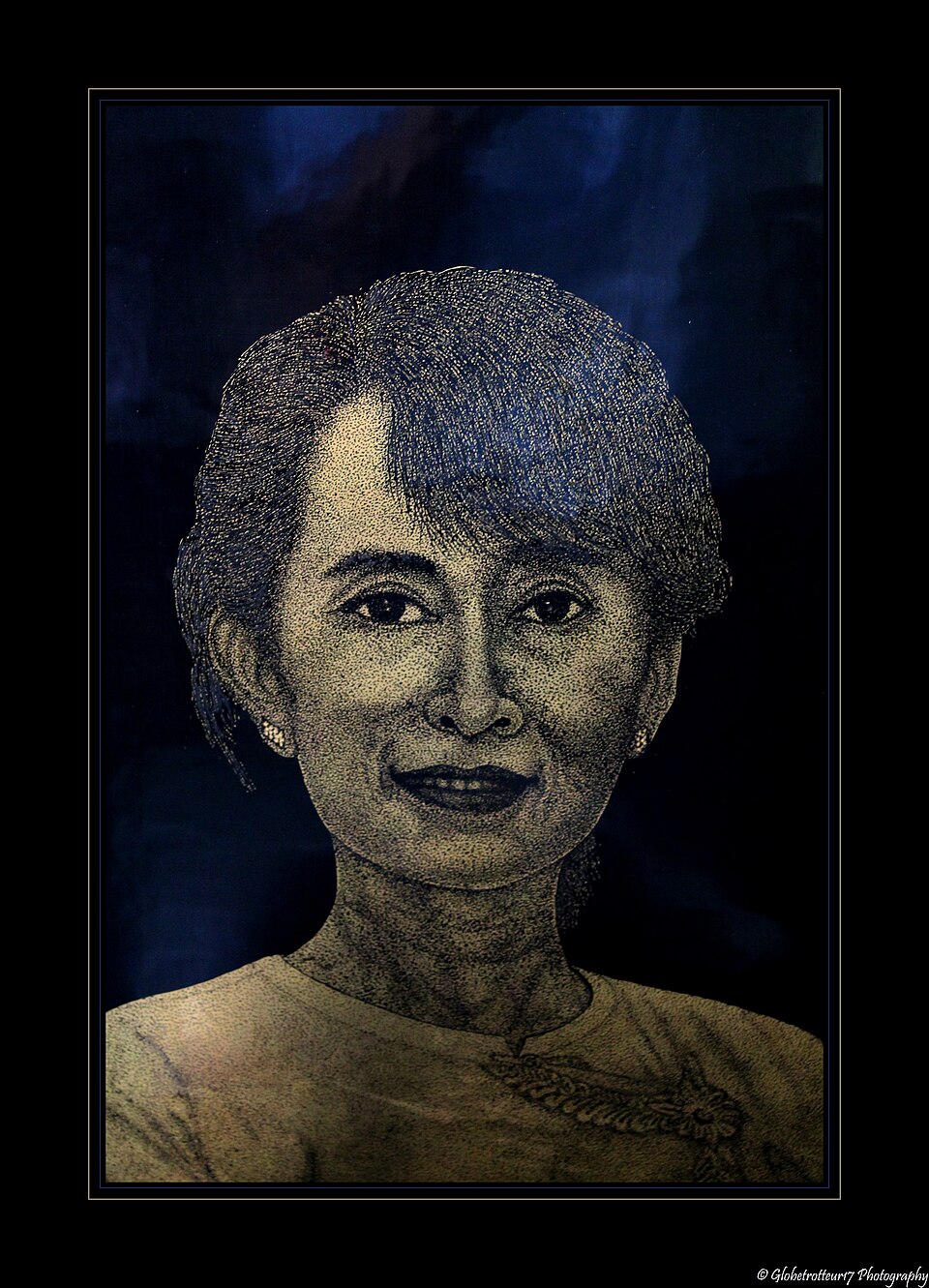
—Why, among all imperfect systems, do you stubbornly defend democracy?
Because no system is innocent, and democracy is the only one that admits it. I said it in my interviews with Alan Clements, those of Voice of Hope, recorded in secret during my detention: "Democracy is the only system that takes account of human fallibility and provides mechanisms to correct the mistakes of those who govern." A general believes himself infallible; that is why he is dangerous. Democracy, on the other hand, starts from the idea that we all make mistakes, and that we must therefore be able to replace one another without bloodshed. When the National League for Democracy won 80% of the seats in 1990, the junta simply denied the result. That is the difference: we accepted losing, they did not. Everything lies there — not in the perfection of the vote, but in the possibility of peacefully undoing what one has done.
We accepted losing, they did not.
—In power between 2016 and 2021, you were accused of silence regarding the fate of the Rohingya. How do you live with this criticism?
It is the most painful part, and I will not flee from it. Having become State Counsellor — a tailor-made title, since the constitution written by the military barred me from the presidency — I discovered that governing has none of the purity of a cell. The moral icon sculpted in Oslo had to contend with an army she did not command. In 2017, more than seven hundred thousand Rohingya fled to Bangladesh, and the world demanded from me the outrage it expected from the Nobel laureate. I spoke the language of the state when they hoped for the language of conscience. I know what that cost me in the esteem of others. Power forces you to choose your compromises; and History, for its part, does not forgive that you were both the symbol and the administrator.
Governing has none of the purity of a cell.
—If a young girl from Rangoon asked you today what a life like yours is for, what would you answer her?
I would tell her to be wary of statues — including mine. They wanted to make me a saint behind her gate, then reproached me for being only a woman in a chair of power. Both stories are too simple. I wore the longyi rather than the business suit, flowers in my hair facing the rifles, because one can resist without ceasing to be of one's people and one's country. To that young girl, I would say: do not seek to be pure, seek to be useful, and accept that the two sometimes contradict each other. The Burma my father dreamed of in 1947 still does not exist. But as long as a single person refuses, in a street, to lower her eyes before a uniform, that dream is not dead. That, perhaps, is what a life is for.
Do not seek to be pure, seek to be useful — and accept that the two contradict each other.
This imaginary interview was generated by artificial intelligence from sources documented in Aung San Suu Kyi's profile. It dramatises what the figure might have said based on what we know about them, but does not constitute attested historical testimony. For primary sources and factual documentation, refer to the full profile.