Kids interview Aung San Suu Kyi
by Charactorium · Aung San Suu Kyi (1945 — ?) · Politics · 4 min read
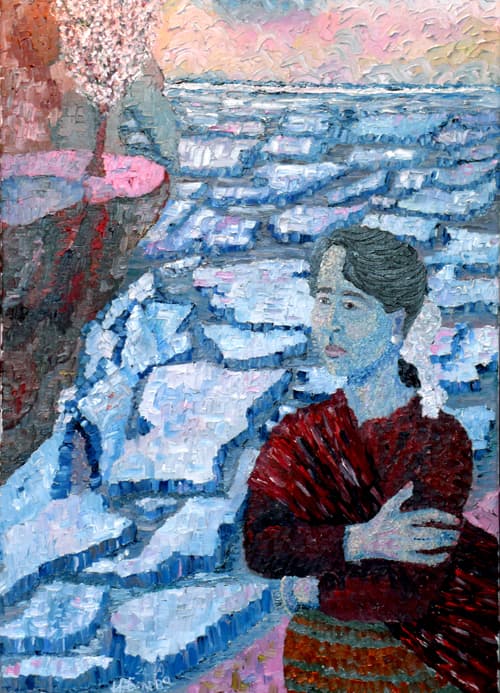
Two young visitors, each twelve years old, are received in a large house by a lake in Rangoon. On a small table, fresh flowers and an old piano. The lady with flowers in her hair seats them and smiles: today, they can ask anything.
—Is it true your father was a hero? Did you know him?
Hardly, my child. My father, General Aung San, liberated our country, then he was assassinated in 1947. I was two years old. Imagine: you grow up with a photo, stories, but no memory of his voice. A whole nation loved him. So later, when I returned to Burma, people looked at me as that man's daughter. That's a heavy burden, you know. You inherit a love you didn't choose. My name means 'sum of brilliant victories.' From a very young age, I understood one simple thing: I could not disappoint those who had believed in him.
You sometimes inherit a love you didn't choose.
—They say soldiers wanted to shoot you. Weren't you afraid?
Yes, of course I was afraid. It was 1989, on a street in Rangoon. I was walking with my supporters, and soldiers took aim. Imagine a line of rifles pointed straight at you. My heart was beating very fast. But I thought: if I run, fear wins forever. So I walked forward alone, slowly, toward the guns. The commander hesitated… then he ordered the guns lowered. You see, courage is not not trembling. It's trembling and taking a step anyway.
Courage is trembling and taking a step anyway.
—You were locked in your house for years? What did you do all day?
Fifteen years in total, in my house at 54 University Avenue. No right to go out, soldiers at the gate. Do you think it's easy, staying home? Believe me, it's a prison, even with a garden. So I got up before dawn to meditate, in silence. I learned piano — Bach, mostly. In the evening, I pressed my ear to a small radio to listen to world news. Without that discipline, I would have gone mad. Every morning I told myself: today again, I will stand firm.
—And your friends outside, could you talk to them anyway?
A little, yes. On weekends, people would gather on the other side of my gate. I would climb onto something and speak to them over the fence. Imagine a silent crowd listening to a voice without seeing the face clearly. Those were my only moments of freedom. One day, I wrote to reassure them: 'I ask you not to be discouraged. Our struggle is just and we must continue to move forward with gentleness but with determination.' Those words from 1996, I truly meant them. Gentleness is not weakness, you know.
Gentleness is not weakness.
—Why didn't you want to fight the bad soldiers with weapons?
Good question. It's tempting, isn't it, to strike back? But I had read Gandhi, and Buddhist books, during my years alone. I understood that violence begets violence, endlessly. The real disease is not the gun. It's fear. I even wrote about it: 'The fear of losing power corrupts those who wield it, and the fear of power corrupts those who are subject to it.' You see? Everyone is afraid, the powerful and the weak. If you stop being afraid, no army can truly command you.
If you stop being afraid, no one can truly command you.
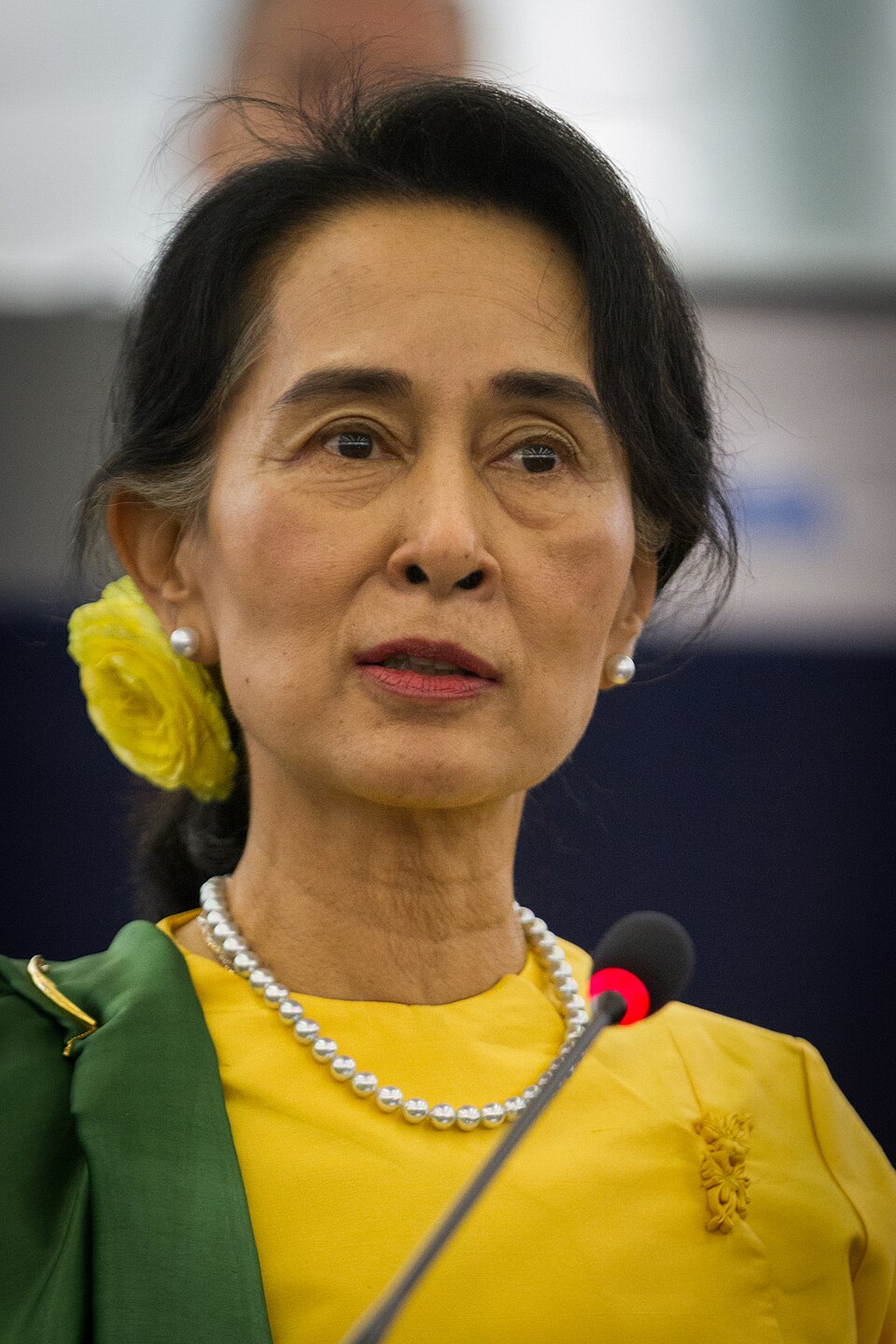
—What was the most important book you wrote?
Probably Freedom from Fear, in 1991 — 'Freeing oneself from fear.' In it I tell what I understood while locked up. You know, writing was my way of resisting without raising a hand. My letters, my essays, I wrote them in the afternoon at my desk. Some were smuggled out of Burma so the world would not forget. Imagine a message in a bottle, but containing ideas. A junta can lock you up, watch you. But it cannot imprison your thoughts.
You can imprison a person, never their thoughts.
—You got a big prize, right? The Nobel Prize? What was it like to receive it?
Actually, I didn't receive it! In 1991, the Nobel Committee awarded me the Peace Prize. But I was locked in my house, I couldn't go to Norway. My son Alexander went to Oslo to collect it for me. Imagine: you are given the most beautiful gift in the world, and you are not allowed to go and take it. My family kept the medal for years. Deep down, that prize told me something precious: the world had not forgotten me behind my gate.
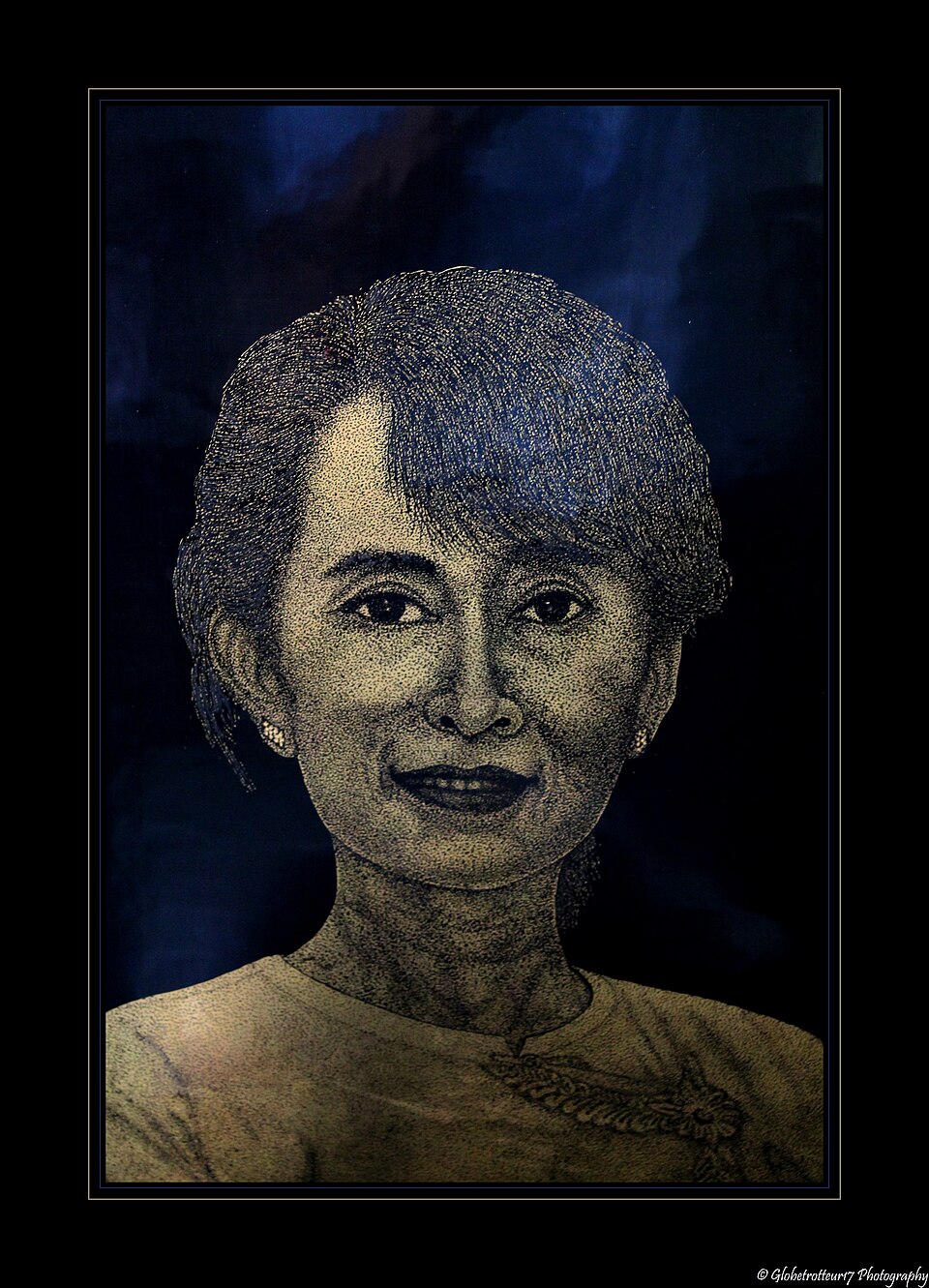
—And you finally got to give your speech one day?
Yes! But we had to wait until 2012, twenty-one years later. Can you believe it? I was an old lady when I finally spoke in Oslo. There, I said that during my years cut off from the world, the Nobel Prize had been for me 'like a ray of light entering my solitude.' That's exactly it. When you are alone in the dark, knowing that strangers, far away, are thinking of you… it warms the heart. That light reminded me that I was not struggling only for my small country.
A ray of light is knowing that strangers are thinking of you.
—Afterwards, you led your country? Were you listened to then?
Yes, and it's a strange story. In 2015, my party won the elections. But the law written by the military prevented me from being president. So a title was invented just for me: 'State Counsellor.' Basically, I ran the country without the official name. Imagine being told: you can command, but you won't have the right to sit in the big chair. That was it. After so many years behind my gate, here I was in power, in Naypyidaw. The hardest part, you see, had not yet come.
—Why do people say you disappointed them in the end?
You ask the painful question, my child. And you are right to ask. In 2017, a minority in my country, the Rohingya, were driven out by the army. More than seven hundred thousand people fled. Many expected me, the lady of the Peace Prize, to cry out to defend them. And I remained silent. The world was deeply disappointed. You see, I spent my life saying we must fight fear… and there, I failed. Remember this: even those we admire can be wrong. No one is a saint forever.
Even those we admire can be wrong.
This imaginary interview was generated by artificial intelligence from sources documented in Aung San Suu Kyi's profile. It dramatises what the figure might have said based on what we know about them, but does not constitute attested historical testimony. For primary sources and factual documentation, refer to the full profile.