Imaginary dialogue between Harriet Creighton and Barbara McClintock
by Charactorium · Barbara McClintock (1902 — 1992) · Sciences · 5 min read

It is at Cold Spring Harbor, on an autumn afternoon in 1983, that Harriet Creighton finds Barbara McClintock among her rows of corn, a few weeks after the Nobel Prize announcement. The slanting light makes the ears still attached to their numbered labels shine, and the smell of dry earth floats over the field. The two women have known each other since Cornell, where young Harriet was the student and then co-author of Barbara in the early 1930s. Creighton comes with a notebook and a great deal of affection, determined to get her former mentor to talk about everything she never admits to journalists.
—Barbara, do you remember our winter at Cornell, in 1931, when we showed together that crossing-over leaves a visible trace on chromosomes?
How could I forget it, Harriet? You were at the next bench, and we stained corn chromosomes with aceto-orcein carmine until our fingers were stained. We wanted to prove something simple and huge: that the exchange of traits between lines corresponded to a physical, observable exchange of chromosome pieces. And we saw it, under the lens, that little knot that changed places. You did half of that work, don't let anyone tell you otherwise. It was the first time I understood that the chromosome was not an abstract drawing in a textbook, but a living thing that the eye could follow. Everything else in my life came out of that gaze.
The chromosome was not an abstract drawing in a textbook, but a living thing that the eye could follow.
—In the 1940s, they say it was corn kernels with changing colors that put you on the trail. What exactly did you see?
Kernels that shouldn't have changed, and did. On the same ear, I saw pigment spots appear where the previous generation had none, as if the color turned on and off at random. But I don't believe in chance when a pattern repeats, Harriet. I counted, drew, started over for entire seasons. Then I understood: something was moving on the chromosome, sitting down near a gene, silencing it, then leaving. Under the microscope, I found the breaks exactly where pigmentation predicted them. The corn kernel told me, color after color, the journey of a DNA fragment. You just had to listen with enough patience.
I don't believe in chance when a pattern repeats.
—You talk about listening to the corn. At Cornell, you already recognized each plant. Where did this memory of plants come from?
I don't know if it can be learned, Harriet — maybe you're born with it, or you cultivate it without realizing. When I walk through a row, I don't see a uniform field: I see individuals, each with its own shape, its way of carrying leaves, its little flaws. Even before cutting a slide for the microscope, I often know what I'll find, because the plant has already told me outside. Colleagues found it mysterious, they called me the one who talks to corn. But there's no mystery: it's attention, nothing else. You only understand an organism when you have stopped imposing on it what you expect from it.
You only understand an organism when you have stopped imposing on it what you expect from it.
—Before coming here, you left Missouri in 1941. Why give up a university post for these uncertain fields at Cold Spring Harbor?
Because in Missouri, I understood that I would never get tenure — not for my work, but because I was a woman. I was tolerated, not established. I would have spent my life asking permission to do research. When Marcus Rhoades told me about the Carnegie Institution, I saw something else: a stable position, no mandatory teaching, no committee to charm, and my own fields a stone's throw from the lab. An almost indecent freedom. Many thought I was withdrawing from the world. I felt I was finally entering it fully. Here, no one ever asked me to justify that a question was worth asking — I could pursue it as long as the corn answered me.
I would have spent my life asking permission to do research.
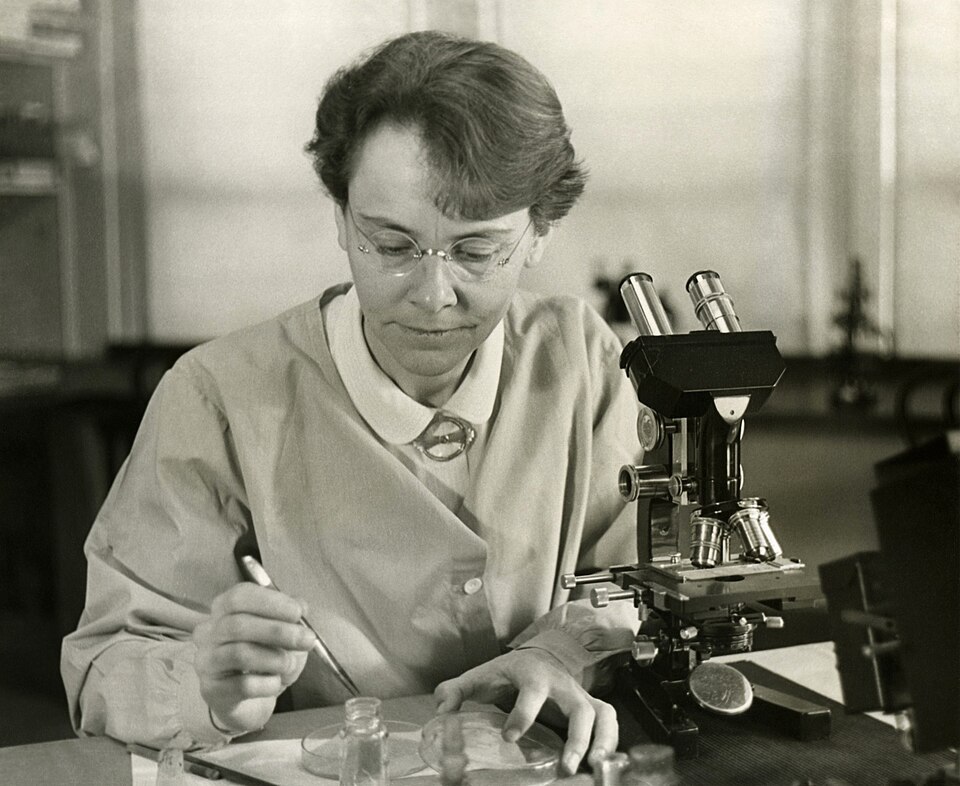
—I watched you work alone here for years. How did you keep going, day after day, without a prestigious position or an audience to applaud?
You keep going because the work itself is enough, Harriet. My days had a simple rhythm: the field at dawn, labeling and observing; the microscope in the afternoon, for hours; the evening, my notebooks and comparisons across generations. I lived frugally, I needed almost nothing. Solitude never weighed on me, because it wasn't empty: it was full of corn, chromosomes, questions. And I had a conviction that depended on no one. If you know you're right, you don't need others to know it. That phrase carried me through the quietest years, when no journal was interested in what I saw.
If you know you're right, you don't need others to know it.
—In 1951, at that Cold Spring Harbor symposium where you presented your mobile elements, the room remained icy. What did you feel that day?
Surprise at first, then a kind of sad calm. I had prepared that talk with extreme care, convinced that the coherence of my data would speak for itself. But the idea that a gene could change place clashed with everything believed: the genome was supposed to be a neat string of beads, immutable. I saw closed faces, politely bored, sometimes frankly incredulous. No one really discussed the substance. I went back to my microscope without changing a thing about my method. I couldn't blame them for not seeing: they hadn't spent ten years in those fields. I decided I would keep accumulating evidence, and time would do the rest — even if it took a long time.
The genome was supposed to be a neat string of beads, immutable.
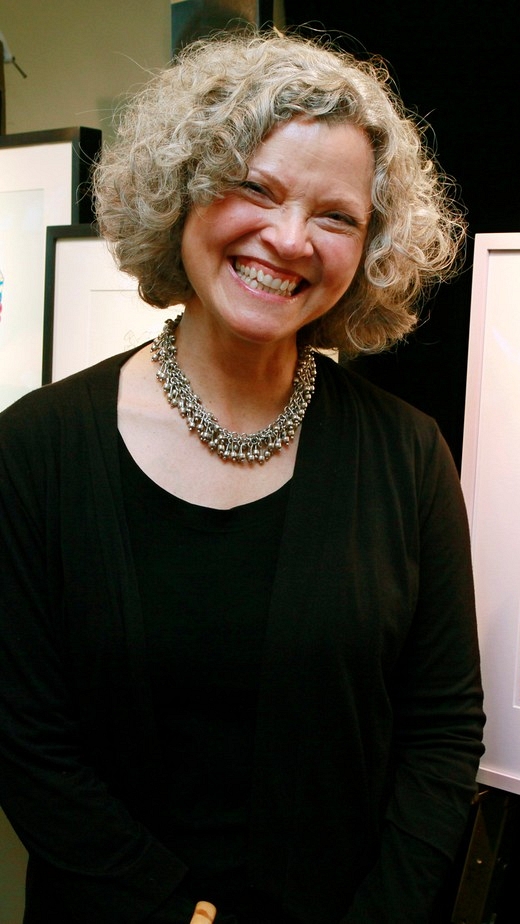
—Indeed, time was long. When Watson and Crick published the double helix in 1953, did that make your struggle even harder?
In a way, yes. The double helix was beautiful, and I admired it — but it gave rise to an image of stable, fixed, almost sacred DNA. Anything suggesting movement in the genome seemed heretical then. My jumping elements fell at the worst time: order had just been found, and I was talking about movements. I gradually stopped publishing in major journals, not out of spite, but because I no longer wanted to fight to be read. I turned to South American corn, to its evolution. I knew biology would eventually meet what I had seen — not because I was right against them, but because nature, after all, doesn't care about our paradigms.
Nature, after all, doesn't care about our paradigms.
—Then, in the 1970s, transposons appeared in bacteria. Did you feel, then, that they were coming back to you?
I felt the ground shift, slowly. First the operon of Jacob and Monod, showing that genes could regulate others — it looked so much like what I described. Then those mobile sequences found in bacteria, fragments jumping from one place to another. Young researchers started writing to me, coming to see me in this lab. Some discovered my 1950 and 1951 papers like unearthing a forgotten text. I felt neither triumph nor bitterness, only quiet relief: I would no longer be asked to prove that my plants existed. The corn had told the truth from the start; it just took bacteria to repeat it in a language the fashion of the time could hear.
I would no longer be asked to prove that my plants existed.
—And here we are: the Nobel, alone, at 81, nearly forty years after your first results. What did this award change in you?
Honestly, Harriet, it mostly disrupted my days. Nothing had prepared me for the period of sudden attention I received after the Nobel announcement. People knocked on my door, photographed me in my fields — I who loved only silence. Deep down, nothing changed: I had never doubted what I saw. What touched me was not the glory, but that my work was finally understood. I had always sought that, not honors. That understanding came so late does not sadden me: science is not a race, and a truth does not wear out from waiting. You, who shared my beginnings, know better than anyone that I was already doing the same work, in the same fields, long before it was noticed.
A truth does not wear out from waiting.
This imaginary interview was generated by artificial intelligence from sources documented in Barbara McClintock's profile. It dramatises what the figure might have said based on what we know about them, but does not constitute attested historical testimony. For primary sources and factual documentation, refer to the full profile.