Imaginary interview with Beaumarchais
by Charactorium · Beaumarchais (1732 — 1799) · Literature · 7 min read
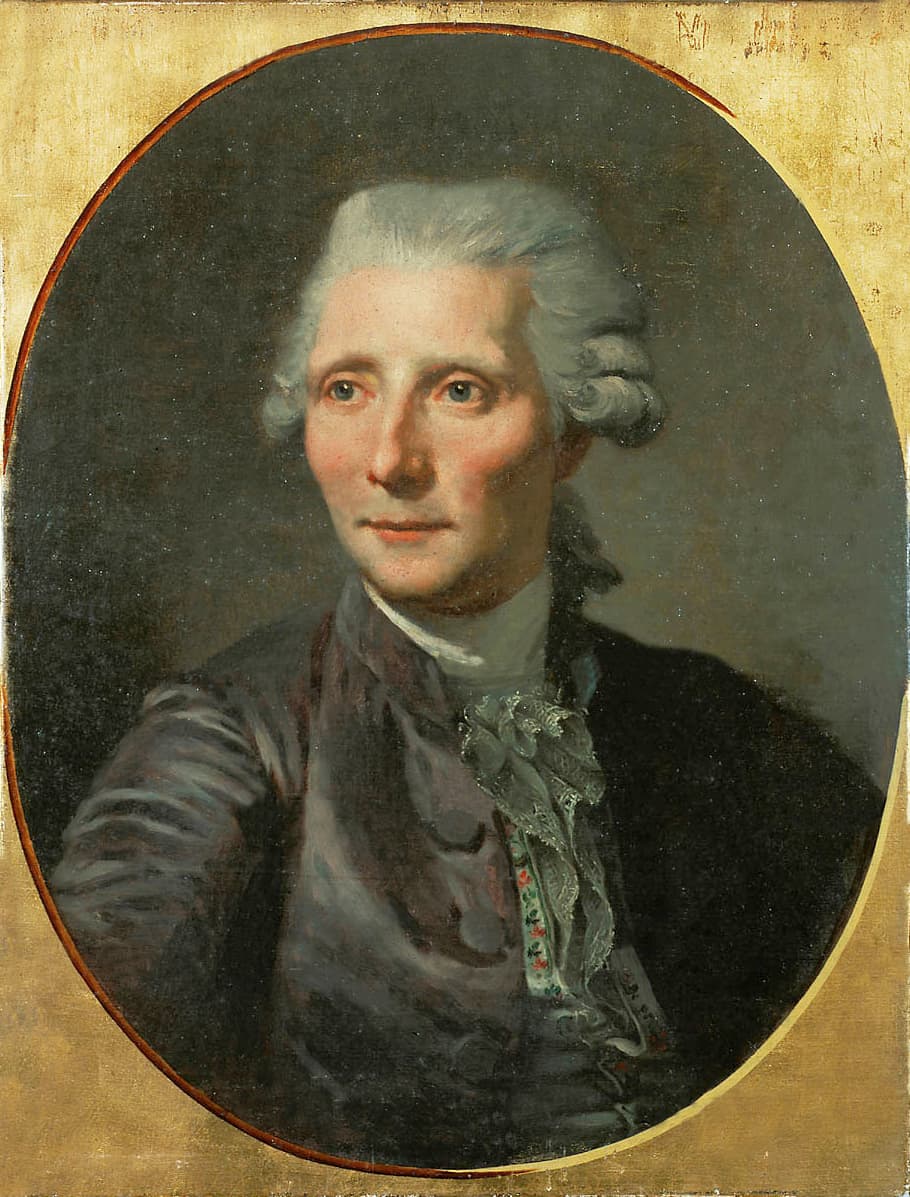
Spring 1788. We are received in the grand mansion Beaumarchais has just completed on the Rue du Pas-de-la-Mule, directly across from the Bastille, amid gardens and the music room where a harp still lingers. The man is nearly sixty, sharp-eyed, quick-witted; he invites us to sit and begins, as if continuing a plea.
—Before theater and business, there was your father's workshop. How does a watchmaker's son become what you are today?
My father kept a shop near Rue Saint-Denis, in the heart of artisan Paris, and it was at his bench that I first learned the patience of gears. At twenty-one, I thought I had found something better: a new escapement mechanism, more accurate, to house the hour in a watch that fit in the palm of a hand. The watchmaker Lepaute, who fancied himself a grand master of his guild, tried to claim the invention as his own. I brought the matter before the Academy of Sciences, which, in 1754, ruled in my favor. You see, I had neither name nor rank then, only the conviction that honest work should not be stolen. That first battle taught me something I never forgot: a man alone, armed with his cause and his obstinacy, can make those who despise him bend.
A man alone, armed with his cause and his obstinacy, can make those who despise him bend.
—They say music opened the doors of the court to you. How did that happen?
Through the harp, sir, which I taught myself, without a master, by scraping the strings until I tamed them. I became skilled enough that I was asked to give lessons to the daughters of Louis XV, at Versailles itself. Imagine the son of a craftsman from Rue Saint-Denis crossing the Hall of Mirrors, his instrument under his arm, to go teach princesses! It was there, in those gilded antechambers where people speak softly and scheme fiercely, that I understood how fortunes are made. In 1761, I bought the office of King's Secretary, which conferred nobility upon me: I became Caron de Beaumarchais. I was reproached for having bought my name. I reply that it had been denied me so often that I had the right to give it to myself.
I was reproached for having bought my name; it had been denied me so often that I had the right to give it to myself.
—Let us come to the theater. What new thing did you want to do with that barber named Figaro?
To restore comedy its liveliness, its mischief, its insolence! When The Barber of Seville premiered at the Comédie-Française in 1775, the public was weary of dusty intrigues where one is bored in lace. I put on stage a valet cleverer than his master, a man of the people who gets out of everything through wit. Figaro says that line which I believe is the truest I have written: 'I make haste to laugh at everything, for fear of being obliged to weep.' There is the spring of all my gaiety: it is not lightness, it is defense. One laughs so as not to break. Count Almaviva thinks he is running the game; it is Figaro who pulls the strings, just as the little man sometimes holds the great man in check, in life as in the pit.
—The Marriage of Figaro was long banned. Why did this play frighten the authorities so much?
Because it says aloud what everyone thinks in whispers. Louis XVI, it is said, after hearing it read, declared that the Bastille would have to be destroyed before such a thing could be performed. The royal censorship persisted for years. The scandal lies in a single monologue, in Act V, where Figaro says to his master: 'Because you are a great lord, you think you are a great genius!... What have you done for so many blessings? You took the trouble to be born, and nothing more.' I did not write a pamphlet there, I wrote a comedic line; but a well-aimed line makes more noise than a libel. Some wanted to see a threat; I saw only a valet claiming his due. Laughter, properly placed, disarms better than anger.
A well-aimed line makes more noise than a libel.
—Do you remember the first performance, on April 27, 1784?
How could I forget! After so much censorship, even the court clamored for the play the king had wanted to ban. The crowd pressed at the doors of the Comédie-Française with such fury that three people died there, suffocated in the crush. Think of it: people died to get in and see a comedy. Great ladies spent the day locked in the boxes so as not to lose their seats. I tasted a revenge there that I will not call sweet — one does not rejoice at such a price — but resounding. What the authorities had condemned, the public carried in triumph. I had written in my preface that only small men fear small writings; that evening, the great themselves rushed to applaud what they had trembled to ban.
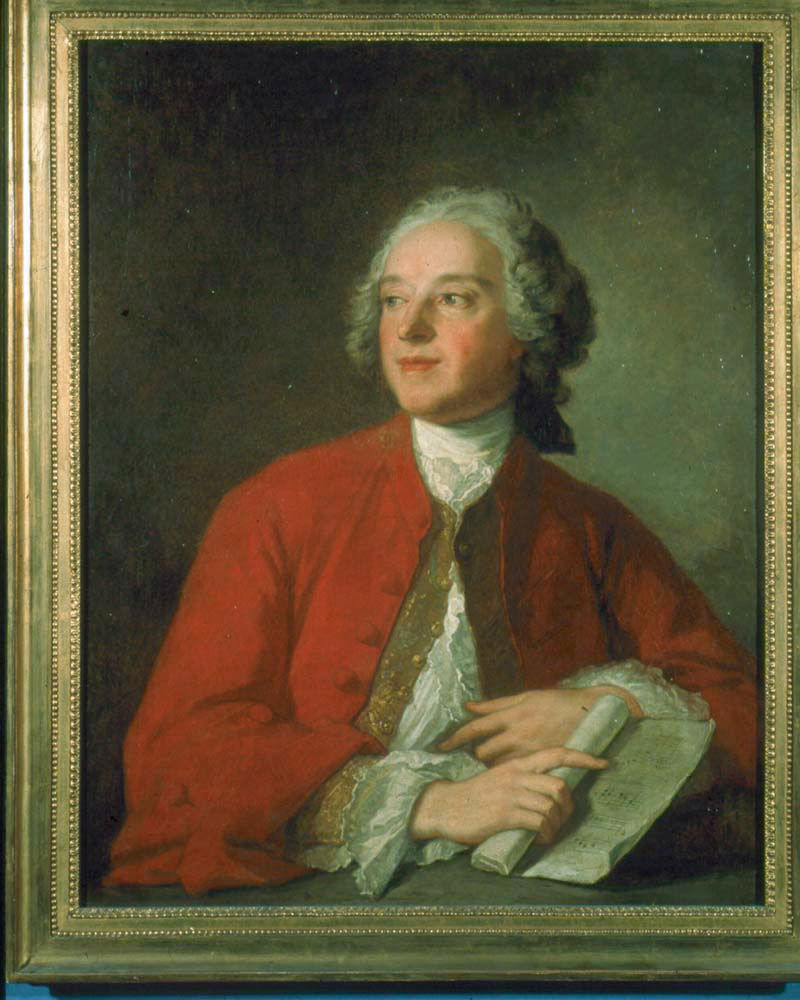
—Before theatrical glory, there was the Goëzman trial. How did that affair transform you?
It made me a writer in spite of myself. Judge Goëzman thought me lost, crushed under an obscure procedure that ruins a man without his knowing why. Rather than flounder in the shadows of the courts, I took up my pen and published my Mémoires contre Goëzman, four texts in which I told everything, with irony, to the public itself. I wrote: 'I was a peaceful citizen, carrying on my trade in publishing and music in my own way; I am attacked in my fortune, in my honor, and it is I who am dragged before the courts!' All Paris read me, laughed with me, took my side. The legal brief, that dry procedural instrument, became under my hand a genre, almost a spectacle. I had turned my defense into public comedy, and public opinion into my true judge.
I had turned my defense into public comedy, and public opinion into my true judge.
—You also fought for authors' rights. Where did that struggle come from?
From an old anger at the injustice done to writers. The actors pocketed the receipts, the publishers prospered, and the author, for his part, had only the honor of being performed as his salary. I had learned too well, in my father's workshop, what a man's work is worth to suffer that of the mind to be thus plundered. In 1777, I gathered my colleagues and founded what became the Society of Dramatic Authors, so that each might be paid for the fruit of his labor. I was called a quibbler, a money-grubber — as if claiming one's due were a fault. Authors' rights are not pettiness: they are the dignity of the creator, who does not beg and does not let himself be robbed. I waged this battle like the others, brief in hand, until they yielded.
—You were known as a playwright, but also as a secret armorer of the American Revolution. How did you become involved in that distant war?
Out of conviction and a taste for audacity, I confess. When the American colonies rose up, I saw an opportunity to weaken England while serving a cause that appealed to me: men refusing to be born subjects when they wished to be free. I obtained a tacit agreement from Minister Vergennes, and set up a fictitious trading company, Rodrigue Hortalez et Compagnie, a front behind which I shipped to the insurgents guns, powder, uniforms, tents — enough to equip an army. All this shadow diplomacy passed through letters carefully sealed with wax, which no one was to open. I committed my own fortune, without guarantee, without official title. It was a life-size play, in which I was at once the author, the financier, and the secret agent. Figaro, in short, playing on the world's stage.
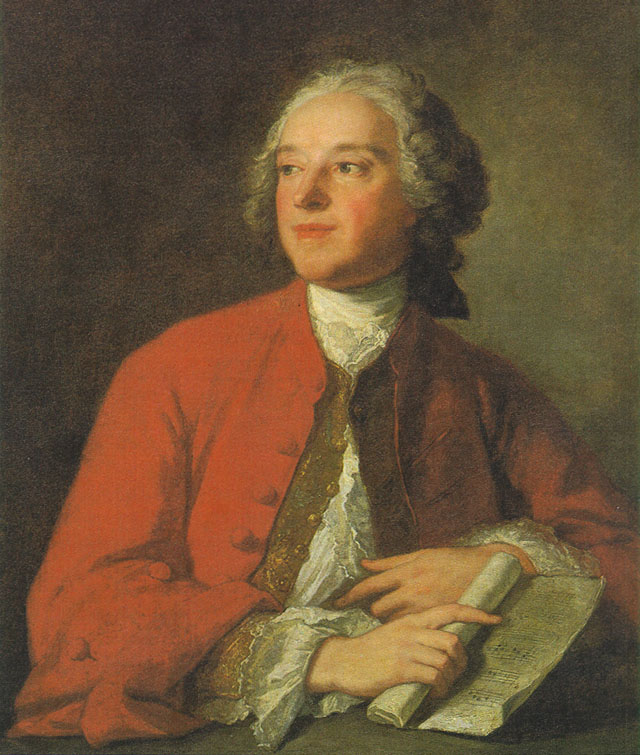
—This commitment cost you dearly, they say. Were you ever compensated?
Compensated? I laugh to keep from groaning. I poured my personal fortune into Rodrigue Hortalez et Compagnie, armed ships, advanced sums that no state ever repaid me — neither France, which pretended to know nothing, nor those United States I had helped to birth and which, once on their feet, forgot their supplier. The triumphant insurgents remembered their generals, not the man in Paris who had sent them the powder. Such is the fate of those who act in the shadows: people profit from their work and neglect their name. I then spent years presenting my accounts, memoir after memoir, as always. But in that trial, against the ingratitude of two nations, I fear I never obtained satisfaction.
—Among your ventures, the complete edition of Voltaire in Kehl seems the most colossal. What drove you to do it?
The desire to save a treasure that censorship wanted to scatter. At Voltaire's death, his entire work risked remaining banned, scattered, mutilated. I resolved to publish it in full — seventy volumes! — and, since it could not be printed freely in France, I set up a printing press across the Rhine, in Kehl, in imperial territory, out of reach of our censors. I bought the type of the great Baskerville, had the paper brought in, organized an entire manufacture of thought. It was a ruinous enterprise, and it earned me little gratitude. But what! A man who had spent his life pleading for the freedom of the pen could not let that of the greatest of our philosophers be extinguished. Spreading the Enlightenment meant defending it.
A man who had spent his life pleading for the freedom of the pen could not let that of the greatest of our philosophers be extinguished.
—After so many battles — watches, comedies, trials, arms, books — how would you like to be remembered?
As a man who never consented to be silent. I was in turn a watchmaker, musician, playwright, arms dealer, printer of Voltaire — and I was reproached for each of these trades, as if the mind had to choose a single livery. But it is always the same man who defies Lepaute before the Academy, Goëzman before the judges, and the great lord before the pit. I wrote in the preface to my Marriage that only small men fear small writings; I have never feared, myself, to write or to act. If, by some impossibility, I am still read in a century, I would like people to hear behind every line of Figaro the laughter of a craftsman's son who refused to bow his head. The rest — fortune, offices, honors — is only scenery.
It is always the same man who defies Lepaute, Goëzman, and the great lord before the pit.
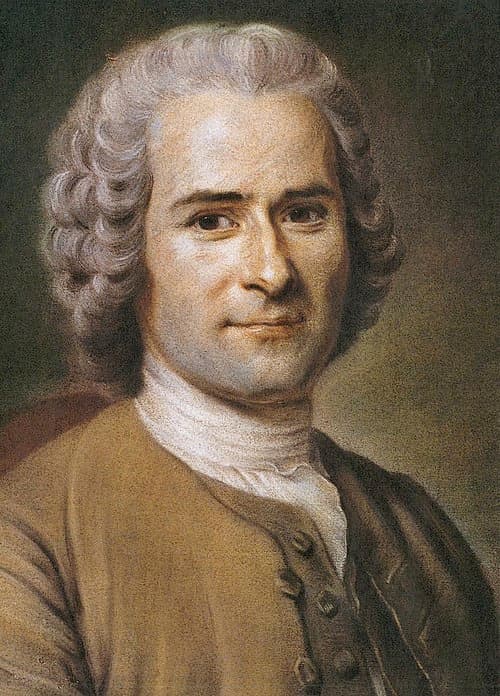
This imaginary interview was generated by artificial intelligence from sources documented in Beaumarchais's profile. It dramatises what the figure might have said based on what we know about them, but does not constitute attested historical testimony. For primary sources and factual documentation, refer to the full profile.