Imaginary dialogue between Paul Claudel and Camille Claudel
by Charactorium · Camille Claudel (1864 — 1943) · Visual Arts · 5 min read
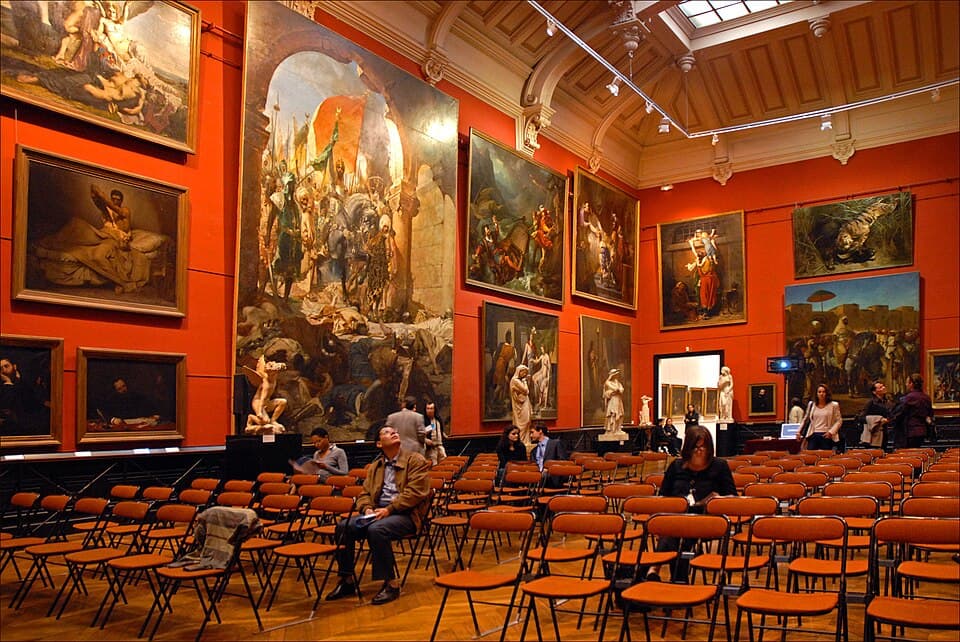
It is at the asylum of Montdevergues, near Avignon, that Paul Claudel finds his elder sister this spring of 1927. The mistral makes the cypresses crack behind the high walls, and the harsh light of Provence has nothing of the soft, filtered light of the Parisian studios of yesteryear. They have not seen each other for years — he travels the world for diplomacy, she has not left these rooms since her committal. Paul carries the weight of their shared childhood and the dull shame of not being able to bring her back to Paris.
—Camille, I remember as a child the busts you forced me to pose for in Villeneuve. How did Rodin enter this life already given over to clay?
So you remember, little Paul, those hours when I held you still against the window? I already had earth in my blood. When Alfred Boucher had to leave for Rome, around 1884, he asked Rodin to replace him with us. I did not know that a master was entering; I thought I was receiving another teacher. Very quickly I became his pupil, his assistant, his model — and much more besides. I put my hands into his, into the Gates of Hell, into the Burghers of Calais. No one will ever know where my work ends and his begins. That, you see, is what gnaws at me most: having given my best years to a work that bears another's name than mine.
No one will ever know where my work ends and his begins.
—You sculpted The Mature Age, that man torn between two women. The whole family read your breakup into it. Was it a confession, Camille?
You guessed it like everyone else, and you were right. That man an old woman drags away while a young one begs him on her knees — yes, it is him, it is us, it is the end. I modeled it toward the end of the century, when I finally had to tear myself away. They tried to prevent me from casting it in bronze, they did everything to keep it from being seen. Understand me: I no longer wanted to be the shadow cast by a great man. I wanted to tell the truth of a flesh that is abandoned. It cost me my place, my commissions, my peace — but a supplicant in plaster cried out for me what I could no longer say aloud.
I no longer wanted to be the shadow cast by a great man.
—Father used to tell us of your childhood tenacity. But in Paris, in 1881, the École des Beaux-Arts was closed to you. How did you force that door shut to women?
Closed, yes, like so many others. The École des Beaux-Arts did not want us, so I entered the Académie Colarossi, one of the few that accepted women. Father, you know better than I, pleaded my case when Mother and all of society found it indecent for a young girl to knead clay and study the nude body. I had to fight for every model, every studio, every block of marble. A sculptor needs assistants, founders, state commissions — and all of that was granted to my male colleagues, rarely to me. I worked twice as hard to get half the attention they received without even asking.
I worked twice as hard to get half the attention.
—Octave Mirbeau wrote in 1895 that you were a woman of genius in an art reserved for men. Did such praise finally open official doors for you?
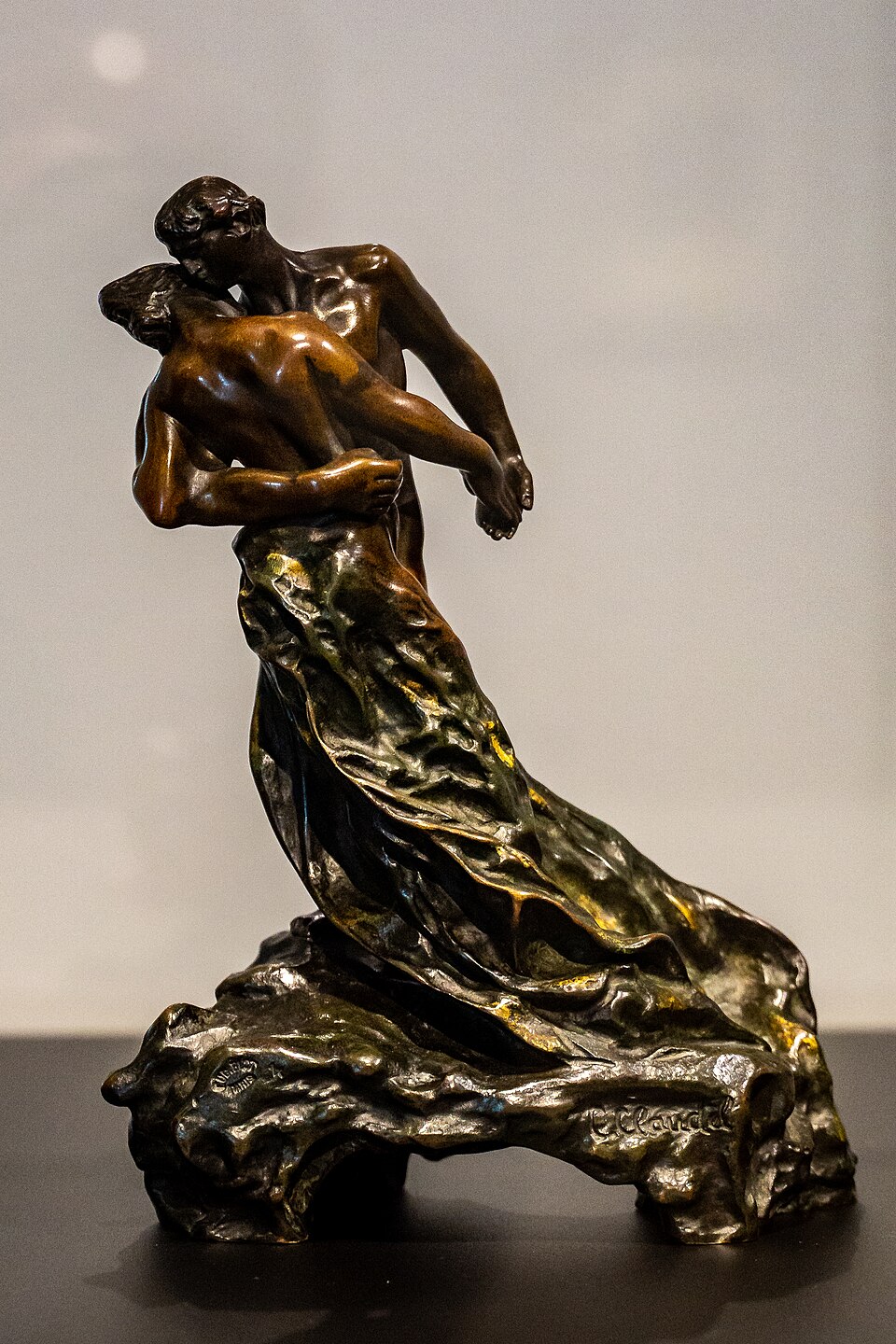
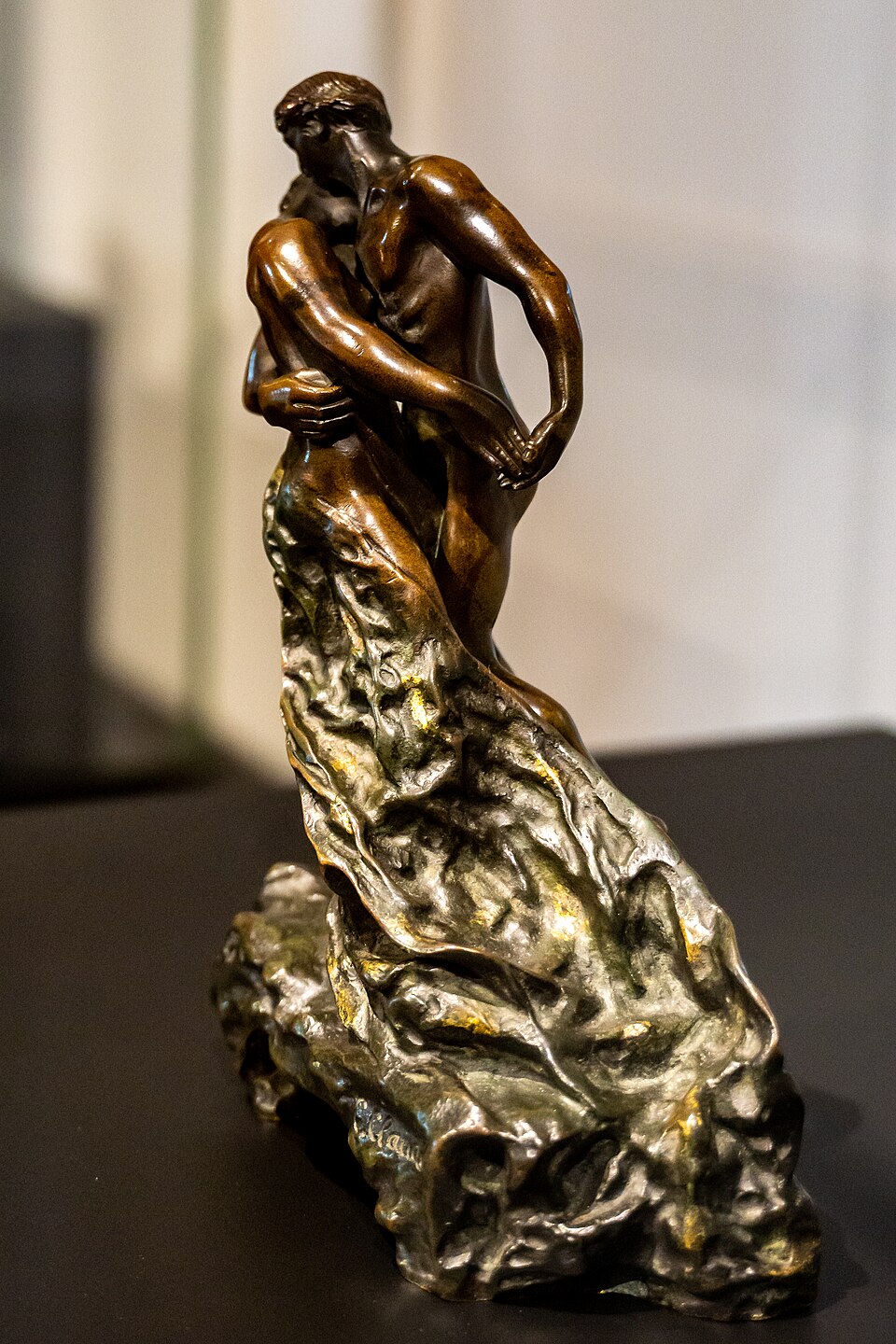
Mirbeau was generous, and I wept reading it. A woman of genius, he said, where genius seems reserved for men alone. But a critic's words do not turn into marble. When I presented The Waltz, that couple swept away by dance, the administration deemed it too sensual and refused me the marble commission. That is what they held against me: not a lack of talent, but the supposed indecency of a woman who dares to show desire. They praised me with one hand and closed the drawer with the other. A man would have been celebrated for the same boldness; I was suspected. The recognition of newspapers does not feed a studio.
A critic's words do not turn into marble.
—You once showed me those little bathers under an immense wave. Where did you get that idea, so far from the statuary people expected of you?
The Wave, yes. You looked at it a long time, you who love the Orient. I had seen Japanese prints, those images of Hokusai where water rears up like a living being and threatens to engulf everything. I wanted that in stone: three small women crouching, tiny, under the weight of an onyx wave ready to cover them. It was new; people were not used to a sculptor telling such a tender fright. I left the grand heroic format for the intimate, for the murmur. There, I was no longer anyone's pupil — I was inventing my own language, to the measure of a palm. That wave, deep down, was already a bit of my destiny that I sculpted without knowing it.
That wave was already a bit of my destiny that I sculpted without knowing it.
—That translucent stone, onyx, which you worked for The Gossips, seemed to fascinate you. What were you seeking in such a difficult material?
Onyx is a stone that holds light instead of reflecting it. For The Gossips, I carved four women leaning toward one another, sharing a secret. Marble would have made the scene cold, official; onyx made it alive, almost warm, like a confidence one overhears. No one sculpted like that, in such small scale, the trivialities of daily life — four gossips in a corner. They wanted gods, heroes; I gave them chatterboxes. That was my freedom, Paul: taking a material reserved for trinkets and putting all the tenderness of the world into it. Bronze for the skeleton, onyx for the flesh — I combined what no one dared to marry.
They wanted gods, heroes; I gave them chatterboxes.
—When you settled alone at 19 Quai de Bourbon, I thought you were finally free. But that studio, what did it become for you over the years?
At first, it was freedom, you're right. My own studio, on the Île Saint-Louis, with the beautiful northern light and the Seine below. I got up early, prepared my clay, moistened my rough drafts, I was queen of that disorder. Then commissions grew scarce, money ran out, and the walls began to weep with me. I no longer opened to anyone, or almost no one. The studio I had wanted as a refuge became a cave where I locked myself in with my works and my terrors. The founders demanded their due, visitors seemed like spies. This place of work, little by little, turned into a cell — long before they assigned me a real one.
This place of work turned into a cell, long before they assigned me a real one.
—I was told, with horror, that you yourself smashed your sculptures in that studio. Camille, why destroy what you had spent so many years bringing to life?
You are right to be afraid, I understand. Some evenings, I took the mallet and smashed into pieces what I had shaped that morning. You will think it was the madness they attribute to me. But understand: I could no longer bear the idea that they would steal them, copy them, sign them with another name. Dust was better than plunder. And then there was the rage of oblivion — what was the point of leaving behind figures that no one wanted to exhibit, buy, or look at? I returned to the earth what the earth had given me. They were not crises, Paul: they were verdicts. I judged my work and executed it with my own hands.
They were not crises: they were verdicts.
—Camille, you know why I come, and you know I could not get you out of here. The doctors themselves say your internment is unjustified. How do you live with this?
I live it as an injustice every hour, Paul, and you are well placed to know it. In 1913, barely had our father been buried when they came to fetch me at Quai de Bourbon to lock me up. The reports themselves say it: no organized delirium, some ideas of persecution perhaps, but nothing that required me to be walled up for thirty years. They keep me out of fear, out of convenience, out of family weariness. Here, at Montdevergues, I have not touched clay again — what is the point of sculpting for walls? I only ask to go home, to breathe the air of Paris, to see a studio again. I am lucid, do you hear, terribly lucid — and that is my true punishment.
I am lucid, terribly lucid — and that is my true punishment.
—You once wrote me that your life had been a dream of which this was the nightmare. What do you want me to keep of you, my sister, if you are forgotten outside?
So you remember my letter. Of the dream that was my life, this is the nightmare — I still think it every morning when I wake behind these bars. What do I want you to keep? Not the inmate, not the madwoman pointed at. Keep the young woman of Quai de Bourbon, hands full of clay, who carved onyx and made bronze dance. Keep The Waltz, Sakuntala, the bathers under the wave. Say, later, that your sister sculpted by her own strength, owing nothing to anyone but herself. The world may forget me, but you, the writer of the family, have the words I no longer have. Make the clay speak when I have fallen silent.
Make the clay speak when I have fallen silent.
This imaginary interview was generated by artificial intelligence from sources documented in Camille Claudel's profile. It dramatises what the figure might have said based on what we know about them, but does not constitute attested historical testimony. For primary sources and factual documentation, refer to the full profile.