Kids interview Camille Claudel
by Charactorium · Camille Claudel (1864 — 1943) · Visual Arts · 5 min read
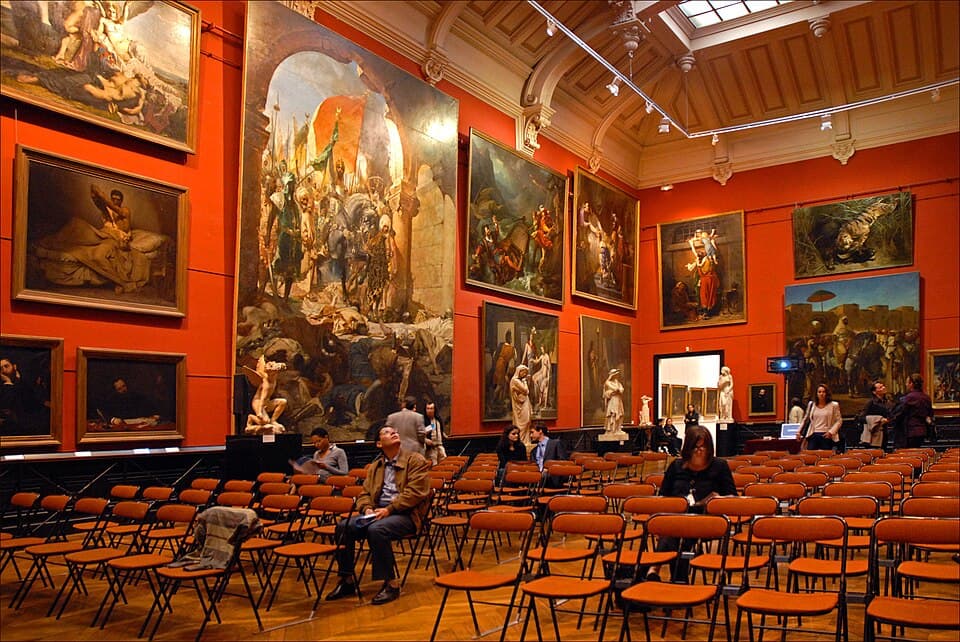
Two young visitors of twelve years old push open the door of a studio cluttered with plaster casts and blocks of stone. A lady with earth-covered hands turns around and smiles at them. Camille Claudel puts down her tool, touched that children have come to listen to her, and invites them to sit near the sculptor's stool.
—How old were you when you started sculpting?
You know, my child, I was barely twelve — your age. Where I lived, in Fère-en-Tardenois, the ground was full of clay, that soft earth you can squeeze between your fingers. I would grab handfuls and shape heads, animals. Imagine finding a living paste under your feet, and it obeying your hands. That's what it was for me. Later, my father agreed to enroll me in Paris, at the Académie Colarossi. It was one of the few schools that accepted girls. The great school, the Beaux-Arts, closed its doors to us women.
Imagine a living earth that obeys your hands: that was sculpting.
—What was it like the day you met Rodin?
It was around 1884, I was very young. My teacher, a sculptor named Alfred Boucher, had to leave for Rome. Before leaving, he asked another artist to teach us: Auguste Rodin. You see, it's like passing the torch to someone. Except that torch changed everything in my life. I became his pupil, then I helped him in his studio on Rue de l'Université. I carved marble, I prepared his figures. It was called being a practitioner: the assistant who does the work from the master's model. I was gifted. Perhaps too much, to stay in his shadow.
—Why did you make a sculpture of a man torn between two women?
Ah, you're talking about The Mature Age. It's my most secret work, from 1899. Look at it closely: a man between two ages. On one side, a young woman on her knees reaching out to him, begging him to stay. On the other, an old woman carrying him away. Can you guess who that pleading young woman is? It's me. I had loved Rodin, I had worked with him for almost ten years. And then he left, he chose another life. With earth and bronze, I told this heartbreak. That's also what sculpture is: you can sculpt your own pain when words are no longer enough.
You can sculpt your own pain when words are no longer enough.
—What is your favorite sculpture, and what is it made of?
My child, I really love The Wave, made in 1897. Imagine three tiny women bathing, and above them an immense wave about to crash. I carved the wave from a rare translucent stone, onyx, which lets a little light through, like frozen water. And the secret is that an image from Japanese artists had amazed me: a great wave drawn by a master named Hokusai. No one in my time dared to mix stone with inspiration from so far away. I liked to invent my own path, not copy others'.
—What was a day in your studio like?
I got up early, in my studio on the Quai de Bourbon, on a little island in the middle of Paris. In the morning, I moistened my clays so they wouldn't dry out and I arranged my tools. My favorite was the modeling tool: a small stick of wood or metal for digging and smoothing the clay. The morning light came from the north, soft and shadowless, perfect for seeing the reliefs. In the afternoon, I sculpted for hours without stopping, sometimes until evening, by oil lamp. I often forgot to eat. Sculpture took me completely, like a somewhat jealous friend.
—Was it hard being a woman sculptor in your time?
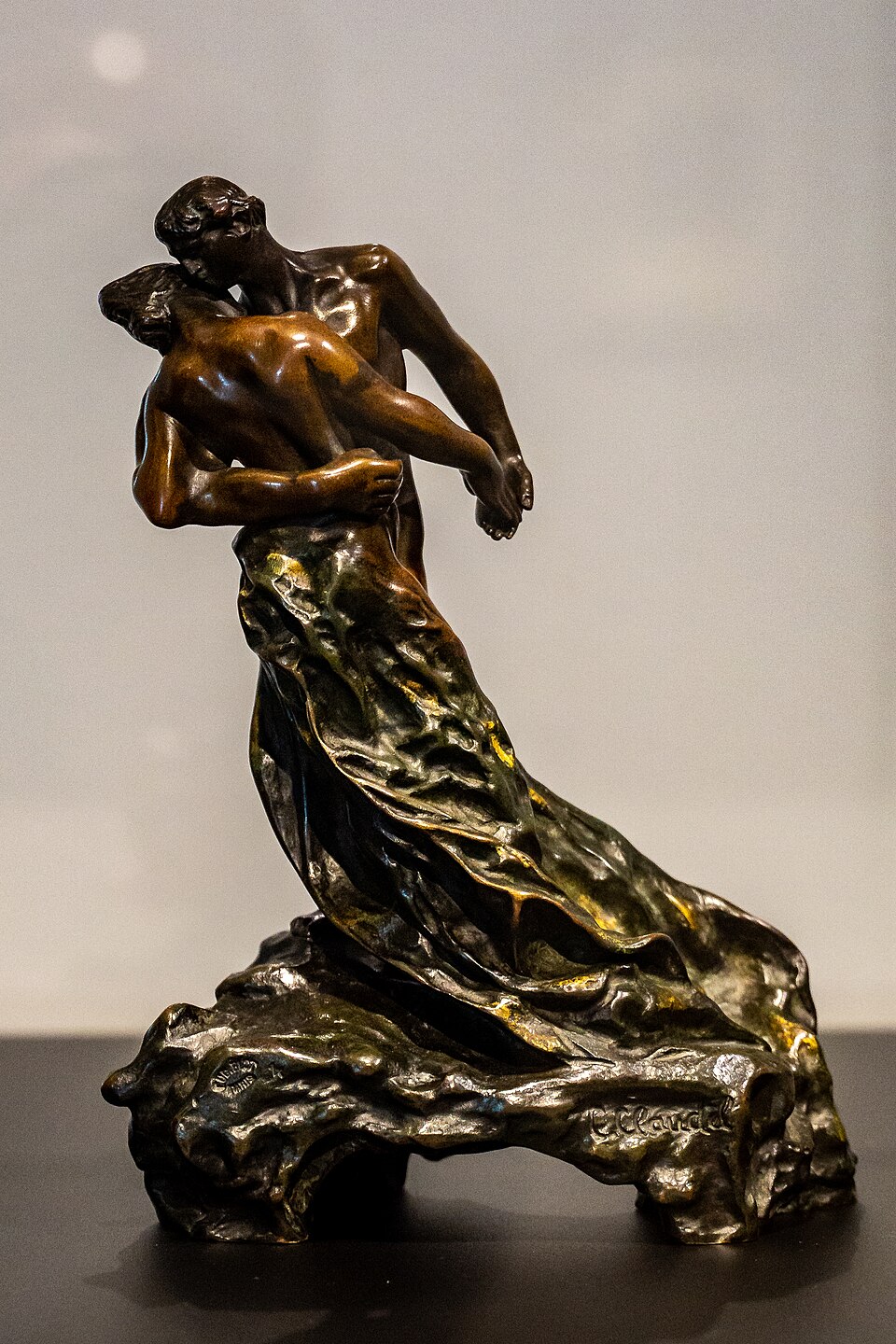
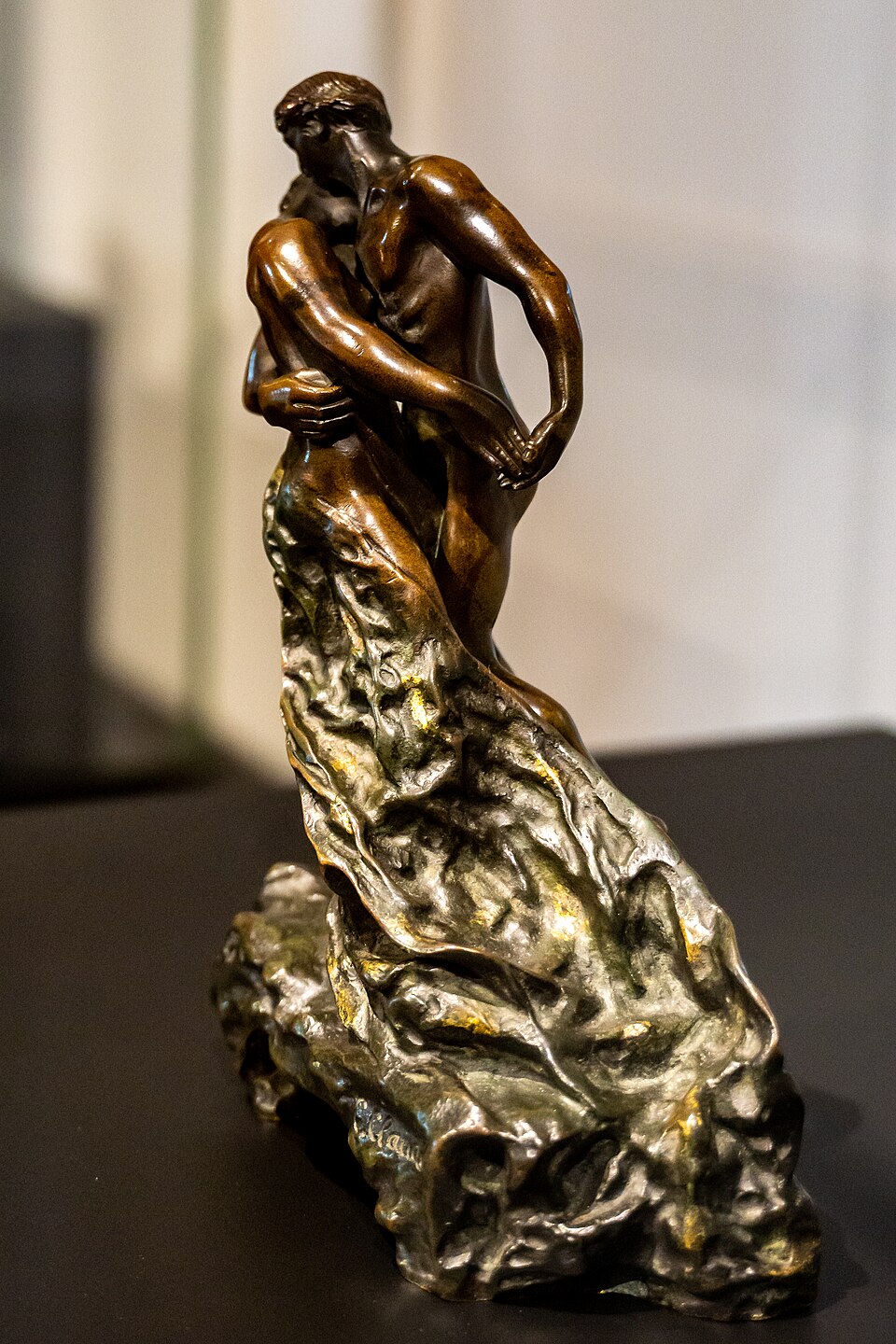
Yes, my child, it was a daily struggle. Many thought a woman could not be a great artist. One day, I sculpted The Waltz, a couple turning, embraced in dance. The administration found it too sensual and refused to commission it in marble. Can you imagine? They judged my art as they judged my life. Fortunately, a courageous writer, Octave Mirbeau, wrote in 1895 that I was a great sculptor, in a trade where genius was believed reserved for men alone. Those words I kept as a treasure.
They judged my art as they judged my life.
—Did you make a good living from your sculptures?
Not really, alas. To live, a sculptor hoped for state commissions: that's when the French administration buys a work from you, or pays you to make one. My male colleagues received many. I had a few, but far fewer. So I lived simply, sometimes poorly. I ate bread, soup, a little cheese. Onyx and marble are expensive, and bronze even more. You see, the hardest part wasn't lacking ideas: I had hundreds. It was lacking money to turn them into real sculptures.
—Why did you break your own sculptures?
You touch on something painful. Starting in 1905, in my studio, I began to destroy my works. I broke them with my own hands, the same hands that had created them. Why? I was more and more alone, and I believed people wanted to steal my ideas. Fear grew in me like a weed. My studio deteriorated, I locked myself in. You know, sometimes suffering clouds everything, even the love you have for your own work. That's why so few of my sculptures remain today. Many disappeared under my own blows.
—Is it true that you were locked up for a very long time?
Yes, my child, and that is the saddest part of my story. In 1913, after my father's death, my family had me committed to an asylum, a house where they lock up people said to be ill. Then I was transferred to Montdevergues, near Avignon. I stayed there for thirty years, until my death. The most unfair part? Even doctors wrote that my confinement was no longer necessary. To my brother Paul, I wrote that my life, once a dream, had become a nightmare. And there, I never again touched a lump of clay.
My life, once a dream, had become a nightmare.
—If you were seen today, what would you like to tell us?
I would like to thank you, first, for coming to listen to me. For a long time, I was forgotten. People saw me only as Rodin's pupil, or the confined woman. But do you know that one day, long after me, a whole museum bearing my name was opened, in Nogent-sur-Seine? There they keep my Gossips, my Wave, everything I did not break. If you remember one thing from me, keep this: what you create with patience and courage can survive, even when the world turns its back on you. Keep shaping your own earth, my child, and never listen to those who say a girl cannot.
What you create with courage can survive, even when the world turns its back on you.
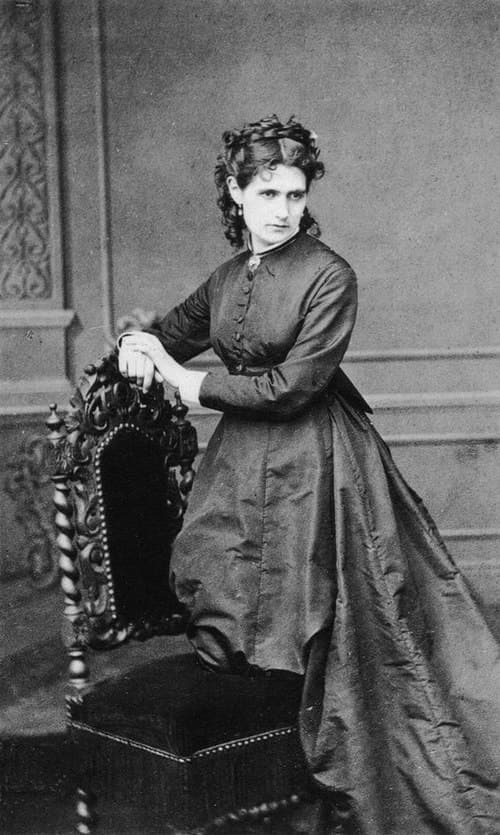
This imaginary interview was generated by artificial intelligence from sources documented in Camille Claudel's profile. It dramatises what the figure might have said based on what we know about them, but does not constitute attested historical testimony. For primary sources and factual documentation, refer to the full profile.