Imaginary interview with Camille Claudel
by Charactorium · Camille Claudel (1864 — 1943) · Visual Arts · 6 min read
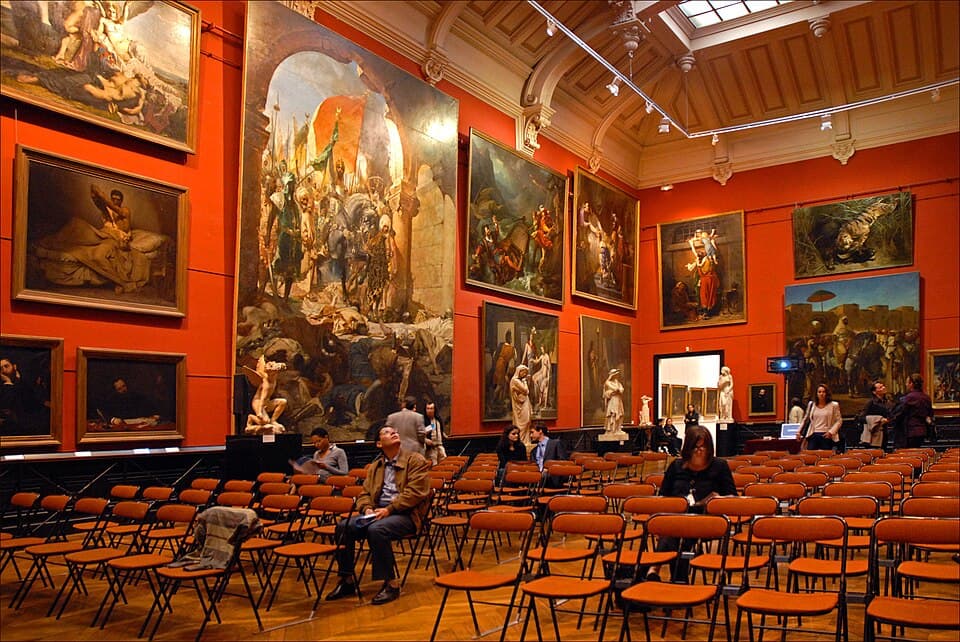
Avignon, summer 1935. Behind the walls of the Montdevergues asylum, in a courtyard where the light falls harshly, a seventy-year-old woman looks at her hands. She has not modeled any clay for twenty-two years. She was long called mad; that day, she agrees to speak about clay, Rodin, and the onyx that was her kingdom.
—How did you come to sculpture?
I knew clay before words. In Fère-en-Tardenois, as a kid, I would pick up the red earth from the paths and give it faces — I was twelve and already had this mania for kneading reality. My father understood me; he enrolled me at the Académie Colarossi, because the École des Beaux-Arts, you see, closed its doors to women like you close a gate on a forbidden garden. There I learned to look at a body not as an object of scandal but as an architecture of muscles and tension. With the modeling tool in my hand, I no longer thought about what I was allowed to do: I thought about the form rising under my fingers, which never asked me if I was a girl or a boy.
I knew clay before words.
—Do you remember your meeting with Auguste Rodin?
It was around 1884. Our master, Alfred Boucher, had to leave for Rome, and he asked Auguste Rodin to take over for him with us. I still see the man entering the studio, that gaze that assessed a shoulder, a wrist, just as I assessed them. Very quickly I was no longer just his student: I became his practitioner, his hands sometimes, in the studio on rue de l'Université. I carved feet, hands for his Burghers of Calais, for his Gates of Hell — one doesn't always know how much of oneself is hidden in what another signs with his name. We worked forehead to forehead on the same clay. It was there, in that closeness of modeling, that everything began: admiration, work, and the rest, of which I did not yet know it would cost me so dearly.
—What does The Mature Age represent for you?
The Mature Age is my wound set upright in bronze. A man between two women: one young, on her knees, arms outstretched, begging; the other, old, who carries him away without resistance. This man being dragged off, let whoever understands understand. As early as 1886, I had written to Rodin: 'There is always something absent that torments me. I work fiercely on my bust, but I cannot finish it.' That something absent was already him leaving, or me losing him. I put that tearing into plaster because I didn't know how to say it otherwise. They found the work too personal, almost indecent in its truth. But a sculpture that doesn't bleed a little, what's the point of modeling it?
A sculpture that doesn't bleed a little, what's the point of modeling it?
—How was The Wave, that very singular work, born?
From water and stone, two things that should not get along. For The Wave, in onyx and bronze, I carved three little bathers crouching under an immense wave that will swallow them. That wave, I had seen it in the Japanese, in Hokusai, in those prints where the foam curls like a claw — no one here was really looking that way yet. Onyx, that translucent stone veined with green, I chose it because light enters it as into the water of a pond. They reproached me for leaving noble marble for these jeweler's materials; I found a whole world there. There, at least, I was no longer in anyone's shadow: the wave was mine, the gesture was mine, and the onyx bore no signature but mine.
The wave was mine, the gesture was mine.
—Why this taste for small formats and intimate scenes, like The Gossips?
Because greatness is not a matter of size. The Gossips — some say The Chatterers — is four women leaning toward each other, in a corner's hollow, confiding some secret. I carved them in onyx, small like figurines, but I wanted people to hold their breath at what they are saying to each other. I took this subject from the street, watching strangers whisper. That is what official commissions did not understand: that a murmur among four women is worth a three-meter bronze hero. With my modeling tool, I sought the exact tilt of a nape, the weight of a confidence. Sculpture doesn't always need to shout; sometimes it only has to be silent and listen.
—Your works were often judged too sensual. How did you experience that?
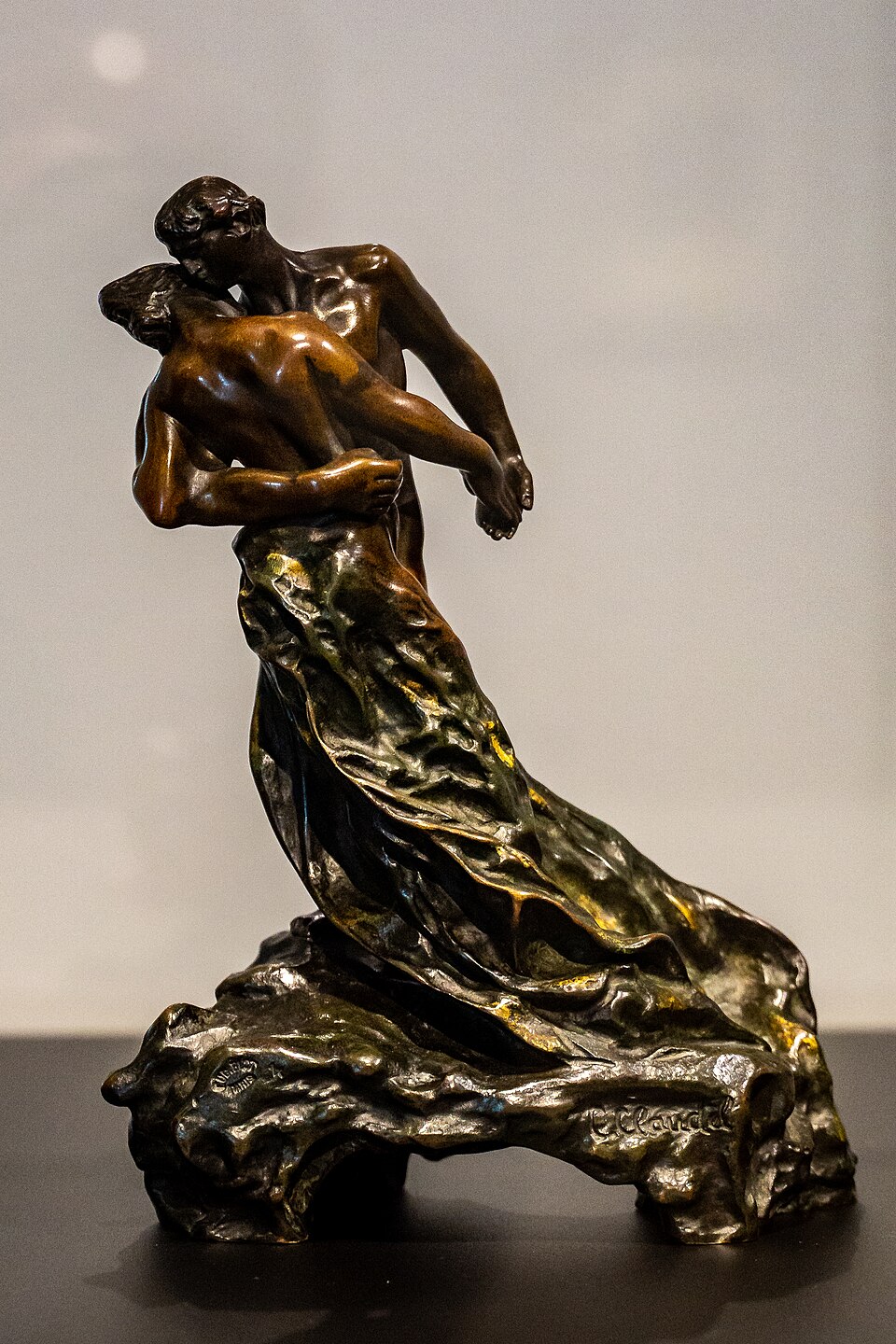
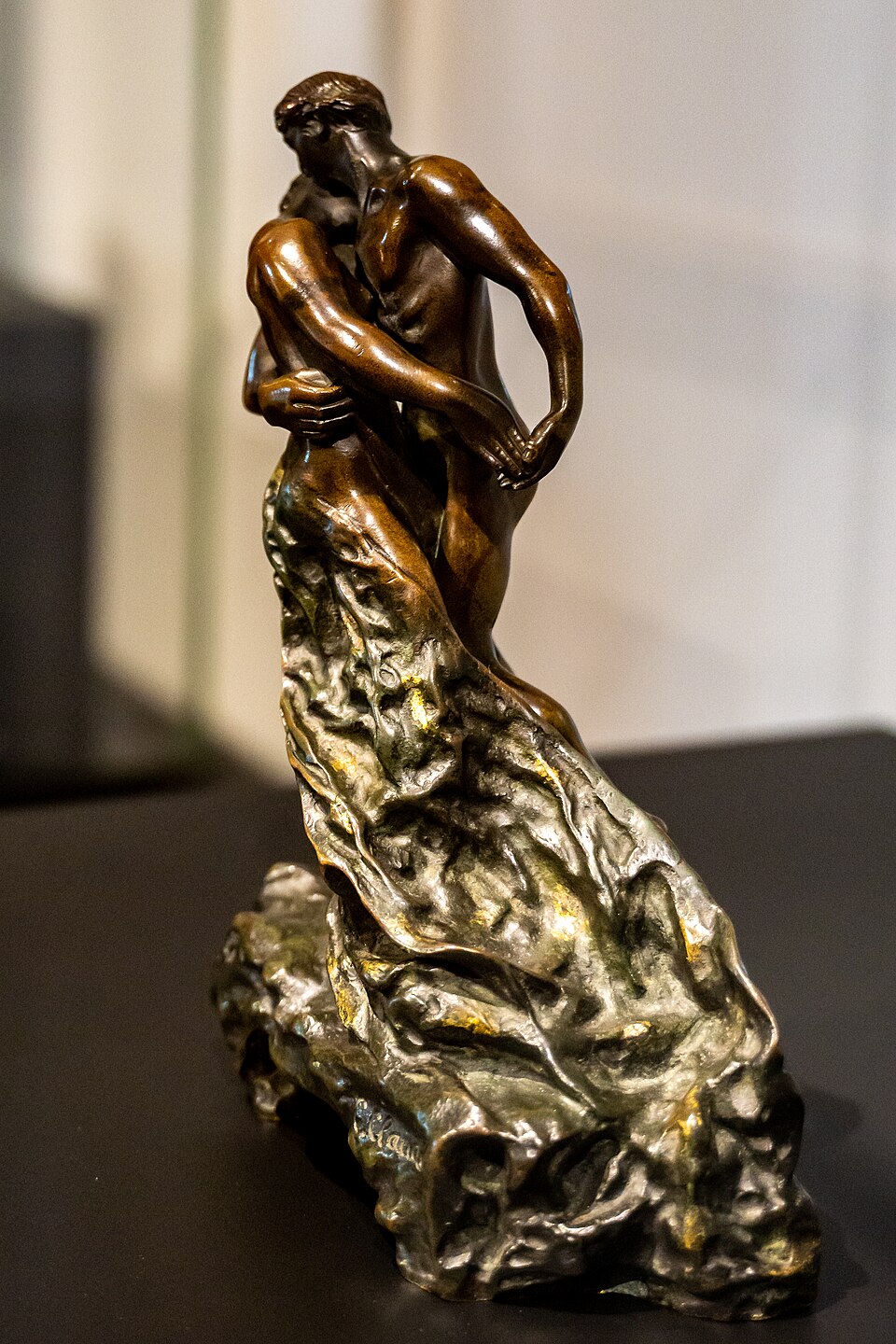
The Waltz, in 1893 — a couple carried away in the dance, leaning so close to falling that you can almost hear the music. The administration found it too sensual, they refused me the state commission in marble, as if two bodies spinning together were indecent. See the irony: they praised in men the audacity they reproached in me as a fault. Fortunately, Octave Mirbeau wrote in 1895 that I was a great sculptor, in an art where genius seemed reserved for men alone. That did me good, I admit, but it also hurt me: did one have to be astonished that a woman had genius, like a dog that could talk? I did not ask to be admired despite my sex. I asked that they look at the sculpture, and keep quiet about the rest.
—What were your days like in your studio on the Quai de Bourbon?
From 1899, I settled alone at 19 quai de Bourbon, on the Île Saint-Louis. I got up early, for the light — the northern light, even, without treacherous shadow, the only one that tells the truth of a volume. I moistened my rough sketches, arranged my tools around the sculptor's stool on which I turned for hours, standing, until I forgot to eat. Some bread, sometimes soup, and that was enough when the form came. In the afternoon, I went to the foundry to supervise a bronze, or I received a critic between two molds. In the evening, by lamplight, I continued. It was a monk's life, but a monk who would have had his hands in the earth rather than joined. That studio was my kingdom and, I already felt it, would become my prison.
—They say that from 1905 you destroyed your own works. Why?
From 1905, yes, I would sometimes take the cutting wire and slice what I had spent months bringing to life. Understand: I believed I was spied on, pillaged. I imagined people came at night to copy my ideas to sell them under other names. Rather than see them stolen, I preferred to return them to nothingness — a cut of the wire in the clay, and the thing no longer existed. The studio on quai de Bourbon was deteriorating around me, the plasters were gathering dust, I hardly opened my door anymore. Solitude, which had first served as a rampart, became a rising water. I no longer always distinguished my real enemies from those my head fabricated. They call that madness; I long called it defense.
—How did you experience your internment in 1913?
My father died in 1913. He was the last to defend me. A few days later, they came to get me from my studio and took me to Ville-Évrard. Papers had been signed, alienists had put their names under the word internment. Yet the report itself acknowledged that I showed no constructed delirium, that my condition did not require prolonged confinement. Do you understand what it is, to hear a doctor write that you could be let out, and still remain behind the walls? The war came in 1914, I was transferred farther, toward Avignon, to Montdevergues. There, I no longer touched clay, nor the modeling tool, nor onyx. What's the point of sculpting for walls? They had taken my hands by taking my freedom.
—What would you say to those who will discover you, long after you?
To my brother Paul, one day, I wrote these words: 'I live in a world so curious, so strange. Of the dream that was my life, this is the nightmare.' That is where I am, at Montdevergues, among women who are not all mad. If I could imagine that someone would read me in a century, that they would reopen my crates of plaster, I would say this: do not pity me, look. Look at Sakountala, look at The Wave, look at what these hands wrested from stone before they were locked away. I was not only the student of a great man nor the poor recluse of Avignon. I was a sculptor, plain and simple. If my name is to return one day, let it return for the clay I kneaded, and not for the tears they will want to shed over me.
This imaginary interview was generated by artificial intelligence from sources documented in Camille Claudel's profile. It dramatises what the figure might have said based on what we know about them, but does not constitute attested historical testimony. For primary sources and factual documentation, refer to the full profile.