Imaginary interview with Carl von Linnaeus
by Charactorium · Carl von Linnaeus (1707 — 1778) · Sciences · 6 min read
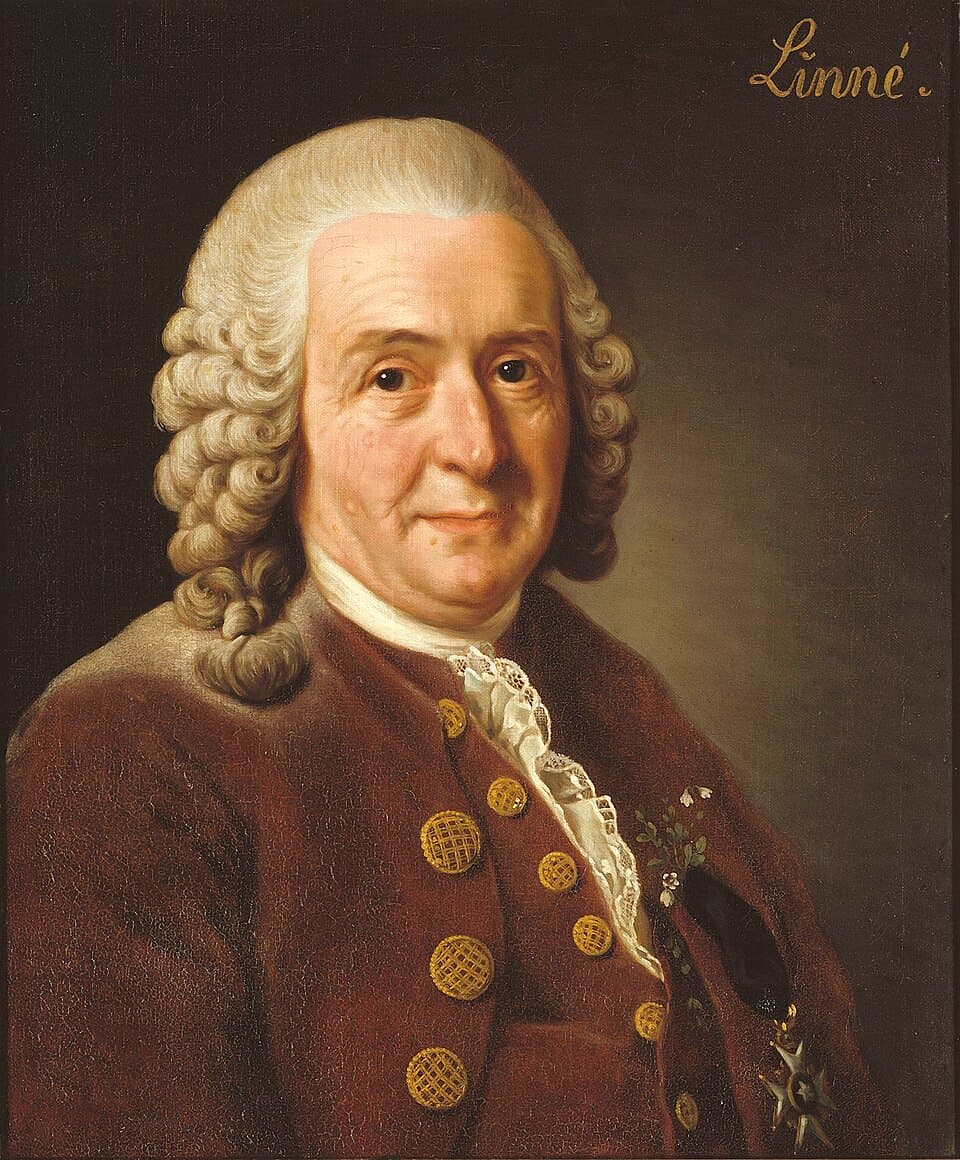
Summer 1758, at Hammarby, his country estate a few versts from Uppsala. The old naturalist receives us between flowerbeds, a magnifying glass hanging from his neck, still dressed in his field clothes. Behind him, the small museum he built away from fires houses fourteen thousand dried plants; he speaks softly, eyes bright, as if afraid of disturbing a bloom.
—How does one preserve the memory of an expedition as harsh as that to Lapland?
One keeps it in the legs, sir. 1732, I was twenty-five years old, and I traveled nearly four thousand six hundred kilometers in five months, mostly on foot, sometimes on horseback, through marshes that swallow you up to the knee. I saw the midnight sun shine on flowers that bloom only under that perpetual light. One day, crossing a swollen river, I nearly drowned; the water reached my chest and the horse trembled. From that journey I brought back a hundred new species, my notebooks filled with sketches, and my Flora Lapponica. I also brought back a Sami costume that I still wear with pride: it says better than any speech what knowledge of the North costs.
One keeps an expedition in the legs, sir.
—What exactly were you looking for in those Arctic lands that no one wanted to explore?
I was looking for what no cabinet herbarium could give me: the living plant, on its own soil, as God placed it. The Royal Society of Sciences of Uppsala had granted me a small stipend, and I set out alone or nearly so, with my plant press and my magnifying glass. I lived among the Sami, tasted their reindeer milk, noted their use of herbs for healing. A naturalist who never leaves his lectern describes only pressed corpses; I wanted to grasp nature in motion, its stamens open to the polar wind. That harsh land taught me patience and forged my reputation as an explorer that my books alone would never have built.
A naturalist who never leaves his lectern describes only pressed corpses.
—Why were you so insistent that each plant bear only two Latin words?
Because the disorder of names was a Tower of Babel, sir. Before me, a single flower had ten different names depending on the country, whole sentences as names. What mind could find its way? In my Philosophia Botanica, in 1751, I laid down the rule: the name of each plant must be composed of two words, the first denoting the genus, the second the species. Two years later, my Species Plantarum applied it to more than seven thousand three hundred plant species. The naturalist in Beijing and the one in Paris can now understand each other at a single glance. I wanted to give creation a common language, simple as a key that opens all locks.
Before me, a single flower had ten names depending on the country — a Tower of Babel.
—What ambition lies behind your motto "Deus creavit, Linnaeus disposuit"?
An ambition that some will deem excessive, and they will not be wrong to do so. God created, Linnaeus organized: I never claimed to shape the world, only to put it in order. When I published the first edition of my Systema Naturae in the Netherlands, in 1735, I aimed to arrange the three kingdoms — animal, vegetable, mineral — as one arranges a library, into classes, orders, genera, and species. The vegetable kingdom I divided into twenty-four classes based on the number of stamens. Some reproached me for such arrogance in wanting to classify everything; I answer that putting order into the Creator's work is still a way of adoring Him. Twelve times I revised this work in my lifetime.
Putting order into the Creator's work is still a way of adoring Him.
—Do you remember the decision to place humans among the primates?
I remember it all the more because it earned me many reproaches. In the tenth edition of my Systema Naturae, in 1758, I placed humans among the primates and named them Homo sapiens. Christian Europe was scandalized: to place the creature made in God's image alongside the ape, what sacrilege! But I challenge anyone to show me, by the sole rules of anatomy, a character that clearly separates humans from apes. I do not find one. My magnifying glass does not lie, and my method knows no exception of favor. I placed humans where nature places them, not where vanity would put them. The controversy has not died down, and I doubt it will soon.
I placed humans where nature places them, not where vanity would put them.
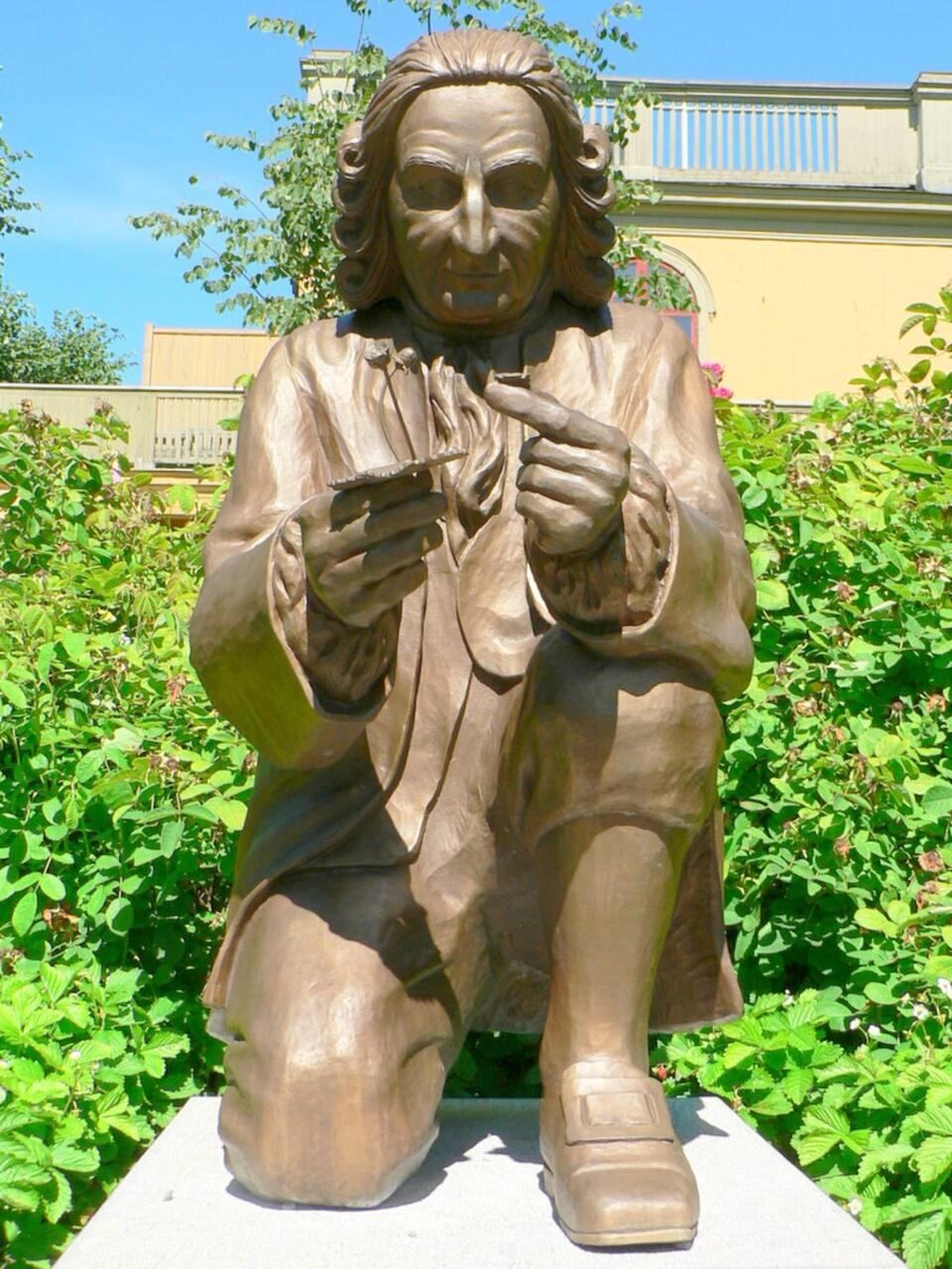
—Did you not fear the wrath of theologians in making that choice?
Fear, sir, is a poor counselor for a naturalist. I am a pastor's son, grew up in Råshult in a parsonage, and no one will accuse me of despising the Creator — I never ceased to praise His order. But devotion must not command classification. If I were to exclude humans from the primates out of mere prudence, I would betray the very method that gives value to my Systema Naturae. So I held firm, relying on what my magnifying glass and dissections showed me. The doctors murmured, yet King Frederick I had ennobled me the year before. So you see, one can disturb minds and still keep favor.
Devotion must not command classification.
—It is said that your botanical outings turned into celebrations. What was really the case?
That was true, and I still feel a child's joy at it! At Uppsala, my plant hunts sometimes gathered up to two hundred participants. We would set out early in the morning into the countryside, my magnifying glass around my neck, and everyone would run to flush out a plant, an insect, a nest. They would shout Vivat Linnaeus! when a rare species was captured, and the troop would return to town to the sound of drums and horns, like a victorious army. The rector, they say, frowned at such commotion. But I maintain that a science one loves is better remembered than a science one endures. My Latin lectures filled the amphitheater with students from all over Europe; these plant hunts were their joyful extension, botany brought down into the meadows.
A science one loves is better remembered than a science one endures.
—What became of those disciples you called your "apostles"?
Ah, my apostles… seventeen young men I sent to the four corners of the globe, where I could not go myself, to bring me the plants of the world. One left for Japan, another for Arabia, another yet for the South Seas on English ships. They botanized in my name, labeled, dried, shipped their crates to my herbarium in Uppsala. But that was my joy and my torment: several never returned. Fever, shipwreck, hostile lands took some of those boys I loved as sons. Each rare specimen they sent enriched my Systema, and each death wrung my heart. One does not arrange the world without losing lives.
One does not arrange the world without losing lives.
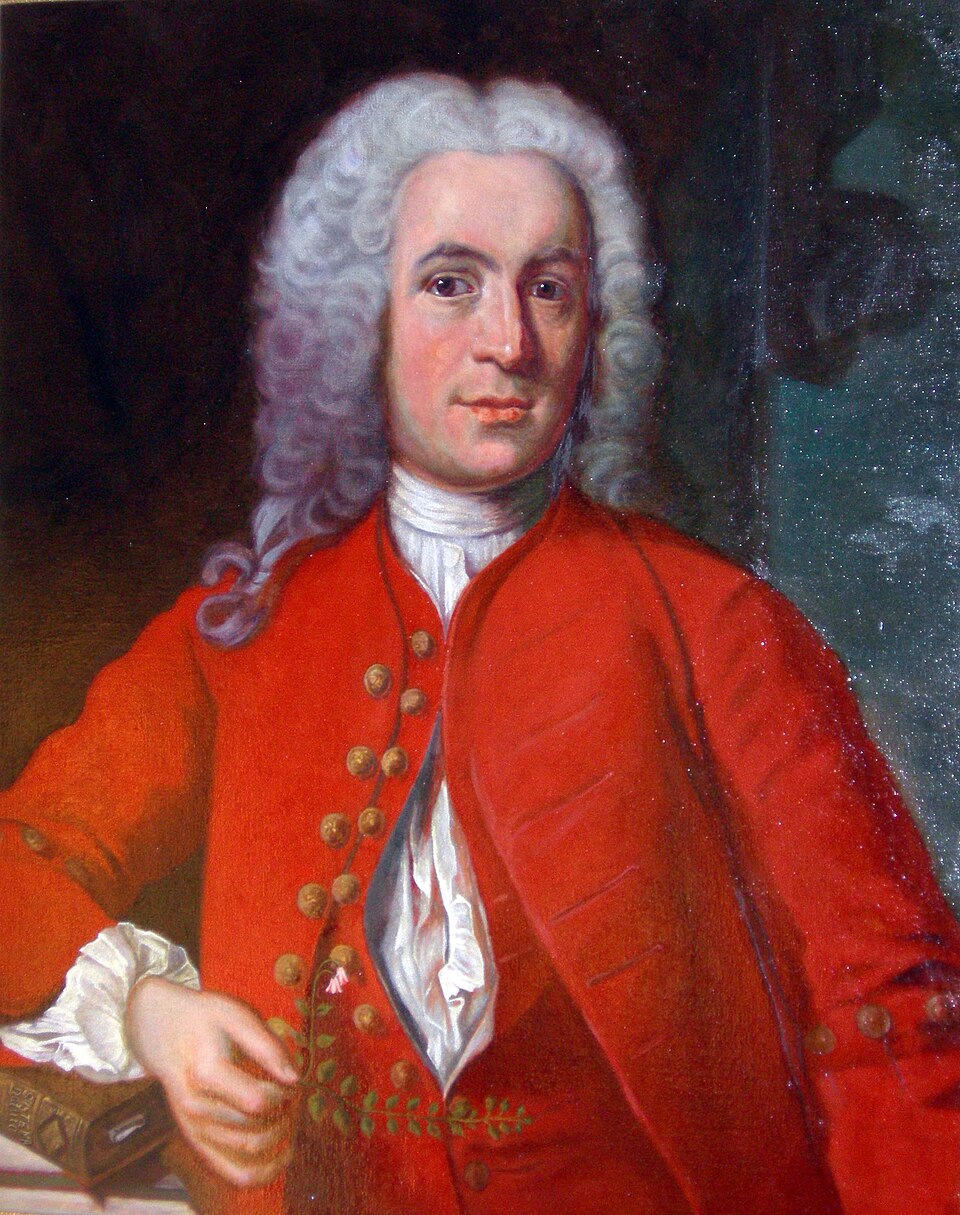
—Is it true that you named some plants to settle scores?
I confess this little fault, and I still smile at it. A botanist named Johann Siegesbeck had launched attacks against my system, which he deemed obscene because it was based on the sexual organs of plants — stamens and pistils, male and female of the same flower. The fellow cried scandal. So I dedicated to him a small, foul-smelling, graceless creeping herb: the Siegesbeckia. Let him who sullies my work bear the name of a stinking plant! Conversely, I honored my friends by engraving their names in the eternal flora. You see, my magnifying glass serves to observe nature, but nomenclature also serves to remember — both loyalties and treacheries.
Let him who sullies my work bear the name of a stinking plant!
—Why did you base your classification on what others found so shocking?
Because nature does not blush, sir, and the scholar need not blush for her. I observed, magnifying glass to eye, that the flower is the organ of plant generation: its stamens and pistils are its nuptials. So I built my twenty-four classes of the vegetable kingdom on the number and arrangement of these organs. I was accused of indecency, like poor Siegesbeck, talk of "debauchery" in the gardens. But I only read what the Creator wrote in the corolla. To hide the mechanism of flowers out of modesty would be to prefer blindness to truth. My method prevailed, that is my answer to the delicate.
Nature does not blush, and the scholar need not blush for her.
—At the evening of your life, what do you wish to remain of this whole enterprise?
I wish order to remain, simply. When I retire here, at Hammarby, and classify my specimens by evening light, I think that I have given men a language to name every herb in the meadow and every beast in the woods. My herbarium — fourteen thousand plants — is nothing but a living dictionary. If I could imagine being read a century hence, I would hope that my two-word nomenclature survives my quarrels and my pride, that a child picking a flower might still give it its genus and species name. The rest — ennoblement, the Uppsala crowds, the Vivat — is but smoke. What remains is the Species Plantarum, and the right name placed on each thing.
My herbarium is nothing but a living dictionary.
Read further
This imaginary interview was generated by artificial intelligence from sources documented in Carl von Linnaeus's profile. It dramatises what the figure might have said based on what we know about them, but does not constitute attested historical testimony. For primary sources and factual documentation, refer to the full profile.