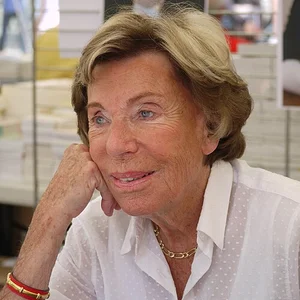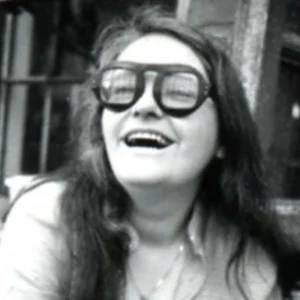

Kate Millett (1934-2017) was an American writer, theorist, and artist, a major figure of second-wave feminism. Her essay “Sexual Politics” (1970), drawn from her doctoral thesis, became a founding text of feminist studies.
Kate Millett(1934 — 2017)
Kate Millett
États-Unis
5 min read
Frequently asked questions
Key Facts
- Born in 1934 in Saint Paul, Minnesota, in the United States
- Published “Sexual Politics” in 1970, a major theoretical work of feminism
- Active member of the women's liberation movement and the National Organization for Women (NOW)
- Published “The Loony-Bin Trip” (1990) about her experience of psychiatric confinement
- Died in 2017 in Paris
Works & Achievements
Founding essay of feminist studies that analyzes “patriarchy” as a political system of domination; a worldwide bestseller.
Documentary film in which three women tell the story of their lives to the camera, illustrating the idea that “the personal is political.”
Experimental, taboo-free autobiography about her private life and her sudden fame.
A collection of testimonies and analyses on prostitution, giving voice to the women directly involved.
An investigative book about a horrific news story, in which she examines cruelty and the violence inflicted on young girls.
An autobiographical account of her psychiatric confinement and her critique of psychiatry.
A memoir devoted to her aunt and to her own coming of age as a young woman and an artist.
Anecdotes
In 1970, Kate Millett appeared on the cover of Time magazine, which dubbed her “the Mao Tse-tung of the Women's Liberation Movement.” This sudden fame made her uncomfortable: she was wary of the idea that a single person could embody an entire collective movement.
Her most famous book, “Sexual Politics” (1970), was in fact her doctoral dissertation defended at Columbia University. Rare for an academic thesis, the book sold tens of thousands of copies and became a worldwide bestseller.
Before becoming a theorist, Kate Millett was a sculptor and spent time in Japan, where she exhibited her work. Throughout her life, she continued to create artistic installations alongside her writing.
In 1979, she traveled to Iran just after the revolution to support Iranian women who were protesting against the mandatory wearing of the veil. The authorities of the new regime quickly expelled her from the country.
Late in her life, she founded a colony for women artists on a Christmas tree farm she ran in New York State, blending farming, art, and feminist activism.
Primary Sources
Coitus cannot be regarded as an act isolated from the context of human relations; it is woven into the much larger fabric of relationships of which it is but the concentrated summary.
An autobiographical narrative in which Millett candidly lays bare her life, her bisexuality, and the contradictions of her sudden fame following the success of Sexual Politics.
A personal account of her psychiatric confinement and her refusal of treatment, in which she denounces the way society locks away those deemed “different.”
Key Places
Birthplace of Kate Millett, where she grew up in a Catholic family of Irish descent.
University where she defended the doctoral thesis that became *Sexual Politics*. She also taught literature there.
Manhattan neighborhood where she lived and set up her artist's studio, at the heart of the intellectual and activist scene.
Iranian capital where she traveled in 1979 to support women protesting against the mandatory veil, before being expelled.
City where Kate Millett died in 2017, during a trip with her partner.
Typical Objects

The writer's everyday working tool, on which she wrote the thesis that became “Sexual Politics.” A symbol of women claiming their voice through writing.

Millett's groundbreaking book, which analyzes the relations of domination between men and women. It circulated from hand to hand in the feminist groups of the 1970s.

Chisels, gouges, and materials she used for her sculptures and installations. Millett was a visual artist before and during her career as a theorist.

A vehicle for slogans held aloft in the feminist marches of the 1970s. It embodies the activist, collective dimension of the women's liberation movement.

Millett also made documentary films, such as “Three Lives” (1971). The camera allowed her to give a voice to ordinary women.
School Curriculum
Vocabulary & Tags
Key Vocabulary
Tags
Daily Life
Morning
In the morning, Kate Millett divided her time between writing and artistic creation. Seated at her typewriter or working in her studio, she devoted herself to her texts and her sculptures with the same intensity.
Afternoon
The afternoon might be given over to teaching at the university, to feminist group meetings, or to preparing demonstrations. She exchanged ideas extensively with other activists and intellectuals.
Evening
In the evening, she returned to the New York artistic and activist scene: debates, public readings, discussions about the ideas stirring the era. These moments nourished her thinking.
Food
Like many New York intellectuals of her time, she ate simply, often as meetings and cafés dictated. Later, her farm in upstate New York provided her with fruits and vegetables.
Clothing
Millett adopted a casual, unfussy style, rejecting the imposed “feminine” dress codes. This choice echoed her convictions about the freedom of women.
Housing
She lived for a long time in a loft-studio in the Bowery district of New York, blending her living space with her place of creation. She also acquired a farm where she planted trees and hosted a colony of women artists.
Historical Timeline
Period Vocabulary
Liens externes & ressources
Références
Œuvres
Sexual Politics (La Politique du mâle)
1970
Flying (En vol)
1974
The Prostitution Papers
1973
The Basement
1979
The Loony-Bin Trip
1990
A.D.: A Memoir
1995