Imaginary dialogue between Andrea Dworkin and Catharine MacKinnon
by Charactorium · Catharine MacKinnon (1946 — ?) · Society · Philosophy · Politics · 5 min read
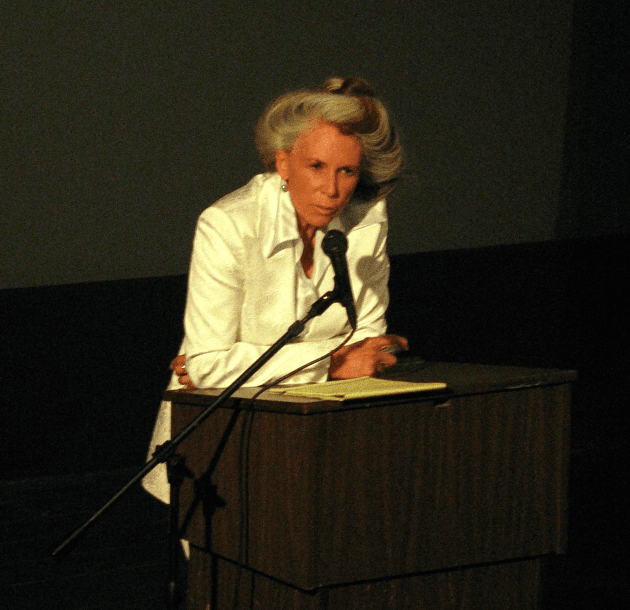
It is in a small apartment in Minneapolis, in the winter of 1983, that Andrea Dworkin comes to find Catharine MacKinnon. On the coffee table lie annotated drafts of the ordinance they are drafting together, next to a cooling tea. They have known each other for only a short time but recognized each other immediately, two voices of radical feminism convinced that the law can be a weapon. Andrea came less to question than to understand the path that led her comrade here.
—Catharine, before your book from 1979, a woman harassed at work had no legal word to describe what she was experiencing. Where did that idea come to you?
From listening, Andrea. I heard women describe things that had no name, therefore no existence before a court. A supervisor who demands sex in exchange for a job uses power drawn from one sphere to impose a deprivation in another — that is the mechanism. Title VII of the Civil Rights Act of 1964 already prohibited sex discrimination at work: one just had to demonstrate that harassment was a form of it. As long as a wrong has no name, it exists for no one except the one who bears it in her body. I wanted to give it that name so that it would finally become visible in the eyes of the law.
As long as a wrong has no name, it exists for no one except the one who bears it in her body.
—You write your theory, and seven years later the Supreme Court cites you in the Meritor decision. When you were writing, did you imagine it would go that far?
No, you don't write betting on the Supreme Court, you write because you cannot do otherwise. But I knew the argument was right, and a right argument eventually finds its way. In 1986, in Meritor Savings Bank v. Vinson, the justices recognized that harassment was indeed discrimination under Title VII, exactly as I had argued. That day, it wasn't my name that mattered, it was that millions of women finally gained a remedy. Theory that stays in journals protects no one; theory that enters a courtroom changes lives. That is what I seek.
Theory that stays in journals protects no one; theory that enters a courtroom changes lives.
—You keep repeating that sexuality is not a given of nature. That position earns you a lot of anger. Why do you hold it so strongly?
Because if women's situation is not biological, then sexuality must be largely a social construct. That does not mean it has no basis in material reality, nor that it is not real — it is terribly real. But what is constructed can be undone. As long as we believe that domination stems from nature, we suffer it as fate. The day we see that it is manufactured, in concrete power relations, it becomes a political object. Kate Millett sensed it as early as 1970: the bed is a political place. I am just following that thread to its end, all the way to the law.
What is constructed can be undone; the day we see that domination is manufactured, it becomes a political object.
—We are always confronted with equality, that beautiful equality that treats everyone the same. You say that equality lies. Explain to me.
Formal equality consists of applying the same rule to everyone. That seems noble, but apply the same rule to people placed in unequal situations, and you correct nothing: you reproduce inequality under an appearance of neutrality. That is the trap. The state, through law, institutionalizes male domination precisely by disguising it as objectivity. Law prohibits rape, but defines it in a way that makes it almost impossible to prove. What I demand is substantive equality that confronts real power relations. Treating unequals identically is not justice; it is well-mannered domination.
Treating unequals identically is not justice; it is well-mannered domination.
—In the book you are preparing on the State, you go so far as to say that law is male. Aren't you afraid of being accused of condemning everything wholesale?
I will be accused of everything, Andrea, you know that better than anyone. But saying that law is male is not saying that every judge is a tyrant. It is noting that the point of view that believes itself neutral, universal, objective is in reality the point of view of those who wrote the rules. The objectivity of law is the subjectivity of men erected as a norm. My work in that book is to make that point of view visible as a point of view. Once seen, it can no longer be taken for eternal truth. It is a work of unmasking as much as of theory.
The objectivity of law is the subjectivity of men erected as a norm.
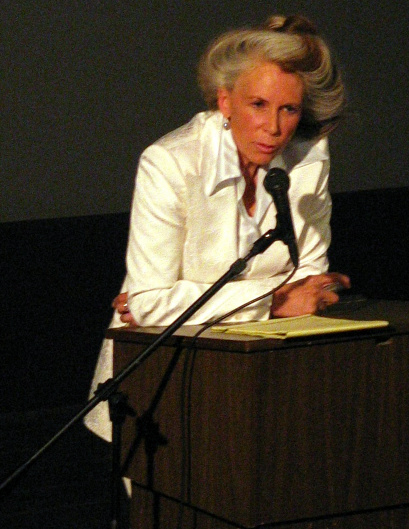
—Here we are, both bent over this Minneapolis ordinance. Remind me what convinced us to attack pornography through civil law.
The refusal to treat it as a mere idea protected in the name of expression. You and I start from the same observation: pornography does not merely depict the hierarchy of the sexes, it creates it. Real women are used to produce it, real women are hurt in it, and others are hurt by its use. So our ordinance allows victims to sue producers civilly for sex discrimination. We are not asking the police to censor; we are giving women the right to act for themselves. That is our common bet, Andrea: putting legal power in the hands of those who have been used.
Pornography does not merely depict the hierarchy of the sexes, it creates it.
—The city council passed our text twice, and twice the mayor vetoed it in the name of the First Amendment. How do you stand firm against that wall?
I stand firm because the wall proves me right. When you answer wounded women that freedom of speech trumps their dignity, you confess exactly what we denounce: that the speech of the powerful weighs more than the bodies of the dominated. The First Amendment is brandished as a shield by those who profit from the system. The veto is not a defeat of the argument; it is the revelation of who decides. We lost the vote, but we gained clarity. One day, what we are writing today in this room will seem obvious — for now, we simply had to dare to write it.
The veto is not a defeat of the argument; it is the revelation of who decides.
—You and I do not write the same way — you the legal scholar, me the writer. What did our four-handed work teach you?
That anger and precision do not oppose each other; they complement each other. You go straight to the flesh of the matter, you name violence without softening it, and I seek the legal form that will make it enforceable in court. Alone, I might have let law blunt the edge of reality. With you, I keep before my eyes what we are really defending: women, not concepts. This ordinance carries both our voices, and that is why it rings true. I do not think I would have dared to go so far without having you beside me at this table.
Anger and precision do not oppose each other; they complement each other.
—You often speak of taking these struggles beyond borders. If one day women were mass-raped in a war, what would you do with our theory?
I would take it to international courts, without hesitation. Rape systematically committed in war is not an excess of soldiers; it is a weapon, an instrument for destroying a people through the bodies of its women. It must be recognized as such: war crime, crime against humanity. International law has long treated rape as collateral damage, almost a footnote. Yet if women were fully human, we would not be spoils to be distributed. What we theorize here in Minneapolis — subordination through sexuality — also applies on battlefields. Domination has no borders; our law must have none either.
Wartime rape is not an excess; it is a weapon: the destruction of a people through the bodies of its women.
—That question, 'Are women human?', you pose it almost as a provocation. Do you really believe it is still open?
I believe it is sadly very open, Andrea. Look at how the world treats those who are sold, exchanged, reduced to the state of sexual and reproductive slaves from one country to another. If women were considered fully human, all of that would be unthinkable, unbearable, prosecuted everywhere. Yet it is accepted, tolerated, turned away from. My question is not rhetorical: it measures the gap between the great proclaimed principles and the real lives of women. As long as that gap exists, the answer is not settled. My work, at bottom, consists of forcing the law to answer yes — and to draw all the consequences.
My question measures the gap between the great proclaimed principles and the real lives of women.
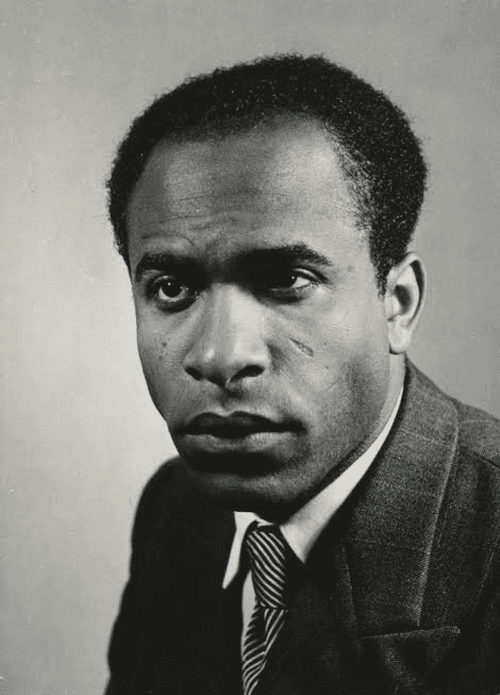
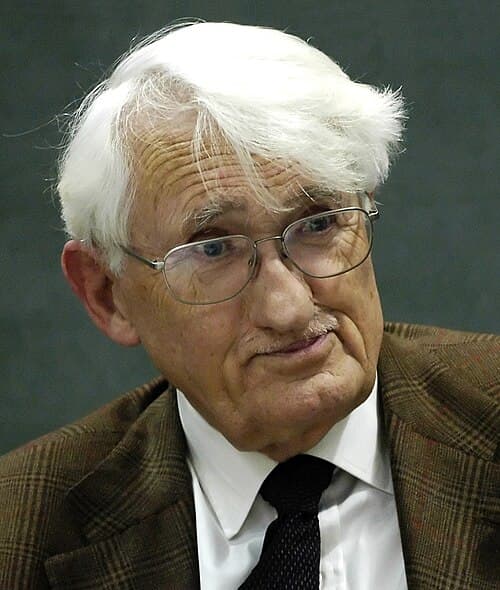

This imaginary interview was generated by artificial intelligence from sources documented in Catharine MacKinnon's profile. It dramatises what the figure might have said based on what we know about them, but does not constitute attested historical testimony. For primary sources and factual documentation, refer to the full profile.