Imaginary interview with Catherine de Medici
by Charactorium · Catherine de Medici (1519 — 1589) · Politics · 6 min read
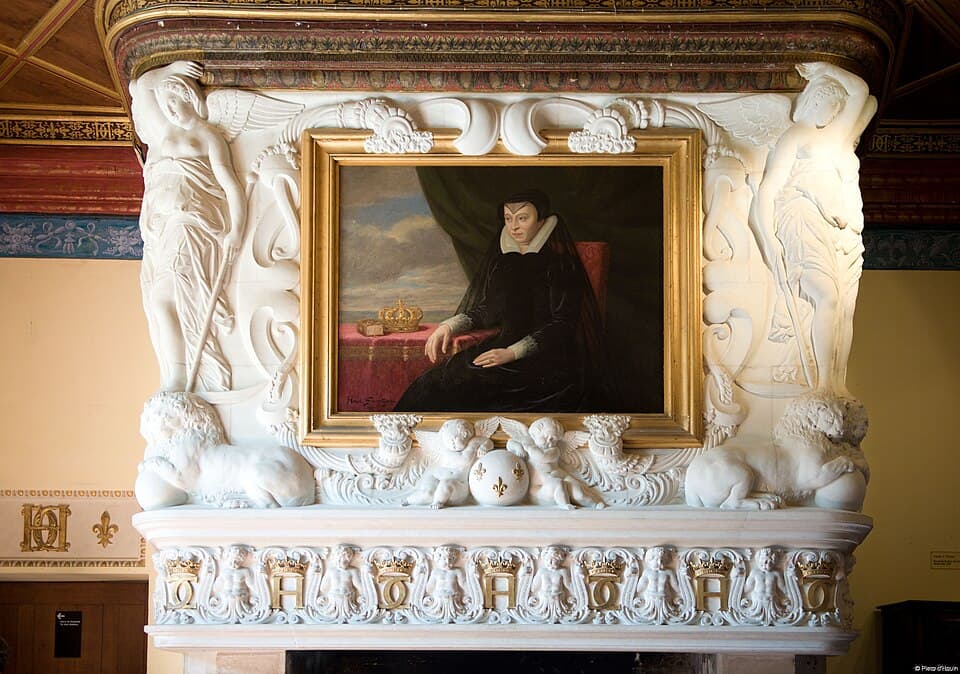
January 1589, Château de Blois. The cold bites the stones and the queen mother, dressed in her eternal mourning, receives in a room hung with tapestries, an astrolabe placed near her dispatches. Weakened but with a keen eye, she agrees to look back on forty years spent holding a kingdom on the brink of the abyss.
—You have been seen dressed in black your whole life. How did this mourning become your signature?
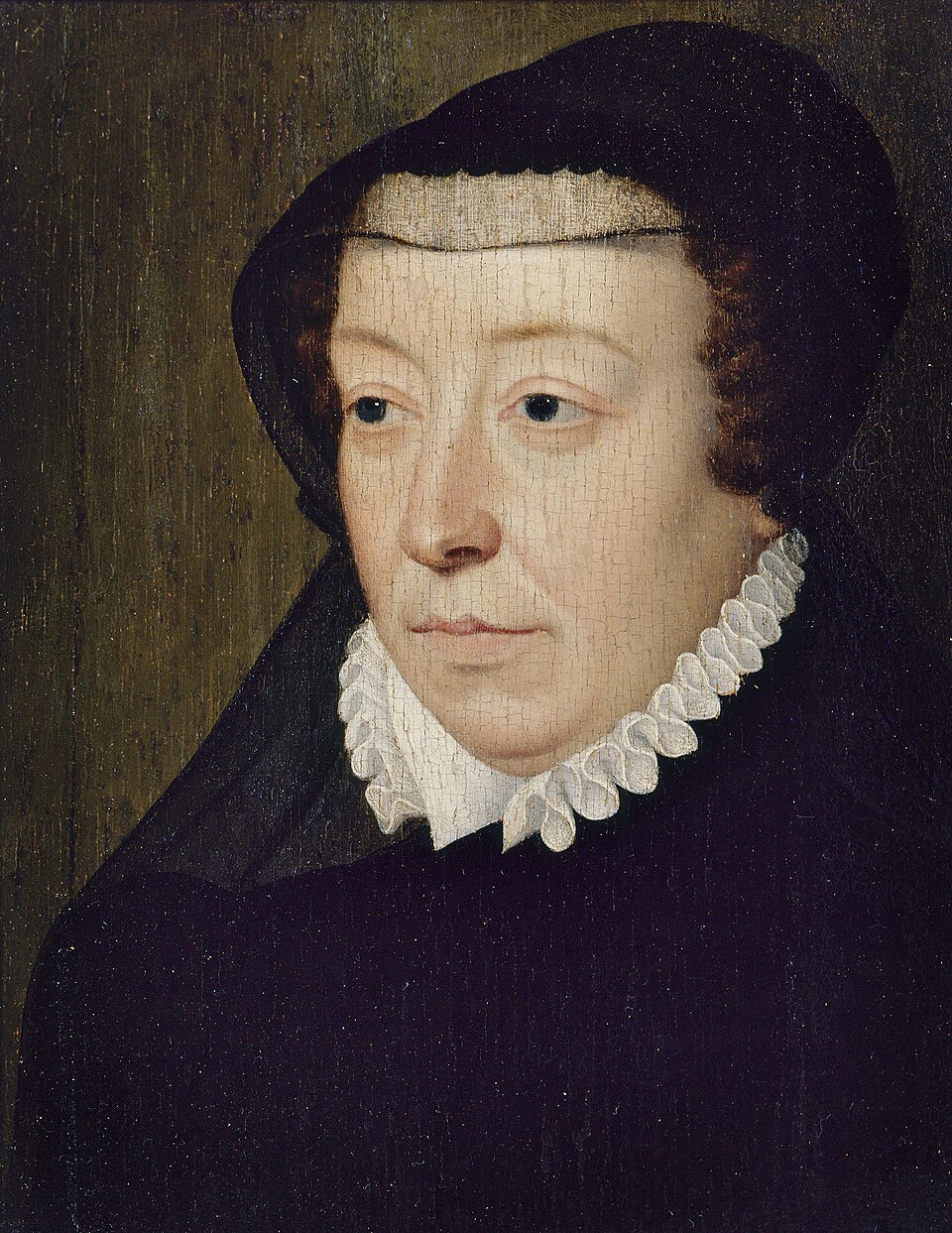
On 30 June 1559, my husband Henry II was running a lance against the Comte de Montgomery. The splinter of wood pierced his eye; he agonized for ten days, and I ceased to be merely his wife to become the guardian of his sons. The black I took then, I never left it — not out of funereal coquetry, as is whispered, but because a queen who governs in the name of children must show that she no longer belongs to herself. I am called the black queen, and they think they are injecting venom. I hear in it the constant reminder that nothing I do is for my pleasure. My apartments are full of Venetian mirrors, I confess, but none has ever reflected back the image of a free woman.
A queen who governs in the name of children must show that she no longer belongs to herself.
—As regent for two of your still minor sons, how did you intend to establish their authority?
When Charles IX was only ten, I took him by the hand and toured him through the entire kingdom — two full years, more than three thousand leagues of broken roads, from 1564 to 1566. I wanted his subjects to see their king in the flesh, that he might not be just a name signed on edicts. In each city we passed through, I received the notables of both faiths, weighed their grievances, sent them away with a word of appeasement. What I sought, I wrote a hundred times in my letters: 'to preserve the authority of the king my son and maintain peace in this kingdom, for without peace there is no kingdom.' That is my sole doctrine, and I have never known any other.
I wanted his subjects to see their king in the flesh, that he might not be just a name signed on edicts.
—Making Catholics and Protestants coexist seemed unthinkable then. Why did you persist?
Because I saw the kingdom tearing itself apart like a cloth pulled from both sides. As early as January 1562, I had an edict promulgated allowing those of the so-called Reformed Religion to live and stay in cities without being sought out or molested. I was accused of betraying the Church; I was betraying only fury. Then came the Edict of Amboise in 1563, the Peace of Saint-Germain in 1570 with its places of safety. Each edict of pacification was a truce bought at a high price, never a victory. I knew these compromises were fragile as glass, but I preferred a bad agreement to a good battle. The Huguenots hated me, the Guises suspected me: proof, perhaps, that I held the middle ground.
I preferred a bad agreement to a good battle.
—You speak of compromise, but the word 'Politique' had a precise meaning then. What did it cover?
Those were called Politiques who dared to place the State above the quarrel of altars — those for whom a divided kingdom was better than a kingdom in ashes. I often leaned toward them, and I was reproached for it as lukewarmness. But consider what the Chambre Ardente was under my husband: a court that sent heretics to the stake relentlessly. I sought another path, that of the edicts of pacification, convinced that you do not burn a faith, you only harden those who bear it. My enemies saw Florentine dissimulation in it. I saw in it the only arithmetic that counts: how many deaths spared against how many principles bent.
You do not burn a faith, you only harden those who bear it.
—You built so much. Where did this passion for stone come from?
From Italy, no doubt, where it is held that a prince is judged by what he leaves standing. As early as 1564 I commissioned the Tuileries Palace from Philibert Delorme, a residence that was to connect with the Louvre by a long gallery. And at Chenonceau, that château I took back from Diane de Poitiers after Henry II's death, I had a two-story gallery thrown over the Cher, light as a festival bridge. Building, you see, is governing differently: stone obeys, and does not change sides with every edict. When everything was falling apart around me, I went to my construction sites as others go to pray — and at bottom it was a prayer, addressed to what endures.
Stone obeys, and does not change sides with every edict.
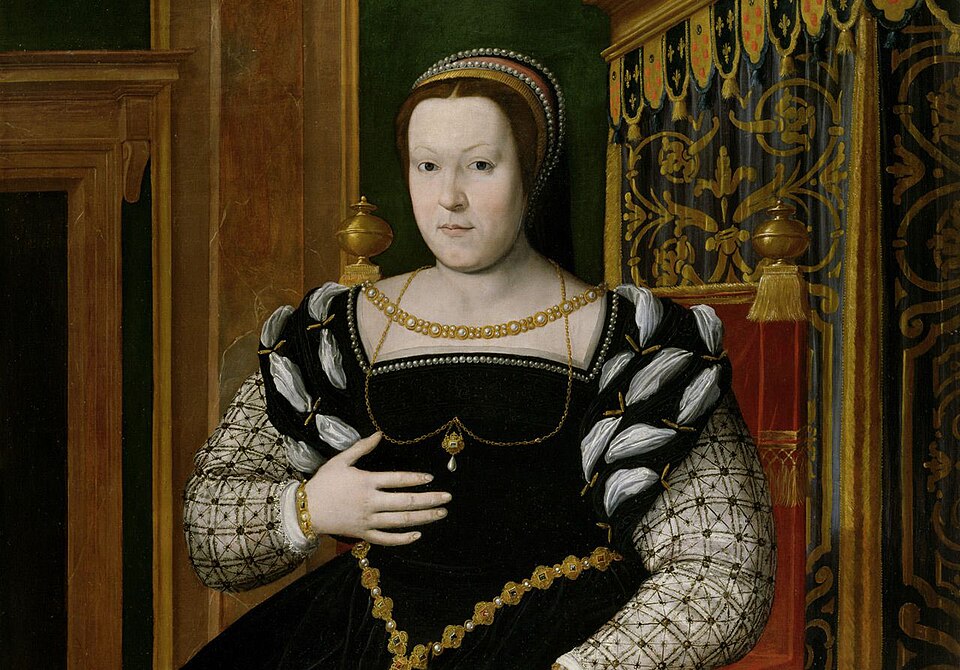
—What did you hope to achieve with those lavish festivals called your 'Magnificences'?
Everything that ambassadors and faction leaders would never say to each other around a council table, I made them say around a ballet. My Magnificences mixed music, dance and theater, and it is agreed that they are the infancy of what would be called court ballet. Believe me, nothing was gratuitous: seating a Guise and a Coligny before the same spectacle forced them to breathe the same air for an evening. Beauty disarms better than sergeants. I spent without counting on velvet, lights, machines — for a court that is dazzled forgets for a moment to hate, and it is in those stolen moments that truces are forged.
Beauty disarms better than sergeants.
—They say you changed even the way people ate at the French court. What did you bring from Florence?
I left the Palazzo Medici as a child, but I kept the taste for refined things. It is said — and I do not deny it — that I brought Florentine cooks in my baggage, and with them came artichokes, sorbets, a thousand sweets that your French lords did not know. I confess a stubborn fondness for cock's combs and candied fruits; my doctors have reproached me enough for it. But the table is also a theater of power: you impress an ambassador with a sideboard as with an army. I introduced the folding fan, that Italian whim, and many ladies of the court now hide their faces with it without knowing they owe it to me.
The table is also a theater of power: you impress an ambassador with a sideboard as with an army.
—You arrived as a foreign girl in a court that looked down on you. How did you experience it?
Florentine, merchant, daughter of bankers — I was made to feel it for a long time, especially in the years when I did not give Henry an heir. But a foreigner learns to observe before speaking, and that served me better than any birth. I was married in Marseille in 1533, under the blessing of Pope Clement VII, my relative; I entered this kingdom with my Venetian mirrors, my cabinet of curiosities filled with ancient medals and rare stones, and the will never to appear surprised. Even fashion helped me: that farthingale that flares the skirts, I spread it at court. They mock the Italian woman, then one day they dress like her.
A foreigner learns to observe before speaking, and that served me better than any birth.
—Your taste for the stars caused much gossip. What place did you actually give to astrology?
The place one gives to any uncertain science: you listen to it, you do not obey it. I invited Nostradamus to court in 1555 and asked him to cast the horoscopes of my children. He supposedly predicted that my four sons would be kings — and three were, which suffices to turn a soothsayer into a prophet in the eyes of the credulous. I had a column erected near the Hôtel de la Reine where I climbed to consult the sky, and I always kept an astrolabe within reach. But make no mistake: I never signed an edict on the faith of a star. The stars consoled me during nights when men no longer consoled me.
You listen to it, you do not obey it.
—Why this curiosity for the sciences and rare objects, in such troubled times?
Because one needs a kingdom where one rules in peace, and mine was that cabinet of curiosities I kept closed. I gathered ancient medals, precious stones, manuscripts, instruments — an astrolabe, star maps. The world outside was tearing itself apart over questions of sacraments; there, among my objects, I touched what men have produced that is durable and beautiful, without massacring each other for it. The Renaissance from which I came believed that one could know everything, and I kept that fervor. It was also, I admit, a way of fleeing: when you have buried so many sons, you seek refuge with things that do not die.
When you have buried so many sons, you seek refuge with things that do not die.
—In your lifetime, a pamphlet forged the image of a perfidious schemer. What do you reply to that portrait?
You are speaking of the Discours merveilleux de la vie de Catherine de Médicis, that Protestant libel from 1575 which accuses me of covering my designs under the veil of piety to better stir up divisions and reign. The poison of that writing is that it ascribes calculation to what was often despair. Yes, I dissembled — what queen survives without it? Yes, after the Saint Bartholomew's Day massacre of 1572, the horror seemed to give them reason. But to judge a regent by a pamphlet of enemies is to judge a captain by the account of those he fought. My daughter Marguerite, who knew me better, wrote that I worked ceaselessly to reconcile the great ones. Between these two portraits, History will choose — and I fear it will prefer the venom to the truth.
The poison of that writing is that it ascribes calculation to what was often despair.

This imaginary interview was generated by artificial intelligence from sources documented in Catherine de Medici's profile. It dramatises what the figure might have said based on what we know about them, but does not constitute attested historical testimony. For primary sources and factual documentation, refer to the full profile.