Kids interview Catherine de Medici
by Charactorium · Catherine de Medici (1519 — 1589) · Politics · 5 min read
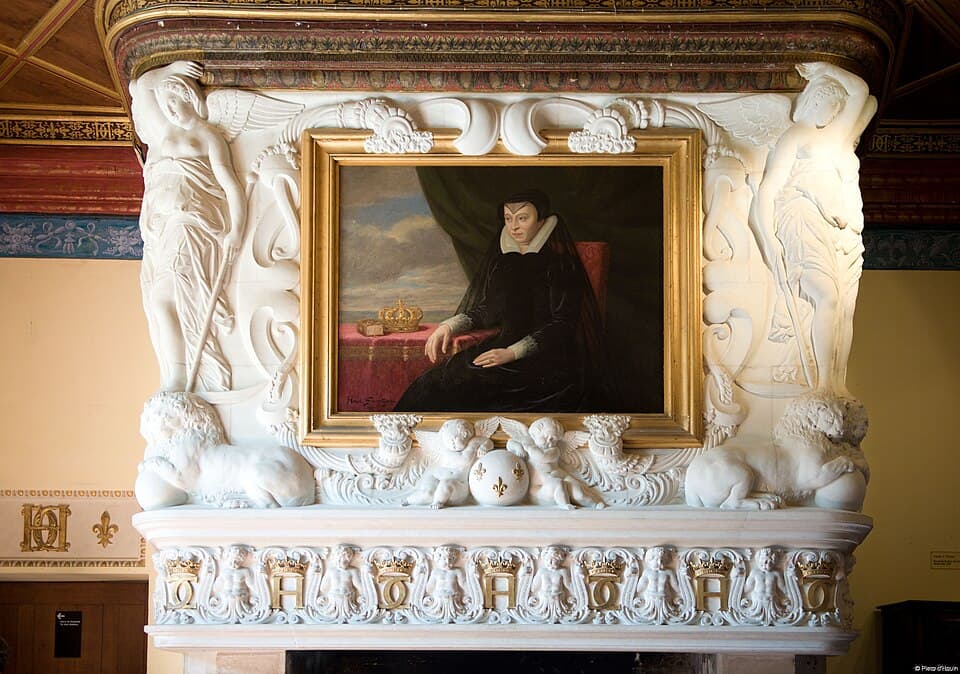
Two 7th-grade students visit the Château de Blois on a school trip. In a room draped in black, an old woman in a dark dress waits for them, a patient smile on her lips. It is Queen Catherine, and she has agreed to answer their questions.
—How old were you when you became Queen of France?
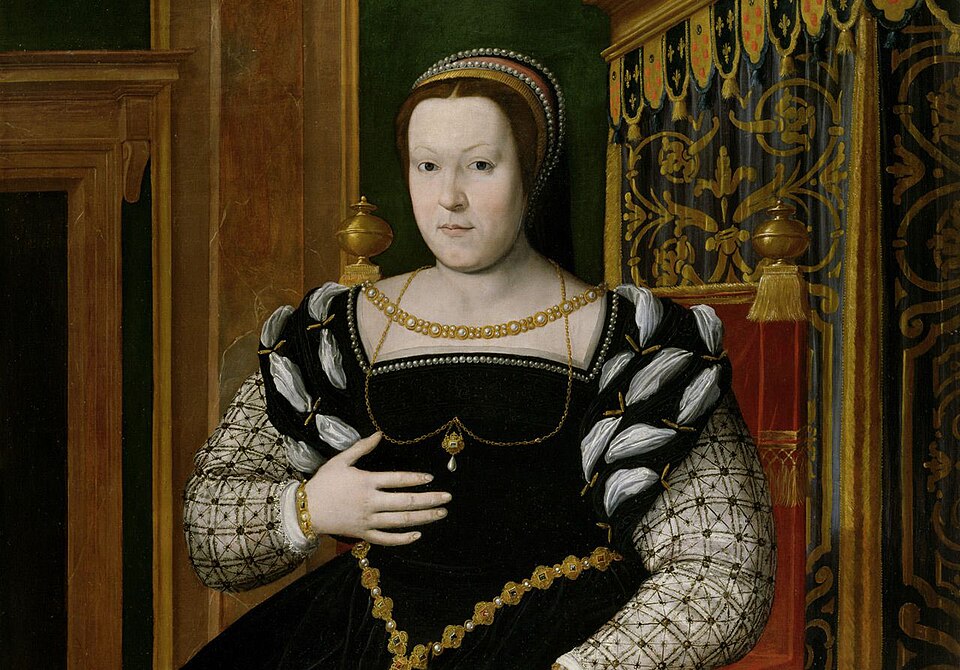
Oh, I was very young, you know! I was born in Florence in 1519, into the Medici family. At 14, I was married to Henry, a French prince. Imagine: you leave your country, your language, your parents, to live among strangers. I was afraid, my child. Henry became king in 1547, and I queen at his side. But real power, I only took later, when my sons were too young to govern alone. It was called being regent: commanding in place of the child-king. It was a heavy burden on such young shoulders… especially mine.
You leave your country, your language, your parents, to live among strangers.
—What was it like having a son who was king while he was still a child?
It was an immense weight, truly. When my son Charles IX ascended the throne, he was only 10 years old. A child! How can a boy of that age command armored lords? So I decided in his place. In 1564, I took him on a grand journey across the entire kingdom — more than two years on the road! We went from town to town so that the people could see their king with their own eyes. Imagine hundreds of wagons, horses, tents, crossing all of France. I wanted them to love him before they feared him.
I wanted them to love him before they feared him.
—Why did people go to war over religion in your time?
Ah, that is the great sadness of my life. In my time, Christians had split into two: Catholics, and Protestants called Huguenots. Each believed the other was wrong about God. And instead of discussing it, they fought, they burned villages. I thought a simple thing: a kingdom where people slit each other's throats is no longer a kingdom. So I had edicts of pacification written — laws saying 'stop, live together.' As early as January 1562, I allowed Huguenots to pray without being harassed. That was new, and many hated me for it.
A kingdom where people slit each other's throats is no longer a kingdom.
—Did you really believe in peace between the two sides?
With all my heart, my child. I once wrote that without peace, there is no kingdom — and I thought that every morning when I woke up. In 1570, I obtained the Peace of Saint-Germain: we granted the Huguenots places of safety, fortified towns where they could pray in peace. It was like giving each person a corner of the house so they would stop fighting in the hallway. Alas, hatred was stronger than my letters. But do you know? Long after my death, King Henry IV signed a great edict of toleration. My dream, in the end, lived on.
It was like giving each person a corner of the house.
—Why are you always dressed in black in paintings?
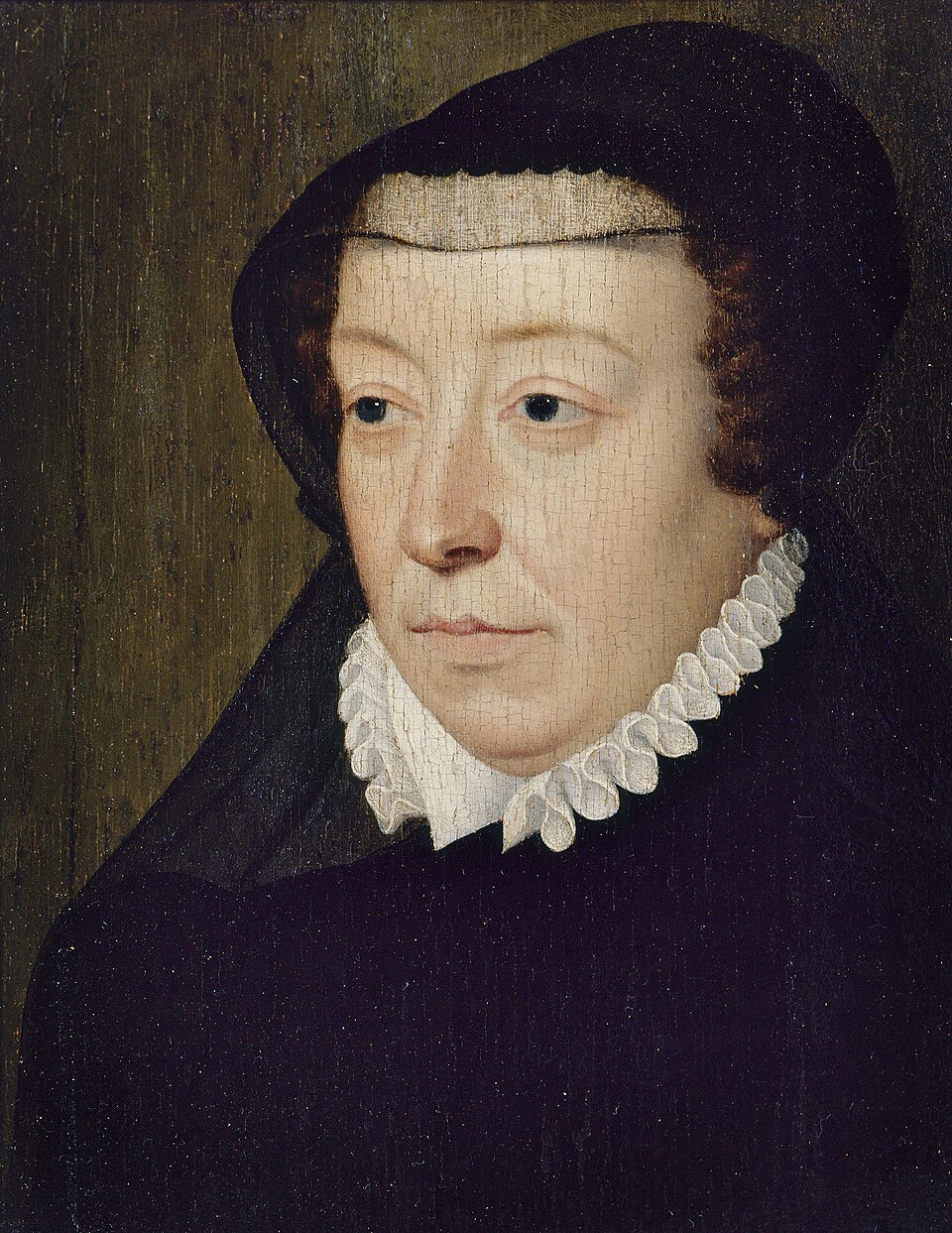
You notice well! In 1559, my husband Henry died during a tournament: a lance pierced his eye. I thought the sky had fallen on me. From that day on, I never again left off black, until my death. I was nicknamed the 'Black Queen.' You know, in my time, mourning was worn on oneself, like a flag of sorrow that is never put away. My dresses were of dark velvet, embroidered, but always black. It was not sadness for show, my child. It was the memory of a man I loved, sewn into the fabric.
The memory of a man I loved, sewn into the fabric.
—Is it true that you had lots of châteaux built?
Yes, and it was one of my great joys! I loved to build. In Paris, I commissioned the Tuileries Palace, starting in 1564, from a brilliant architect named Philibert Delorme. And at Chenonceau, that château set on the river, I had a long two-story gallery built that spans the Cher, with water flowing just beneath! Imagine dancing above a river in the evening, with hundreds of candles. Building, for a queen, is not just about making beautiful walls. It is showing that you are powerful, that you endure. A well-placed stone speaks louder than a speech.
A well-placed stone speaks louder than a speech.
—What were the great feasts you held at the château like?
Oh, they were dazzling! I organized what were called the Magnificences: enormous festivities, with music, dancers, theater, fireworks. Imagine a garden at night, ladies in shimmering dresses, troupes performing stories of gods and heroes. But be careful, my child: it was not just for fun. When Catholic and Huguenot lords hated each other, I invited them to dance together. Hard to fight when you share the same party, isn't it? These shows were so new that today they are considered the ancestors of ballet. Beauty, sometimes, calms better than weapons.
Hard to fight when you share the same party.
—What did you do in the evening, after a long day of ruling?
The evening was my favorite time. After a day of letters and councils, I received my guests for shows and music. I loved ballets, fine conversations, the laughter of dancers. It was also my way of working, you know: by watching who spoke to whom, I guessed the friendships and grudges of my court. And then, before going to bed, I sometimes consulted my astrologers about what the stars foretold. In my time, many serious people believed that the heavens guided our lives. A queen must know how to read men by day, and the stars by night.
Read men by day, and the stars by night.
—Is it true that you believed in stars and predictions?
Yes, and I am not ashamed of it! In my time, astrology was not nonsense: people truly thought the stars spoke. I invited to my court, in 1555, a very famous man, Nostradamus. I asked him to read my children's future in the stars. He supposedly announced that my four sons would become kings! Three actually did — striking, isn't it? I kept near me an astrolabe, an instrument of brass circles for observing the sky. Imagine a star map you hold in your hand. It did not replace my judgment… but it reassured me on difficult nights.
A queen must read the future without ever ceasing to think.
—What good things did you eat that the French didn't know?
Ah, now there's a question I like! Coming from Florence, I brought a bit of my Italy in my luggage — including cooks! At the French court, thanks to them, people discovered astonishing things: artichokes, frozen sorbets, pretty pastries. Imagine the lords' surprise tasting a cold, sweet cream for the first time! I was a bit of a gourmand, I confess — I liked candied fruits. The table, you see, is also politics: when you share a good meal, tongues loosen and hearts open. I changed the taste of an entire court.
When you share a good meal, tongues loosen.
—If only one thing were remembered about you, what would you want it to be?
What a beautiful question, my child… They said much evil of me, you know. Pamphlets accused me of every plot. But I would like this to be remembered: for thirty years, amid hatred, I constantly tried to hold the two sides together to keep France from tearing itself apart. I left over 6,000 letters — open them, and you will see a mother who negotiates, who begs, who hopes for peace. I did not always succeed. But I always tried. Remember that you can fail a thousand times and still keep reaching out your hand.
You can fail a thousand times and still keep reaching out your hand.
This imaginary interview was generated by artificial intelligence from sources documented in Catherine de Medici's profile. It dramatises what the figure might have said based on what we know about them, but does not constitute attested historical testimony. For primary sources and factual documentation, refer to the full profile.