Imaginary dialogue between Marguerite de Valois and Catherine de Medici
by Charactorium · Catherine de Medici (1519 — 1589) · Politics · 6 min read
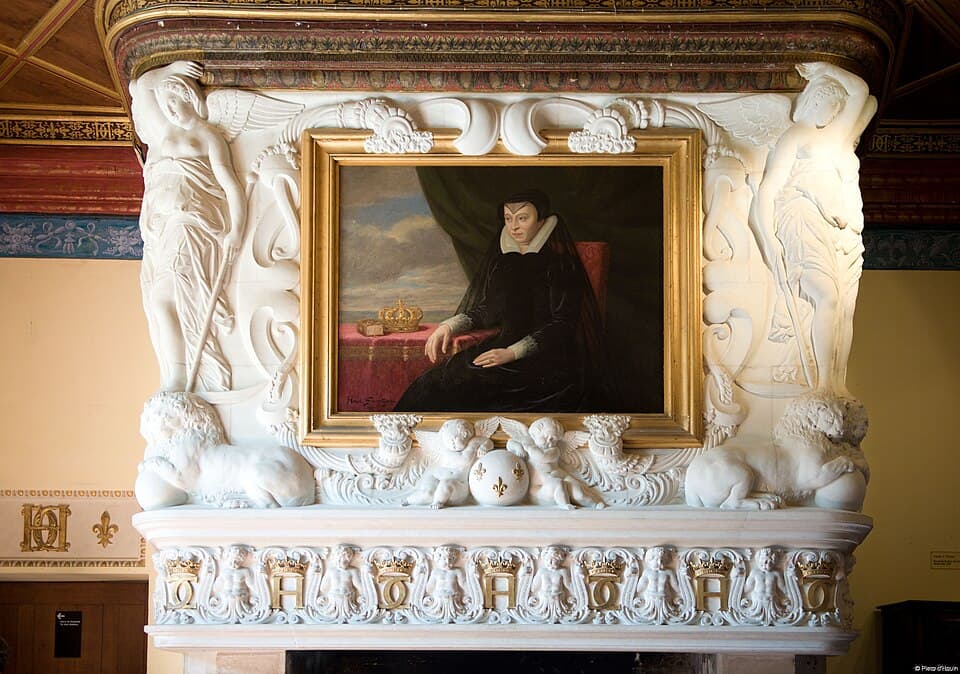
It is in the long gallery built over the Cher, at Chenonceau, that Marguerite de Valois finds her mother in this autumn of 1582. The October light glides over the water; servants set the tables for an upcoming festival, and Catherine, dressed in her eternal black velvet, still dictates letters. Daughter and queen-mother know each other to the bone: Marguerite was married by her to Henry of Navarre ten years earlier, six days before Saint Bartholomew's Day. She comes tonight not as a princess, but as a memoirist, seeking the woman behind the regent.
—Madame my mother, you raised me in the turmoil of wars. When you wrote that there is no kingdom without peace, did you truly believe it?
More than you think, my daughter. As early as January 1562, by the Edict of Saint-Germain, I allowed those of the so-called Reformed Religion to live in the kingdom without being hunted or molested — something no king had dared. They called me foolish, they called me lukewarm. But before me were your brothers, children seated on a throne that the Guises and the Châtillons fought over like prey. My only goal was always to preserve the authority of the king my son and to maintain peace, for without peace there is no kingdom. You saw it: each edict was a dike against blood. That the dike sometimes broke does not prove that we should have stopped building it.
Without peace there is no kingdom — and each edict was a dike against blood.
—I was only a child during the great journey across the kingdom with my brother Charles. Why drag the entire court along the roads for two years?
Because a king who is not seen is but a name, Margot. Your brother Charles was thirteen, and half the kingdom knew of him only what the preachers said. So we set out, from 1564 to 1566, more than three thousand leagues of dust and mud, from the Pyrenees to Lorraine. In every town I made the king appear, I received the notables of both sides at my table, Catholics and Huguenots side by side, forced to be courteous under my gaze. You complained about the litters and the cold, I remember. But I was buying peace one handshake at a time. Governing, you see, is first of all showing oneself.
A king who is not seen is but a name.
—Since my father fell under Montgomery's lance, I have never seen you in anything but black. Why this endless mourning, Madame?
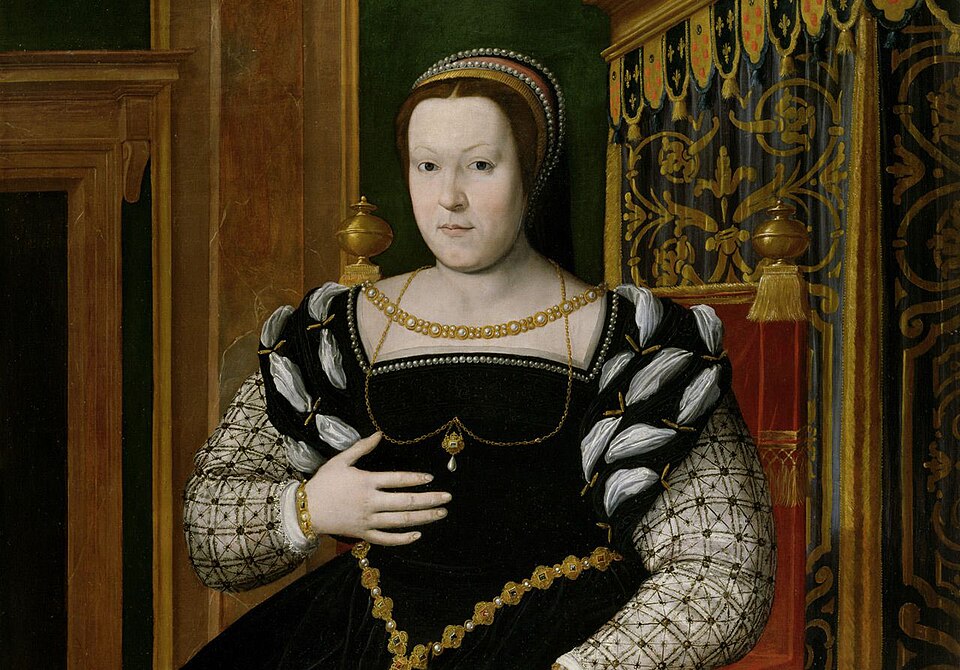
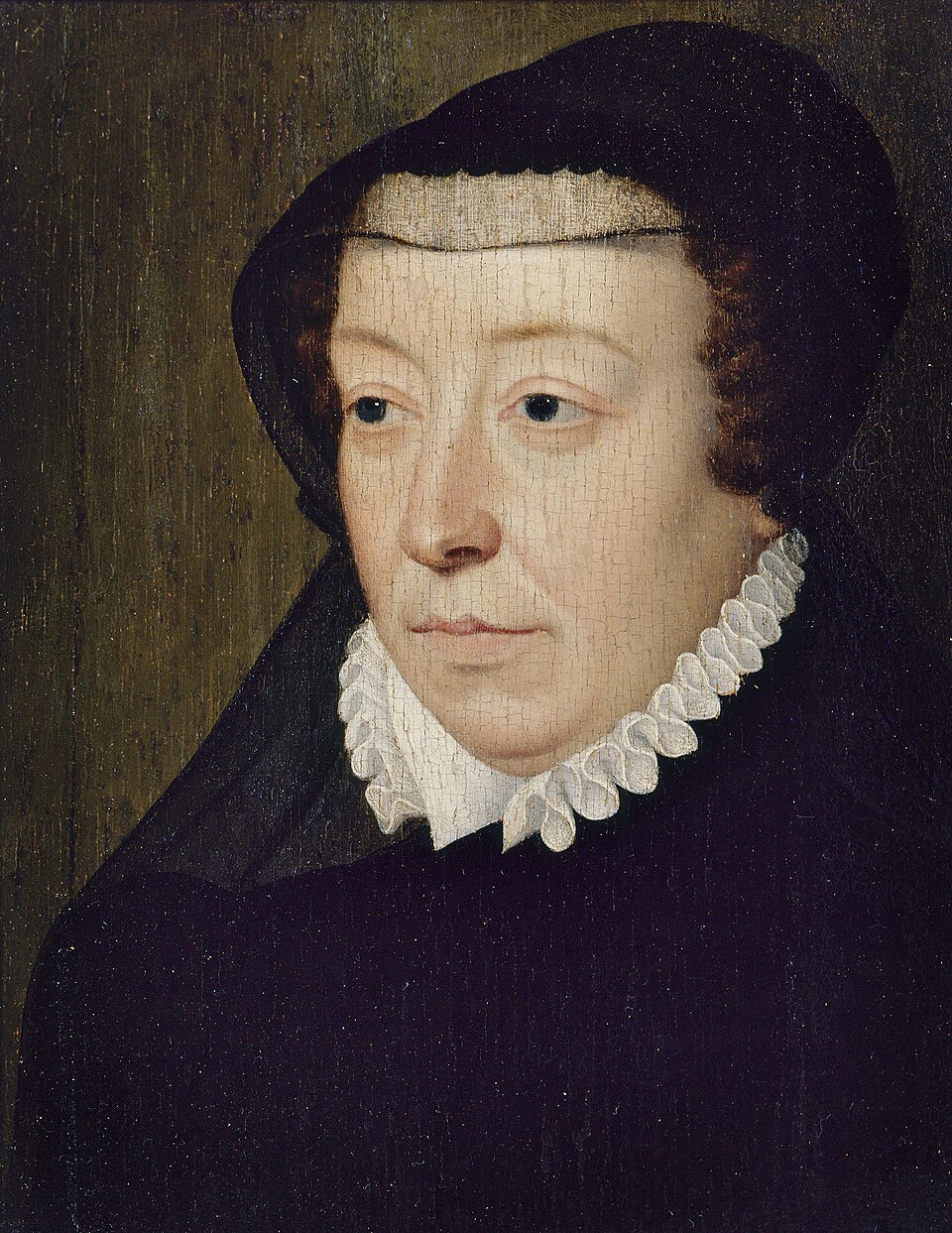
Because the day your father died, in 1559, a part of me died with him. You were too young to measure it. I had warned Henry to beware of that tournament — the omens were bad. He did not listen, and the splinter of that lance in his eye left me a widow at forty, with children and a kingdom on my hands. The black I wear is not only grief: it is armor. A woman alone at the head of a state must make herself grave, almost frightening. They call me the Black Queen; so be it. Better to be feared in mourning than scorned in colors. This color tells everyone that I no longer laugh, and that I do not bend.
The black I wear is not only grief: it is armor.
—A dreadful libel was circulated against you, that Discours merveilleux, which paints you as dissembling, stirring up troubles to better reign. Does it affect you?
That pamphlet lies, and lies cleverly, which is worse. It says that I cover my designs under the veil of piety and peace while nurturing divisions. Think of the absurdity: who needs the calm of the kingdom more than I? My enemies understood that an Italian woman, widow and mother of kings, makes a convenient culprit. Florentine, therefore poisoner; pious, therefore hypocrite; patient, therefore devious. I do not defend myself with libels in return — I have better things to do. But remember this, you who may write one day: they will judge my actions, not the venom spat on my name. Calumny is the tax that anyone who wields power without holding the title must pay.
Calumny is the tax that anyone who wields power without holding the title must pay.
—Here we are in your gallery over the Cher, which you wrested from Diane de Poitiers. Was it the queen speaking, Madame, or the widow taking revenge?
Both, I will not lie to you — to you less than to anyone. During your father's lifetime, that woman reigned over him and over Chenonceau, and I kept silent, as a wife who wants to endure keeps silent. But when he died, I took back what should have returned to the crown, and I gave her Chaumont in exchange: everything was legal, you see, rancor knew how to dress itself in law. Then I had this two-story gallery built over the Cher, where we walk. Diane had her bridge; I turned it into a palace. What seems like a woman's whim was also a matter of state: a château embellished by the queen-mother tells the entire kingdom that the house of France stands firm, and that I am the one holding it.
Diane had her bridge; I turned it into a palace.
—As a child, I danced at your magnificences without guessing their purpose. What were those wildly expensive festivals really for?
For everything, my daughter, except having fun — or rather, to make it seem like we were having fun while governing. A festival is a battlefield where no blood is spilled. When I made a Guise and a Coligny dance together, when I mixed music, ballets, and feasts until dawn, I forced men who hated each other to smile in front of foreign ambassadors. The Spaniards left convinced that France was rich and united: that was worth an army. And those spectacles I composed — those ballets where dance tells a story — give the court a common language, gentler than edicts. Believe me: a truce sealed in pleasure is better remembered than a peace signed in fear.
A festival is a battlefield where no blood is spilled.
—It is whispered that Nostradamus promised you that three of your sons would be kings. Do you truly believe that the stars govern our lives, Madame my mother?
I believe they warn us, without commanding us. I summoned Master Nostradamus to court in 1555, and I asked him to cast the horoscope of each of my children — including you, Margot. For your brothers, he saw crowns; and Francis, Charles, Henry reigned in turn, as you witnessed. Does that seem like sorcery? It is prudence. A prince who ignores the sky deprives himself of a counselor whom no one can corrupt. But do not misunderstand: never has a star signed an edict in my place. I consult the stars in the evening, and in the morning I decide alone, with my feet in the mud of affairs. The sky lights the road; it is still up to me to walk.
The sky lights the road; it is still up to me to walk.
—You had that tall column erected near your Hôtel de la Reine in Paris. What are you seeking, Madame, in the sky above the city?
A head start on time, my daughter. That column I raised around 1574 — one climbs it by a hidden staircase to a platform where my astrologers read the stars. Fools see it as the whim of a superstitious old woman. But consider my life: three fragile sons, grandees who plot, death that can strike the throne at every tournament, every fever. Whoever reigns without knowing how to read the future reigns blind. I observe conjunctions as I observe ambassadors: to guess the next move. The doctor feels the pulse of the body; I feel the pulse of destiny. It is not that I fear the sky — it is that I hate surprise. A surprised queen is a lost queen.
Whoever reigns without knowing how to read the future reigns blind.
—You fed me dishes that no one at this court knew before you. What did you bring, Madame, from your Florence to France?
A taste, Margot — and taste governs more people than an edict. When I arrived from Florence, a young bride in 1533, this court ate heavily and drank without grace. I sent for my Tuscan cooks, and with them came artichokes, iced sorbets, those fine pastries you secretly relished. They laughed at my Italian ways, then copied them, down to the last gentleman. That is how one conquers without an army: through the table, through elegance, through envy. Florence had taught me that beauty is a power. I changed the way France eats, dresses, and entertains itself — and that, you see, will outlast most of my treaties.
That is how one conquers without an army: through the table, through elegance, through envy.
—Your apartments overflow with Venetian mirrors and rare objects locked in your cabinet. Why hold so tightly to this luxury from Italy, Madame my mother?
Because nothing is ever mere ornament, my daughter — everything speaks. Those Venetian mirrors, so costly that princes envy them, tell whoever enters my home that the queen-mother commands the rarest. My cabinet, where I keep ancient medals, stones, and manuscripts, is not a coquette's chest: it is the portrait of a mind. Whoever knows what I collect guesses what I value — knowledge, art, the memory of the Ancients. I even popularized the folding fan, that little object from Italy that became the grace of every lady. Power, Margot, is not only held in the Council: it breathes in a tapestry, it shines in a mirror. A magnificent court makes a feared queen. Remember this, the day it is your turn to appear.
Power is not only held in the Council: it shines in a mirror.
This imaginary interview was generated by artificial intelligence from sources documented in Catherine de Medici's profile. It dramatises what the figure might have said based on what we know about them, but does not constitute attested historical testimony. For primary sources and factual documentation, refer to the full profile.