Kids interview Clare of Assisi
by Charactorium · Clare of Assisi (1194 — 1253) · Spirituality · Philosophy · 5 min read
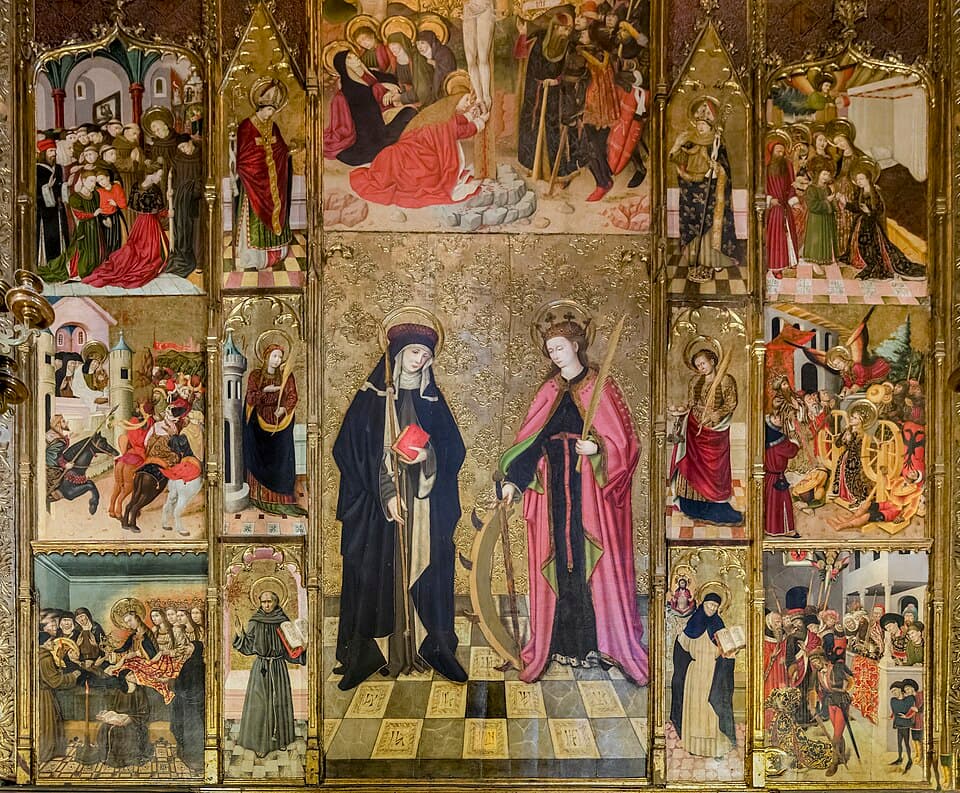
Two young visitors of twelve push open the door of the convent of San Damiano, in Assisi. An elderly nun, smiling despite her fatigue, invites them to sit near her bed. Her name is Clare, and she is happy to tell her story.
—How old were you when you left your parents' home?
I was eighteen, my child. One spring night, the night of March 18–19, 1212, I slipped out silently. Imagine a street in Assisi plunged into darkness, no light, just the sound of horses' hooves in the distance. I ran to the little chapel of the Portiuncula, where my master Francis was waiting. There, he cut off my hair. You know, for a girl from a noble family, cutting your hair meant telling the whole world: I am leaving everything. My heart was pounding. But I was not afraid for a single second.
Cutting my hair meant telling the world: I am leaving everything.
—Your parents must have been angry, right? Did they try to bring you back?
Oh yes, my child. A few days later, my brothers came to get me at the monastery of Sant'Angelo in Panzo. They were furious, ready to drag me away by force. Imagine strong men pulling you by the arm to take you home. So I clung with all my strength to the altar of the chapel. I gripped the cold stone and repeated: no, I am staying. They finally gave up. A girl of my rank never disobeyed her family. That day, I chose another family: God and the poor.
I clung to the altar, and I repeated: no, I am staying.
—What did it smell like in your convent in the morning?
It smelled of cold and damp stone, my child. We rose before daybreak to sing in an icy chapel, with no fire to warm us. We slept on simple wooden planks. In the morning, a little barley bread, boiled vegetables, water. Nothing more. Three days a week, I ate nothing at all. Imagine being hungry and cold, and still singing with joy. Francis once had to order me to eat a little, because he thought I was too thin. We had chosen this poverty, like choosing a gift.
Being hungry and cold, and still singing with joy.
—Is it true you said no to the pope? Can you do that?
Yes, my child, and I still tremble a little at the thought. Pope Gregory IX thought my rule was too harsh for women. He wanted to release me from my vow of giving everything. So I answered him softly but firmly: I need to be forgiven my faults, not to be relieved of my poverty. Imagine a young nun standing up to the head of the whole Church. That was extremely rare in my time. Later, in 1247, Pope Innocent IV wanted to impose a more comfortable rule on me. I refused again. My poverty was my treasure. No one was going to take my treasure away.
I need to be forgiven my faults, not to be relieved of my poverty.
—Why did you insist on owning nothing at all? That's strange.
I understand that seems strange to you, my child. We called ourselves the Poor Ladies. In 1216, the pope gave me a unique document, the Privilegium paupertatis, the 'privilege of poverty.' It was the right to own nothing at all, neither individually nor together. No one in the Church had ever received that. You see, I believed that Jesus himself owned nothing on earth. By choosing to be poor like him, I felt very close to him. Imagine giving someone you love the only thing you have: your empty hands and your full heart.
My empty hands were my gift: nothing of my own, everything to God.
—They say you made soldiers flee. What was that like?
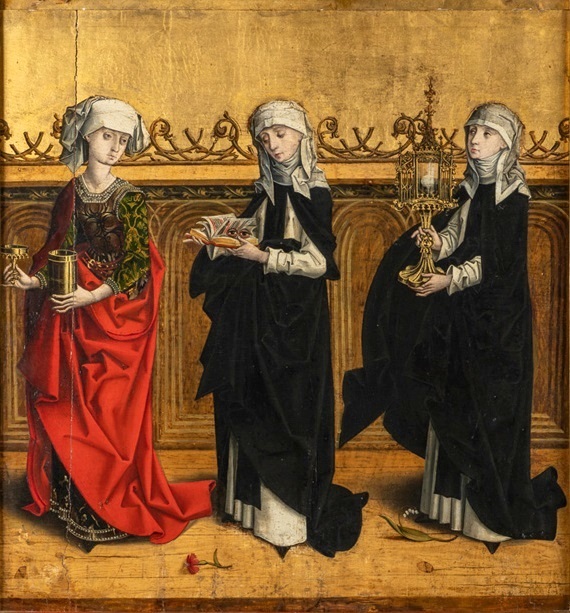
It was in 1240, my child, a terrible year. Mercenary soldiers were already scaling the walls of our convent of San Damiano. I was very sick, I could barely get up. So I had myself carried to them, holding the monstrance — the precious vessel that displays the host, the consecrated bread. Imagine a frail woman, carried by her sisters, brandishing a simple golden object before armed warriors. And yet they fled, terrified. Since then, painters always depict me with that monstrance in my hands. It wasn't my strength. I had none. It was my trust.
I had no strength. It was my trust that made them flee.
—Were you sick for a long time? What did you do in bed?
Twenty-eight years bedridden, my child. Almost the whole end of my life. But I never sat idle. With a needle and thread, I embroidered corporals — the small white cloths placed on the altar during Mass. I sent them to poor churches around Assisi, those that had nothing. Imagine fingers trembling with fever, yet still sewing, stitch after stitch, to help others. I also took care of my sick sisters, I washed their feet. Being bedridden does not mean being useless.
Being bedridden does not mean being useless.
—Is it true you are the first woman to have written a rule?
Yes, my child, and it still fills me with wonder. A religious rule is the text that says how to live in a convent: prayers, work, silence. Before me, only men had written one accepted by Rome. Never a woman. I wrote mine word by word, to protect our poverty. In 1252, Cardinal Raynaldus approved it. Imagine waiting years for someone to say yes. And the real 'yes' came only two days before my death, with the papal bull, that lead-sealed document. I was able to hold it close. I was at peace.
Before me, no woman had written a rule accepted by Rome.
—How did it feel to receive letters from people far away?
It warmed my heart, my child. I wrote to a princess, Agnes of Bohemia, who had given up being queen to found a convent in Prague, very far from here. Imagine: a king's daughter abandoning her crown to live poor like me. I sent her four letters over the years. I also wrote to a nun in Bruges, in Flanders. You see, even nailed to my little chapel in Assisi, my words traveled across the mountains. A letter, in my time, took weeks to arrive. But friendship knew no borders.
Even locked in my chapel, my words crossed mountains.
—Were you afraid of the night, alone in the convent?
No, my child, the night was my friend. After Compline, the last evening prayer, a total silence fell over San Damiano. All my sisters slept. I often kept vigil in the dark, praying very softly. Imagine a chapel with no light at all, just your breathing and the wind outside. Others might have trembled. I felt watched over. The danger was not the shadows of the night — it was the soldiers, illness, hunger. And yet, every night, I fell asleep trustingly on my wooden plank. Fear, you see, did not cross the door of my heart.
Fear did not cross the door of my heart.
—What would you like people to remember about you today?
What a beautiful question, my child. I would like them to remember that a woman, even weak and sick, can stand firm. My order still exists, you know? It is called the Order of Saint Clare, and sisters still live as we did. Imagine: a little flame lit more than seven centuries ago, still burning. I had no army, no wealth, no crown. Just a rule written by hand, a needle, and immense trust. If you keep only one thing from me, keep this: it is not the strong who change the world, it is the faithful.
It is not the strong who change the world, it is the faithful.
This imaginary interview was generated by artificial intelligence from sources documented in Clare of Assisi's profile. It dramatises what the figure might have said based on what we know about them, but does not constitute attested historical testimony. For primary sources and factual documentation, refer to the full profile.