Imaginary dialogue between Adam Smith and David Hume
by Charactorium · David Hume (1711 — 1776) · Philosophy · 5 min read
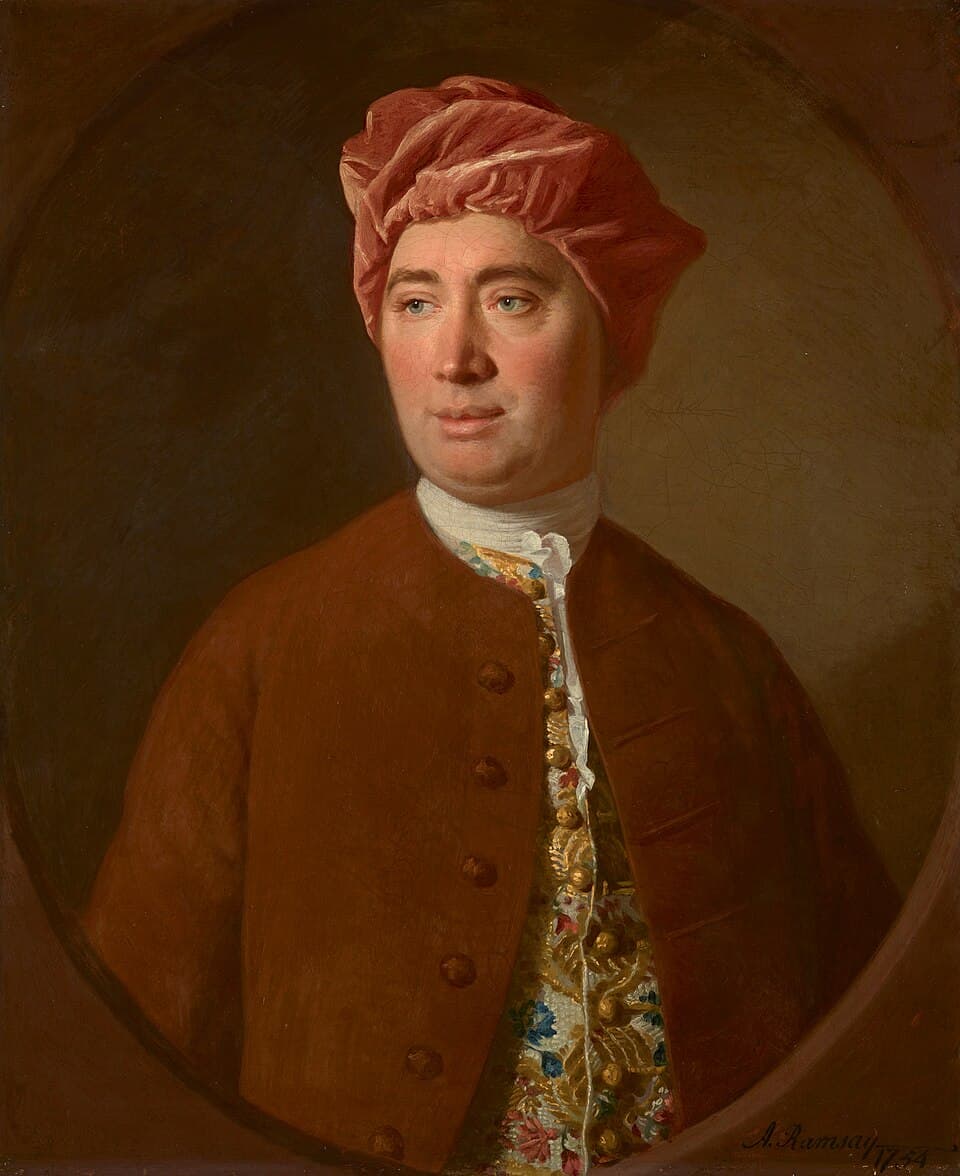
It is in a quiet study in the New Town of Edinburgh, in late summer 1776, that Adam Smith visits his old friend David Hume, weakened but still with a mischievous glint in his eye. A teapot steams between them, and the fading evening light glides over the leather-bound books that line the walls. They have known each other for so many years, have together roamed the taverns of the old town and debated until dawn; Smith comes tonight not as a philosopher, but as a friend, to capture the voice of the man behind the work.
—David, you who so often provoked me on causality during our suppers, tell me simply: what did you want to commit to the flames back in 1748?
Ah, my dear Adam, you know me too well to think me incendiary! In my An Enquiry Concerning Human Understanding, I called for the bonfire only for empty volumes — those containing neither abstract reasoning concerning quantity or number, nor experimental reasoning concerning matter of fact and existence, nothing but sophistry and illusion. All genuine knowledge arises from sensory experience: our impressions first, vivid and immediate, then the ideas which are merely their faint copies. And that famous causality that metaphysicians think they see in necessity? A mere habit of the mind, the custom of observing one event follow another. That is my entire empiricism: I do not deny cause, I deny that we see it. We expect it, that is the truth.
Causality is not a necessity we see, but a habit we acquire.
—My friend, all Europe buzzed about your quarrel. When you welcomed Rousseau to England in 1766 to protect him, did you expect such a shipwreck?
Not for a moment, Adam, and that is what still grieves me. I received him as one receives an outlaw, offering him my protection against those who persecuted him on the Continent. I put all my generosity into it, sincerely. And then this man, consumed by some fever of the soul, began to see in me the leader of a plot to destroy him! He accused me publicly, and the scandal spread through every salon in Europe. For a long time I believed one could reason with a wounded mind; I learned that a diseased imagination creates its own executioners. The worst part was having to defend myself for a kindness I thought was beyond suspicion.
A diseased imagination creates its own executioners.
—Do you remember, when you returned from Paris: all Edinburgh gossiped about “Big David” adored by the ladies. Did you see that welcome of 1763 coming?
Never in my life! Imagine, Adam: a corpulent and placid philosopher, hardly cut out for socializing, suddenly fought over by the greatest ladies of the court. From my arrival as secretary to the embassy, the salons vied for my company as if I were some marvel. They nicknamed me “Big David,” and upon my word, I accepted the sobriquet with good grace — one had to smile at this rotundity. Yet I gained from it the friendship of Diderot, d’Alembert, and all those minds of the Encyclopédie. Beneath the powdered wig and the civilities, those were the only hours when conversation was worthwhile. Worldly fame amused me; French wit, however, held me fast.
They fêted me as if I were a prodigy: I, Big David, fought over by the salons of Paris.
—And behind the bows of the salons, you the skeptic, did you never detect some vanity in that Parisian adulation?
Of course, my friend, and that is the very salt of the matter. A man who has spent his life dismantling the illusions of the mind does not let himself be intoxicated by a countess’s compliments! I saw clearly that this fashion would carry me away as it carries everything, and that another would take my place the following season. But what matters the sincerity of the world when the table is good and the conversation lively? I enjoyed Paris as an observer as much as a guest, savoring the wit without being duped by the incense. You, who know my distrust of certainties, will guess that I filed these honors under pleasant impressions, knowing full well they would fade into pale ideas. Pleasure, yes; vanity, never for long.
I tasted the incense of the salons without ever being its dupe.
—I want us also to remember the injustice. In 1745, you were denied a chair at Edinburgh for irreligion. How did you bear that wound?
With less serenity than I let show, Adam. To be judged unworthy of teaching in my own city, on the pretext that my ideas smacked of sulfur, marked me deeply. They feared the irreligious more than they weighed the philosopher. But fate, which loves irony, led me in 1752 to the Advocates’ Library — one of the richest collections in Scotland. There, among the leather-bound books, I found not a chair but something far better: the material for my History of England. What the universities denied me, my six volumes finally gave me: recognition. They closed one door; I opened a larger one.
They denied me a chair; the library gave me a work.
—That History of England, you wrote it while we debated so much economics. What did it change for you, the historian more than the philosopher?
It finally made me readable, Adam! My Treatise of Human Nature, as you know, fell dead-born from the press — not a soul to read it. Philosophy neither fed my purse nor my name. But history, there is something that speaks to everyone: the passions of kings, wars, revolutions, told without the baggage of party. My six volumes, published between 1754 and 1762, became the work found in every honest library in the kingdom. For the first time, I lived by my pen as an independent man. The philosopher had plowed without reaping; the historian harvested. And yet, see the irony: it is my pages on the understanding, once scorned, that will perhaps outlive me the most.
The philosopher had plowed without reaping; the historian harvested.
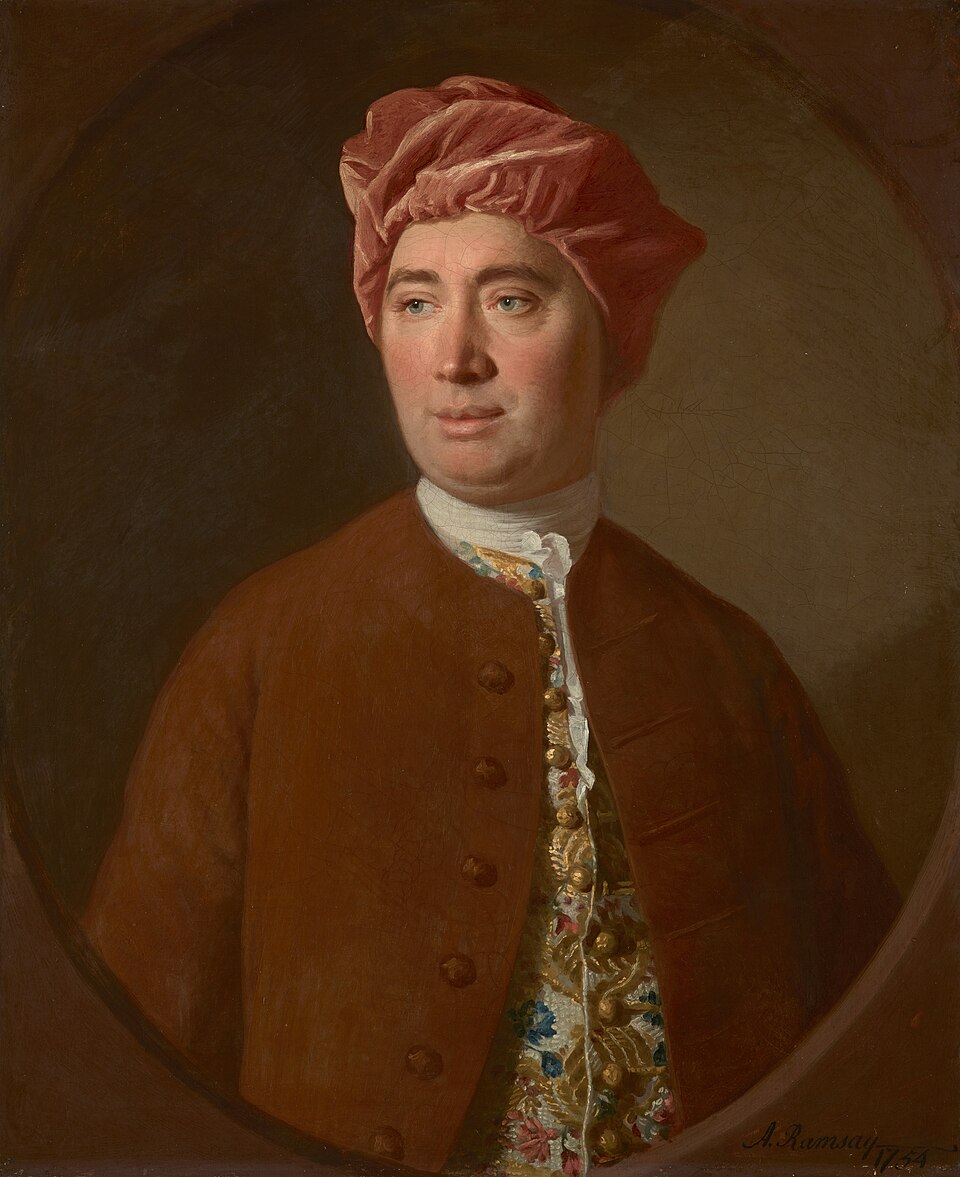
—David, you know the affection I bear you. Speak to me plainly about your approaching death: where does this calm come from, which so disconcerts our devout friends?
From the same source as everything else, Adam: I expect nothing that I have no reason to expect. Why should I tremble before a passage from which no one has ever returned to frighten me? I rather amuse myself by trying to think of some excuse I might offer Charon to delay the crossing of the Styx — perhaps one more correction to my works! But the old ferryman will not be fooled. You see, a life governed by experience does not, at the end, demand consolations it never believed in. I am going out as I have lived, gentle in spirit and with a quiet conscience. If that shocks pious souls, so be it; I do not owe them a fear I do not feel.
I am still trying to think of some excuse to offer Charon to delay the crossing.
—Your Dialogues Concerning Natural Religion, which you entrusted to me, you want them published only after you. Why such caution, my friend?
Because prudence, Adam, is the last virtue of the skeptic! In them I examine the arguments for the existence of God with a rigor that British society would not forgive me for while I live. All my life I have been “Big David the unbeliever” — no need to light a final fire when the flame is going out by itself. These dialogues say that no system resolves the difficulties where our so limited concepts confront so vast a universe: the whole remains a curtain of mystery. That is better said from a voice that is stilled, where anger can no longer reach the author. I entrust them to you, in whom I have faith — it is the only article of faith I know.
You are the only article of faith I know.
—When I think back to our afternoons in the Edinburgh clubs, with Ferguson and Robertson, tell me: what did this friendship give you that glory could not?
Everything that mattered, Adam. Glory is a brilliant but cold impression; friendship is the very warmth of the hearth. Think of our hours in the taverns, those conversations where we undid the world between two glasses of claret — it was there, far more than in the Parisian salons, that my thought was sharpened. You were both my opponents and my accomplices. When the university expelled me and Rousseau slandered me, it was your esteem that kept me standing. A man can do without a chair and a crown, but not without a few friends who understand him. Sympathy, you see — that sentiment I place at the foundation of morality — I have not only thought it: with you, I have lived it.
Sympathy, I have not only thought it: with you, I have lived it.
Read further

This imaginary interview was generated by artificial intelligence from sources documented in David Hume's profile. It dramatises what the figure might have said based on what we know about them, but does not constitute attested historical testimony. For primary sources and factual documentation, refer to the full profile.