Imaginary dialogue between Gérard Mourou and Donna Strickland
by Charactorium · Donna Strickland (1959 — ?) · Sciences · 6 min read
It is in a cozy lounge of a hotel in Stockholm, a few days before the December 2018 ceremony, that Gérard Mourou meets his former doctoral student over two cups of coffee that are growing cold. Outside, the Swedish night has fallen at four in the afternoon. They have known each other since 1983, since that optics lab at Rochester where it all began, and this time the master comes to listen to the student. Between them hovers that slightly rough camaraderie of people who have aligned beams together until midnight.
—Donna, when the Academy called you at five in the morning, I heard you almost hung up. Tell me what really happened.
You know me, Gérard — I'm not the type to imagine a call from Stockholm. The ringing, the Swedish accent, that name Royal Academy... my first reaction was to wonder if someone was playing a prank on me. I almost wanted to check before believing it. And then the number struck me: only the third woman, after Marie Curie in 1903 and Maria Goeppert Mayer in 1963. Fifty-five years of silence between her and me. I stood there, in my pajamas, thinking it was absurd and magnificent at the same time. Honestly, I never really thought our little pulses would lead us here.
I almost wanted to check that it wasn't a joke before daring to believe it.
—This idea of being “the third woman” — do you carry it as a burden or as quiet pride?
Neither, really. I never worked thinking about a tally, you know that better than anyone — at Rochester, I was thinking about diffraction gratings, not medals. But when the number came up, I understood it said something bigger than me. Fifty-five years without any woman receiving this physics prize is not a neutral statistic. So I accept it with humor, because dramatizing is useless, but I also carry it as a responsibility. If a student sees that a girl from Guelph could do this, maybe she'll tell herself the door isn't locked. That's my part of the work now, in addition to the lasers.
Fifty-five years without any woman: that's not a neutral statistic.
—Come back to the heart of the craft. Explain to me, as if to an undergraduate, how you amplify a pulse without pulverizing the material.
That's the problem that stumped us all, Gérard: if you directly amplify an ultrashort pulse, its intensity blows up the amplifier crystal. The idea of chirped pulse amplification — CPA, in 1985 — is to never let the pulse stay concentrated during amplification. First, you stretch it in time with a pair of diffraction gratings, which separate the wavelengths and delay them relative to each other. The pulse becomes long, hence gentle: you can amplify it in the Nd:YAG without breaking anything. And only at the end, you recompress it, you put all the colors back in phase. You recover a short pulse but now colossal in power. Stretch, amplify, recompress. Three steps, and all of nonlinear optics shifted.
Stretch, amplify, recompress — three steps, and all of laser physics shifted.
—Do you remember our nights at the optical bench at Rochester? What was the real moment when you knew it worked?
I remember it as if it were yesterday, and you probably do too. We spent hours on that vibration-isolated table, correcting alignment to the micron, cursing when a truck passed in the street and shook the beam. The real moment wasn't a flash of genius; it was a measurement: seeing on the oscilloscope the recompressed pulse, short, and realizing the energy was there, intact. The compression worked. I understood that the stretching idea held up experimentally, not just on paper. It's not glorious, it's just a trace appearing in the right place after weeks of adjustments. But that trace became the founding paper — and, years later, this trip to Stockholm.
It wasn't a flash of genius; it was a trace in the right place after weeks of adjustments.
—That 1985 paper came directly from your thesis. You, the student, and me, your supervisor, signing together. How did you experience that relationship?
With a strange freedom, Gérard. You entrusted me with an open problem, you didn't give me the solution — you let me bump into the gratings, fail, start over. Many supervisors would have taken over at the first obstacle; you let me keep the bench. The fact that CPA was born from my doctoral thesis, and that we co-signed it in Optics Communications, remains for me the very meaning of a thesis: a student's work that can, sometimes, shift a line of physics. I didn't realize it at the time. I just wanted my experiment to work and for you to be happy with the result the next morning. That it brings us back here together, thirty-three years later, I find almost dizzying.
A thesis is a student's work that can, sometimes, shift a line of physics.
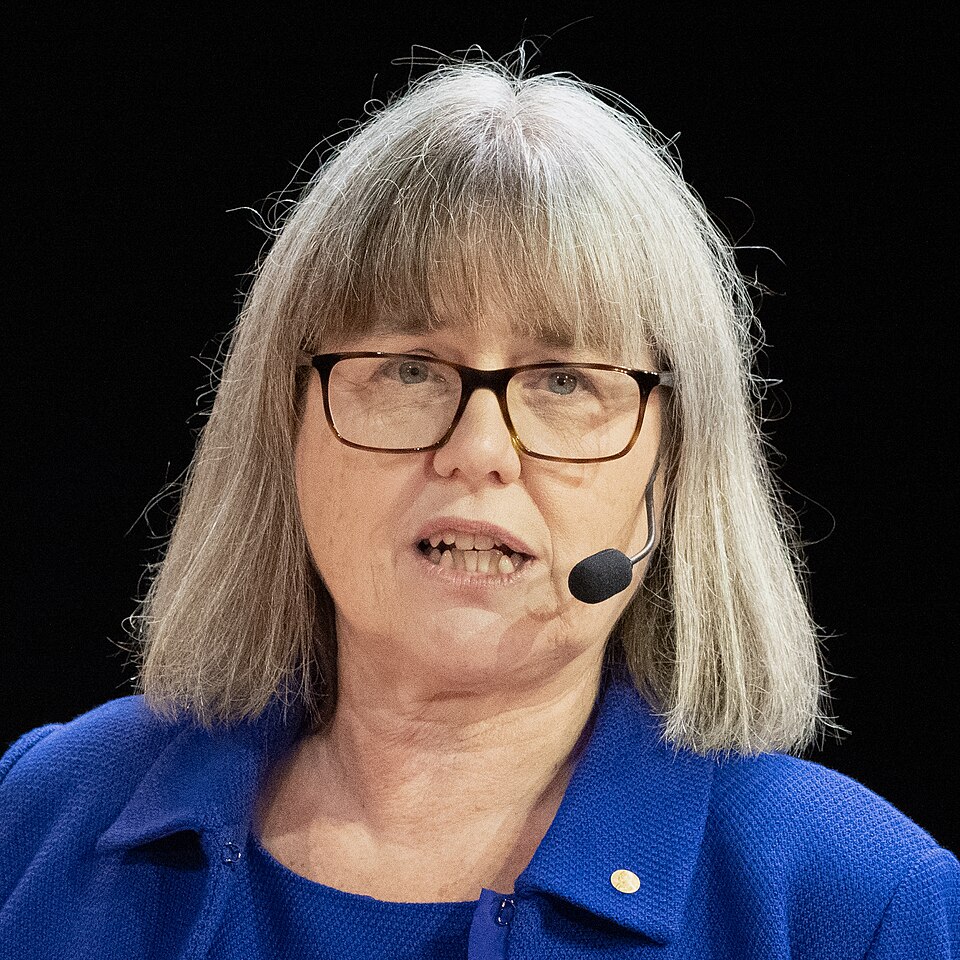
—Sharing a Nobel between a supervisor and his doctoral student is extremely rare. Does it change anything between us, in your opinion?
Frankly, no — and maybe that's the most beautiful part. We always worked as equals in front of an optical table: the laser doesn't care who directs the thesis, it works or it doesn't. What the shared prize says is simply the truth of what we did: an idea thought together, verified by my hands and your intuition. I know that in many accounts, the student would have been erased in favor of the professor. That you always insisted my name remain first on the paper — that, I don't forget. It doesn't change anything between us, because it was already there. It just makes it visible to others.
The laser doesn't care who directs the thesis: it works, or it doesn't.
—When we were trying to stretch light, did you ever think for a second that we would one day operate on millions of eyes with it?
Not for a second, Gérard, and I swear that's the absolute truth. We wanted intense pulses to do good physics: study matter, plasmas, light-matter interaction in novel regimes. Medicine wasn't on our minds at the optical bench. It was much later that I understood that CPA had become the heart of LASIK surgery, that we were reshaping corneas with our ultrashort pulses, and that millions of people were seeing better every year because of it. I learned about it almost as a spectator, like news that concerned me without belonging to me. That's the adventure of fundamental research: you seek to understand, and one day someone, somewhere, turns it into a tool for healing. You never control the legacy of your ideas.
We sought to understand matter; one day, elsewhere, someone turned it into a scalpel of light.
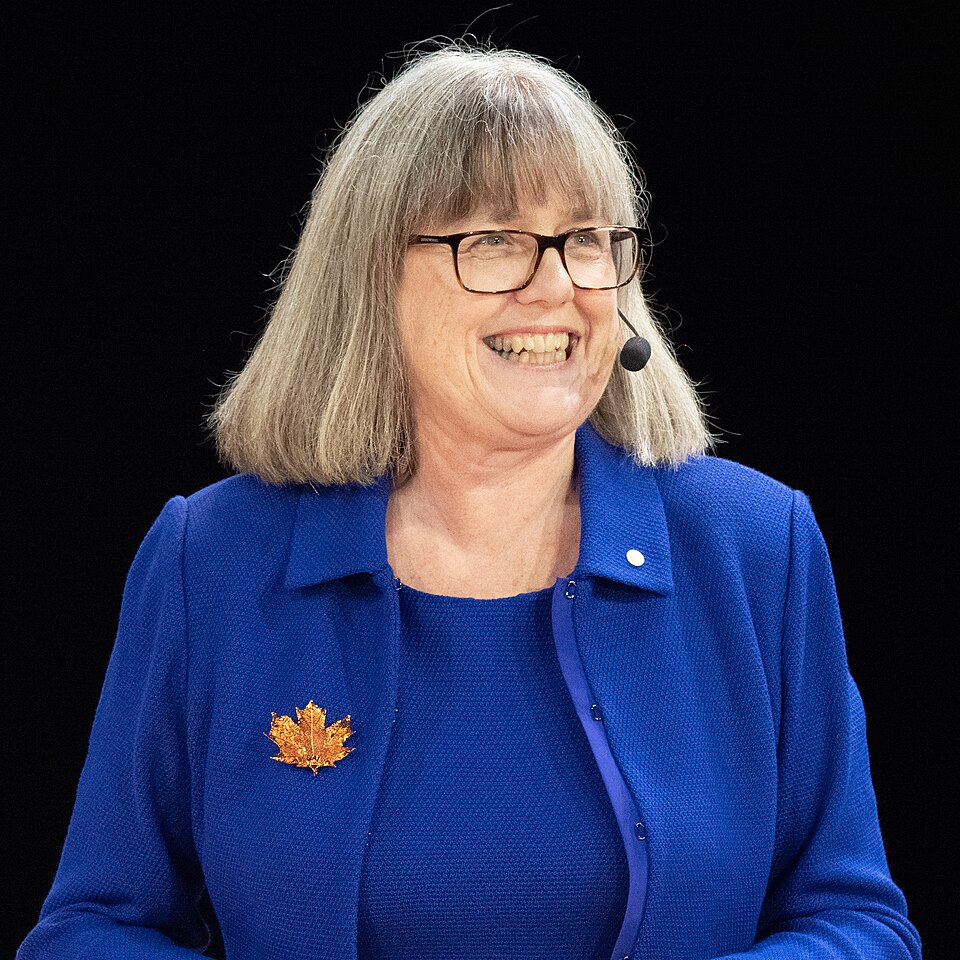
—At Waterloo, you continue to work on ultrashort lasers on tissues. What still keeps you in the lab, after all this?
What has always kept me: the precision of the gesture, Gérard. At Waterloo, we push fiber lasers toward very fine applications, the retina, the cornea — cutting or repairing tissue without damaging what's around it, because the pulse is so brief that it deposits its energy before heat can diffuse. It's exactly the same fascination as at Rochester, just turned toward the living. I never sought to climb, to direct large institutes; I wanted to stay close to the experiment, close to the students aligning their first beams. The Nobel doesn't change that. On Monday, I'll be back in front of a vibration-isolated optical bench, grumbling because an alignment shifted during the night. That's where I'm happy.
The pulse is so brief that it deposits its energy even before heat has time to diffuse.
—I was told that before the prize, someone tried to create an encyclopedia page for you online, and it was rejected. Is that true?
It's true, and it both makes me laugh and grinds my teeth. Before the Nobel, a contributor tried to create my page on Wikipedia; the moderators rejected it, deeming me not “notable” enough. A co-inventor of CPA, not notable enough. A few months later, the prize comes, and the page is created urgently overnight. See the irony? It's not a personal tragedy, I didn't suffer from it. But it's a symptom: women in science are missing from reference sources, so they are judged invisible, so they remain absent. A circle that closes on itself. My life didn't depend on a web page — but that of a kid looking for a model, maybe it did.
A co-inventor of CPA deemed “not notable enough”: that's a symptom, not a detail.
—One last thing that surprised me: you remained an associate professor for a long time, without asking for more. Why, Donna?
Because it didn't interest me, quite simply. At Waterloo, I had my lab, my students, my lasers — I had everything I needed to do science. I never applied for the higher rank; the idea of putting together promotion dossiers for a title seemed like time stolen from experiments. Some found it surprising once the Nobel was awarded, as if there were a mystery. There isn't one. I focused on the work and left hierarchies to people who are passionate about them. I acknowledge that it's a luxury, and that not all women have had that latitude. But for me, what keeps me standing is not a line on a business card — it's a well-compressed pulse.
What keeps me standing is not a line on a business card, it's a well-compressed pulse.
This imaginary interview was generated by artificial intelligence from sources documented in Donna Strickland's profile. It dramatises what the figure might have said based on what we know about them, but does not constitute attested historical testimony. For primary sources and factual documentation, refer to the full profile.