Kids interview Donna Strickland
by Charactorium · Donna Strickland (1959 — ?) · Sciences · 5 min read
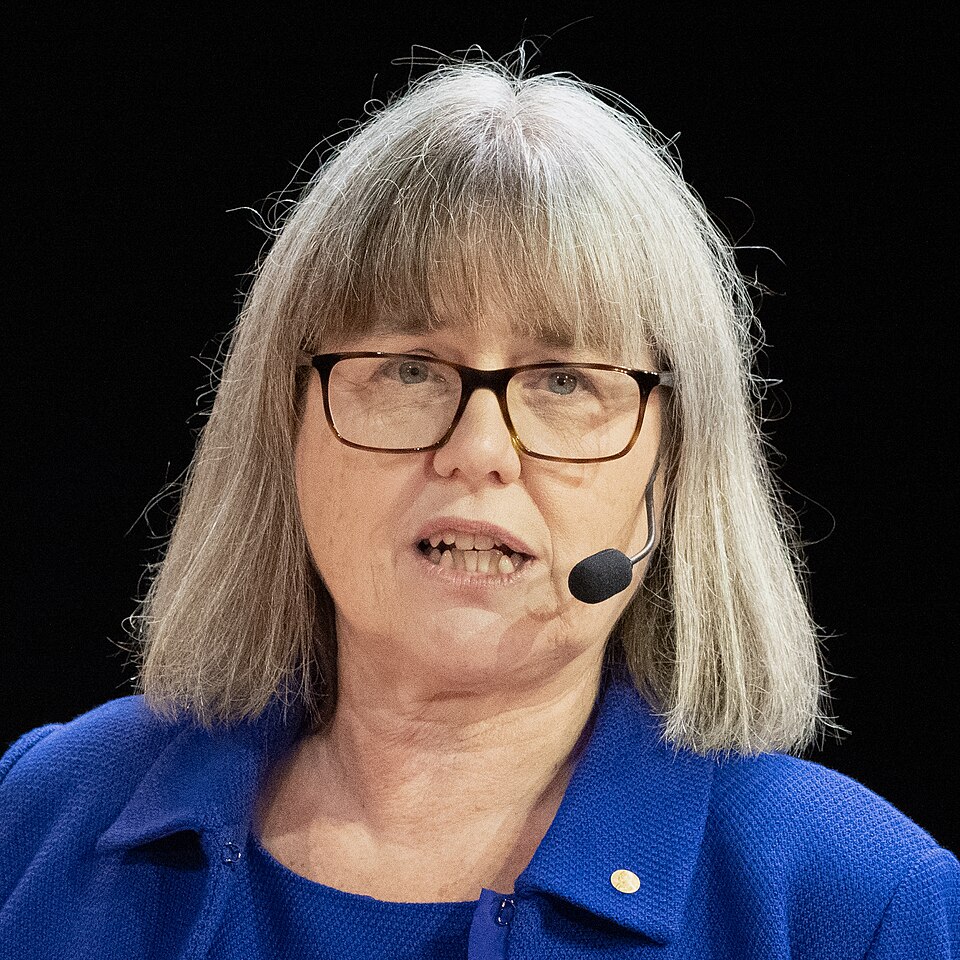
Two 12-year-old students, on a school field trip, get the chance to meet a real physicist, a Nobel laureate. Intimidated but curious, they sit down near a large lab bench. Donna Strickland smiles at them and invites them to ask all their questions.
—How old were you when you left home to study lasers?
You know, I was a young woman from Canada, born in Guelph. In 1983, I left for the United States, to the University of Rochester. Imagine a student leaving her country, her peaceful Ontario, to enter a big optics lab. I was scared, yes, but above all I was amazed. There, I joined the team of a professor, Gérard Mourou. He supervised my thesis, that long research work you do for years to discover something new. I spent my days surrounded by mirrors and light beams. And it was in that lab that a small idea would change everything.
I was scared, yes, but above all I was amazed.
—What was your brilliant idea with lasers? Explain it simply.
Imagine you want to push light very hard, but if you concentrate it too much, it breaks everything, even the machine. That was our problem in 1985. So with Gérard Mourou, we found a trick. We stretched the light pulse in time, like stretching a rubber band. Once stretched, it is less violent: we can amplify it without damaging anything. Then we compress it all at once. Boom, an ultra-powerful and ultra-short light! We called it chirped-pulse amplification. It became one of the most cited papers in all of laser physics.
We stretched light like a rubber band, so as not to break anything.
—What did your lab look like? What was on the table?
Oh, it wasn't a table like your kitchen table! It was a large, very heavy optical bench, placed on air cushions. Why? Because the slightest vibration, even a truck passing outside, can misalign the beams. We wanted absolute calm. On it, there were mirrors, and especially a diffraction grating: a plate engraved with tiny grooves that separate the colors of light, a bit like a very precise prism. And we always wore special safety goggles. A laser beam in the eye, my child, is unforgivable. Safety, in a lab, comes before everything else.
—Is it true that your doctoral discovery won you the Nobel?
Yes, and that is what is rare and beautiful. The seminal paper from 1985, the one that started everything, came directly from my doctoral thesis. A student, you see, not an established old scientist. And in 2018, I shared the Nobel Prize with Gérard Mourou, who had been my thesis supervisor. Receiving the greatest prize in physics with your former mentor, based on your own work as a student, is almost unprecedented in the history of science. It means one simple thing: even when you are young and just starting out, you can discover something that changes the world.
Even young and just starting out, you can discover something that changes the world.
—What is your laser really used for, in ordinary people's lives?
You might know someone who couldn't see well and had eye surgery. That operation is called LASIK. Well, it uses ultra-short lasers, which our technique made possible. The beam reshapes the cornea, the small transparent window in front of the eye, to correct vision. Later, at the University of Waterloo, I continued working on lasers to treat the retina and cornea. Imagine: light so precise and brief that it can sculpt living tissue without burning around it. Millions of people see better today thanks to this principle. That touches me deeply.
—Did you know from the start that it would heal people's eyes?
No, not at all! And that is what is funny. When we invented our technique, we just wanted to understand light, to do beautiful physics experiments. We weren't thinking about hospitals at all. It was only years later that I learned our work was being used for eye surgery. I was astonished. You see, in science, we often search out of pure curiosity, without knowing where it will lead. And sometimes, long after, it gives tools that change millions of lives. That is why we must let researchers explore, even when we don't immediately see the use.
We search out of curiosity, and sometimes it changes millions of lives.
—How did you react when you got the call about the Nobel Prize?
Ah, that! It was early in the morning, the phone rings. A voice tells me I've won the Nobel Prize in physics. And you know what I thought? That it might be a joke! I first wanted to check it wasn't a prank. Imagine your face if someone told you something like that when you just woke up. I didn't really believe it. I was a quiet professor at Waterloo, doing my research in my corner, not seeking honors. And suddenly, the whole world wanted to talk to me. My very simple, somewhat casual reaction made people smile everywhere. It remained very natural for me.
They tell me I've won the Nobel, and first I check it's not a joke.
—Is it true that almost no women won this prize before you?
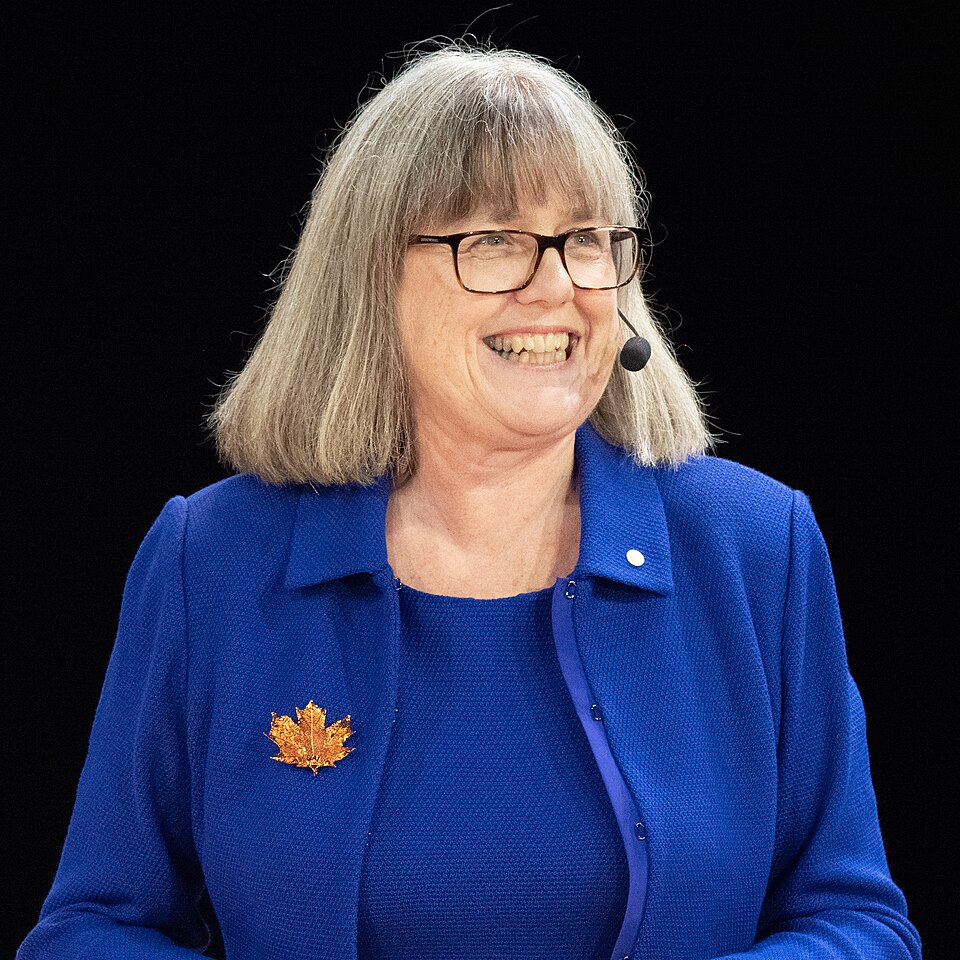
Yes, and that says a lot. In 2018, I became only the third woman in all of history to receive the Nobel Prize in Physics. The first was Marie Curie, in 1903. The second, Maria Goeppert Mayer, in 1963. And after her, nothing for 55 years! Fifty-five years without any woman. Imagine all that time. Yet women were doing great science everywhere. But they weren't seen, they weren't rewarded enough. When I received this prize, I hoped one thing: that many little girls would tell themselves that they too, one day, can do physics.
—I heard Wikipedia didn't want a page about you before. Is that true?
Yes, and it's a funny story! Before my Nobel, someone wanted to create a page about me on that big online encyclopedia. But it was refused: the editors thought I wasn't "famous" enough, not important enough. Can you believe it? And then, a few months later, the Nobel comes, and quickly, the page is created in a hurry! That shows something sad: women scientists are often forgotten, as if no one thinks to tell their story. Yet I had been doing the same physics for years. Nothing had changed about me, except others' perception.
Nothing had changed about me, except others' perception.
—Why weren't you a big important professor with a grand title?
Good question, and it surprised many people after my Nobel! At the University of Waterloo, I was an associate professor, not a full professor, the highest rank. People wondered why. The truth? I simply never asked to go higher. I wasn't interested in those matters of titles and hierarchies. I preferred to spend my time in my lab, with my lasers and my students, searching for exciting things. You know, my child, the most important thing was never to have the fanciest title on my door. It was to understand light, and to love what I did every day.
The most important thing was never the title on my door, but to love what I did.
This imaginary interview was generated by artificial intelligence from sources documented in Donna Strickland's profile. It dramatises what the figure might have said based on what we know about them, but does not constitute attested historical testimony. For primary sources and factual documentation, refer to the full profile.