Imaginary interview with Donna Strickland
by Charactorium · Donna Strickland (1959 — ?) · Sciences · 5 min read
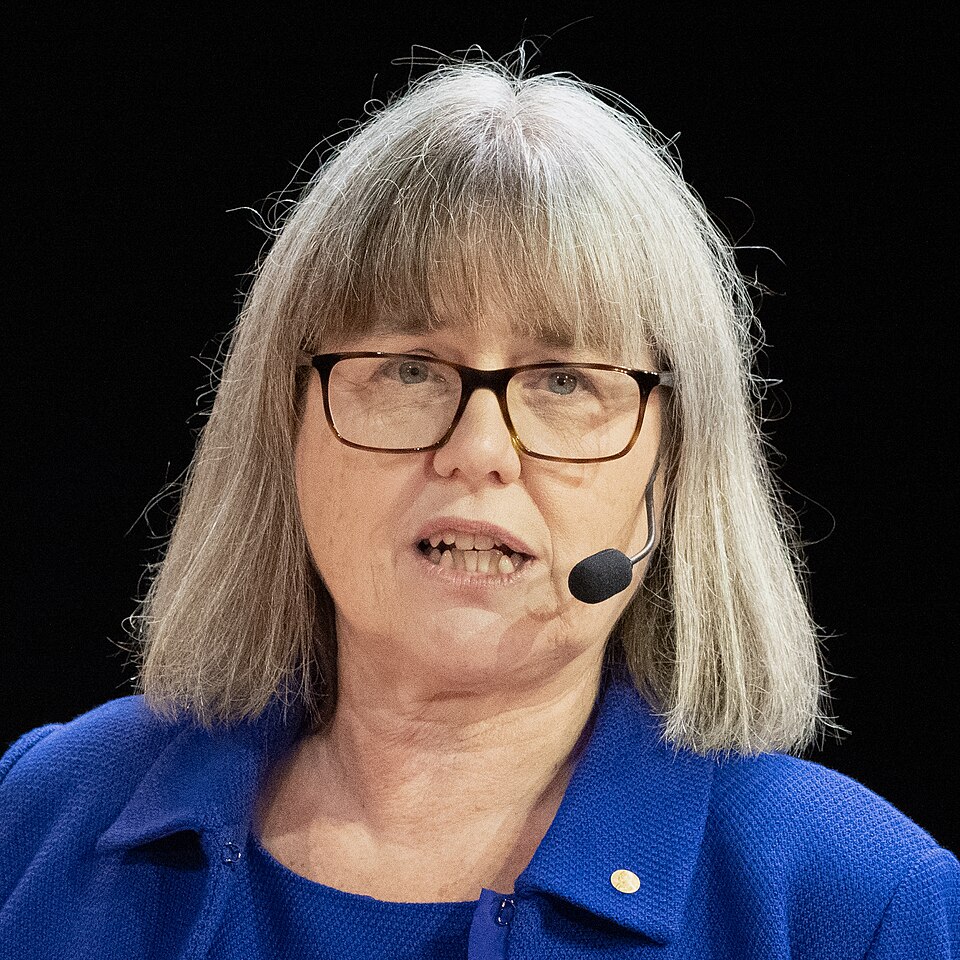
October 2018, University of Waterloo. In an office cluttered with reprints and optical diagrams, a physicist with a measured voice receives us a few days after the announcement that turned her life upside down. Coffee in hand, Donna Strickland talks about lasers the way others talk about gardening: with quiet precision and disarming humor.
—How did you find out you were receiving the Nobel Prize in Physics?
The phone rang very early, and a voice told me I was sharing the 2018 Nobel with Gérard Mourou and Arthur Ashkin. My first reaction was to wonder if someone was playing a prank on me — honestly, you don't wake up thinking this will be that morning. I was here, at Waterloo, in the most ordinary setting imaginable, and suddenly I was told I was the third woman to receive this distinction, more than half a century after Maria Goeppert Mayer. I laughed, I think. It wasn't false modesty: it's just that laser physics gets you used to slow, patient results, and there everything came at once.
You don't wake up thinking this will be that morning.
—What does it feel like to become the third female laureate since Marie Curie?
It's a source of pride, but also a question that makes me uncomfortable. Fifty-five years had passed since Maria Goeppert Mayer in 1963 — fifty-five years without a woman receiving the Nobel Prize in Physics. I don't believe for a second that women stopped doing great science during that period. I wish we no longer had to count, that we could simply say “A physicist invented such and such a technique” without specifying her rank on such a short list. But as long as we have to count, I want my name to help female students realize that the laboratory door is open to them.
As long as we have to count women, I want my name to help open the laboratory door.
—Can you simply explain the idea behind chirped-pulse amplification?
The problem in the 1980s was brutal: if you tried to amplify a very short laser pulse directly, you destroyed the material meant to amplify it. It was like trying to pour an ocean into a thimble. Our idea, with Mourou, was to first stretch the pulse in time using a diffraction grating, amplify it gently once diluted, then recompress it at the very end. The light then regained its brevity, but filled with colossal energy. That's the whole principle of CPA, published in 1985: never ask the amplifier crystal to absorb more than it can handle at once.
It was like trying to pour an ocean into a thimble.
—What did your laboratory at Rochester actually look like?
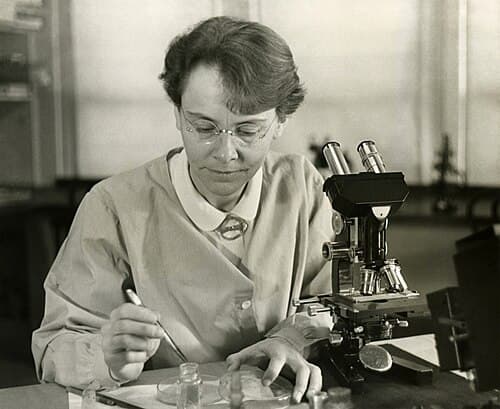
Imagine a massive optical table, suspended on air cushions so that no vibration, not even a truck passing in the street, could misalign the beams. At the heart of the setup, a Nd:YAG laser and its amplifier chains, and everywhere those safety goggles we never took off. Aligning the diffraction gratings took hours of painstaking patience, eyes glued to the oscilloscope to check the pulse shape. At night, the Institute of Optics at Rochester was silent, and we were tracking that compressed signal that proved it worked. When I first saw the pulse emerge intact and recompressed, I knew we had something real.
—This discovery was born during your PhD. How did you experience it at the time?
I was just a student when I arrived in 1983 in Gérard Mourou's lab at Rochester. The foundational paper, Compression of amplified chirped optical pulses, came directly from my thesis work in 1985 — well before I even defended my PhD in 1989. At the time, I wasn't thinking “I'm revolutionizing physics”; I was thinking “Will my setup hold up tonight?” It's only in hindsight that you realize an idea born on a PhD student's bench ended up spreading worldwide. A thesis is not a school exercise: it can be the first pebble of an avalanche.
A thesis is not a school exercise: it can be the first pebble of an avalanche.
—What does sharing this prize with your former PhD supervisor mean to you?
It's quite rare, and it touches me deeply. Gérard Mourou was my PhD supervisor, the man who entrusted me with this problem of ultrashort pulses and let me explore. Receiving the same Nobel as him, decades later, is a way of saying that the relationship between a master and his student is not one-way: we build together. He brought intuition and lab experience, I brought daily experimental tenacity. CPA bears both our names because it truly emerged from that meeting, and I think it's fitting that the Stockholm committee recognized it that way.
—Did you know that before the Nobel, a Wikipedia page about you had been rejected?
Yes, and that story says a lot. A contributor had tried to create a page about me, but moderators rejected it, judging that I wasn't “notable” enough. Then the 2018 Nobel came, and the page was set up urgently that same day! I smile about it, but it's revealing: women in science are often missing from reference sources, not because they don't exist, but because they aren't deemed worthy of inclusion until an institution has anointed them. How many equally deserving female researchers will never get their Stockholm phone call to suddenly make their work “notable”?
I was judged not notable — until a phone call from Stockholm decided otherwise.
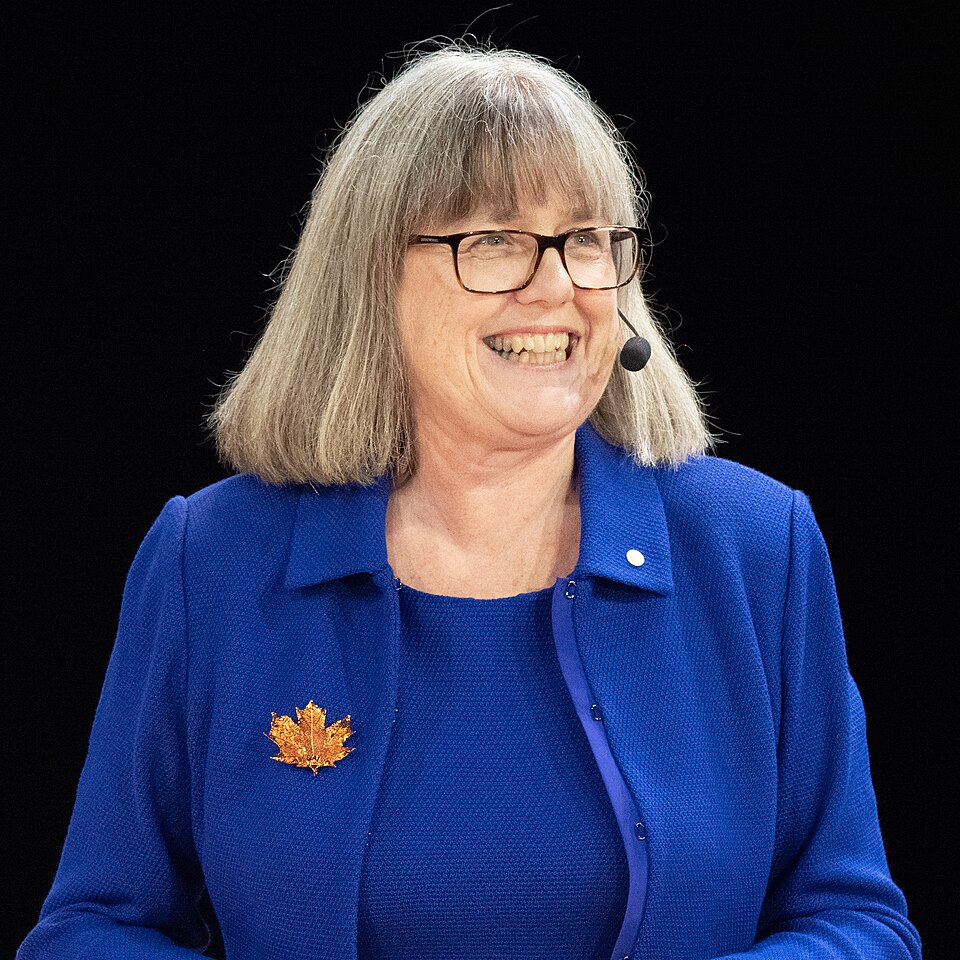
—People were surprised to discover you were only an associate professor. How do you explain that?
Many people were astonished that a Nobel laureate was only an associate professor at Waterloo. The simple truth is: I had never applied for a higher rank. That may seem strange, but academic hierarchies have never much concerned me. What interested me was being in the lab, aligning my beams, mentoring my students — not filling out promotion dossiers. I'm not saying this is a model to follow, and I know this detachment is a luxury not all women can afford. But for me, the title was never the goal; physics was.
The title was never the goal; physics was.
—Did you expect your work would one day be used to operate on millions of people's eyes?
Absolutely not, and that's the whole point of fundamental research. In 1985, I was trying to amplify light without burning my crystal — I wasn't thinking about patients in an ophthalmology clinic. It was much later that I realized CPA had become the core of LASIK, the surgery that reshapes the cornea to correct myopia, performed on millions of people each year. Discovering that your PhD equations end up restoring clear vision to strangers is dizzying. In physics, you never know which door you're opening: you just push, and sometimes it's an operating room behind it.
You never know which door you're opening; sometimes it's an operating room behind it.
—Which applications of your ultrashort lasers are most dear to you today?
At Waterloo, I continue research on fiber lasers applied to biological tissues — the retina, the cornea, those delicate areas where you can afford no brutality. The ultrashort pulse has this extraordinary virtue: it acts so fast that it deposits its energy before heat can diffuse to neighboring tissues. It's surgery with light, almost without collateral damage. But these same pulses are also used to study matter on the femtosecond scale, to machine semiconductors, to probe plasmas. I love the idea that a single physical principle, born from a bench-top setup, feeds both medicine and the most fundamental science.
This imaginary interview was generated by artificial intelligence from sources documented in Donna Strickland's profile. It dramatises what the figure might have said based on what we know about them, but does not constitute attested historical testimony. For primary sources and factual documentation, refer to the full profile.