Imaginary interview with Dorothy Dandridge
by Charactorium · Dorothy Dandridge (1922 — 1965) · Performing Arts · Society · Music · 5 min read

Los Angeles, an evening in 1958. In a hotel lounge with drawn curtains, a woman in a silk sheath dress smokes slowly, between rehearsals. Dorothy Dandridge agrees to talk — about fame, the drained pool, and everything an Oscar could never fix.
—How did you learn you were nominated for an Oscar in 1955?
A phone call, one morning, and suddenly my name in every newspaper. February 1955, Life Magazine put me on the cover, calling me a “revelation” from Carmen Jones. I first thought the doors were finally opening. I had worked that role like a woman possessed — singing Bizet in English, standing up to Otto Preminger on set. The first Black woman nominated for Best Actress: that's what they wrote about me. What they didn't write was the silence that followed. The phone, so loud that morning, went quiet for months. Hollywood didn't know what to do with fame in my color.
The phone, so loud that morning, went quiet for months.
—What happened after that historic nomination?
Nothing. Or almost nothing, which is sometimes worse. I had been crowned the first Black actress in Hollywood, and no major studio offered me the role that should have followed. I waited for scripts worthy of me; they sent me maids and silences. Understand: in this system of studio contracts, they own you, they mold you, they decide your public face — but they wouldn't sign a Black woman to carry a story. I spent entire afternoons rehearsing cabaret songs for lack of a set to place my talent. Brushing an Oscar doesn't open a door: it leaves you standing in front of it, watching it stay closed.
Brushing an Oscar doesn't open a door: it leaves you standing in front of it.
—Do you remember your evenings at the Frontier Hotel in Las Vegas?
Every night, I filled the room. They applauded me standing, a mixed audience, men in tuxedos, a gooseneck microphone, and two hours of grace where I was queen. Then the lights went out. I left through the service door, the staff entrance, because I was forbidden to sleep under the roof that sold my name in neon lights. Forbidden from the pool, too — that pool my songs helped fill with guests. You perform at the top of the bill, and they treat you like an intruder as soon as the curtain falls. That segregation, in 1950s Nevada, you wore it like a coat you could never take off.
I filled the room, then I left through the staff door.
—There's a story about a defiant act of yours near a forbidden pool. What really happened?
A hotel refused to let me swim there. So, under their gaze, I dipped the tip of one finger in the water — just one finger, a tiny provocation. The manager had the entire pool drained and disinfected, as if my skin were a contagion. One finger, and thousands of liters dumped. The press talked about it, and that's the irony: my trivial gesture revealed more truth than a thousand speeches. A system that cheered me on stage at night judged my touch impure the next day. I didn't shout. I let the absurd speak for me; it was far more eloquent than I.
One finger in the water, and they drained the whole pool.
—Why did the role of Carmen mean so much to you?
Because for once, I was the magnetic center of the story, not its backdrop. Carmen Jones, in 1954, was Bizet's opera transposed, an all-Black cast, and me at the fiery heart. I wore out my script with annotations — diction, singing, every gesture. Preminger was demanding to the point of cruelty, but I understood this role would be my proof. The New York Times wrote that I performed with rare intensity; I reread that line many times on doubtful nights. Carmen was free, untamed, fatal — everything a Black actress had almost never been allowed to embody on screen.
For once, I was the center of the story, not its backdrop.
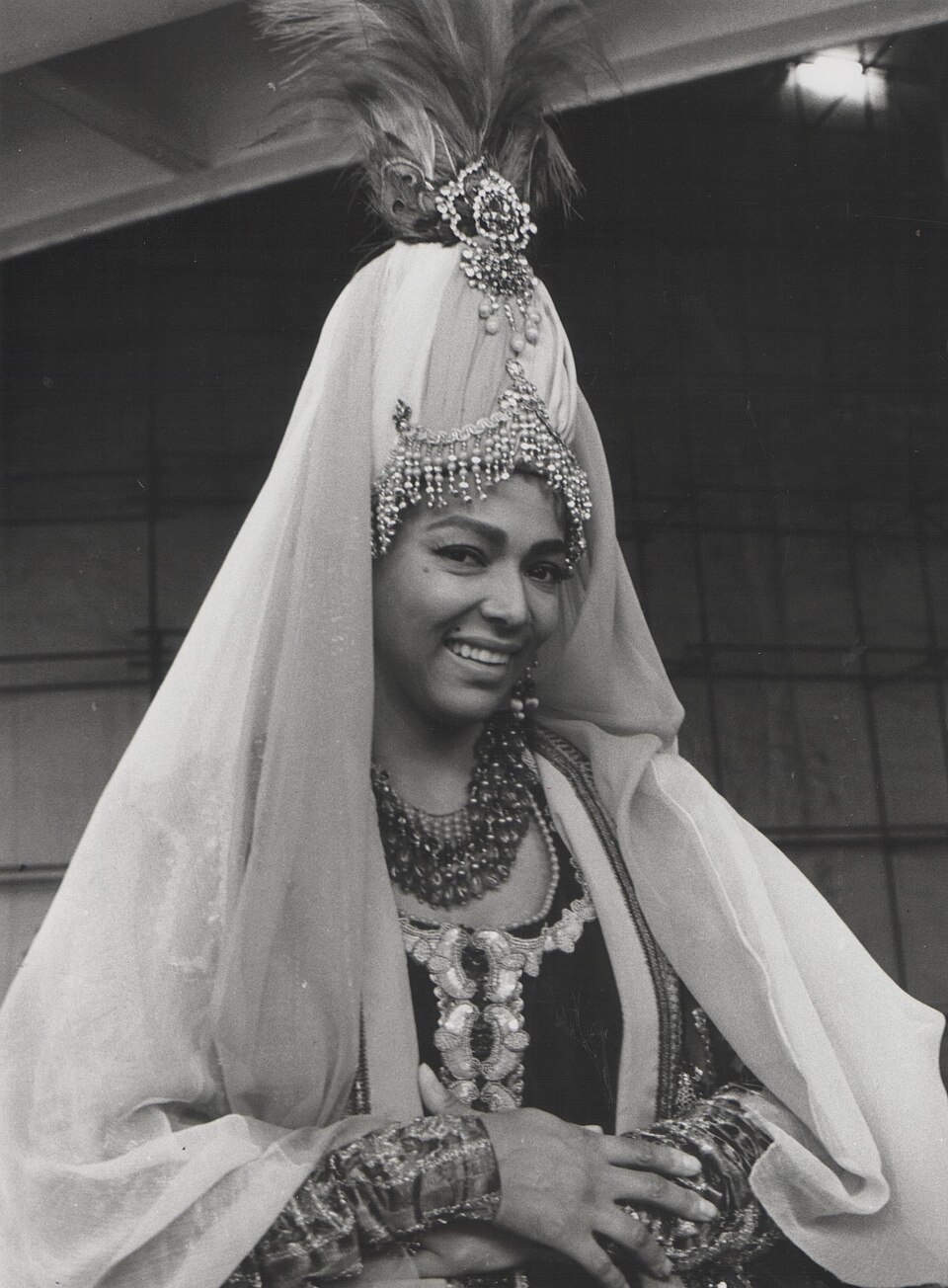
—What do you say to those who criticized the film Porgy and Bess?
I understand them. Playing Bess in 1959, opposite Sidney Poitier, in that Gershwin opera — part of the Black community saw it as a stereotypical image, and that criticism hurt because it hit home. But what would you have had me do? I wasn't offered thirty roles to choose the most dignified. Between Bess and nothing, there was Bess. That's the truth people forget when they judge: the few great roles offered to Black actors forced us into compromises never imposed on others. I did my best inside a cage whose bars I didn't design.
Between Bess and nothing, there was Bess.
—You told Jet Magazine you had to be “twice as good.” What did you mean?
Exactly what I said to that journalist, in 1954: “I am a Black woman in Hollywood. That means I have to be twice as good to get half the opportunities.” It wasn't a complaint; it was arithmetic. Every interview, I prepared like a scene; every public outfit — a belted suit, a wide-brimmed hat — had to be impeccable. A white actress could afford a lapse; for me, the slightest flaw became the proof they were waiting for to shut the door. I lived watched, scrutinized as much for my glamour as for my color. So yes, I worked twice as hard — for half.
It wasn't a complaint; it was arithmetic.
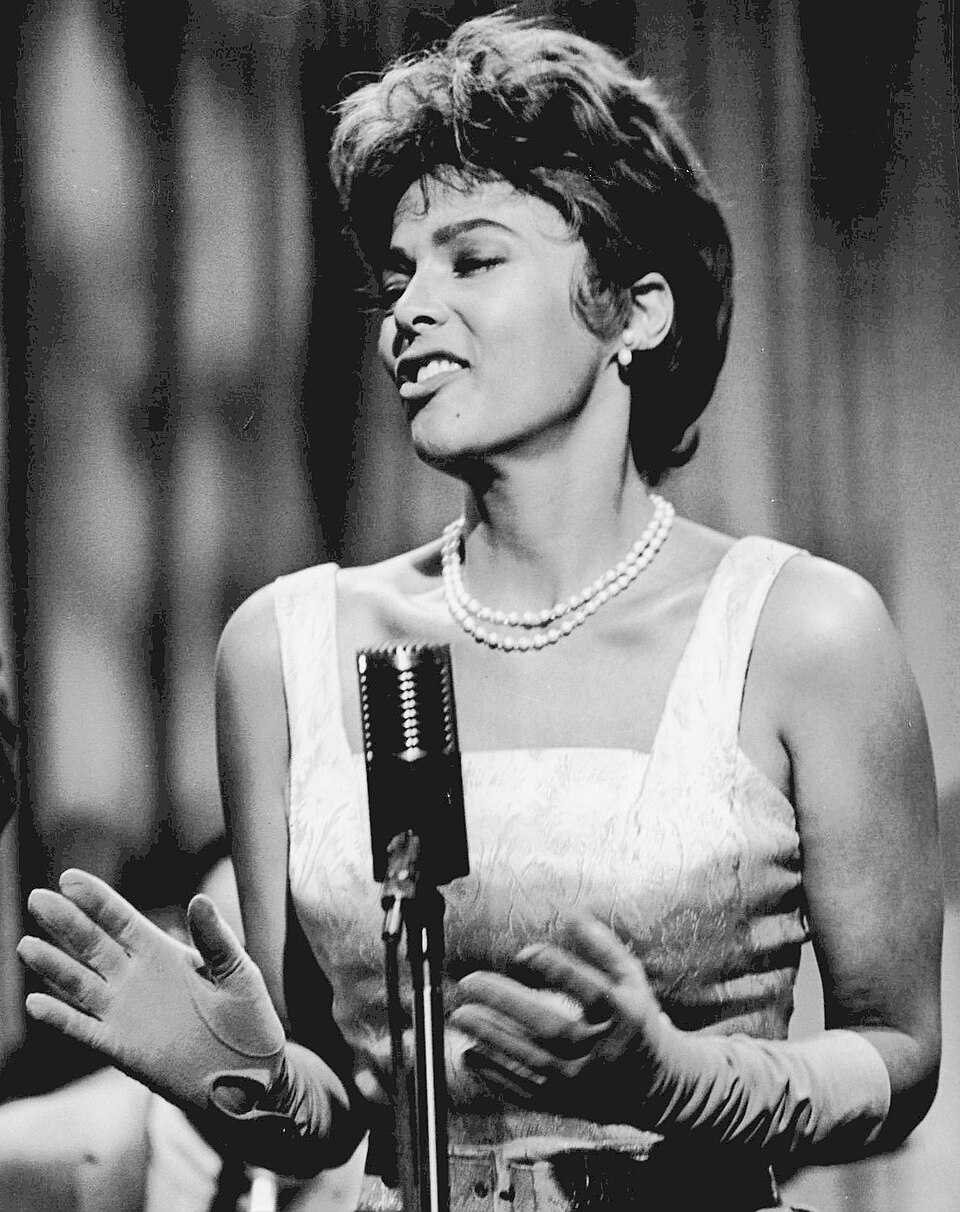
—How did you experience those social gatherings where you were finally invited?
Like balancing acts. I was admitted to stars' parties, and often I was the only Black woman in the room. Fascination and distance in the same look: they found me lovely, exotic, and kept their distance. I'd return to my rented apartment in Hollywood, never bought — because even famous, racial covenants kept me out of the nice neighborhoods. I learned to smile under tension, to control my image like holding a high note without wavering. That wasn't social life. It was a second stage, without applause, where my mere presence was judged.
They found me lovely, exotic — and kept their distance.
—You rarely speak of your daughter Lynn. What does she mean to you?
She was born in 1951, and at birth, brain damage marked her forever. She is my most intimate wound, the one I only speak of in a whisper. After my divorce, I bore the weight of her care alone, in a specialized facility. A huge part of what I earned went there, and it was right, she was my daughter — but it weakened me, year after year, without the public guessing behind the silk dress. They saw the icon; they didn't see the mother counting every paycheck. Fame, believe me, does not comfort a child you cannot heal.
They saw the icon; they didn't see the mother counting every paycheck.
—Do you fear ending up forgotten, despite all you have opened?
I would be dishonest to say no. I have brushed ruin, and the idea that one day an overdose or accident might take me, quietly, in an apartment in West Hollywood, without the press caring — that idea haunts me. The country vibrates for Martin Luther King, for Rosa Parks, for the marches; I fear being eclipsed by the very movement of which I was, despite myself, one of the first icons. If I could imagine being read in a century, I would want them to remember this: I pushed a door open, alone, and if others one day walk through it after me, then my solitude will not have been in vain.
I pushed a door open, alone; may others one day walk through it.
This imaginary interview was generated by artificial intelligence from sources documented in Dorothy Dandridge's profile. It dramatises what the figure might have said based on what we know about them, but does not constitute attested historical testimony. For primary sources and factual documentation, refer to the full profile.