Imaginary dialogue between Leymah Gbowee and Ellen Johnson Sirleaf
by Charactorium · Ellen Johnson Sirleaf (1938 — ?) · Politics · 5 min read
It is on the veranda of a house in Monrovia, at the end of 2011, that Leymah Gbowee meets the woman she simply calls Ma Ellen. The two women have just shared the Nobel Peace Prize a few weeks earlier in Oslo, and the air still smells of the warm Atlantic rain on the tin roofs. They have known each other since the war years, when the market women and church women took to the streets to demand an end to the fighting. Gbowee has not come as a journalist: she comes as a sister in arms, with her activist's questions wanting to understand what the other has carried in silence.
—Ma Ellen, I remember our white marches before 2005. The night you defeated George Weah in the runoff, what did you feel, you, the first among us?
Leymah, you who marched at the head of those women dressed in white, you know better than anyone what that victory weighed. When the results came in, I didn't think of myself. I thought of all those mothers who had buried their sons, of those market women who had braved bullets to demand peace. Becoming in 2006 the first woman elected to lead an African state was not my triumph: it was yours. I felt the weight of an entire continent on my shoulders. The world was watching to see if a woman could rebuild a country shattered by fourteen years of war. We had no right to fail.
It was not my triumph: it was yours.
—Before power, there were prison bars. You were thrown in jail under Doe, sentenced to ten years. In your cell, what kept you from bending?
You know that fear, Leymah, the one that seizes you at night in a cell. In 1985, after criticizing Samuel Doe's regime, I was arrested, then sentenced to ten years. I thought I would never see my sons again. But in that silence, I understood one thing: they could imprison my body, never my conviction. Later, under Charles Taylor, I experienced exile and threat again. Every humiliation carved into me a determination harder than stone. When you have lost everything but your dignity, you become free in a way the powerful do not understand. That is what carried me to the presidency.
They could imprison my body, never my conviction.
—You were trained at Harvard, far from our counties. How did this economist wipe out a multi-billion dollar debt that was strangling Liberia?
My time at Cambridge, where I earned my master's in public administration in 1971, gave me a weapon few heads of state possessed: mastery of numbers. When I came to power, Liberia was crushed under nearly five billion dollars in debt inherited from the wars. With my briefcase and IMF reports, I went to plead our case from capital to capital. Thanks to the HIPC initiative, we secured the cancellation of over 4 billion dollars. It wasn't magic, Leymah, it was hard work, nights spent poring over balance sheets. Wiping out that debt meant giving our children a future that was no longer mortgaged.
Wiping out that debt meant giving our children a future that was no longer mortgaged.
—Many criticized you for courting the IMF and World Bank too much. To us, the women of the streets, what do you say about those choices?
I understand that reproach, and I accept it, because it comes from those who suffered the most. But think: a country without rule of law, without schools, without roads, does not feed its children with slogans. I had to bring back investors, restore confidence, prove that Liberia was no longer a black hole of corruption. Yes, I spoke the language of international institutions, because that language unlocked resources. The peace dividend had to be fetched where the money was. I would have liked to go faster for the market women and peasants. But rebuilding a devastated state is the work of a generation, not a single term.
A country without schools does not feed its children with slogans.
—In Oslo, you dedicated our prize to the market women and church women. Why did you insist, before the whole world, on stepping back behind them?
Because it was the truth, Leymah. That Nobel prize in 2011, we three received it — you, Tawakkol Karman, and I — but in reality it belonged to thousands of others. To the women who risked their lives to stop the war, to those who held families together when everything collapsed. In Oslo, I said this prize belonged to the market women, the church women. How could I have stood on that stage alone? I have always believed that Africa's salvation rests in the hands of its women. That day, the Nobel Committee was not rewarding three people: it was finally acknowledging a truth you had carried all along.
Africa's salvation rests in the hands of its women.
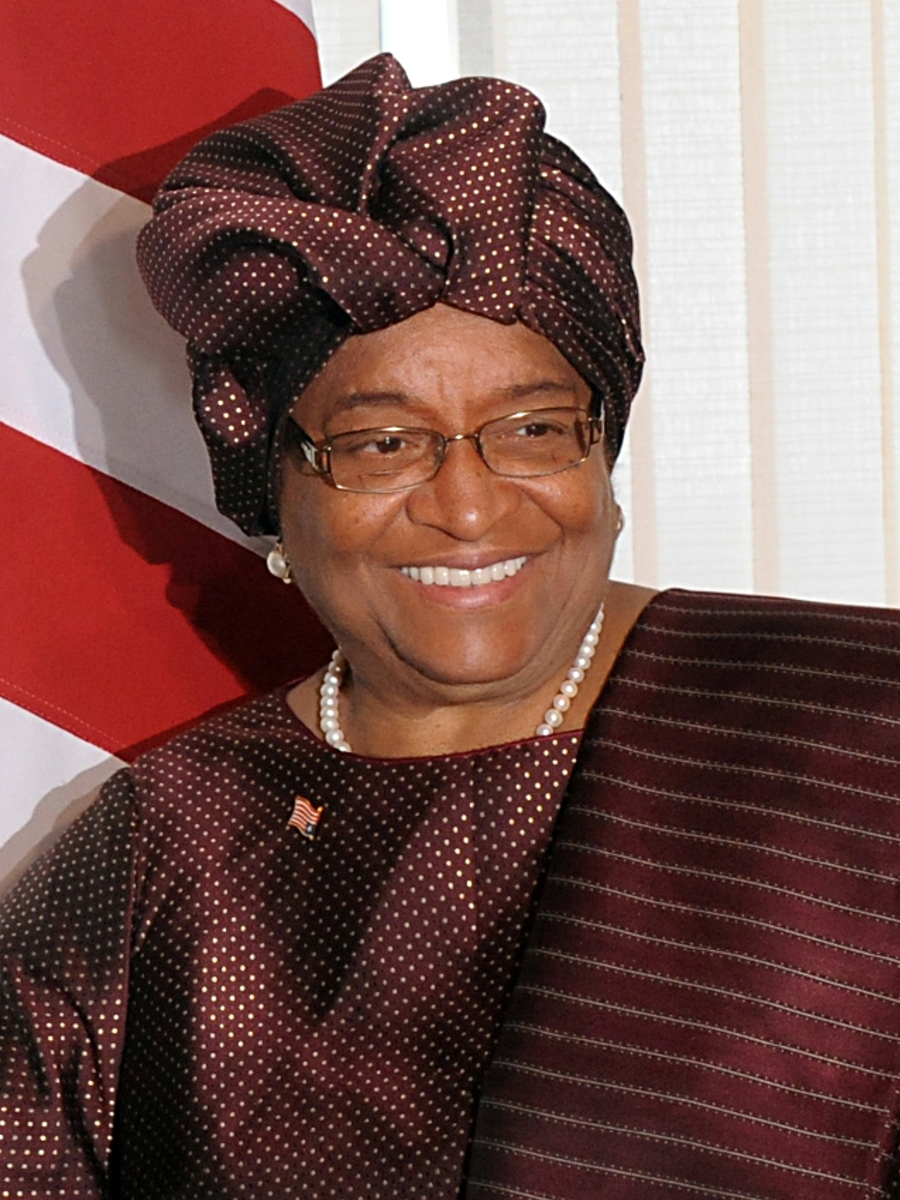
—You have been nicknamed Iron Lady. You who speak so much of women, does that nickname of toughness really suit you?
That nickname, Leymah, was stuck on me like armor, and I accepted it without letting it define me. Governing a country emerging from war requires a firm hand: you must confront the warlords, refuse corruption, say no to those who would plunge the country back into chaos. Yes, I was tough when necessary. But behind the Iron Lady there is a mother, a grandmother, a woman who also weeps. Firmness is not the opposite of tenderness: it is what protects it. Without firmness, our dreams of peace would have been trampled by the first armed men to come along.
Firmness is not the opposite of tenderness: it is what protects it.
—In the morning, at the Executive Mansion, before cabinet meetings, how do you begin those days that decide the fate of an entire people?
I rise before dawn, around five-thirty, when Monrovia is still asleep. I start with prayer, then reading dispatches and reports from my ministers. You know, that moment of silence before the bustle is where I draw my strength. At the Executive Mansion, that palace rebuilt on the ruins of war, every wall reminds me of what we have been through. Then come the councils, audiences, trips to the counties to never lose touch with the ground reality. A president who no longer walks among her people ceases to understand her people. I have always refused that.
A president who no longer walks among her people ceases to understand her people.
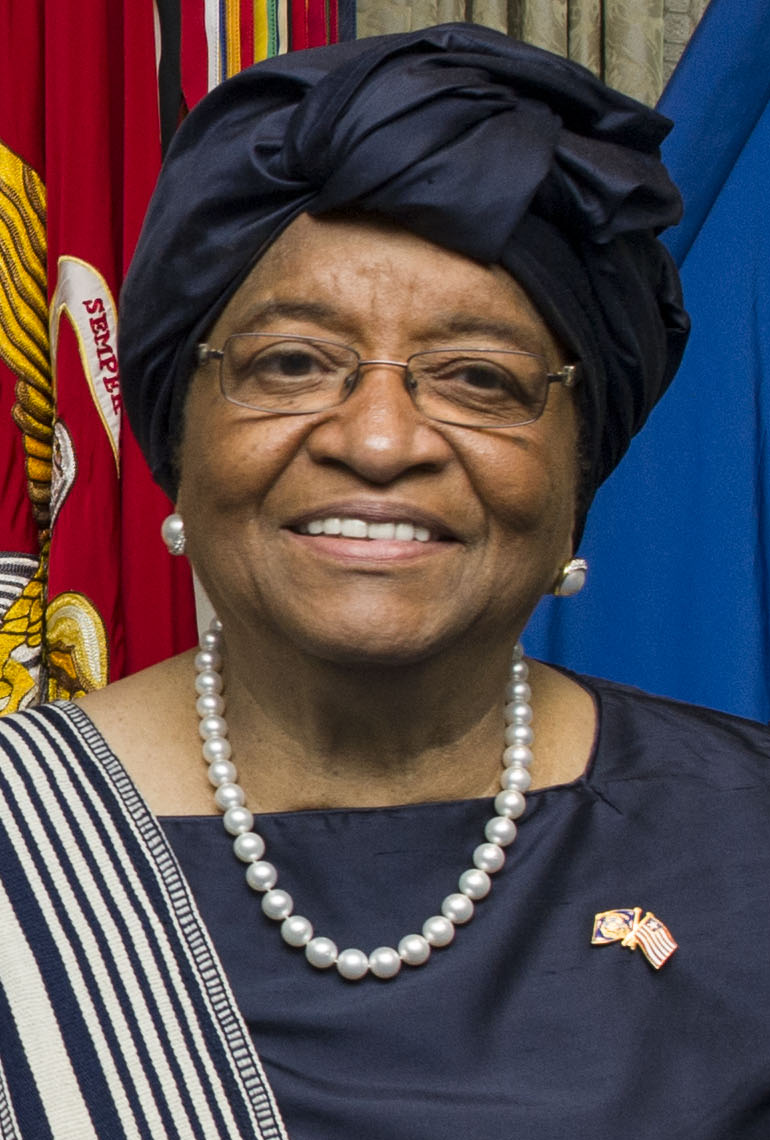
—And now, the shadow that no one yet sees. You fear for our country a new ordeal — a disease, perhaps. How do you prepare for it?
Leymah, I fear most what we are least armed against. Our hospitals were destroyed by wars, our doctors fled. If a major health crisis struck our region, I know we would be among the most vulnerable. That is why I fight to rebuild the health system, brick by brick, with help from the international community. I always keep my phone within reach, because in a country with fragile infrastructure, communication can save lives. We learned during the war that prevention is worth a thousand times the reaction. I hope never to have to coordinate such a response — but I prepare as if the ordeal were already here.
Prevention is worth a thousand times the reaction.
—A day will come when you must leave this chair. You who fought so hard for power, how do you imagine giving it back, in peace?
This may be the hardest trial, Leymah, harder than winning power: knowing how to give it back. Since 1944, our country has never known a peaceful transfer between two elected presidents. Imagine what that would mean: one day, handing the sash to my successor without a single shot fired, without a single exile. That would be my greatest pride, far more than any title. Power is not property; it is a deposit the people entrust to you. Those who cling to it betray those who carried them. I want to prove to Africa that an African democracy can turn its pages calmly, through ballots and not bullets.
Power is not property; it is a deposit the people entrust to you.
—One last question, Ma Ellen, between us. In your nights of exile and cell, what made you believe that that day in Oslo would come?
Nothing, Leymah. I never imagined Oslo in my cells. You don't survive prison by dreaming of medals: you survive by refusing to lie to your conscience. What I wanted was not glory, but for my grandchildren to grow up in a Liberia where people no longer disappear for speaking out. When the Nobel Committee called, I first thought of all those who did not live to see that day. Recognition came afterward, like an unexpected grace. But what kept me standing was the certainty that our cause was just — and that a just cause always, one day, finds its light.
You don't survive prison by dreaming of medals: you survive by refusing to lie to your conscience.
This imaginary interview was generated by artificial intelligence from sources documented in Ellen Johnson Sirleaf's profile. It dramatises what the figure might have said based on what we know about them, but does not constitute attested historical testimony. For primary sources and factual documentation, refer to the full profile.