Imaginary dialogue between Pierre Corneille and Fontenelle
by Charactorium · Fontenelle (1657 — 1757) · Literature · Sciences · 5 min read
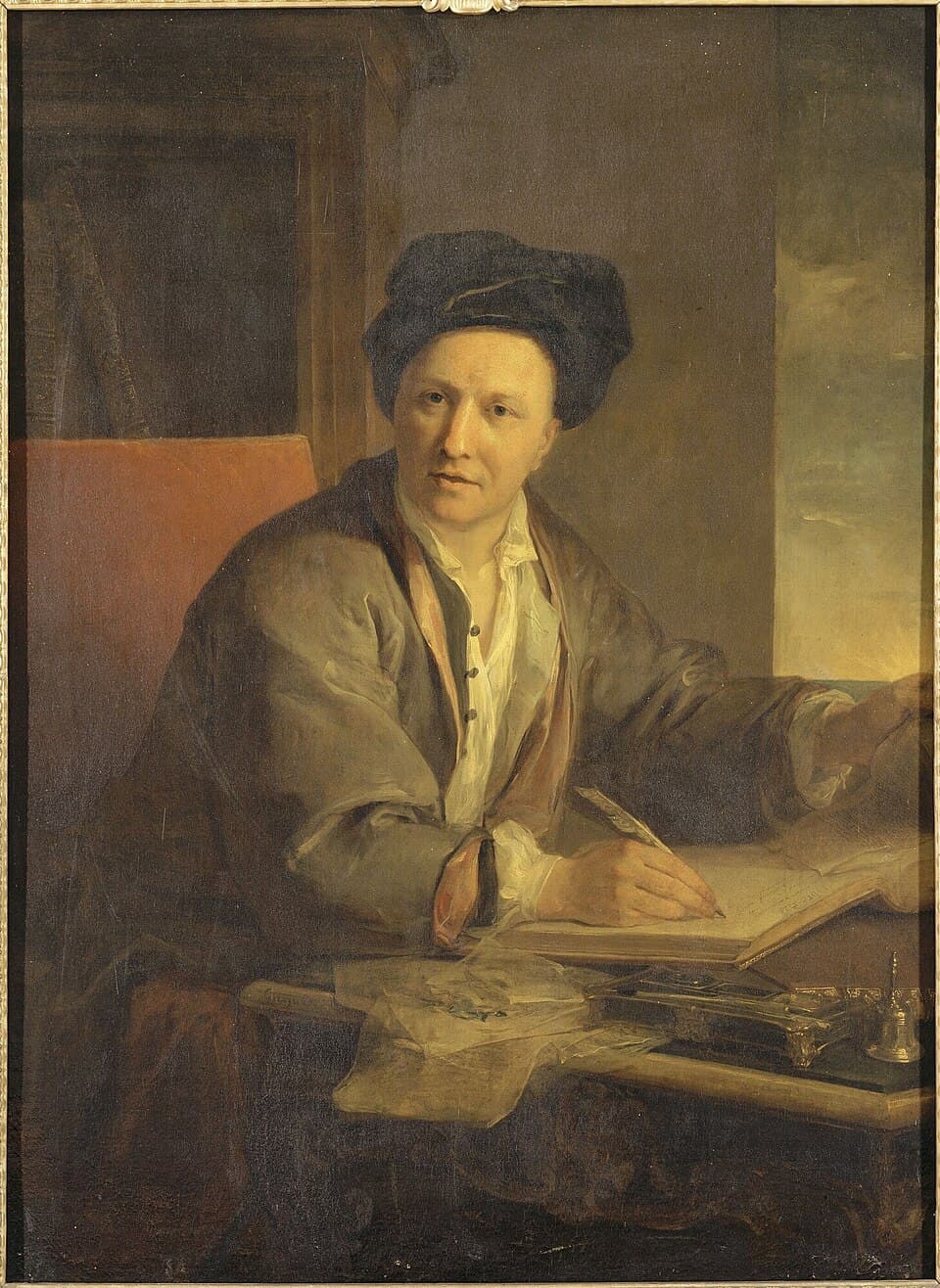
It is in the alleys of a Parisian garden, on a mild late summer evening, that Pierre Corneille meets his nephew Fontenelle, still all heated from a salon conversation. A brass telescope lies on a bench, abandoned near a celestial globe, and the scent of boxwood rises with the evening coolness. The uncle and nephew have known each other since Rouen, since the childhood of young Bernard in the shadow of the great family theater. The old playwright, faithful to the Ancients, comes this evening to affectionately tease this boy who has taken it into his head to side with the Moderns.
—Bernard, my nephew, I hear you are leading a marquise through the gardens in the evening to show her the stars. What is this game?
You laugh, my uncle, but this game is my entire art. In my Conversations on the Plurality of Worlds, I imagined six evenings where I lead a marquise under the stars and explain the system of Copernicus to her without making her open a single treatise. I show her the Earth spinning like a top, the other worlds perhaps inhabited, and all this between two gallantries. You who built tragedies where passion conveys morality, you will understand me: I wanted science to enter through pleasure. A telescope, a globe, a fine evening, and philosophy lets itself be loved. The salon ladies, who fled scholars, read me until dawn.
—And do you really believe that a woman of the world can understand the astronomers' sky, she who has never touched a mathematical instrument?
I believe it, and more: I believe that everyone can, provided you catch them through curiosity. See what I put into the mouth of my book: all philosophy is founded on only two things, on having a curious mind and poor eyes. Our eyes are weak: we think we see a point where a sun burns. But the mind can go further than the gaze. The marquise does not need calculations, she needs wonder. I give her wonder, and reasoning comes by itself. That is how, my uncle, one turns an idle woman into a thinking person.
All philosophy is founded on only two things: on having a curious mind and poor eyes.
—That stings me, Bernard. You, my sister's son, dare to write that the Moderns equal the Ancients? Think of what we owe to the Romans.
I know it, and no one reveres more than I what you have drawn from Rome, my uncle. But in my Digression on the Ancients and the Moderns, I did not say that the Ancients were small: I said that nature does not exhaust itself. The whole question of preeminence I reduce to whether the trees that were once in our countryside were taller than those of today. But the present oak is as good as Caesar's. Men are not born worse than before; only, we inherit all that the centuries have amassed. We see farther, not because we are worth more, but because we stand on very ancient shoulders.
Men are not born worse than before; we inherit all that the centuries have amassed.
—But if each century adds to the previous, then what I did for the theater will one day be surpassed? Admit that this bothers me a little.
My uncle, that is the whole beauty and cruelty of my idea. I believe in the progress of knowledge: a scholar today knows more than the greatest of the Ancients, because truth accumulates. But the beauties of taste, those you gave to the stage, do not become obsolete like a theorem. One corrects a geometry; one does not erase a tragedy. What I advance holds for the sciences, where one builds stone upon stone; for poetry, each century starts anew. So your name fears nothing: you will be read when my calculations are dust. Progress devours scholars, it spares poets.
—There is a rumor that you are attacking the oracles of the Ancients, those sacred voices that delivered decrees. Is that not a dangerous boldness, my nephew?
Bold, perhaps; impious, no. In my History of Oracles, I did not deny that peoples believed in those voices: I sought why they believed in them. My rule is summed up in one sentence: let us make sure of the fact before we trouble ourselves about the cause. Most people rush to the cause and skip over the truth of the fact. They wanted demons in the temples; often there were only clever priests and credulous minds. I do not touch true religion, my uncle, I touch superstition, which is its ape. Dismantling a false marvel is to serve the true one.
Let us make sure of the fact before we trouble ourselves about the cause.
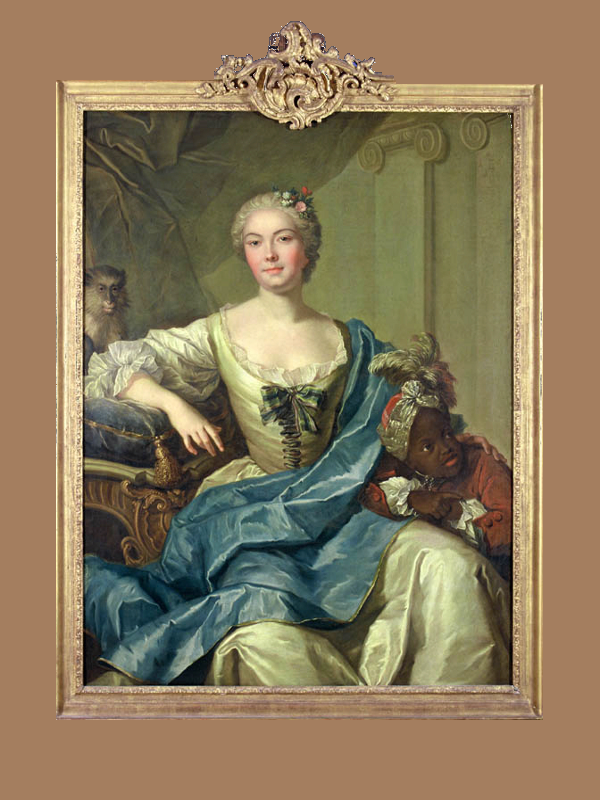
—And where do you get the idea that fables, those beautiful tales with which I nourish my verses, are only products of human ignorance?
Do not be alarmed, my uncle, I do not despise your fables, I explain them. In my essay On the Origin of Fables, I go back to the first men: they saw thunder, the raging sea, and having no science, they imagined gods behind every force. Myth is not a lie, it is a child's philosophy: human reason babbling before it knows how to speak. Thus the same errors recur among all peoples, Greeks as well as American savages, because the human mind is everywhere the same when it is ignorant. Your poets inherited these dreams; I seek their root. It is the same curiosity, turned toward the cradle of beliefs.
—They say you have been entrusted with the pen of the Academy of Sciences for life. Forty years of eulogizing the dead: is that not a strange office, Bernard?
Strange and magnificent, my uncle. As perpetual secretary, I have held this post for over forty years, and my duty is to write the eulogy of scholars when they pass away. You will say it is a gravedigger's job; I say it is a ferryman's job. When a geometer dies, his work is locked up in memoirs that ten people will read. I tell his life, I make his discoveries clear, and I return them to the cultivated public. Thus I have recorded in the registers of the Academy the work of an entire Europe of researchers. That is perhaps my true masterpiece, my uncle: not having invented, but having prevented so many inventions from dying with their authors.
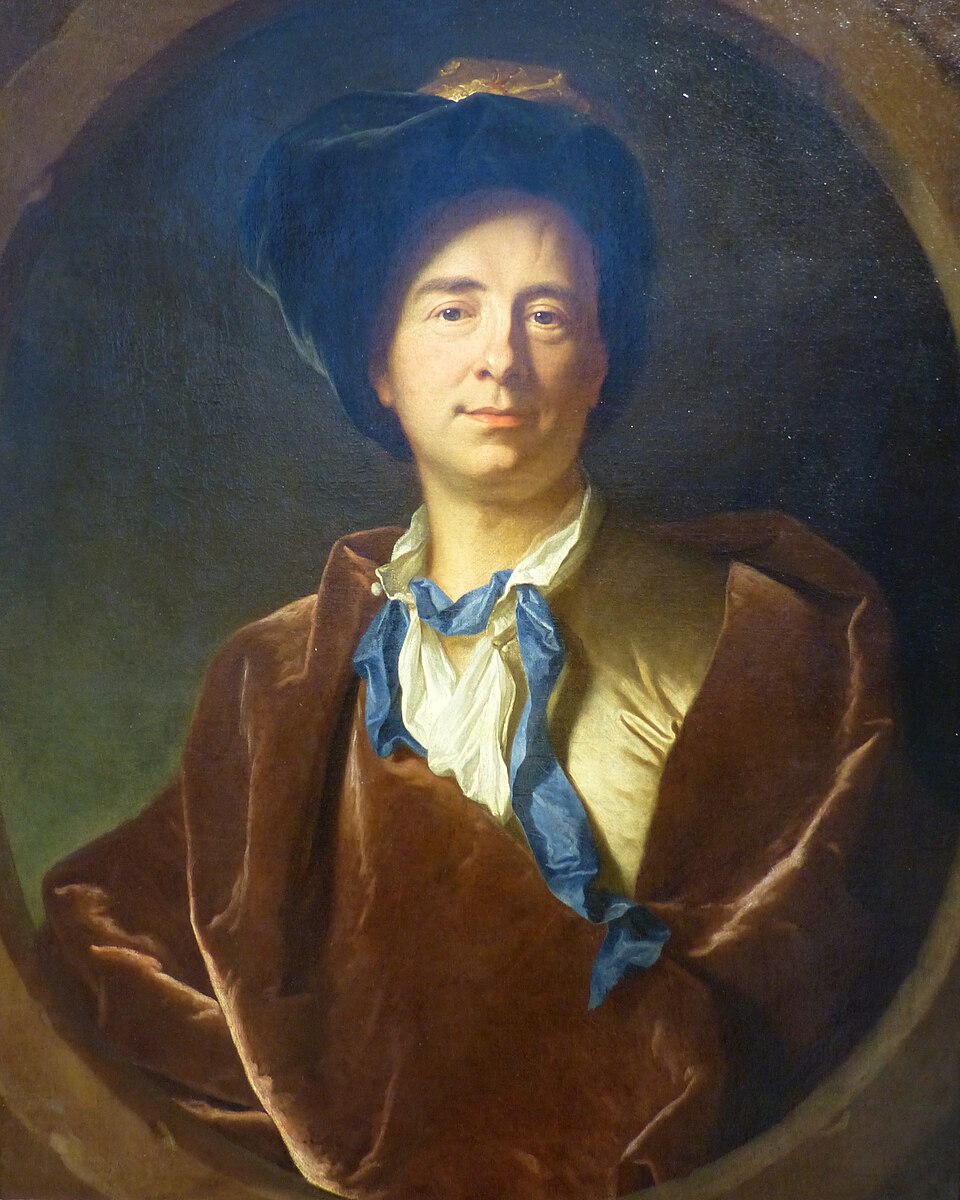
—And among all those scholars you bury with your speeches, is there one who gave you more trouble than the others?
Without hesitation: the Englishman Newton. Eulogizing him was formidable, for he left a great legacy of glory, and a sort of trial arose between the English and the Germans, rather like that which seven cities of Greece waged over Homer's birth. Everyone claimed him. I had to arbitrate the quarrel that opposed him to Leibniz over the invention of calculus, to manage the self-esteem of two nations, and to do justice to a man whose physics of attractions shook our dear vortices of Descartes. Praising a dead man of this stature, my uncle, is like giving you a eulogy of a rival in the theater: you must be just without denying yourself.
—You are very old now, my nephew, older than I ever was. So tell me: what is your secret for lasting so long?
The secret, my uncle, consists of little: moderation in everything. I got up late, ate frugally, lots of strawberries and asparagus, very little wine, and I kept away from passions that consume. I never chased after women or honors; that spares the heart and health. I approach a hundred years without having known either the great fevers of love or the angers of ambition. Our family from Rouen was of good stock, it is true, but a calm temperament does the rest. One lives long when one looks at the world with curiosity rather than fury. Science has taken the place of all agitations.
—You frequent salons until evening, they say, and your witty sayings are law there. Give me one, Bernard, so I can judge if my nephew has wit.
Gladly, my uncle, but do not judge me too harshly. The other evening, at Madame de Lambert's, a lady asked me what difference there was between her and a clock. I answered her that a clock marks the hours, and she makes them forget. That is all my salon art: to say a gallantry that is also a thought. In the evening, at Madame de Tencin's later, I slip between two compliments the latest discoveries of the Academy, and no one notices that they are being taught. The world thinks I am entertaining them; in truth, I am shaping them. A wit that only serves to shine is a candle; I try to be a candle that also illuminates.
A clock marks the hours; you, madame, make them forget.
Read further
This imaginary interview was generated by artificial intelligence from sources documented in Fontenelle's profile. It dramatises what the figure might have said based on what we know about them, but does not constitute attested historical testimony. For primary sources and factual documentation, refer to the full profile.