Imaginary dialogue between Vincenzo Viviani and Galileo
by Charactorium · Galileo (1564 — 1642) · Sciences · 5 min read
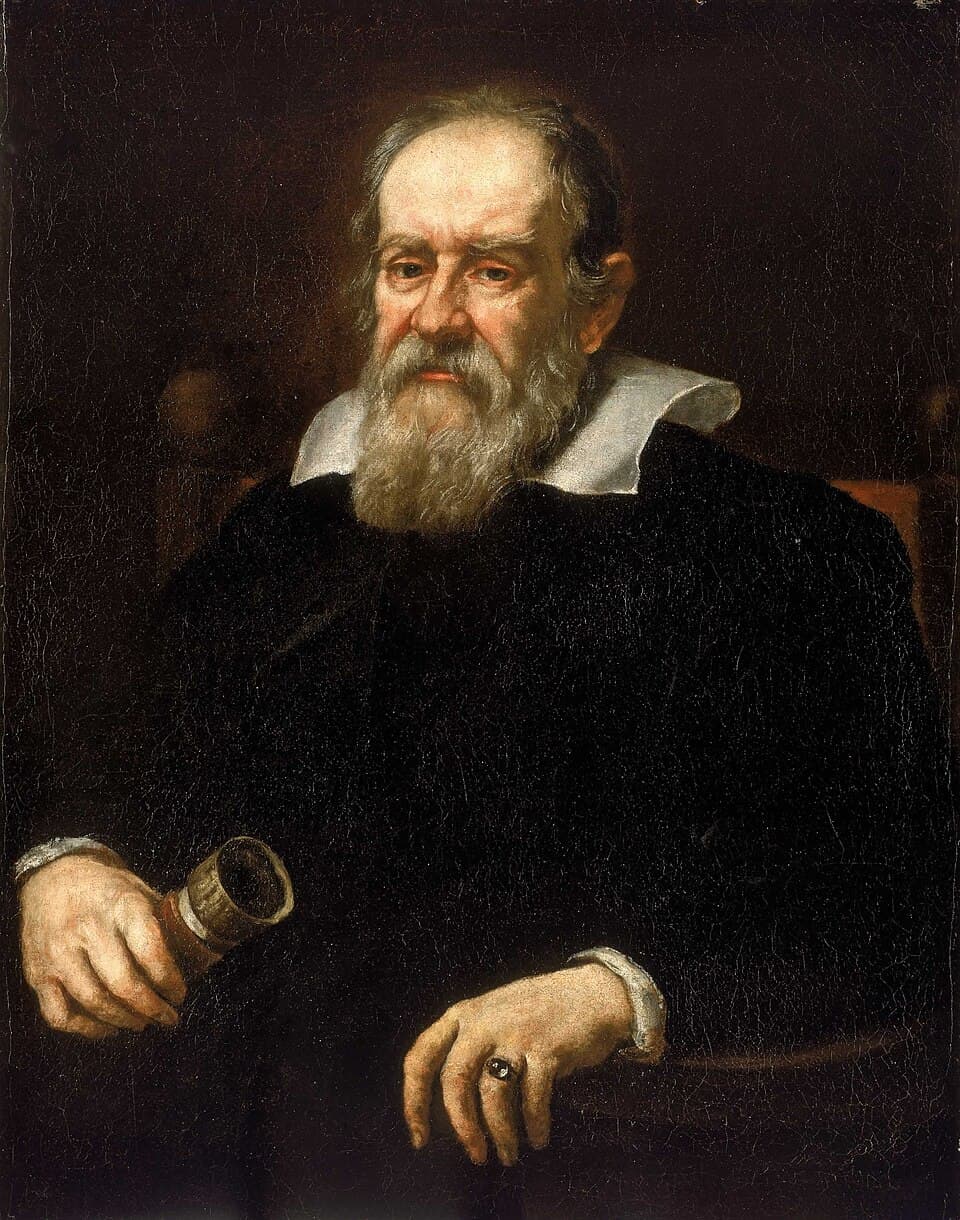
It is in the cool dimness of the villa Il Gioiello, at Arcetri, that I find the Master in this winter of 1641. The shutters are half-closed to spare his now-extinguished eyes, and on the table rest a silent lute and the pages I have been transcribing for him for months. I assist him every day, read his own letters to him, and collect his words before they fade. Today, I want him to tell me everything again, from the beginning, so that nothing is lost.
—Master, you who have told me so much about that night of 1609, tell me: what does one feel when first pointing one's telescope at Jupiter?
My dear Viviani, imagine an instrument that I myself polished, lens after lens, until it magnified twenty times what the naked eye barely discerns. That night, I saw near Jupiter three small stars, then four, aligned like pearls. The next day, they had moved. Do you understand? They revolved around the planet, exactly as the Moon revolves around us. The sky of Aristotle, perfect and immutable, had just cracked before my eyes. I named them the Medicean stars, in honor of the Medici, for a scholar without a patron observes nothing at all. But between us, it was not the princes that moved me that evening: it was holding in a lead tube a truth that no one had seen before me.
The sky of Aristotle, perfect and immutable, had just cracked before my eyes.
—You confided in me that you published these observations in haste. Did the Sidereus Nuncius of 1610 bring you the glory you hoped for?
Glory, yes, and with it jealousies. That little book, the Sidereus Nuncius, spread across all Europe in a few weeks. Overnight, I was appointed mathematician and philosopher to the Grand Duke of Tuscany, and I left Padua for Florence. But know, Viviani, that many refused to look through the telescope, the cannocchiale, claiming my stars were merely a defect of the glass. How can one argue with a man who closes his eyes to avoid contradiction? I learned that day that showing is never enough: one must also overcome the fear of seeing.
Many refused to look, claiming my stars were merely a defect of the glass.
—You have so often made me roll balls down these inclined planks. Why such persistence, Master, for such a humble motion?
Because this humble motion hides the greatest of laws, my friend. They say I dropped weights from the top of the Leaning Tower of Pisa — a pretty fable, but one cannot measure anything in so swift a fall. It was the inclined plane that revealed everything: by slowing the descent, I could finally count. I rolled bronze balls and measured time with a water clock, weighing the water that flowed out. And I discovered that the spaces traversed increase as the odd numbers, that speed increases uniformly with time. All bodies fall the same, whether of lead or straw, if air does not hold them back. Nature never lies to those who know how to question her patiently.
Nature never lies to those who know how to question her patiently.
—These works on motion, you finally gathered them in the Discorsi of 1638, while you were already confined here. How did you endure?
You know better than anyone, you who have seen me bent over those pages. The Discorsi e dimostrazioni are the work of my whole life, the fruit of my years in Padua which I so loved. In them I establish the laws of uniformly accelerated motion and the curved trajectory of projectiles. But the Inquisition forbade me to publish in Catholic lands. So the manuscript traveled in secret to Holland, to the Elzeviers, to escape censorship. Think of the irony: a blind old man, under house arrest, dictating the foundations of a new science while being forbidden to speak. One can imprison the man, Viviani, but never what he has understood.
One can imprison the man, but never what he has understood.
—I hardly dare mention it, Master. That Dialogo of 1632 — did you know, while writing it, that it would lead you before the Holy Office?
I had a license, Viviani, a permission in due form. My Dialogo sopra i due massimi sistemi featured three interlocutors comparing the system of Ptolemy and that of Copernicus — I thought I had presented it as a mere hypothesis, as I had been ordered. But the defender of the old world, I had named Simplicio, and some saw it as a mockery of the pope himself. Thus a book I thought prudent became the indictment. As early as 1616, the Holy Office had declared heliocentrism contrary to Scripture; I had believed time had softened the sentence. I was mistaken about men, not about the stars.
I was mistaken about men, not about the stars.
—It is whispered throughout Tuscany that as you rose from your abjuration in 1633, you murmured that the Earth still moves. Is it true, Master?
Ah, that phrase attributed to me… Do you truly believe that a man on his knees before the tribunal, threatened with the fate of Giordano Bruno burned alive thirty years earlier, would have murmured such bravado? I am not a martyr, Viviani, I am a man who wanted to live and continue his work. I abjured with my lips what my reason held to be true. My Dialogo was placed on the Index librorum prohibitorum and will not be removed in my lifetime. But no matter what I said or kept silent: the satellites of Jupiter ask no one's permission to revolve. The truth of a thing does not depend on the courage of the one who states it.
The satellites of Jupiter ask no one's permission to revolve.
—You have made me read your Saggiatore twenty times. This idea that nature is written in mathematics — where did it come from, Master?
It came to me slowly, observing that everything measurable can be understood. In Il Saggiatore, I wrote that the great book of the universe is written in mathematical language, and its characters are triangles, circles, and geometric figures. Without them, one wanders in a dark labyrinth. The natural philosopher of old discoursed on qualities, on the perfect ether of the heavens; I want to weigh, measure, demonstrate. Do you see the difference? One does not convince nature with syllogisms, but with numbers. That, I believe, is all I leave to the scholars who will follow me.
The great book of the universe is written in mathematical language.
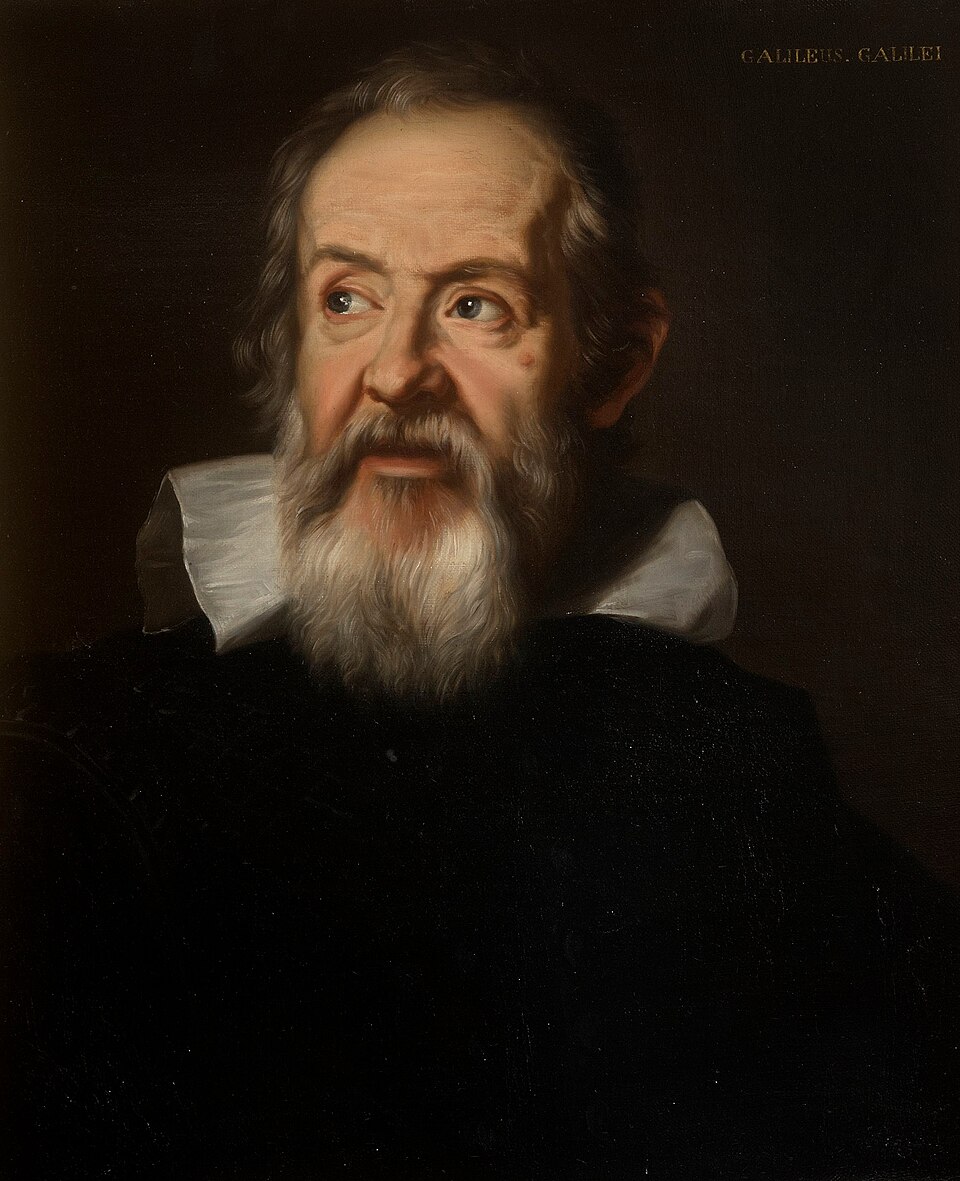
—But this language of numbers, some accused you of opposing it to Scripture. How did you respond, in your letter to the Grand Duchess Christina?
With respect for faith, my friend, but with firmness for reason. I wrote to Christina of Lorraine in 1615 that the Bible teaches us how to go to heaven, not how the heavens go. Scripture speaks the language of the people to touch souls; it cannot instruct us about orbits and motions, which God has entrusted to our senses and intelligence. Why would he have given us reason if we must suspend it before every verse? I never wanted to destroy faith, only to free science from its tutelage. One does not serve divine truth by making it speak nonsense about the stars.
The Bible teaches us how to go to heaven, not how the heavens go.
—Master, since your eyes closed, I hold the pen. Do you sometimes reflect on what it means for you to no longer see the sky?
What cruel irony, is it not, Viviani? That sky that no one had scrutinized as I did, those heavens that I first enlarged with my telescope — now they are forever closed to my eyes. They tell me that the universe I so expanded has shrunk to the space of my body and this room. It is true. But I still see through your voice when you read to me, through the hand of Torricelli when he calculates for me. My mind, it has no eyes to lose. What I understood of motion and the stars remains as clear in me as once under the sun of Padua. Night has taken my sight; it will not have my reason.
Night has taken my sight; it will not have my reason.
—In the evening, you sometimes ask me to place the lute of your father Vincenzo in your hands. What do you seek in that music, Master?
I seek my father, Viviani, and I seek the order of the world. Vincenzo Galilei was a great musician, and it was he who taught me, as a child, that the length of a string and the pitch of a sound obey numerical ratios. You see: before even looking at the stars, I had in my fingers the proof that harmony is mathematical. When I pluck these strings today, my hands remember what my eyes can no longer read. Music, the fall of bodies, the course of planets — all speak the same secret language. Stay near me this evening, and play with me: these are the only demonstrations a blind old man can still offer.
Before even looking at the stars, I had in my fingers the proof that harmony is mathematical.
This imaginary interview was generated by artificial intelligence from sources documented in Galileo's profile. It dramatises what the figure might have said based on what we know about them, but does not constitute attested historical testimony. For primary sources and factual documentation, refer to the full profile.