Imaginary dialogue between Perséphone and Hades
by Charactorium · Hades · Mythology · 5 min read
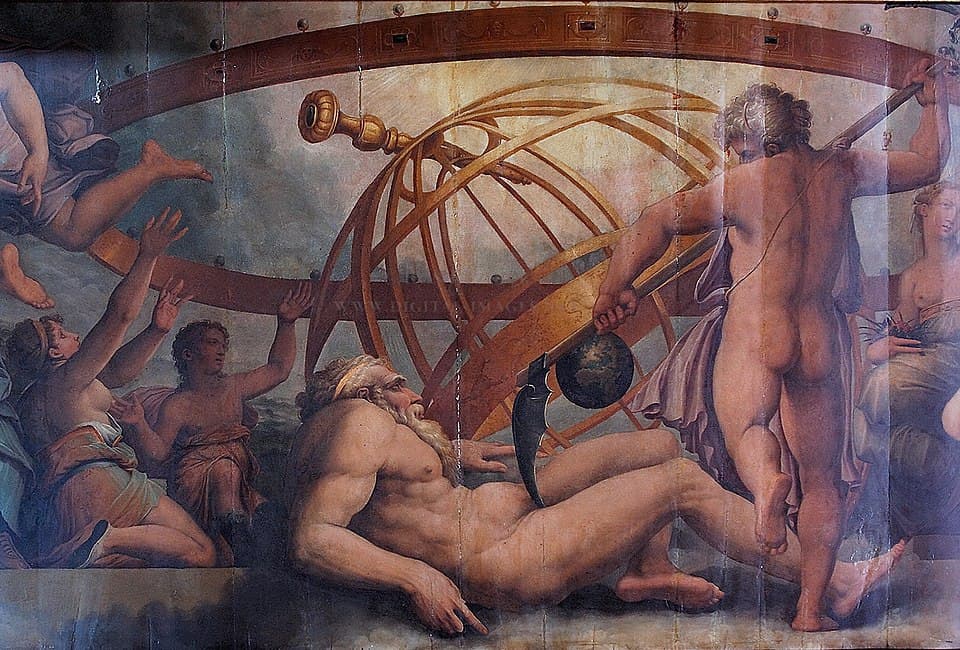
In the great hall of the underground palace, where the throne of Hades now stands beside hers, Persephone comes to sit near her husband. Outside murmurs the Styx, and the cold gleam of gems torn from the earth lights their faces. Queen of this realm as much as she was once its captive, she knows the man behind the dreaded god. Today, she wants to hear him speak of himself — of the abduction, of justice, of the shadow that fell to him.
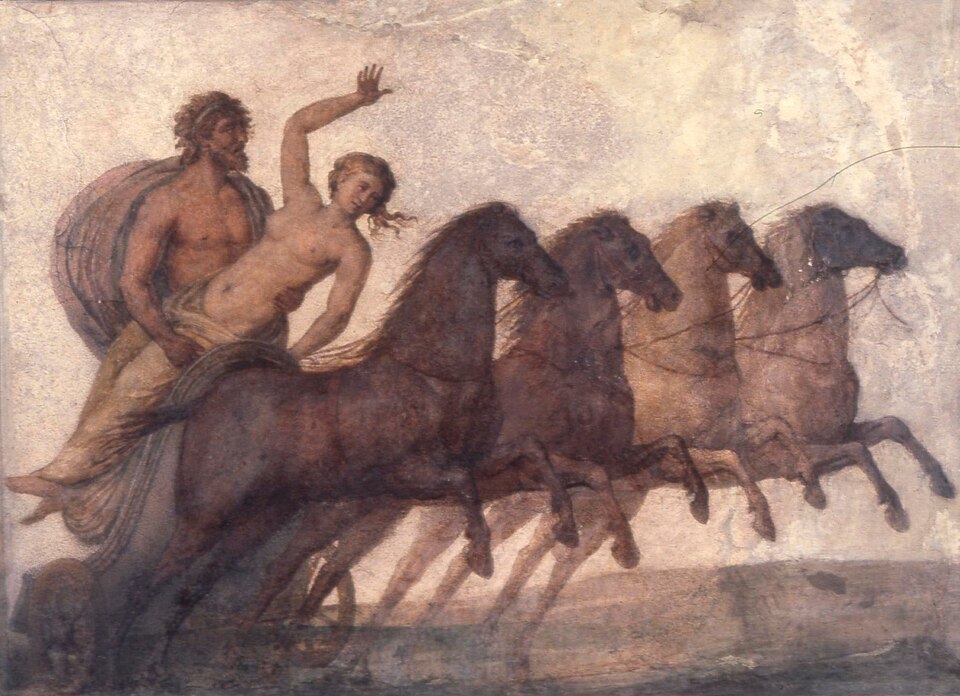
—My lord, on the day your black chariot split the meadow of Nysa to carry me away, did you already know that I would one day reign at your side?
I knew it, Persephone, and that is why I did not hesitate. Zeus himself had consented to our union, but I knew your mother Demeter: she would never have let you descend. So I opened the earth and my horses bore you here. I am reproached for this abduction as a violence; I see it as the only door that could open. The pomegranate you tasted was not a trap, but a bond — a few seeds, and you belonged forever to my realm as much as to the world above. I did not want you as a servant or a captive. I wanted you as queen. You are not the shadow of my throne: you are its other half.
You are not the shadow of my throne: you are its other half.
—Yet mortals sing of my abduction as a calamity that chills the earth each winter. What do you say to them?
Let them sing what they see, and let them see only the surface. When you return to your mother, the earth greens again; when you come back to me, it rests under frost. This division of seasons is not a wound, it is an order. The grain must descend under the earth before it sprouts — you yourself are that grain, death and rebirth together. I am not ignorant of Demeter's grief, nor of the tears you shed in the early days. But look today: you judge souls beside me, you are invoked, feared, and honored. The misfortune of men has made you a full goddess.
—Before the palace, before me, there was the division of the world. Tell me how the shadow fell to you rather than the sky.
We were three brothers after the war against the Titans: Zeus, Poseidon, and I. Our father Cronus vanquished, the world remained to be divided. Some say I was relegated, punished — it is false. We drew lots, equally, as brothers. Zeus received the wide-winged sky, Poseidon the gray sea, and to me fell the mist and darkness. Chance gave me the vastest realm, for all the living eventually descend there. I did not inherit a second-rate throne. I received the only domain that no one leaves.
I received the only domain that no one leaves.
—You fought alongside your brothers against the Titans. Do you resent that Zeus shines in the daylight while you rule in shadow?
Resent? No. My brother rules Olympus and his thunder is sung; I rule the inevitable. Which of the two powers is greater, I leave you to judge. During the Titanomachy, it was my helmet of invisibility that gave us the advantage: I stole the Titans' weapons without their seeing me. Without shadow, the sky might have lost. I covet neither Olympus nor its noisy assemblies. I sit there when Zeus summons me, then I descend without regret. Each his lot, sealed by fate. Mine suits me — all the more since it led me to you.
—Each morning you welcome new souls with Minos and Aeacus. What weight do you bear, you who decide their eternity?
A weight that no living being imagines. At dawn, Charon deposits on the shore the shades of the day, and already Minos, Aeacus, and Rhadamanthus weigh their lives. I preside, I decide: Tartarus for perjurers and criminals, the Elysian Fields for the just, the Asphodel Meadows for the multitude of the lukewarm. Plato will say of me that I am a just god who distributes punishments and rewards according to deeds — and that is how I wish to be known. I do not hate the dead; I order them. Without this justice, the universe would return to the chaos before the gods. The key of Tartarus never leaves my hand: it holds back what must remain buried.
I do not hate the dead; I order them.
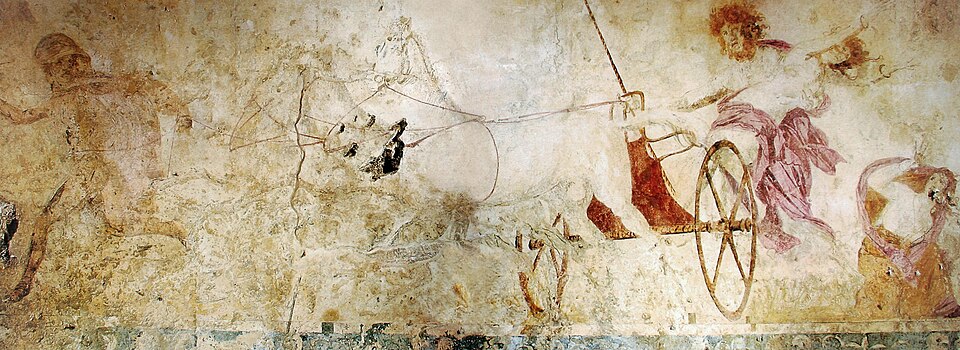
—You who judge the faults of others, have you ever wondered whether your own act toward me called for judgment?
The question is fair, and only you could ask it. I judge men according to their oaths and betrayals; yet I betrayed no one. I asked Zeus for your hand, and he granted it. What I took by force was your consent to descend — not your honor. Yet I do not hide behind the law: I saw your tears in the first months and have not forgotten them. If my scales were to weigh me myself, they would say that I loved clumsily, in the manner of a god of shadow who does not know how to court. But they would not say that I was unjust. You stayed. That is my only plea.
—Up there, they dare not speak your name: they call you 'the Rich,' 'the Benevolent.' Does this fear of mortals hurt you?
It does not hurt me — it protects me, and protects them. The Athenians call me Plouton, 'the Rich,' for the metals and gems sleep in my domain; or 'the Benevolent,' so as not to draw my gaze. They believe that by silencing my name, they delay their descent. I leave them to this belief, for fear keeps men in order better than love. I am called the most dreaded of the Immortals; in the Iliad, no one dares to face me, for no one escapes my realm. But the dreaded is not the cruel. I am inevitable, that is all — and the inevitable frightens more than the wicked.
—Your helmet makes you invisible to the eyes of the living. Do you like to walk among them unseen, observing them in secret?
I seldom go up there, and when I do, the helmet of Aïdes wraps me in shadow. Invisible, I observe mortals who think themselves alone: their whispered oaths, their offerings thrown on tombs, their prayers for the dead they mourn. This teaches me about souls before they descend. But do not think I take a thief's pleasure in it — I have no taste for the world above, its light soon wearies me. My realm is enough. The helmet is not a toy: it is the sign that I go where I please, seen or unseen, and that nothing is closed to me. Invisibility is the purest form of sovereignty.
—When I first descended, I crossed your rivers without understanding them. Explain the boundary you guard.
My realm is girded by five rivers, Persephone, and each has its office. The Styx, by which the gods themselves swear inviolable oaths; the Acheron, river of affliction, which Charon ferries souls across for a coin; the Cocytus of lamentations, the Phlegethon of fire, and the Lethe whose water erases memories. These waters are not scenery: they are the impassable boundary. A soul that has crossed them never returns — save rare exceptions granted by the gods. You crossed them alive, and that is why you are unique: you come and go where all remain. At the Necromanteion of the Acheron, the living beg me to glimpse their dead. I answer them with the silence of the waters.
A soul that has crossed my rivers never returns.
—Our palace shines with gold and gems torn from the earth. Why so many riches in a realm that the living imagine desolate?
Because the living are mistaken about my domain, as about me. They imagine it barren and black; it is the richest of all. All gold, silver, and precious stones sleep in the bowels of the earth — that is, in my home. That is why I am called Plouton, the Rich: I guard the buried treasures as I guard the souls. Our palace, which you know better than anyone, is adorned with them not out of vanity, but because these metals are my natural share of the world. And do not forget that I also watch over the seeds and future harvests, hidden beneath the soil. My realm is not the opposite of life. It is life's secret storehouse.
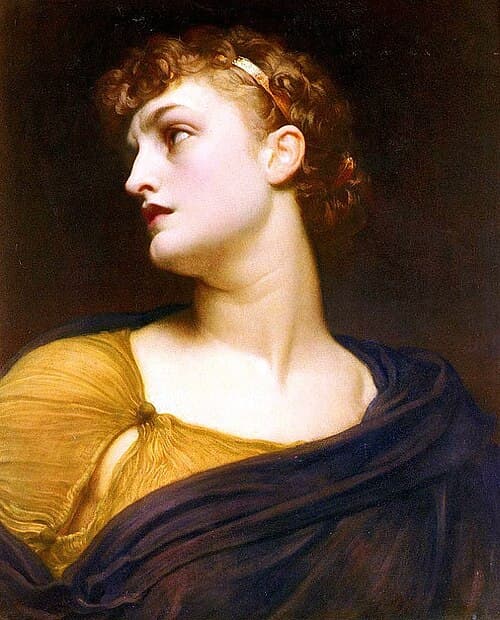
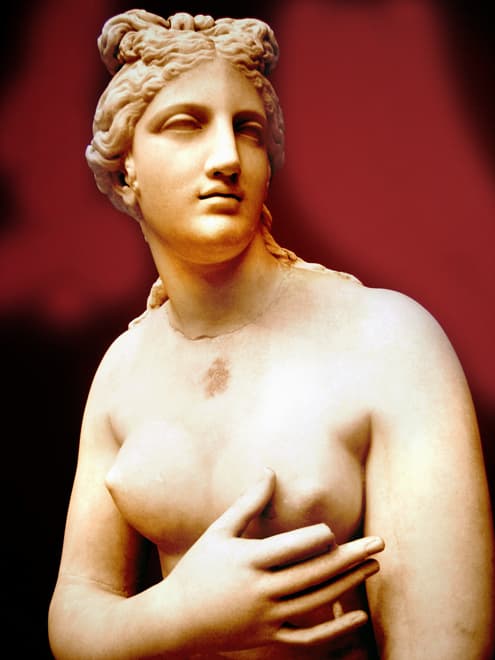
This imaginary interview was generated by artificial intelligence from sources documented in Hades's profile. It dramatises what the figure might have said based on what we know about them, but does not constitute attested historical testimony. For primary sources and factual documentation, refer to the full profile.