Imaginary interview with Hades
by Charactorium · Hades · Mythology · 6 min read
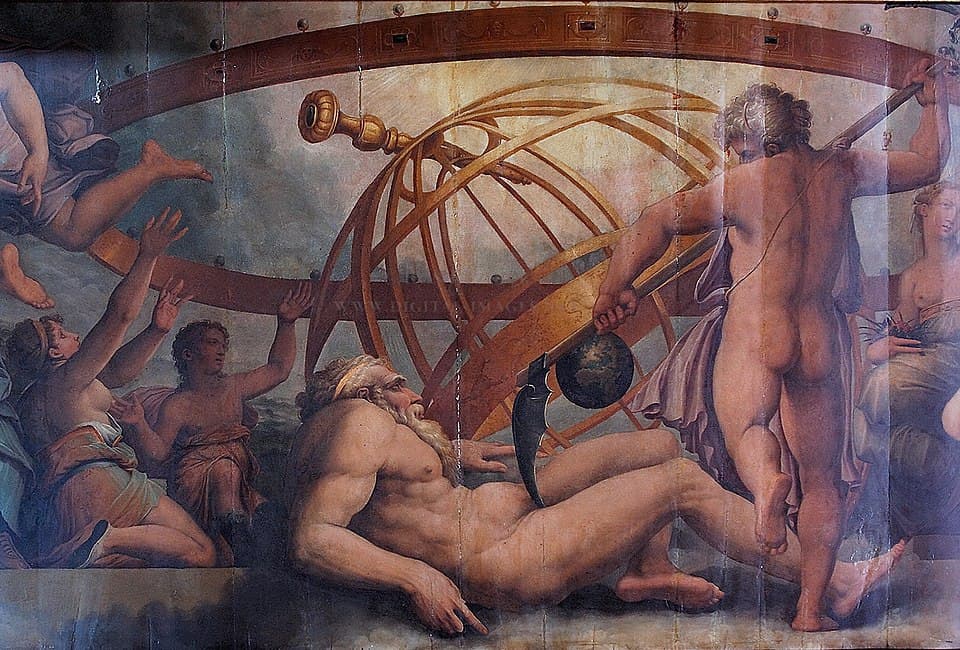
No living soul crosses these gates without reason, yet the interview was granted. In the great hall of basalt where the Styx murmurs in the distance and Cerberus dozes at the threshold, the Lord of the dead has consented to speak, his dark cloak melting into the shadows. Here is what he whom they dare not name has to say.
—How did you become the master of this underworld kingdom?
Before the Underworld, there was war. My brothers Zeus and Poseidon and I overthrew the Titans, and Cronos our father with them, in a struggle that shook the foundations of the world. When victory was won, we did not fight over the spoils like greedy mortals: we drew lots. The sky fell to Zeus, the gray sea to Poseidon, and to me, as Hesiod sings, the mist and darkness. Some think I was cheated. They are wrong. The lot was fair, and no one decided for me: divine fate made the choice. I received an entire domain, as vast as the sky, as deep as the sea is wide. That mine is sunless does not make it a lesser kingdom.
Some think I was cheated. The lot was fair: divine fate made the choice.
—Do you never miss the brilliance of Olympus, where your brothers dwell?
I ascend to Mount Olympus when the assembly of the gods requires it, and I take my place among the Twelve. But I do not stay there. Up above, everything is movement, quarrels, the vanity of light. Here, something else reigns: permanence. The sun rises and sets for the living; underground, nothing changes, nothing lies. My palace is buried deep in the bowels of the earth, adorned with the gold and silver that the earth hides from mortals—those riches of which I am the guardian. The Greeks understood this, they who sometimes call me the Rich One. They pity me for living far from the ether? I do not pity the ether. I have silence, justice, and the eternity of things accomplished. The tumult of Olympus, I leave to those who need it to exist.
—Why did the Athenians refuse to pronounce your name in their sanctuaries?
Because they feared I might hear them, and to hear them is to remember them. So they twist their tongues: they call me the Rich One, or the Kindly One, as one flatters someone feared so that he looks elsewhere. This does me neither honor nor offense. I understand their caution. Every mortal knows that one day he will descend along the Styx, that Charon will ferry him for the price of an obol, and that my ledger will open to his name. To pronounce Hades is to name that certainty. They prefer euphemism, the white poppy laid on tombs, the offering poured at night, the averted face. I am not a god one prays to for gain: I am the one one hopes to keep waiting. This modesty of the living, I accept it. It is, in its own way, a form of respect.
I am not a god one prays to for gain: I am the one one hopes to keep waiting.
—Homer describes you as the most terrible of the gods. Do you recognize yourself in that portrait?
In the Iliad, the poet says of me that I am the most terrible of the immortal gods. Terrible, yes—not cruel. That is the nuance mortals always confuse. Ares sheds blood for pleasure; I merely gather what death leaves behind. I am feared because I am inevitable, not because I am wicked. No hero, however great, raises his arms against me: one does not fight the end. I do not like the living to look at me, it is true, for my face is the one from which no one escapes. But terrible does not mean unjust. I am the boundary, the limit, the frontier that Cocytus and Phlegethon trace at the bottom of the world. Let them fear me, so be it. Let them take me for a demon, never: I am order, not evil.
—Do you remember the day you carried Persephone into your kingdom?
The earth opened, and I rose in my golden chariot, drawn by horses blacker than Erebus. She was picking flowers in a meadow, Persephone, daughter of Demeter, and I took her as queen. They call it a rape, and it was one: I do not dress it in any lie. But consider what I offered her—not oblivion, not the anonymous shadow of souls, but a throne at my side, a crown, an empire. I had had the sky within reach of the lot and received the darkness; I wanted a light to reign there with me. Her mother screamed, the world froze in grief, the harvests died. I knew it. But a god who desires does not ask permission from the world of the living: he descends, and he carries away.
A god who desires does not ask permission from the world of the living: he descends, and he carries away.
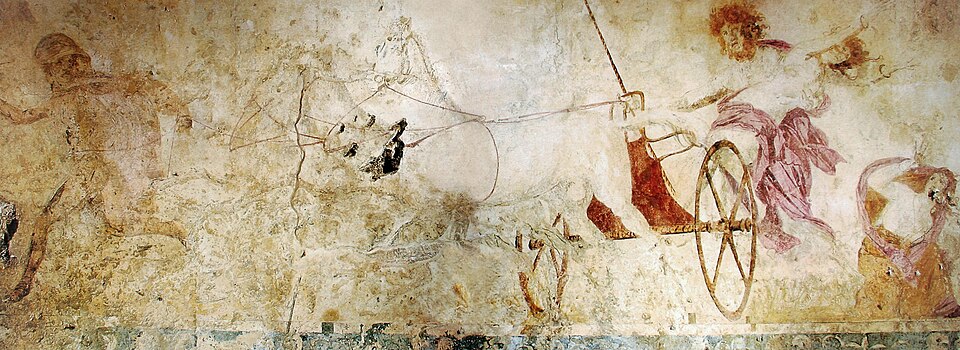
—How do you explain that Persephone now shares the year between your kingdom and the surface?
By a few pomegranate seeds. Before she returned to her mother, I offered her the fruit of my domain, those seeds red as fire under the earth. She tasted them—six, they say. Now whoever has eaten the food of the dead belongs forever, in part, to the kingdom of the dead. Thus was our union sealed. Each year, Demeter receives her and the earth grows green again; each year, Persephone descends to me and the cold covers the fields. Mortals call this the seasons. I call it justice: nothing lives that does not die, nothing is reborn that has not first descended. The pomegranate is not a trap; it is a pact. The world breathes to the rhythm of her comings and goings, and no one, not even Zeus, can undo what that fruit has bound.
—What happens when a soul finally crosses the threshold of your domain?
Charon deposits it on my shore, and then begins the only judgment that never errs. I do not weigh the souls alone: three judges sit for me—Minos, Aeacus, and Rhadamanthus, mortals of such integrity that I made them arbiters of the dead. Each life is examined as one reads a report. The just go to the Elysian Fields, those meadows of gentle light; ordinary souls wander the fields of asphodel; the guilty descend lower. No favor is bought here, no powerful man escapes what he was. On Olympus one can deceive, seduce, corrupt. In my kingdom, the scales are bare. Plato saw it well, he who calls me the just god who distributes punishments and rewards according to deeds. That is my entire office: to render to each, exactly, what he has merited.
On Olympus one can deceive, seduce, corrupt. In my kingdom, the scales are bare.
—At the deepest point of your Underworld lies Tartarus. What role do you assign to it?
Tartarus is the abyss beneath the abyss, as far below my feet as the earth is from the sky. There I guard the Titans we vanquished, chained in the night, and with them the worst criminals who ever defied the gods. It is not a simple prison: it is the dam that holds back chaos. If those forces ever rose again, the ordered world my brothers built would collapse into the formlessness from which it was born. To watch over Tartarus is therefore to watch over the entire universe. The living see in me only the receiver of the dead; they ignore that I am also the jailer of ancient disorder. I keep closed, under a thousand bronze bolts, the door through which everything could begin again. Such is the part of my reign for which no one thanks me: preventing the beginning from returning.
—They speak of a helmet that makes you invisible. What does it represent to you?
The Cyclopes forged it for me during the war against the Titans, as they gave the thunderbolt to Zeus and the trident to Poseidon. It is called the Helm of Darkness. Wearing it, I traverse the worlds without any eye, divine or mortal, perceiving me. Do you see it as a trick? It is rather the exact emblem of what I am. Death walks among you invisible; it is there, in the banquet hall as on the battlefield, without being seen coming. My helmet merely makes visible—to me alone—this truth: I am present everywhere and perceived nowhere. The other gods want to be gazed upon, to have their statues erected in the open. I, my power is to be unseen. One does not look at Hades. One meets him, once, at the end.
Death walks among you invisible. My helmet merely makes visible this truth.
—What is the last face that those who descend to you see?
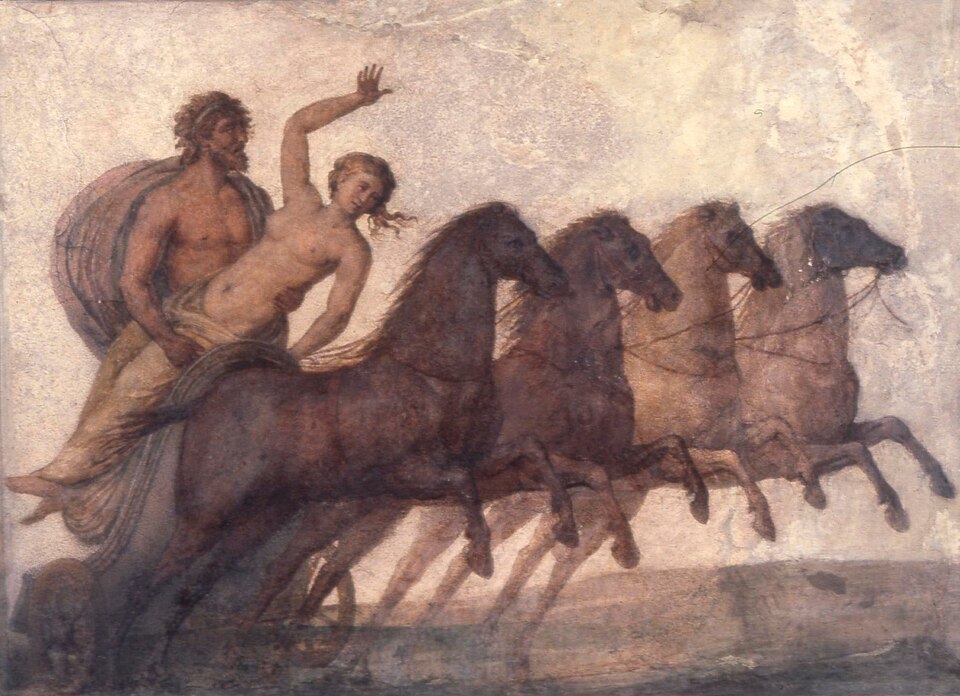
A black chariot, black horses, and a cloak darker even than the stone of my palace. That is the team that emerges from the chasm in the earth, the same that carried off Persephone. When mortals think of me, it is this image they raise in their terror: the color without color, darkness in motion. I wear neither shining armor nor a crown of rays—a simple diadem on my brow, the judge's scepter in my hand. My kingdom has no need of pomp: whoever descends does not return to tell of it. The last face? Mine, perhaps, or only the shadow of passage. But let them not fear unduly. I am not the enemy of the living. I am only their common destination, the one toward which all, kings and shepherds, advance at the same pace.
This imaginary interview was generated by artificial intelligence from sources documented in Hades's profile. It dramatises what the figure might have said based on what we know about them, but does not constitute attested historical testimony. For primary sources and factual documentation, refer to the full profile.