Imaginary interview with Hanuman
by Charactorium · Hanuman · Mythology · Spirituality · 6 min read
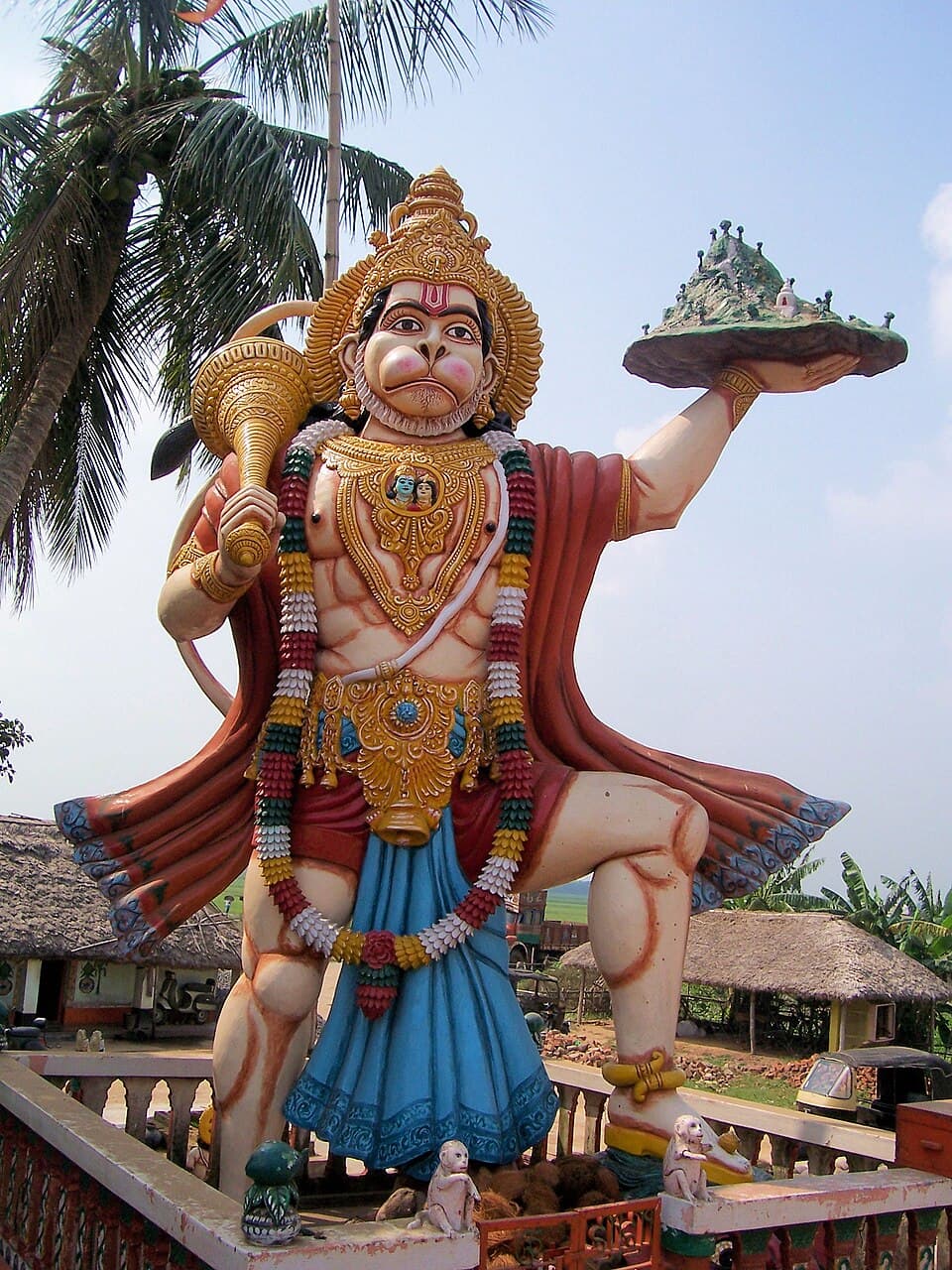
On the heights of Kishkindha, where the Vanara rock still keeps the coolness of the caves, an old monkey crowned with gold sits facing the east, the gada resting across his knees. He murmurs endlessly a name — always the same — and stops only to welcome us. This is Hanuman, son of Vayu, as he consents to speak of his great deeds.
—Tell us about your very first feat, that of your childhood.
I was a child of the wind, hungry as children are. One morning, the disc of the Sun rose above the peaks, round and russet like a ripe mango from the forests, and I wanted to bite it. I leaped. Can you imagine the vertigo of worlds when a little Vanara hurls himself toward the orb of day? Indra, guardian of the thunderbolt, took fright and struck me. His celestial lance broke my jaw — and from that wound came my name, the one you still utter: the broken-jawed one. My father Vayu, the breath of the world, then held his breath in anger, and everything that breathes began to suffocate. The gods had to shower me with gifts to appease him. Thus my strength is not a punishment: it was born of a child’s fault forgiven by all of heaven.
From that wound came my name, the one you still utter: the broken-jawed one.
—How did you cross the ocean to reach Lanka?
Standing atop Mount Mahendra, I made myself a mountain. I gathered my body, tensed every muscle, and took my leap over the salt waters. The waves hollowed beneath my course, the sky churned as on the first day of the world. They say in the Sundara Kanda that I flew like an arrow shot from a god’s hand — and it’s true that I no longer knew whether I was swimming in the air or the sea. It was not my strength that carried me, understand: it was the name of Rama, which I repeated with every beat. A loving servant knows no distance. The ocean was but a threshold, and I had a captive queen to find on the other side.
A loving servant knows no distance.
—What happened when you finally found Sita?
I discovered her in the Ashoka Vatika, the garden of sorrowless trees, seated among the flowers like a flame someone forgot to extinguish. Emaciated, guarded by the demonesses of Ravana, she still refused to despair. I made myself very small, hidden in the foliage, for a queen does not welcome a stranger. Then I let fall before her Rama’s ring — that simple circle of gold my master had entrusted to me. When she recognized it, her face opened like dawn after a long night. I told her deliverance was near, that the armies were coming. You see, I had not crossed the sea to fight: I had come to carry a ring and a hope. Sometimes the greatest of feats lies in a tiny object placed at a captive’s feet.
I had not crossed the sea to fight: I had come to carry a ring and a hope.
—Your enemies captured you and set your tail on fire. How did you turn that ordeal around?
Ravana’s soldiers had bound me and, to humiliate me, they wrapped my tail in cloths soaked in oil and set them ablaze. They laughed, thinking they were marking a spy. But you do not humiliate the son of the wind: my father Vayu made sure the flame did not burn me, while it devoured everything my tail touched. Then I leaped from roof to roof, and Lanka the golden, the proud city of the demon-king, blazed beneath my steps. Palaces, towers, ramparts — all burned, except the place where Sita rested. Understand the lesson: the torture that the wicked prepare for you, return it to their hands; it will always find its rightful use. I left without a single burn, my tail still smoking, leaving behind the first warning to the demon kingdom.
The torture that the wicked prepare for you, return it to their hands.
—What did that fire represent in the war that was to come?
A fire is never just a fire. In burning Lanka, I sought not destruction for its own sake: I wanted Ravana to know, from the depths of his throne, that a single Vanara had sufficed to shake his impregnable city. What would it be then when Rama’s armies came? It was the beginning of his fall, the first tremor beneath his foundations. Demons believe themselves eternal until they are touched; a flame must be set at the heart of their pride for them to begin to doubt. I carried that flame. And later, when the Ram Setu, that bridge of floating stones across the ocean, was built, the armies passed into a city already weakened by fear. My tail had done the work of an omen.
A flame must be set at the heart of their pride for them to begin to doubt.
—They say you lifted an entire mountain. Why such a deed?
Lakshmana, my master’s brother, lay breathless on the battlefield, struck down. Only the Sanjeevani plant, the herb that revives the dead, could save him — it grew on a peak in the Himalayas. I flew to Mount Dunagiri. But in the darkness, all herbs look alike, and the night did not tell me which one shone with life. Should I lose Rama’s brother for a moment’s hesitation? No. So I wrapped my arms around the entire mountain, tore it from its roots, and carried it in my hands as one carries a flower. Let the wise find the right herb; I had no time to choose. This is what I call serving: when you cannot take the part, you carry the whole.
When you cannot take the part, you carry the whole.
—Was it not excessive, to move a piece of the Himalayas for a single plant?
Excess? It does not exist in a servant’s love. You weigh actions, you calculate effort and benefit — I know no such arithmetic. When Rama weeps for his brother, no mountain is too heavy, no ocean too wide. They say in the Yuddha Kanda that I lifted the entire peak and carried it in my mighty arms; they do not add that I would have done it a hundred times if needed. Mount Dunagiri felt light as an offering, for it was not the mountain I carried, but Lakshmana’s life, and behind it my lord’s joy. To measure is already to doubt. And a devotee who doubts has already dropped his burden.
To measure is already to doubt.
—How would you describe the place Rama holds in your heart?
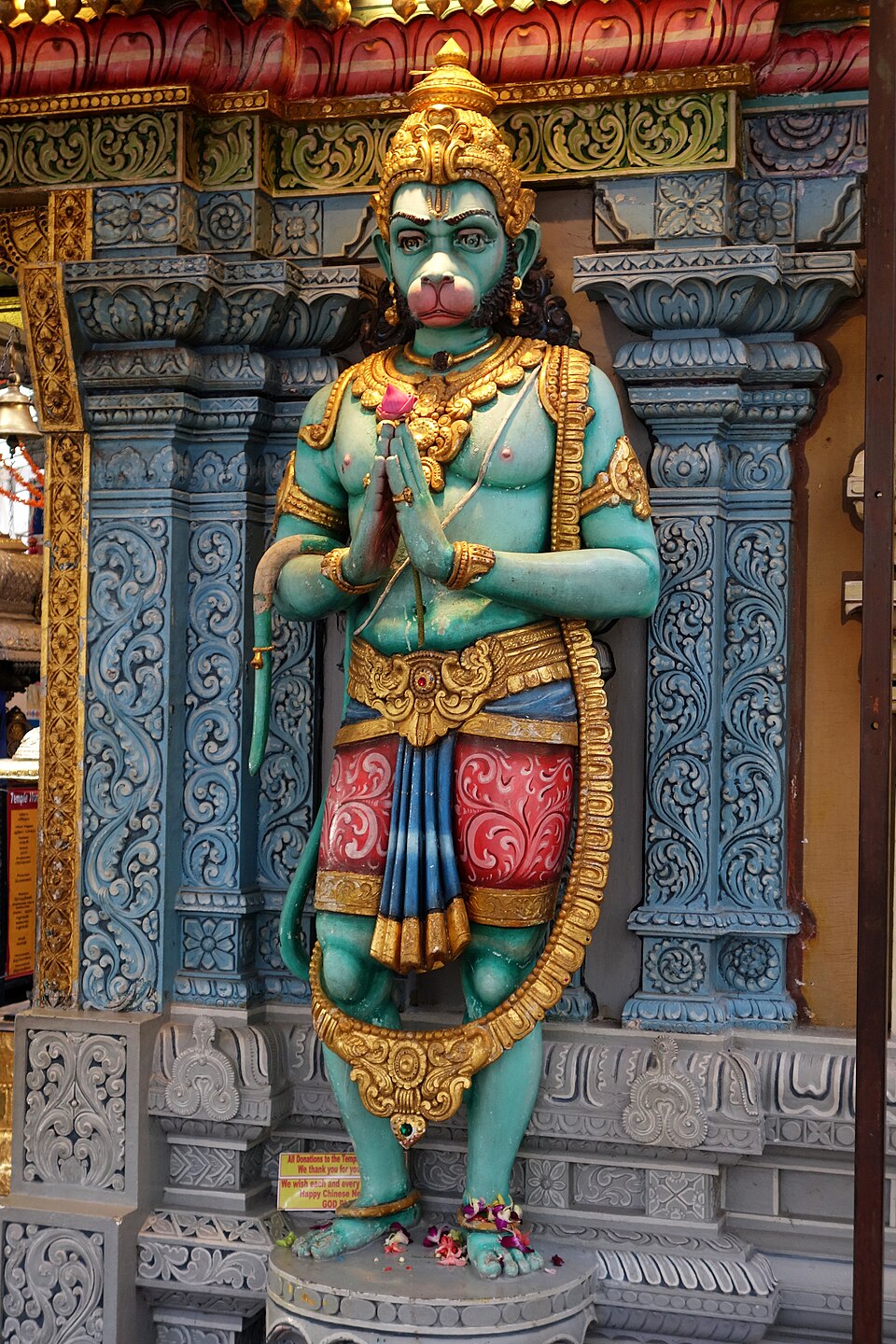
One day, sages wanted to test my devotion. They asked me to prove it. So, with my own hands, I opened my chest — and there, in my flesh, they saw Rama and Sita entwined, engraved deep within me. I did not carry my master only in thought: I carried him in my very entrails. That is bhakti, the total devotion your books name so coldly. It is not a feeling you put away at night. It is the very beat that keeps me standing. Every breath my father Vayu gave me, I return by uttering the name of Rama — that is my practice of japa, the endless repetition. Take that name away, and I am nothing but an ordinary monkey lying across a path.
I did not carry my master only in thought: I carried him in my very entrails.
—You speak constantly of repeating a name. How does this practice transform you?
At dawn, even before weapons practice, I turn my gaze to the rising sun and recite the names of Rama — that is japa, the prayer one no longer counts because it has become the rhythm of the blood. Men believe my strength comes from my muscles or my divine birth. Mistake. It comes from this: from that name repeated even in sleep, for a devotee never quite sleeps. Much later, a poet named Tulsidas will gather my great deeds into forty couplets that crowds will recite daily. He understood what I repeat here: that the weak who invokes becomes stronger than the mighty who stays silent. The name is not an ornament of prayer. The name is strength.
The weak who invokes becomes stronger than the mighty who stays silent.
—After so many feats, where do you find your home and rest?
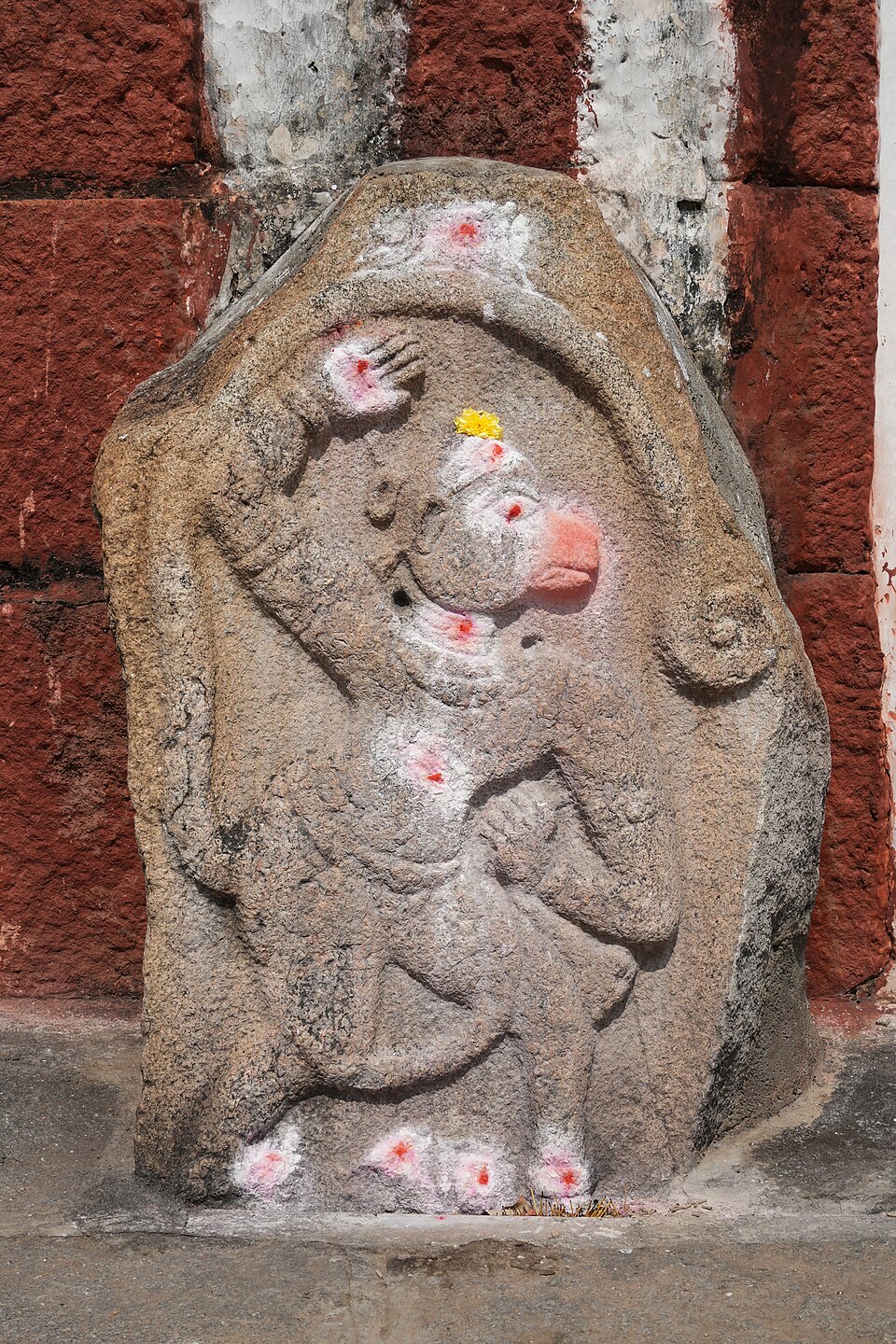
My home? Everywhere the name of my master is spoken. I have lived in the caves of Kishkindha, carved into the rock of the Vanaras, and on the peaks where my father Vayu blows. I feed on figs, mangoes, and forest roots, as befits those who renounce. But I own no dwelling, and I want none. They even found me, long after the war, an old monkey lying across a path, my tail barring the way of a warrior who came — and he could not lift it, strong as he was, until he recognized me as his divine brother. You see: I am always there, somewhere, stretched out on a road, waiting for someone to need a servant. As long as Rama is named on earth, I do not die. I watch.
As long as Rama is named on earth, I do not die. I watch.
Read further
This imaginary interview was generated by artificial intelligence from sources documented in Hanuman's profile. It dramatises what the figure might have said based on what we know about them, but does not constitute attested historical testimony. For primary sources and factual documentation, refer to the full profile.