Imaginary interview with Hazel Scott
by Charactorium · Hazel Scott (1920 — 1981) · Music · Performing Arts · Politics · 6 min read
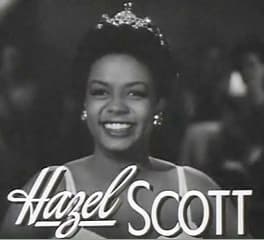
Paris, an afternoon in the late 1950s. In a Left Bank apartment where the smell of coffee still lingers, a woman in a long dress sits down at her piano, lights a cigarette, and waits for questions. Hazel Scott has fled McCarthy's America; here, no one asks her before what audience she agrees to play.
—How did this idea of suddenly switching a Bach piece into boogie-woogie come about?
It started at the Café Society, that little basement theater in Greenwich Village, around 1939. I would very seriously begin a prelude by Bach or an étude by Chopin; the audience thought they were in for an evening of salon music — and suddenly my left hand would launch into a boogie-woogie that made the tables shake. They called it swinging the classics. I always kept my scores open on the music stand, not to read them — I knew them by heart — but so that people could see where I came from before seeing where I was going. Some nights I played on two grand pianos at once, one hand on each. People laughed with pleasure, and I thought: see, so-called classical music and mine are sisters; no one has the right to separate them.
Classical music and mine are sisters; no one has the right to separate them.
—Where did you learn this double language, that of the conservatory and that of swing?
I was eight years old when I was auditioned for Juilliard. I was far too young to enter through the official door, but a teacher, hearing that I could reproduce a chord on first hearing, offered me a scholarship and private lessons. The mornings belonged to scales, to Bach, to Liszt — the discipline of my mother, herself a musician, who did not joke about the keyboard. Swing, on the other hand, I absorbed in the streets of Harlem, where we settled after coming from Trinidad. I grew up between these two worlds, never believing I had to choose. A grand piano knows no segregation of genres; it is men who invent it.
A grand piano knows no segregation of genres; it is men who invent it.
—What happened on the set of "The Heat's On" in 1943?
Hollywood offered Black women only one costume: the maid's apron. I had written into my contract that I would appear only under my own name, at the piano, in an evening gown. One day, on the set of The Heat's On, they wanted to dress Black extras in dirty, wrinkled aprons. I stopped playing. I said they would not shoot another frame until those women had proper costumes. We lost hours; they grumbled that I was being difficult — but the extras left dressed correctly. My long gown, my jewelry, were not coquetry: they were a statement you wore on your body.
My long gown was not coquetry: it was a statement you wore on your body.
—Why were you so adamant about refusing the roles you were offered?
Because an image engraves itself more deeply than a speech. Between 1943 and 1945, in Rhapsody in Blue and elsewhere, I always insisted on appearing as I was: a pianist, elegant, mistress of her keyboard. If millions of Americans saw women of my color only as laughing maids in the background, then cinema repeated the lie every week, in every theater. I preferred fewer roles and no apron. A contract, for me, was a discreet weapon: between two clauses about fees, you slipped in the simple demand not to be humiliated. Many found that presumptuous in a young woman from Trinidad. I found it the least one could do.
I preferred fewer roles and no apron.
—You also wrote the refusal of segregated venues into your contracts. What did that mean concretely?
It meant I could cancel a concert mid-tour if they seated Blacks on one side and Whites on the other. Café Society had shown me something else: the first club in New York where people truly mixed, without rope or railing to sort skins. So why accept elsewhere the segregation that this basement had abolished? In 1949, in Pasco, Washington State, a restaurant refused to serve me because of my color. I did not shrug it off as I was urged to: I filed a lawsuit. A clause in a contract, a lawsuit in court — these are small paper weapons, but with them you chip away at the Jim Crow laws.
A clause, a lawsuit: small paper weapons with which you chip away at the Jim Crow laws.
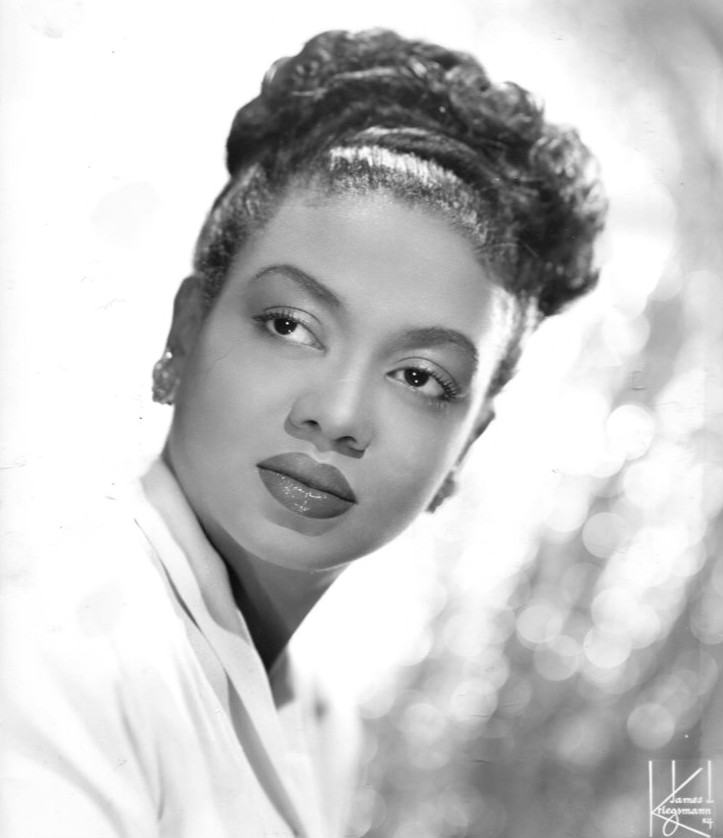
—Where did this certainty come from, that an artist could also fight?
I never separated the keyboard from the street. As the wife of Adam Clayton Powell Jr., pastor and congressman from Harlem, I lived every day at the crossroads of stage and struggle. And then I had seen, at Café Society, Billie Holiday create Strange Fruit, that song about lynchings that chilled the entire room: that night I understood that a song could be an indictment. Refusing a segregated audience, filing a complaint in Pasco, demanding a gown instead of an apron — for me it was the same music played on different pianos. They called me a star; I felt above all accountable for what my visibility made possible for those who had no spotlight.
I felt above all accountable for what my visibility made possible for others.
—In 1950, you became the first African American to host your own television show. How did you experience that moment?
The Hazel Scott Show: my name in the credits, a television camera trained on my hands, and the certainty of opening a door that others would walk through after me. It was 1950; America was discovering that luminous piece of furniture in its living room, and here was a Black woman presiding, in a gown, at the piano. I believed in it as a culmination. But that same year, a pamphlet appeared — Red Channels — listing one hundred fifty-one artists suspected of Communist sympathies, without a shred of evidence, my name among them. The door I had just opened was about to be slammed in my face. A few weeks of glory, then orchestrated silence.
A Black woman presided, in a gown, at the piano — and already they were about to slam the door.
—You chose to go and explain yourself before the House Un-American Activities Committee. Why face the HUAC rather than stay silent?
Because staying silent meant giving credence to suspicion. On September 22, 1950, I appeared before the HUAC of my own free will, to say what I thought of these lists. I reminded them that artists, musicians, all people in the arts, were only impatient to serve their country, and that they should not be erased by the hateful slanders of small and petty men. I weighed my words, but I did not tremble. The price was immediate: the DuMont network canceled my show within days. I was made to pay for speaking. I regret nothing: a broken career is better than a bent dignity.
We should not be erased by the hateful slanders of small and petty men.
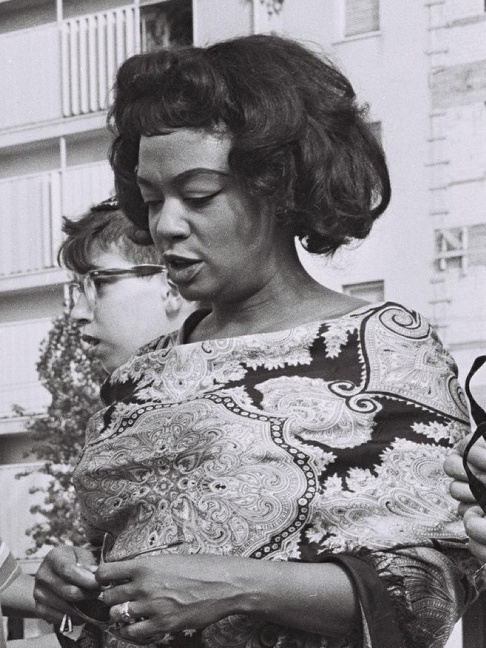
—Despite these storms, you continued to record. What does "Relaxed Piano Moods" mean to you?
That album from 1955 is an island of calm in the midst of dark years. I recorded it with two giants: Charles Mingus on bass, Max Roach on drums — when those men set the tempo, all that's left is to breathe and play. After the uproar of Red Channels and the show ripped away, sitting at the piano for this record was almost a convalescence. You can hear, I think, a woman who refuses to let fear dictate her music. Vinyl records pass, get scratched, get put away in a drawer; but that one says that even defamed, silenced on television, I kept making the keyboard sing. That's my way of not having surrendered.
Even defamed, silenced, I kept making the keyboard sing.
—What made you decide to leave America for Paris?
The air had become unbreathable. In 1957, I packed my bags for Paris, less to conquer Europe than to flee a country that put you on lists and turned off the light. There, in my Left Bank apartment, no one asked my opinions before listening to me play. The halls were full, mixed, free — and for the first time in years, I had no clause to add to the contract, no seat to monitor in the audience. Playing before people who haven't been sorted at the entrance — you cannot imagine what a relief that is. I breathed. Paris didn't cure me of America, but it gave me back my piano without a guard.
Playing before people who haven't been sorted at the entrance — you don't know what a relief that is.
—What did those European years, between 1957 and 1967, bring you?
Time, and a salutary distance. During those ten years of tours and concerts between Paris and the rest of Europe, I could simply be a pianist, not a political case. The audience here had a taste for American jazz without the poison of segregation that accompanied it back home; I was welcomed for my music and not despite my color. Of course, I missed America — Harlem, its smells, its language, the ongoing struggles. I followed the news from afar, the Montgomery buses, the courts that were finally beginning to yield. Paris was my refuge, never my oblivion. You never really leave the country that made you; you only step back enough to keep loving it without dying from it.
You never really leave the country that made you; you step back enough to love it without dying from it.
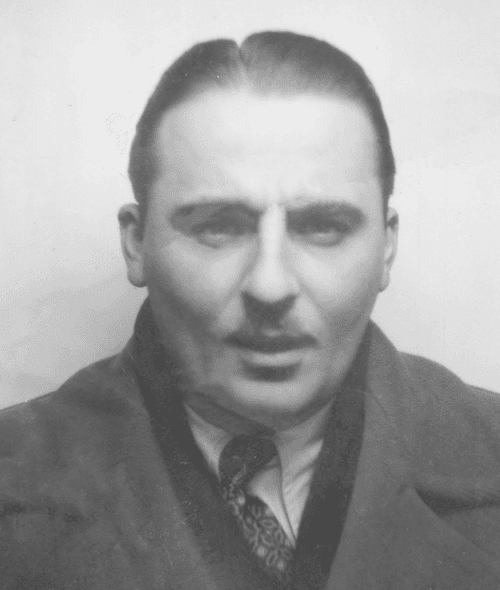
This imaginary interview was generated by artificial intelligence from sources documented in Hazel Scott's profile. It dramatises what the figure might have said based on what we know about them, but does not constitute attested historical testimony. For primary sources and factual documentation, refer to the full profile.