Imaginary dialogue between Zeus and Hera
by Charactorium · Hera · Mythology · 6 min read
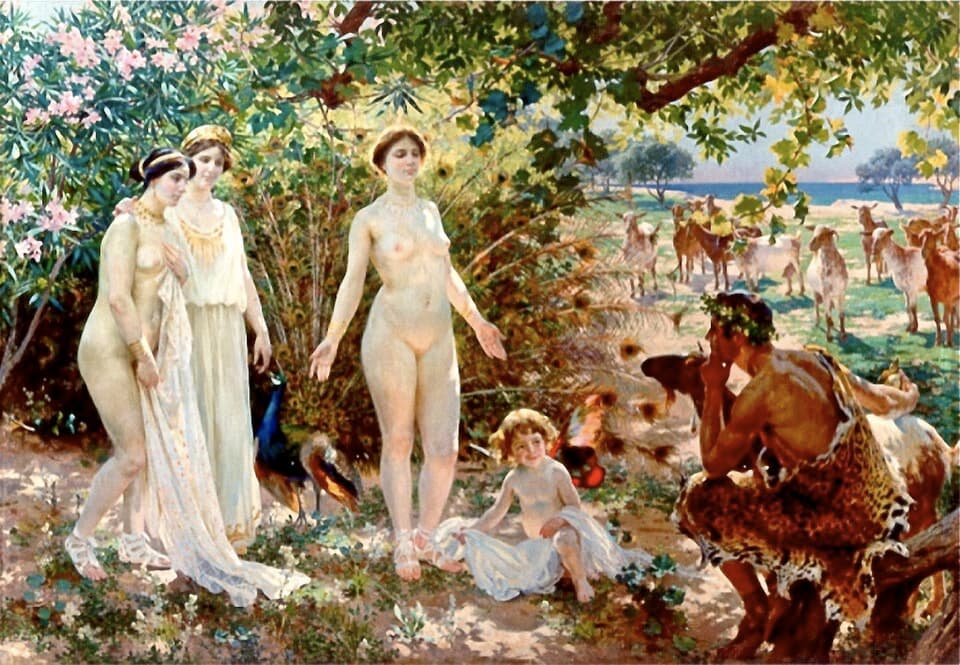
It is beneath the columns of the Heraion of Argos, at dusk, that Zeus joins Hera among the pomegranate offerings left by pilgrims. The scent of sacrificed ox still rises from the altars, and the goddess's peacock drags its tail of eyes across the marble slabs. They have been husband and wife since the dawn of the world, bound by the sacred marriage that mortals imitate — and Zeus comes, for once, to listen to the one he has so often fled. He who knows better than anyone the anger and majesty of the queen of the gods questions her this evening as one returns to a hearth long abandoned.
—Venerable wife, under this roof of Argos the newlyweds bring you pomegranates and veils. You who watch over their unions, tell me: what do you truly protect in them?
I protect what you yourself, my husband, so often shake. When a mortal man and woman bind themselves before my altars, they join not only two bodies: they found a home, a lineage, an order. I am invoked as Hera Gamelia, and brides lay at my feet the pomegranate that promises fertility, the veil that speaks of a wife's modesty. I am the oath they make to each other. You see, where Aphrodite offers only desire and its quickly extinguished fire, I guard duration — the legitimate bed, the recognized child, the house that endures. It is an ungrateful domain, for no one celebrates me when the union prospers; they remember me only on the day of weddings and the day of betrayals.
Aphrodite offers only desire and its quickly extinguished fire; I guard duration.
—Our own union, Hera, men call the model of all others. You who know its reverse side, do you find it worthy of imitation?
They are right to imitate it, and they do not know what they imitate. Our hierogamy, that sacred marriage which priests reenact in my sanctuaries, is the foundation upon which the entire institution rests: if the queen of the gods and the king of thunder are united, then the union of mortals is sacred in turn. That is what our bond teaches. But you, who are well placed to know it, also know that I bear the weight of this image. I must remain the irreproachable wife while you roam the woods and shores. My golden throne, my crown, my bearing: all proclaim a fidelity that I alone uphold. Mortals see only the splendor of our couple; they do not measure what it costs me to embody it.
If the queen of the gods and the king of thunder are united, then the union of mortals is sacred.
—Let us speak of it, since you bring it up. Io, Callisto, so many others... You pursued them relentlessly. Were you jealous, or something else?
Jealous, the poets say — Metamorphoses depicts me relentlessly pursuing my rivals. The word is too small. When you change Io into a heifer to hide her from me, it is not my womanly pride that you wound, it is my domain that you profane. I am the goddess of the legitimate bed: every mistress you take is an insult to what I guard for mortals. How can I watch over the oaths of men if the king of the gods breaks them before my eyes? So yes, I placed the giant Argus with a hundred eyes to guard Io, and when you had him lulled to sleep and killed, I gathered his eyes onto the feathers of my peacock — so that my vigilance, at least, would never sleep. It is not spite. It is my very function.
Every mistress you take is an insult to what I guard for mortals.
—That peacock that follows you even here, its eyes watch in your place. Why did you make this beast, Hera, the mirror of your reign?
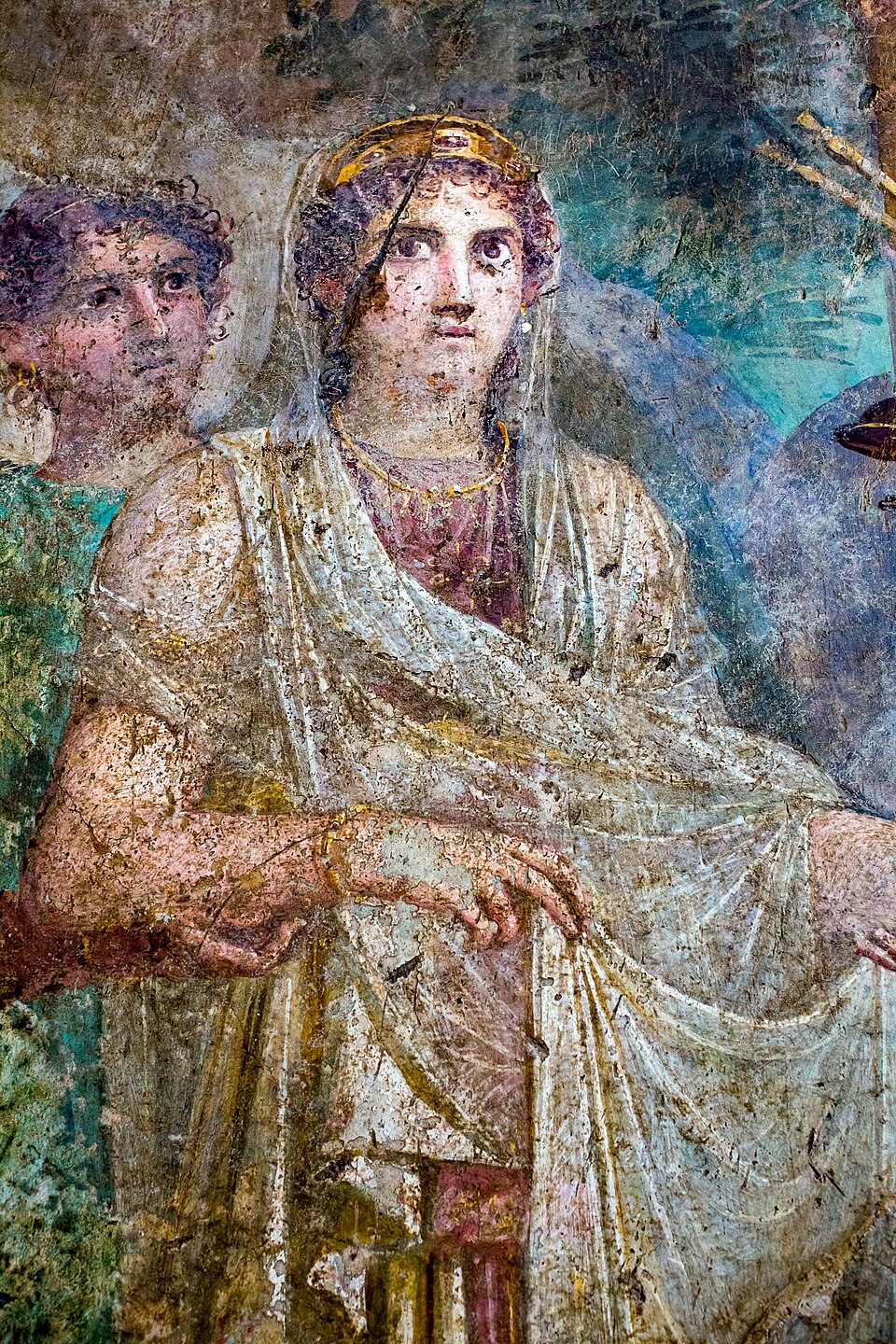
Look at it spread its tail: a hundred eyes of Argus shine there, and each one watches for me. The mortal thinks he sees a bird of vain beauty; in truth he sees the vigilance that never closes. That is why the peacock became my emblem, present on my temples and in the vases offered to me. And it is not alone in declaring who I am: I wear the stephane, that golden crown that circles my brow, and the scepter that proclaims my sovereignty over Olympus. Draped tunic of white and gold, diadem, scepter — each attribute proclaims my rank. Other goddesses have their weapons or their charms; I reign through the insignia of royalty. For I am not a deity among others: I am the queen, and everything about me reminds you of it.
The mortal thinks he sees a bird of vain beauty; he sees the vigilance that never closes.
—Heracles, your most stubborn enemy, is yet my son. You burdened him with twelve impossible labors. What had that child done to you?
That child? Nothing. But he was the living proof of your fault, and his very name — 'glory of Hera' — was a mockery I could not bear. I set every obstacle against him: the snakes in his cradle, the madness that made him raise his hand against his own, then the Twelve Labors I had imposed on him as punishment for his existence. Lion, hydra, boars, journeys to the ends of the world: each ordeal was meant to break him. And yet — here is the irony I acknowledge this evening — it was my persecution that forged him into a hero. Without my anger, he would have been just another son of your loves. I wanted to destroy him; I made him immortal. Such, sometimes, is the twisted work of the gods.
I wanted to destroy him; I made him immortal.
—At Thebes, at Argos, everywhere the heroes born of my wanderings found you in their path. Did you ever spare one of them?
Spare? My vengeance is constant because it is just in my eyes. At Thebes, in that city heavy with your bastards, I intervened relentlessly in the destinies of heroes, pursuing the lineage of your guilty loves. I am reproached for this harshness, but think: if I let the fruits of your infidelities flourish unchecked, what order would remain in the world? I am the counterbalance. Where your seed sows disorder among mortal women, my anger restores a measure. The Greeks understood this: in their tales, I am the ordeal that reveals the true hero. No one becomes great without having faced Hera. My severity is not gratuitous cruelty — it is the price paid by those born from your royal lapses.
No one becomes great without having faced Hera.
—And Troy? You armed the entire Greek host against a city, for a beauty contest. Was that grudge worth a war?
A beauty contest, you say? The shepherd Paris had three goddesses before him and he set me aside, me the queen of the gods, for the promise of a woman. It was not my vanity he scorned: it was my sovereignty. So yes, in the Iliad, I stood entirely on the side of the Greeks, and I dispatched Athena to support their heroes beneath the walls of Troy. I used every trick to bend your will in favor of the Achaeans — you remember, you who wanted to spare the city. When the queen is insulted, it is not a city that must pay, but an entire kingdom to repair the affront. Mortals call it a war; I call it the just price of contempt.
When the queen is insulted, it is not a city that must pay, but an entire kingdom.
—Here we are in your Heraion of Argos, the oldest of your sanctuaries. What do you feel, Hera, when the pilgrims ascend to you?
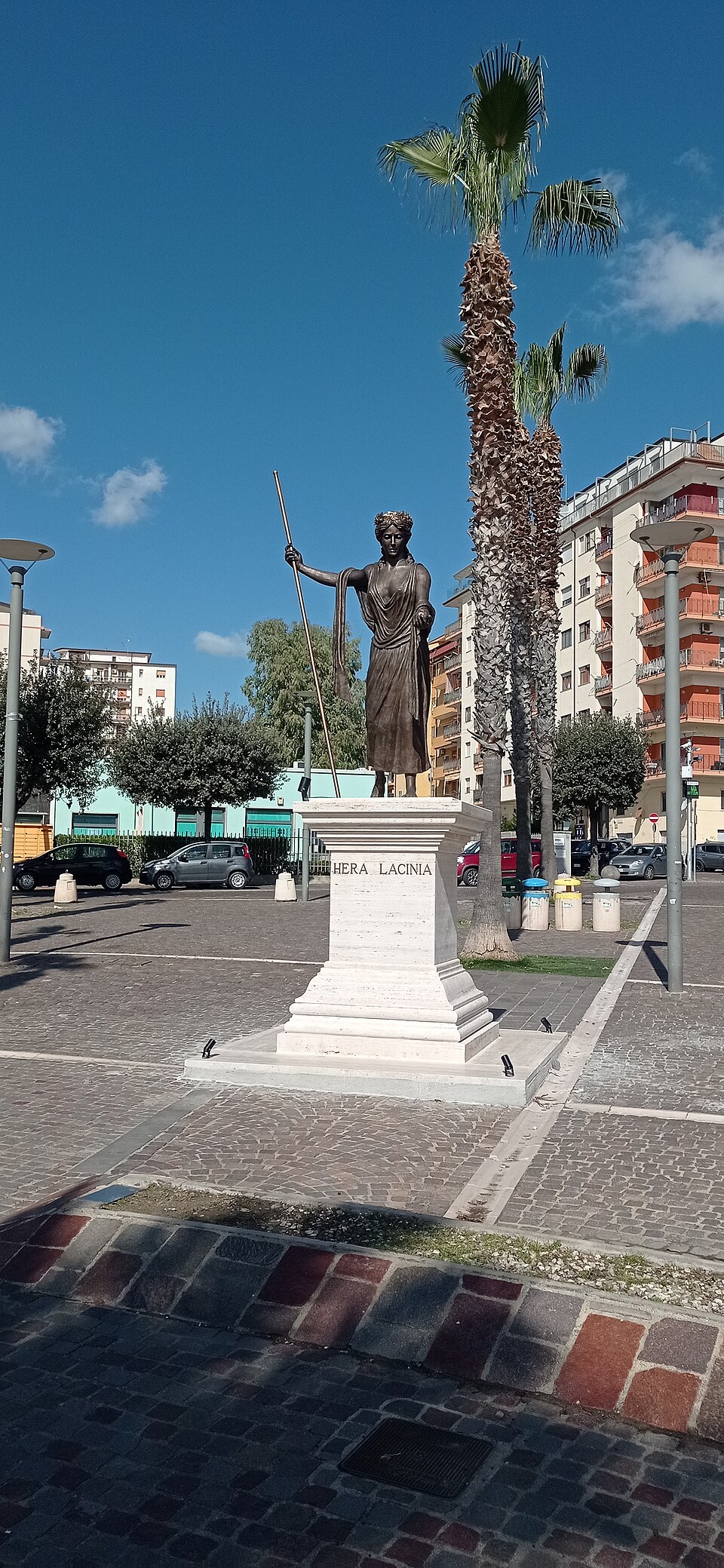
Here, I am at home as nowhere on Olympus. Argos has been my city since the earliest cults, and this sanctuary was one of the most venerable in all of Greece. Do you smell the incense, do you see the chryselephantine statue the Argives raised to me, royal crown on its brow, as the traveler Pausanias will one day describe it? At the festivals of the Heraia, pilgrims flock from all over Hellas, lead processions, drive oxen to the altars. There, I am not the deceived wife of the tales: I am the sovereign that an entire people honors. It is this cult that keeps me standing. Poets tell of my angers, but it is these faithful crowds, generation after generation, that make me a living goddess and not merely a character in their songs.
Poets tell of my angers; these faithful crowds make me a living goddess.
—They also say that Samos claims your birth, far from here. Two cities for a single queen — how do you divide yourself between them?
A goddess is not a mortal tied to a single cradle. At Samos, they tell that I was born on the island, near the ancient sanctuary where I have been venerated for ages; at Argos, they celebrate me as the sovereign of the Peloponnese. I do not divide myself — I extend myself. Every city that bears my cult, every Heraclea founded in my name, adds to my empire. Kings build my temples of white marble to secure my favor, for protecting marriage is protecting lineage, and protecting lineage is guaranteeing the city itself. That is why my cult traveled to the ends of the Greek world, then under the name of Juno among the Romans. As long as a household unites and a mother raises a son, I will be honored somewhere.
I do not divide myself — I extend myself.
—The day is fading over Argos, and soon Olympus calls us to the banquet. Before I escort you there, Hera, tell me: what do you want to be remembered for?
Let them not reduce me to my angers. Yes, I pursued your rivals, burdened your sons, armed peoples — and the songs are full of it. But behind the jealousy that you have so often earned me, there is a function without which your reign itself would totter: I am the guardian of conjugal order, the pillar of the home, the queen who sits at your right at the banquet of the gods. When we raise our cups of nectar on Olympus shortly, remember that it is my constancy that gives meaning to your crown. You are the lightning and the movement; I am the measure and the duration. They will call me vindictive; I would have them know me as faithful. That is what I bequeath: not the fury of a wife, but the majesty of a queen.
You are the lightning and the movement; I am the measure and the duration.
This imaginary interview was generated by artificial intelligence from sources documented in Hera's profile. It dramatises what the figure might have said based on what we know about them, but does not constitute attested historical testimony. For primary sources and factual documentation, refer to the full profile.