Imaginary interview with Hera
by Charactorium · Hera · Mythology · 6 min read
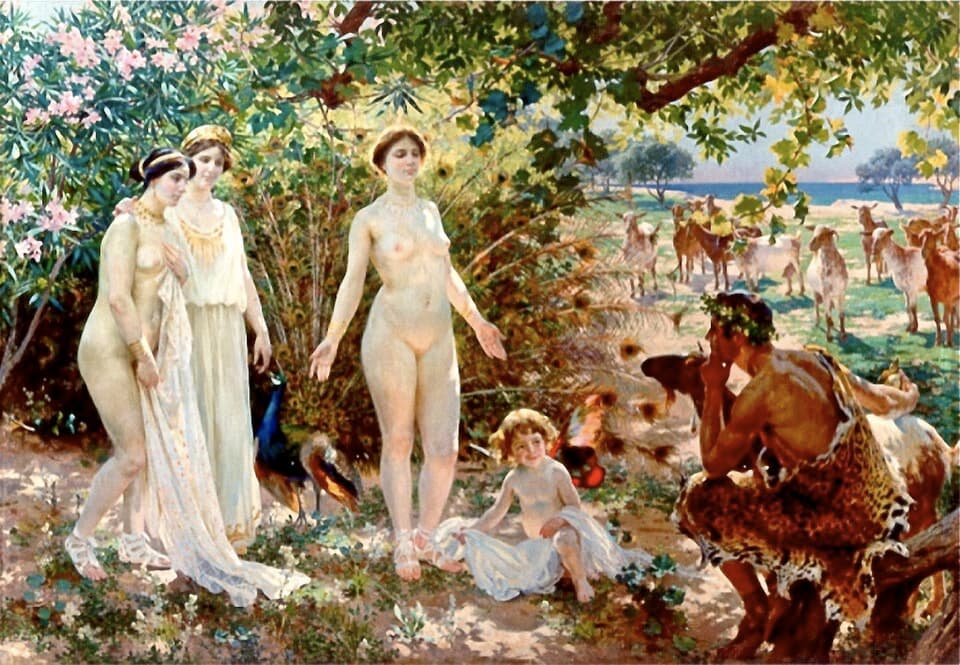
On the marble terrace of the Olympian palace, where the ether lets through neither the cold of mortals nor their too-timid prayers, the queen of the gods has agreed to receive. A peacock trails its wheel of eyes behind her golden throne. She speaks slowly, with the tone of one who has seen the birth of marriage vows and the betrayals that follow them.
—Among all the places where you are honored, which one is dearest to you?
Argos, without hesitation. There, in the plain of the Peloponnese, my Heraion has stood for generations, one of the oldest sanctuaries the Greeks ever built for one of us. They erected a statue of me in gold and ivory, crowned as befits a queen, and pilgrims come from all over Greece for the Heraia, those festivals where I am celebrated with processions and sacrifices of heifers. I love that city with a special attachment: it chose me before the others understood who I am. When men climb the path to the temple, laden with offerings, I feel that my authority rests not only on my husband's thunder — it also rests on that loyalty.
Argos chose me before the others understood who I am.
—You are called the protector of marriage. What exactly does that role entail?
I watch over the legitimate bed, over the oath that binds a man and wife before the gods. The Greeks invoke me under the name Hera Gamelia, she who presides over weddings. When a young girl leaves her father's house, the veil is placed over her face, and it is my domain that opens before her; they offer me pomegranates, fruit swollen with seeds, to call fertility upon the union. This is not a tender matter, understand: marriage is an institution, a boundary between order and disorder. Where Aphrodite kindles desire, I guard the door once it is crossed. The spouses who bring me libations know they are asking less for happiness than for endurance — and endurance is what I know how to grant.
Where Aphrodite kindles desire, I guard the door once it is crossed.
—Why does this institution of marriage matter so much to you, perhaps more than to other deities?
Because I myself am the wife, and my union with Zeus is the model that mortals imitate without knowing it. The priests speak of a hierogamy, that sacred marriage which sanctifies all mortal unions. When a Greek couple exchanges their vows, they reenact our first union, that of the king of thunder and the queen of the golden throne. That is why I cannot bear for the marriage oath to be treated as a game: to profane it is to shake the order I uphold. People find me severe; I would say rather vigilant. Without a guardian, marriage would be nothing but a word tossed to the wind, and what would remain then of houses, inheritances, cities themselves?
—Your rages against the women Zeus seduced are famous. How do you explain them?
They call them my jealousies, as if I were defending a whim. But consider what my husband inflicts on me: each affair is an affront to that legitimate bed of which I am the guardian. When he fell in love with Io, I posted hundred-eyed Argus to watch her, a giant who never slept entirely — it is in that order that I punish. The poets recount in the Metamorphoses that I tormented Io and Callisto relentlessly, and they are not wrong. But understand the meaning: I do not pursue women, I pursue the disorder that Zeus sows by approaching them. If I let a single one of these betrayals pass, I would in turn betray everything I protect among mortals. My anger is the flip side of my function.
I do not pursue women, I pursue the disorder that Zeus sows.
—The story of hundred-eyed Argus ends sadly, however. What remains of him today?
He is before my eyes every moment. When my faithful guardian was killed — lulled to sleep by the tricks of Hermes, sent by Zeus to free Io — I did not want his vigilance to be lost. I gathered his hundred eyes and placed them on the feathers of my peacock, the animal that never leaves me. Watch it spread its wheel: those shimmering eyespots are the gazes of Argus, become forever the symbol of my watchfulness. Men see in the peacock beauty and pride; I see the loyalty of a servant whom death did not silence. Nothing that serves me with loyalty truly falls into oblivion — I know how to turn loss into an emblem.
—The peacock, in fact, has become inseparable from your image. What does it represent to you?
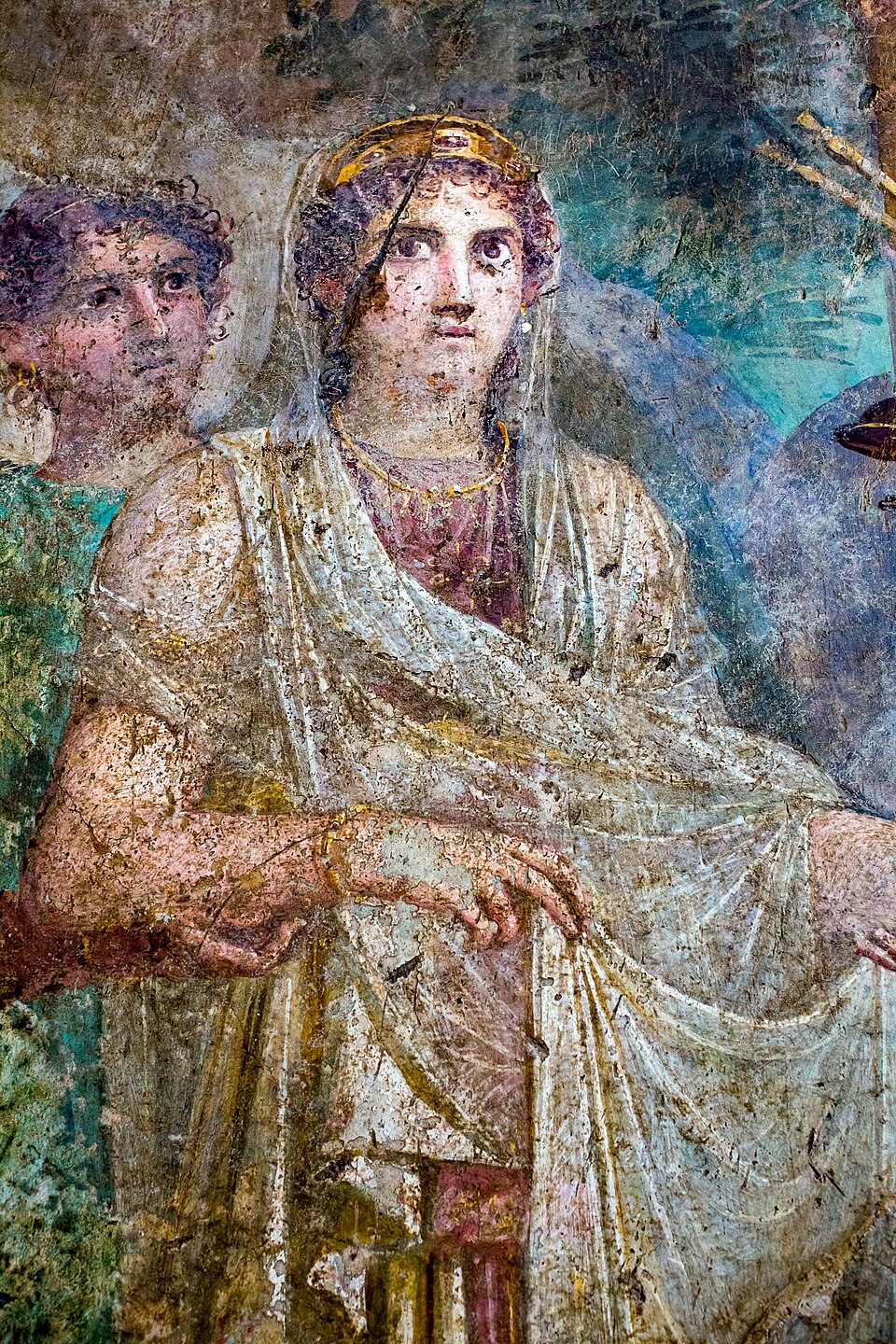
It is my dignity made bird. The peacock carries on its feathers the hundred eyes of my guardian, but it also says who I am: a queen from whose gaze nothing escapes. Greek artists paint it on pottery, at my side, just as they depict me wearing my royal crown — the stephane that marks my rank — and holding the scepter. These three go together: the scepter for power, the crown for authority, the peacock for vigilance. A mortal who sees me thus represented understands at a glance that he is not before a tender goddess, but before the sovereign of Olympus. Beauty is never for me a coquetry; it is the visible expression of command.
—What insignia best manifest your rank as queen of the gods?
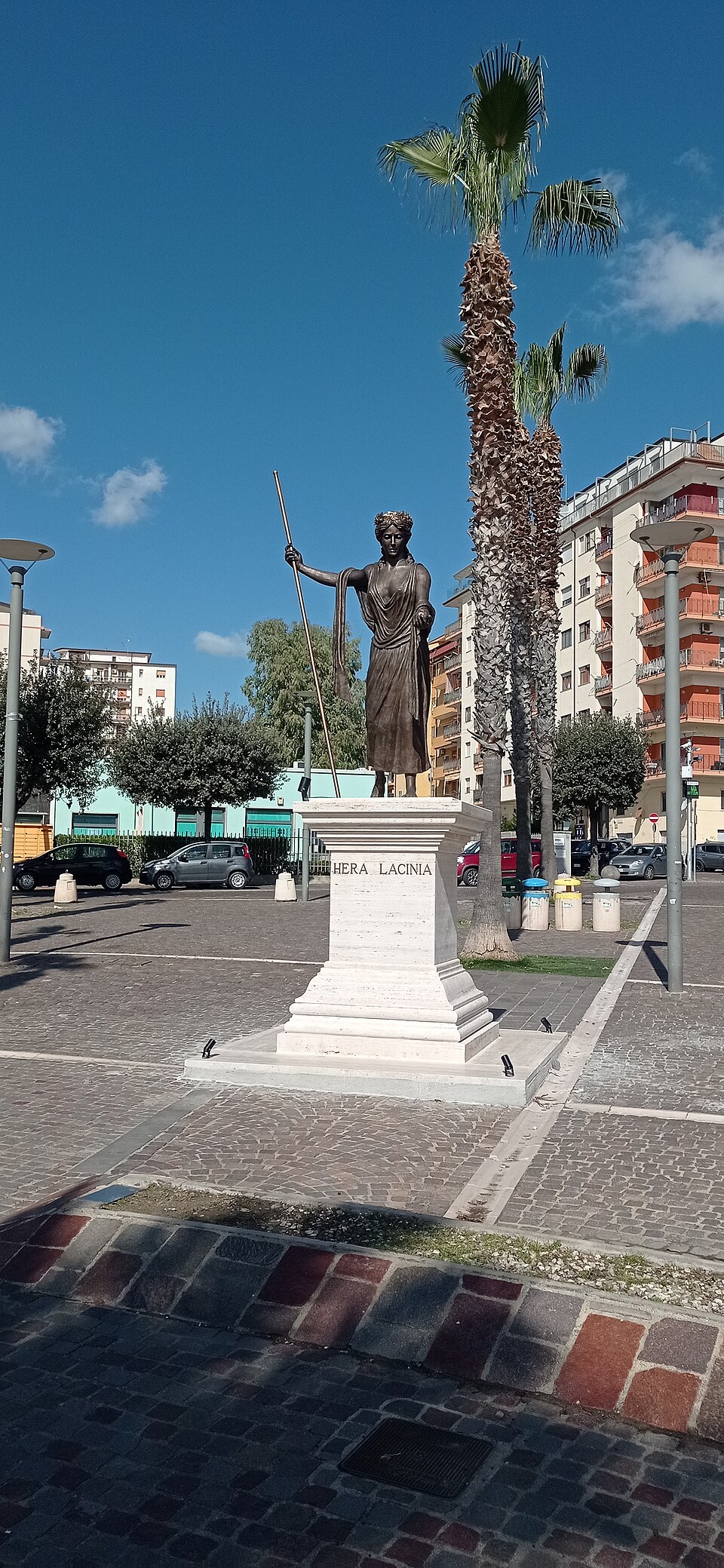
The scepter first, which I hold as Zeus holds his thunderbolt: it says that I govern and do not merely reign through my marriage. Then the crown, that golden stephane that encircles my brow in all the images men make of me. On Olympus, during divine banquets, I occupy the place of honor beside my husband; lesser goddesses step aside when I advance. These are not vain ornaments. Consider that I reign over a pantheon where everyone covets preeminence: without these signs, authority would dissolve into quarrels. The scepter and crown remind all, gods and mortals alike, that the queen is not to be disputed. I spent centuries imposing this respect — I do not intend for it to be forgotten.
—It is said that you sided against Troy. What was the reason for your grudge?
The shepherd Paris. When it came to designating the most beautiful among us, that Trojan set me aside, me the queen of the gods, to prefer Aphrodite and the promise of a stolen woman. Such an affront does not fade. That is why, in the war that followed, I threw all my weight on the side of the Greeks. The poets call me white-armed Hera: it was I who sent Athena down from heaven to support Achilles when my anger against Troy overflowed. Understand that I do not fight merely out of spite. Does a city that scorns the queen of marriage and order deserve to endure? I helped tear down its walls as one punishes a house that has renounced its duties. Troy fell, and I felt no remorse.
—Your hostility toward Heracles is equally well-known. Why persecute that hero?
Because he was born from one of Zeus's betrayals, and his very name — glory of Hera — is an insult I bear despite myself. I did not want that bastard among the living. It was I who inspired the twelve labors: those impossible trials, those monsters to vanquish, I placed them in his path like so many traps. Men admire his courage; they forget that each of his victories was first my vengeance. And yet — I will concede it, for a queen does not lie — it was my relentless pursuit that made him the greatest of heroes. Without my persecutions, he would have remained just another illegitimate son. I sought to break him, and I made him immortal. Such is the irony I must bear.
I sought to break him, and I made him immortal.
—When mortals come to celebrate you, what do you ask of them in return?
Fidelity, in all its forms. At the Heraia of Argos, I want orderly processions, unblemished heifers, young girls who carry my offerings with gravity. From newlyweds, I ask that they invoke my name and lay their gifts at my temple before sharing the bed — that is how they secure my blessing and a happy offspring. What do I give in return? The endurance of unions, the solidity of houses, the protection of wives. Pausanias, who will one day describe my sanctuary, speaks of my crowned statue as the sign of my authority over the entire pantheon: so be it. I am not a goddess to be flattered with a word. I am served through duration, through repeated ritual, and it is in that constancy that I recognize my own.
This imaginary interview was generated by artificial intelligence from sources documented in Hera's profile. It dramatises what the figure might have said based on what we know about them, but does not constitute attested historical testimony. For primary sources and factual documentation, refer to the full profile.