Kids interview Hera
by Charactorium · Hera · Mythology · 5 min read
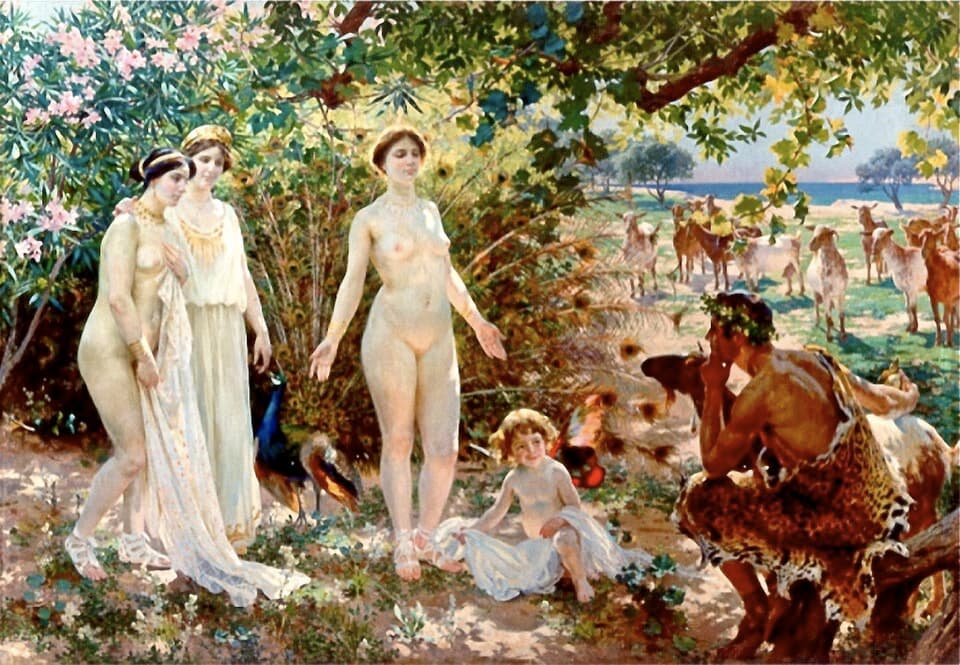
Two young visitors, twelve years old, step through the gates of the great temple of Argos. Before the tall crowned statue, they finally dare to ask their questions. And behold, the queen of the gods, peaceful, leans toward them to answer.
—Hello! We see a magnificent bird near you. What animal is that?
Come closer, my child, don't be afraid. This beautiful bird is my peacock. Do you see those patterns on its feathers, like dozens of eyes watching you? That's no accident. Imagine a giant named Argus, covered in a hundred eyes that never all slept at once. I had tasked him with watching someone for me. When he died, I didn't want to forget him. So I took his hundred eyes and placed them on my peacock's feathers. From that day on, wherever he goes, my bird carries the guardian's gaze. That's why he walks beside me, proud as a queen.
My peacock carries on its feathers the hundred eyes of a guardian who never slept.
—And on your head, is that a crown? Why do you wear one?
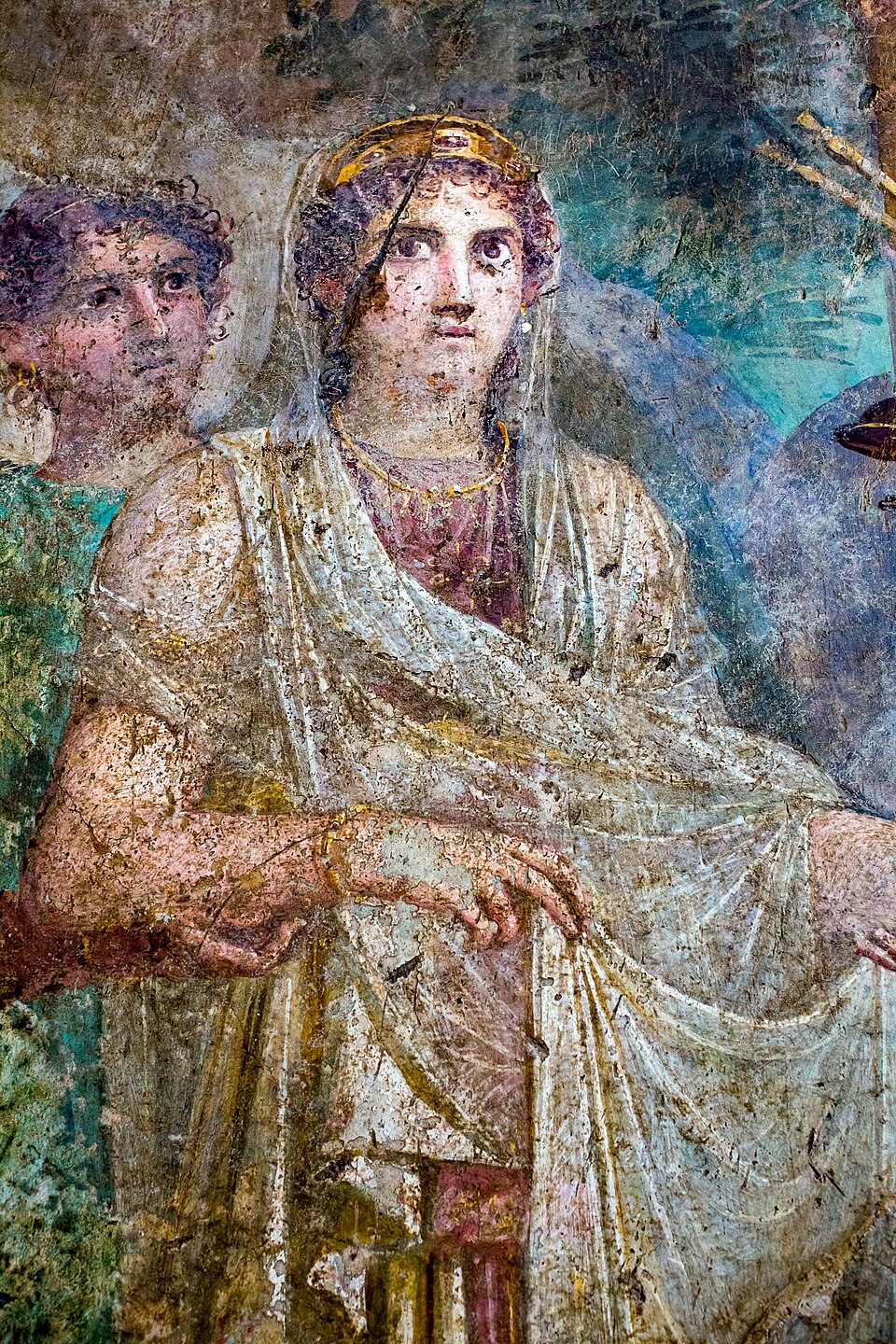
Yes, look closely. It's called the stephane — that's the name of this crown resting on my hair. It's not there for decoration, my child. It tells who I am: the queen of all gods. In my hand, I also hold a scepter, a long precious staff. Imagine a king in your world: when he raises his staff, everyone falls silent and listens. My scepter is the same. My robe is long, draped to the ground, white and gold. When I enter the hall of the gods on Mount Olympus, everyone knows, just by looking at me, that the queen has arrived.
My crown isn't for decoration: it tells that I am the queen of the gods.
—We were told you protect marriages. What does that mean exactly?
That's my most beautiful role, and my favorite. You see, among the Greeks, the day two people got married was immense. The young bride wore a veil over her face, and they shared a pomegranate, that fruit full of little red seeds — a symbol of all the beautiful things wished for the couple. The newlyweds would come to my temple. They called me Hera Gamelia, which means 'Hera who watches over marriage.' They brought me small gifts and asked me to bless their home. Imagine a mother watching over her family, day and night: that's what I was for all the families of Greece.
Watching over families, day and night, is my most beautiful role.
—What was your own marriage like, with Zeus?
Ah, my child, my marriage was not like any other. Zeus is the king of the gods, and I his queen. The Greeks had a precious word for our union: hierogamy, meaning 'sacred marriage.' Imagine that high above, on Mount Olympus, the king and queen of the sky unite — and that this marriage becomes the model for all mortal marriages below. When two young Greeks married, they thought a little of us. Our union made theirs sacred, important, protected. It was as if the sky itself leaned down to bless their small earthly home.
Our marriage in heaven was the model for all marriages on earth.
—In the stories, you often seem angry. Why?
You're right, and I won't lie to you. My husband Zeus was not always faithful to me. He loved other women, mortals, in secret. That hurt me deeply — imagine someone you love betraying you again and again. So yes, my anger would flare. A young woman named Io had caught Zeus's eye: to watch her, I placed my hundred-eyed giant beside her. Another, Callisto, I pursued as well. The poet Ovid tells all this in his Metamorphoses. These stories told the Greeks how much fidelity in a couple mattered to them.
My anger was born from a wound: you do not betray the queen of marriage.
—And that hundred-eyed giant, what did you actually ask him to do?
I entrusted him with a mission of trust. This giant was named Argus, and his entire body was covered in eyes — a hundred eyes! When some closed to sleep, the others remained wide open. No one could escape him. I told him: 'Watch Io for me, day and night, never take your eyes off her.' Imagine a guard who can never be put to sleep, never tricked. He was the perfect watcher. Alas for him, the adventure ended badly. But I did not forget his loyalty: his hundred eyes still shine today on my peacock's feathers.
A guardian with a hundred eyes: when some slept, the others always watched.
—There's a very strong hero, Heracles. Is it true you held a grudge against him?
Yes, and it's a difficult story, my child. Heracles was a son of Zeus, born of another woman than me. In my eyes, his very existence was a wound. So I made his life very hard. You may know his famous Twelve Labors — fighting a huge lion, a many-headed beast, capturing monsters? Well, these nearly impossible trials, he had to accomplish them partly because of my anger. It's strange, you see: by trying to break him, I made him more famous than all other heroes. His strength was born from the trials I imposed on him.
By trying to break him, I made Heracles more famous than all heroes.
—And the city of Thebes, does it matter in this story?
Very much, my child. Thebes is the city where Heracles grew up, and many of my stories take place there. It was a powerful city in Greece, with its walls and heroes. There, I often intervened in the fate of men, especially when it came to pursuing the children Zeus had fathered away from me. Imagine a queen watching from on high, from Mount Olympus, casting her gaze over an entire city. For the Greeks, telling these stories of Thebes was a way to understand why life is sometimes so hard, and why even the strongest must face trials.
Even the strongest must face their trials: that's what our stories said.
—We are in your temple at Argos. Was this place important to you?
More than anything, my child. Argos was my favorite city, my sacred city. There they built for me the Heraion, a great temple of white marble, one of the oldest in all of Greece. Inside stood a huge statue of me, made of gold and ivory — they called it chryselephantine, that learned word which simply means 'of gold and ivory.' Imagine entering a silent hall and seeing a giant queen shining in the dim light. Much later, a traveler named Pausanias described my statue in his book. Thanks to him, we still know today what my home in Argos looked like.
A statue of gold and ivory, giant, shining in the silence of the temple.
—Were there festivals for you? How did they go?
Oh yes, and they were great days! They were called the Heraia, the festivals in my honor. People came from all over Greece, sometimes from very far, just to pass through the gates of my temple at Argos. Imagine a long line of pilgrims on dusty roads, carrying offerings: animals for sacrifice, flowers, wine mixed with water. There were songs, processions, ceremonies throughout the day. For these people, it wasn't just honoring a goddess: it was feeling connected together, all gathered under the gaze of their queen. These festivals made the heart of the city beat.
My festivals connected all Greeks together, under the gaze of their queen.
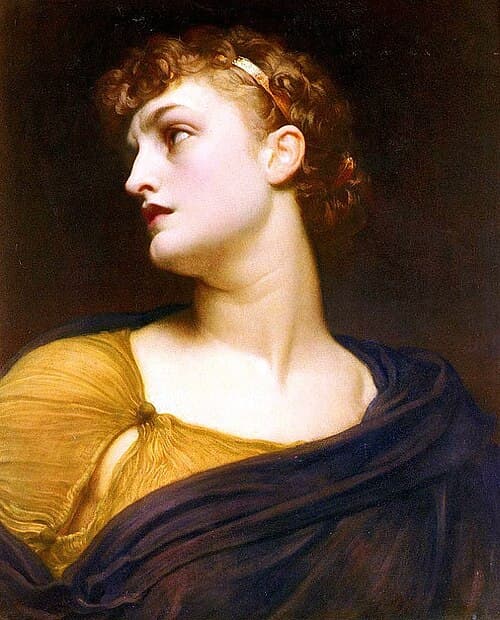
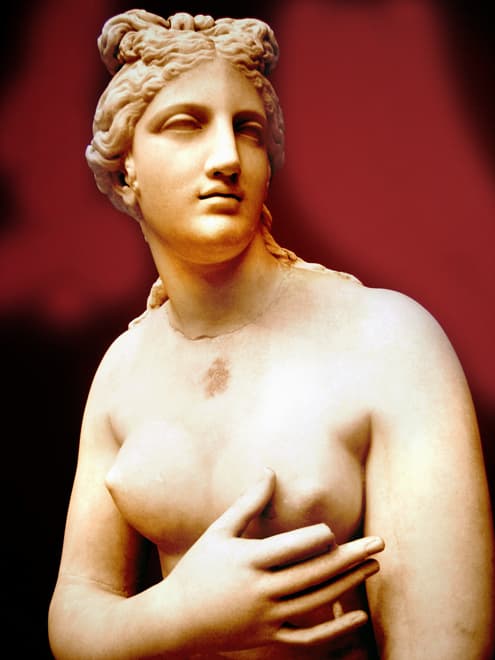
This imaginary interview was generated by artificial intelligence from sources documented in Hera's profile. It dramatises what the figure might have said based on what we know about them, but does not constitute attested historical testimony. For primary sources and factual documentation, refer to the full profile.