Kids interview Hermes
by Charactorium · Hermes · Mythology · 5 min read
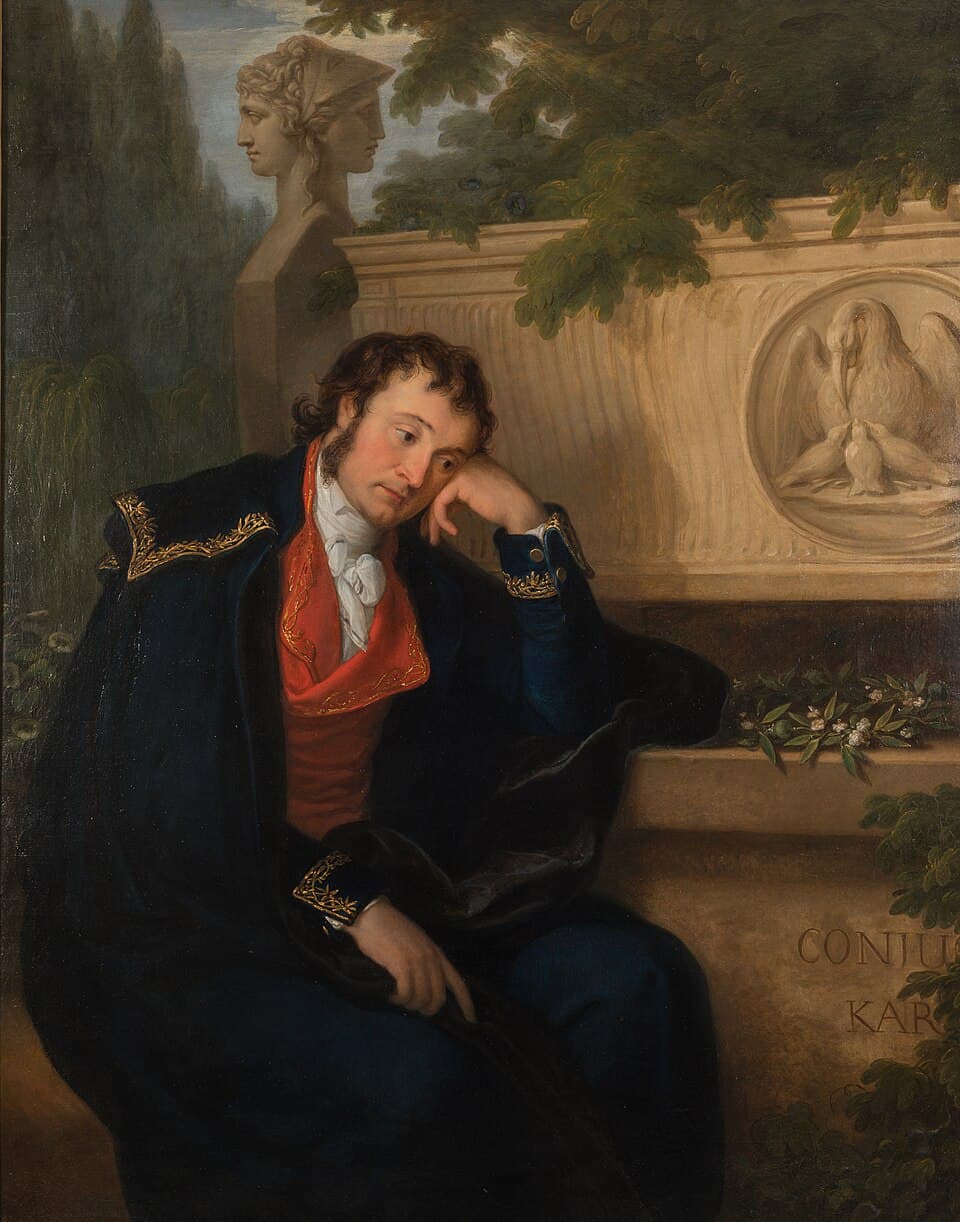
Two young visitors, barely twelve years old, stop at a crossroads where an old stone boundary marker stands. The stone begins to smile. Hermes, the god with winged sandals, sits down beside them to chat.
—Is it true that you pulled a prank on the very day you were born?
You know, my child, I was only a few hours old! In the morning, I was born in a cave on Mount Cyllene. By noon, I was already playing music. And in the evening, I slipped away to steal the cattle of my big brother Apollo. Cleverly, I made the beasts walk backwards. Imagine: their tracks in the dust went the wrong way! Apollo couldn't understand it. When he caught me, he was furious. But I had just invented a beautiful object with a tortoise shell: the lyre. I gave it to him. His anger melted like snow in the sun.
In the morning I was born, at noon I played, in the evening I stole a herd.
—How do you make a lyre from a tortoise? That sounds weird!
It surprises you, huh? Yet it's very simple. I found a tortoise wandering about. I kept its beautiful shell, round and hollow like a little bowl. Imagine a giant seashell that resonates when you blow into it. I stretched strings over it, and I plucked. The sound rose, soft and clear, like a voice singing. That's it, the world's first lyre. My brother Apollo, he is the god of music. When he heard my instrument, his eyes lit up. That's how a thief reconciled with his brother: by offering him a song.
A tortoise shell, a few strings, and behold the first music in the world.
—Why do you have little wings on your feet? Is it for flying?
Exactly! My father Zeus gave me magical sandals, the talaria. That word means "winged sandals." Little golden wings flutter at my ankles. Imagine you run so fast that your feet barely touch the ground. I dart between the clouds like a swallow. I also have a broad-brimmed hat, the petasos, also adorned with wings. And I always hold my caduceus, a staff entwined with two snakes. With it, I can put mortals to sleep with a gesture, or gently wake them. This whole outfit is my uniform as the messenger of the gods.
When my sandals beat their wings, my feet no longer touch the earth.
—They say your snake staff is still used today?
That's a lovely story, my child. My caduceus, you know, that staff with its two intertwined snakes and wings, was the sign of my power as a messenger. It said to all: "this envoy speaks in the name of the gods, do not touch him." It was a bit like a flag of peace raised between two camps. Over time, men made it the symbol of commerce, of merchants exchanging goods. And even, in some distant countries, they placed it on the signs of healers. My staff still travels, long after me. Isn't that amusing for a god of travel?
My messenger's staff still travels, long after me.
—Is it true that you could go to the land of the dead? Weren't you afraid?
Afraid? No, my child. I am the only god of Olympus who can cross all worlds: the sky, the earth, and the realm of the dead. I am called the psychopomp. That big word simply means "the one who guides souls." When a person died, I would come gently to fetch them. Imagine someone taking your hand in the dark to show you the way. I would lead the soul to the banks of the river Styx, the border of the kingdom of the dead. That's why Greek families placed offerings in my honor during funerals. They entrusted me with those they loved.
Dying is just a hand guiding you through the dark.
—Didn't it make you sad to take people away from their families?
That's a heartfelt question, and it touches me. You know, I didn't see my role as a sad one. I was a ferryman, a guide. Imagine a traveler lost on an unknown road at night. Without a guide, he would be afraid, he would wander. I walked beside him all the way to the river Styx. I made the journey less lonely. The Greeks knew it well: that's why they loved me and offered me gifts at farewells. You don't just mourn the one who leaves. You rejoice that he does not leave alone. That's what I did: accompany.
You never leave alone when someone walks beside you.
—Did you really help Odysseus against the sorceress? How?
Ah, the cunning Odysseus! Yes, I helped him. He was landing on the island of a sorceress named Circe. This witch turned men into pigs with a wave of her wand! His poor companions were already grunting in a pigsty. So I descended near Odysseus. I handed him a little magical herb, the moly, a flower with a black root and white petals. Imagine an invisible shield slipped into your pocket. As long as he kept it on him, no spell could reach him. Thanks to it, Odysseus stood up to Circe. That's my job, you see: protecting travelers when danger lurks on the road.
A little flower in your pocket, and no spell can touch you.
—What are those stone markers with your head that they put in the streets?
They were called "herms," like me! They were stone columns with my face carved on top. The Greeks placed them at crossroads, in front of houses, along paths. Imagine you're walking on a deserted road and suddenly a friendly stone tells you: "you are on the right path, I am watching over you." They served as landmarks for travelers and protected them from bad encounters. In Athens, there were them everywhere. I, the god of roads and boundaries, thus kept an eye on every passerby. A stone is silent, but it reassures.
A stone with my face at the crossroads: "you are on the right path."
—Something serious happened with those markers, right? A scandal?
Oh yes, a terrible scandal! It was in Athens, in 415 BC. One night, unknown persons broke almost all the hermaic markers in the city. Imagine waking up and finding all the protective statues in the neighborhood damaged, their faces broken. The Athenians were frozen with terror. For them, it was a sacrilege, an insult to the gods, and a bad omen. The whole city accused a famous general, Alcibiades, of being behind this misdeed. It triggered a huge political trial. You see how seriously I was taken? Touching my markers was to shake the entire city.
Breaking my markers was to shake the entire city.
—If someone met you today, what would they notice first?
What would you see? First my feet, I think. Those little golden wings at my ankles, the talaria, that flutter even when I stay still. Then my caduceus, that staff with two snakes that I never let go. And you would feel something, my child: I can't stay still. I am the god of roads, crossroads, boundaries between worlds. Imagine someone who always has one foot set toward departure. I go from sky to earth, from earth to the kingdom of the dead. If one day you take an unknown road, think of me. I walk with travelers. Safe journey, little curious ones.
I am the one who always has one foot set toward departure.
This imaginary interview was generated by artificial intelligence from sources documented in Hermes's profile. It dramatises what the figure might have said based on what we know about them, but does not constitute attested historical testimony. For primary sources and factual documentation, refer to the full profile.