Kids interview Iris Murdoch
by Charactorium · Iris Murdoch (1919 — 1999) · Philosophy · Literature · 5 min read
Two young visitors of twelve push open the door of an old Oxford house, cluttered with books up to the ceiling. Seated in a leather armchair, a grey-haired lady welcomes them with a smile. She sets down her notebook and pen, delighted that someone has come to talk to her.
—How old were you when you traveled across Europe right after the war?
I was twenty-six, my child, and I never forgot what I saw. In 1945, I worked for an organization called the UNRRA — people who helped refugees rebuild their lives. I was in Vienna, Austria. Imagine cities in ruins, whole families who had lost everything, children without homes. I distributed food, papers, I wrote down names. At night, I couldn't sleep. You know, that's when I understood how unique and fragile each person is. Later, when I wrote my novels, those faces came back. You don't forget the suffering of others.
You never forget the faces of people who have lost everything.
—Is it true you wrote novels AND philosophy books? Why both?
Yes, both, and I never wanted to choose. Many people asked me: "But are you a philosopher or a novelist?" And I would answer: both, it's the same thing! As early as 1947, I wrote to a French friend, Raymond Queneau, that philosophy and literature are two ways of seeing the same thing: how complicated a human being is. You see, philosophy asks the big questions with precise words. The novel, on the other hand, puts those questions into the lives of characters who love, make mistakes, suffer. It's like looking at the same mountain from two different paths. You reach the same summit.
Philosophy and literature: two paths to the same mountain.
—What was it like writing your very first novel?
Ah, Under the Net — my first novel, published in 1954. I was already thirty-four. I wrote it by hand, in a notebook, like everything else. The story follows a young man a bit lost, wandering between Paris and London, searching for who he really is. You know what pleased me most? That people read it and recognized themselves. They said it was one of the best postwar first novels. I was trembling like a leaf. Imagine: you work alone in your room for months, and suddenly thousands of strangers hold your story in their hands.
You write alone in your room, and suddenly strangers read you.
—You spoke many languages, right? What was that for?
It's true, I loved languages: French, German, Russian. And it served me well, you'll see. In England, in the 1940s, almost no one knew a French philosopher who was making waves: Jean-Paul Sartre. I could read him in his own language, without waiting for translations! So I wrote, in 1953, one of the very first English books about him. It was like bringing back a treasure from a neighboring country no one had visited. Learning a language, my child, is opening a door into other people's minds. Without it, I would have stayed locked in my own.
Learning a language is opening a door into other people's minds.
—You won a big prize, didn't you? Were you happy?
Yes! In 1978, my novel The Sea, the Sea received the Booker Prize, Britain's biggest literary award. I was moved, of course. That novel tells the story of a retired theater man, obsessed with a youthful love. He thinks he sees people... but in truth he only sees his own dreams. That's the whole problem with humans! But you know what? Even with that prize, I refused to be pigeonholed. Novelist, philosopher... I wanted to stay free. A prize is nice, but it should never tell you who you are.
A prize is nice, but it should never tell you who you are.
—What exactly was this new idea you made known?
It was called existentialism. It's a big idea from France: it says that human beings don't arrive in the world fully formed; they build themselves through their choices. No one decides who you will be but you. Sartre and his friend Simone de Beauvoir talked about it a lot in Paris. I read them passionately. But careful: I admired this idea, yet at the same time I didn't always agree! I thought it talked too much about the "self" and not enough about others. You see, in philosophy, you can love a thinker and criticize them at the same time. That's what real thinking is.
You can love a thinker and criticize them at the same time.
—Why did you love Plato so much, such an old philosopher?
Because Plato, even two thousand years old, said things that are still true today! I always kept his books near me, covered in my pencil notes. What touched me was his idea of the Good. For him, the Good is not an invention: it really exists, like a star above us. In 1970, I wrote The Sovereignty of Good to defend this idea. Many people in my time thought good and evil were just opinions. I said no. Being good means learning to see others truly, without telling ourselves stories.
Being good means seeing others truly, without telling ourselves stories.
—You said reading novels makes us better. Is that true?
I deeply believe it, yes. A good novel, my child, is not just a pretty story. It is a school of seeing. When you read a character's life, you learn to understand someone who is not you. You enter their head, their heart. I said that art teaches us to see — to see others as they really are. In 1977, in a little book about Plato and artists, I defended this idea. Great literature makes us grow in humanity. That's why I wanted my novels to ask real questions. Reading is training to love better.
A good novel is a school of seeing.
—What did your house smell like? And what were your mornings like?
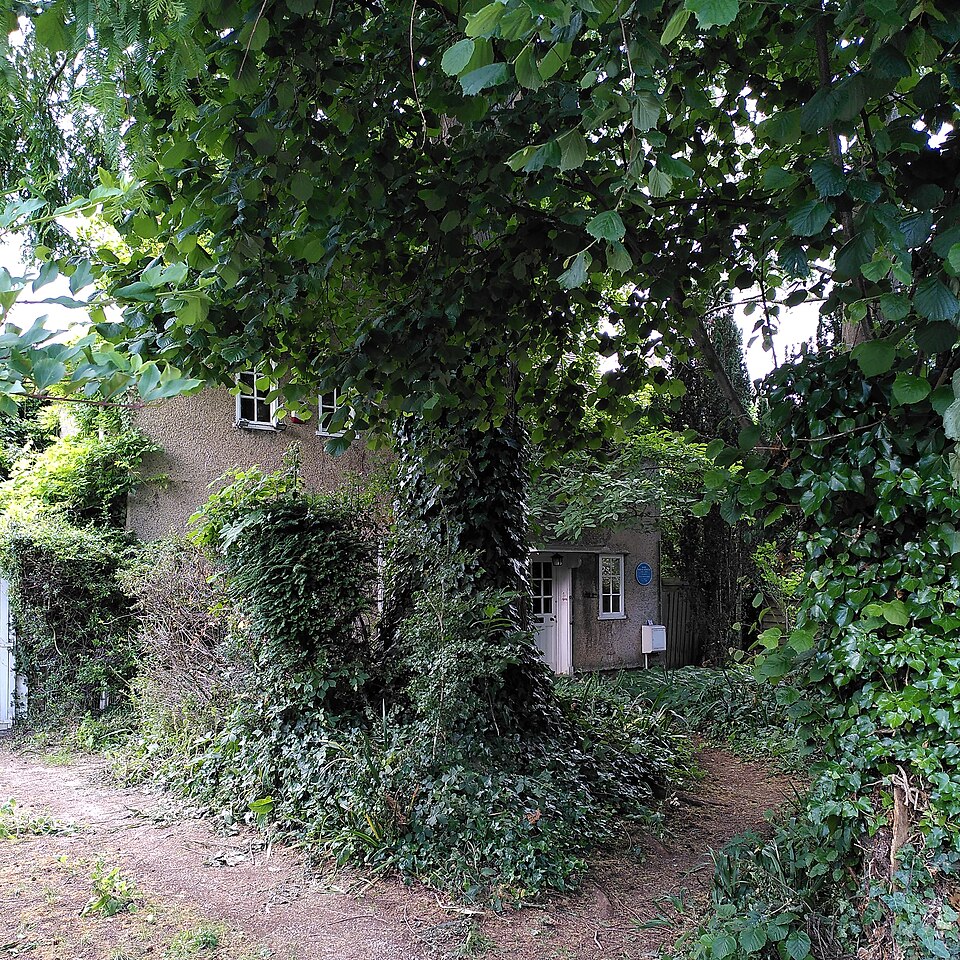
Oh, my house in Steeple Aston, a little country village! My husband John Bayley said it was cheerfully messy. Imagine: books everywhere, on chairs, on the floor, piles of manuscripts, a slightly wild garden that smelled of grass and rain. In the morning, I got up early and went for a walk, sometimes by bicycle through the streets of Oxford. The fresh air woke up my thoughts. Then I settled with my notebook and wrote for the first hours, before anything else. I had no concern for fine things or fashion. A cup of tea, an armchair, my notebooks: that was all I needed.
Books everywhere, a wild garden: that was my happiness.
—Why did you always write by hand, never on a typewriter?
You noticed that! Yes, all my life, I wrote by hand, in notebooks, with a fountain pen. Never a typewriter. For me, the pen extended my hand, and my hand extended my thought. It was like a thread connecting my heart to the page. I became so immersed in my characters that sometimes I cried when one of them died! Do you think that's silly? I thought it was normal. When you love someone, even imaginary, you mourn them. Writing by hand was my way of staying close to my stories, letter by letter.
The pen extended my hand, and my hand extended my thought.
—They say at the end you forgot words. That's sad, how does it happen?
Yes, my children, and I speak of it here as a serious thing, but without fear. At the end of my life, I had a disease called Alzheimer's disease. It gradually erases memory and words. Imagine: I who had spent my life searching for the right word, I could no longer find them. It was like a book whose pages fade one by one. My husband John stayed by my side until the end, with great tenderness. He even wrote a book, Iris, about those last years. You know, losing words taught me one thing: what remains at the end is love, not sentences.
What remains at the end is love, not sentences.
This imaginary interview was generated by artificial intelligence from sources documented in Iris Murdoch's profile. It dramatises what the figure might have said based on what we know about them, but does not constitute attested historical testimony. For primary sources and factual documentation, refer to the full profile.