Imaginary dialogue between Edmond Halley and Isaac Newton
by Charactorium · Isaac Newton (1643 — 1727) · Sciences · 6 min read
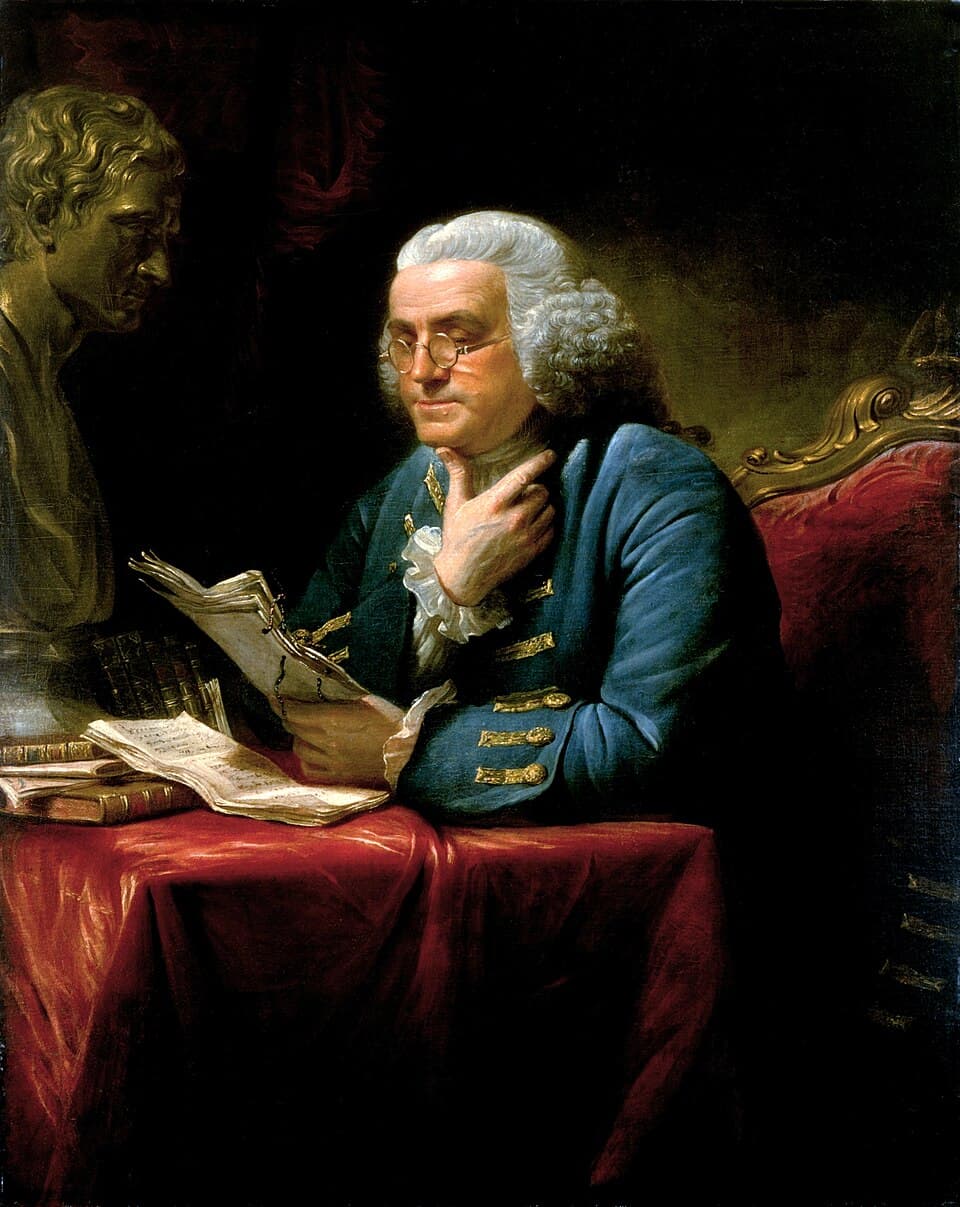
It is in the cluttered study of Newton at Trinity College, Cambridge, on an autumn evening in 1692, that Edmond Halley comes to meet his old friend. On the table, a prism casts colored glints near a flickering candle, and the acrid smell of an alchemical furnace still hangs in the room. Five years earlier, Halley had financed and pushed through the printing of the Principia against their author's reluctance. Tonight, the astronomer comes not as a pressing editor, but as an accomplice, determined to make the most secretive man in England speak.
—Isaac, you've often told me that everything sprouted far from here. Tell me about those two years when the plague drove you from Cambridge.
You know how reluctant I am to boast, Edmond, but those years were the most fruitful of my life. In 1665, when the plague closed the University, I returned to Woolsthorpe, the house where I was born. I was alone, without a master, without a library, and it was precisely that solitude that freed me. In those twenty months, I conceived my method of fluxions, I decomposed light, and I began to suspect that the same force held the Moon and made an apple fall in the orchard. I was then in the prime of my age for invention, and minded mathematics and philosophy more than any time since. One might almost speak of a miraculous year.
I was alone, without a master, without a library, and it was precisely that solitude that freed me.
—And that famous apple in the orchard? The credulous already make a fable of it. What truth is there, my friend?
Less marvel than one imagines, and more reflection. No apple fell on my head to enlighten me all at once—do not spread that tale. But it is true that I was sitting in the garden, thoughtful, and seeing a fruit detach itself and fall straight to the ground, a question seized me: why always toward the center of the Earth, never sideways or upward? From thread to needle, I wondered if this same power did not extend to the Moon. The observation was humble; the meditation was long. That is the whole legend, stripped of its ornaments.
The observation was humble; the meditation was long.
—That prism there on your table still casts colors. Explain to me the experiment that so enraged Hooke at the Society.
Nothing simpler in appearance, yet nothing was more contested. I completely darkened my room and pierced a small hole in the shutter to let in only a thin ray of sunlight. Placing this prism at the entrance, I saw the light paint itself on the opposite wall as a long ribbon of colors, from red to violet. Until then, it was believed that the glass tinted the light; I showed, on the contrary, that white light already contains all these colors, and the prism only separates them. Each ray refracts according to its own degree. Hooke saw it as an attack; I saw only an experiment that anyone could repeat at home.
The glass does not tint the light; it separates what it already contained.
—You hold light to be a stream of corpuscles, while Huygens believes it a wave. Why do you persist in this path?
I persist less than I observe, Edmond. The rays of light seem to me to move in straight lines and cast sharp shadows, which a wave propagating as in water would struggle to do. I therefore imagine light composed of very small corpuscles emitted by luminous bodies, traveling through transparent media in straight lines. This accounts well for reflection, refraction, and the separation of colors. I do not claim to resolve every mystery: there remain phenomena that this hypothesis explains poorly, and I leave the future to judge. But I prefer to build on what experience shows me rather than on invisible conjectures. Let Huygens propose his waves; the facts will decide between us.
I prefer to build on what experience shows me rather than on invisible conjectures.
—Let us speak of your method of fluxions. It is now whispered in Hanover that Leibniz invented calculus before you. Does that wound you?
It weighs on me more than I show. I conceived my method of fluxions as early as 1665, in that manuscript I never had printed—I have always delayed too long in publishing, as you have often reproached me. I consider magnitudes not as an assemblage of infinitely small parts, but as generated by continuous motion: a line described by the movement of a point, a surface by that of a line. The fluxion is the speed of that flow. That Leibniz arrived independently at similar results, with different symbols, I do not deny. But priority belongs to me, and the silence in which I kept my papers cannot count as renunciation. This quarrel, I fear, will not die out in our lifetime.
I consider magnitudes as generated by continuous motion, not by the assembly of parts.
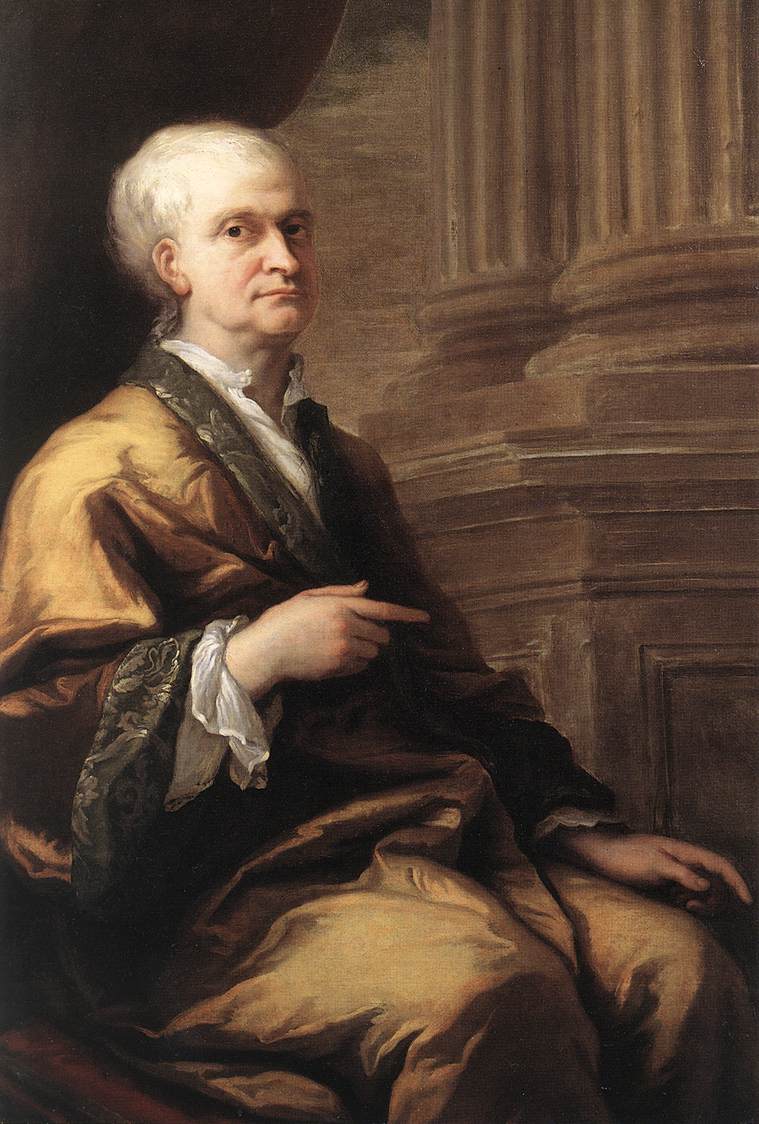
—You once wrote me that phrase about standing on the shoulders of giants, in your letter to Hooke. What did you really mean to say to him?
You remember that letter from 1675? I had addressed it to Hooke, at the height of our disputes on light. If I have seen further than others, it is by standing on the shoulders of giants: that is what I wrote to him. Some saw humility in it, and there was some; Kepler, Galileo, Descartes taught me everything, and I am only their continuator. But between Hooke and me, quarreling over priority, those giants could also refer to those before us—a way of reminding my opponent that no one creates alone, and that the dispute over precedence is petty compared to the common edifice. Each will read into it what they will.
No one creates alone; the dispute over precedence is petty compared to the common edifice.
—That smell of a furnace in your room… I have known you for years and you never speak of it. What do you spend your nights on, Isaac?
You touch there, Edmond, on what I confide the least. Yes, I spend my nights at that furnace, on materials that prudence forbids me to name in public. I seek the hidden principles by which nature works her transmutations, what the ancients called the Work. I have blackened more pages for that than for all my natural philosophy, and I keep them under lock and key. Do not think it madness: I hold that God has inscribed active forces in matter, and that hermetic art approaches it by another path than geometry. But the world is not ready to hear it, and you yourself would take me for a dreamer if I told you more. Keep this to yourself.
I have blackened more pages for the Work than for all my natural philosophy, and I keep them under lock and key.
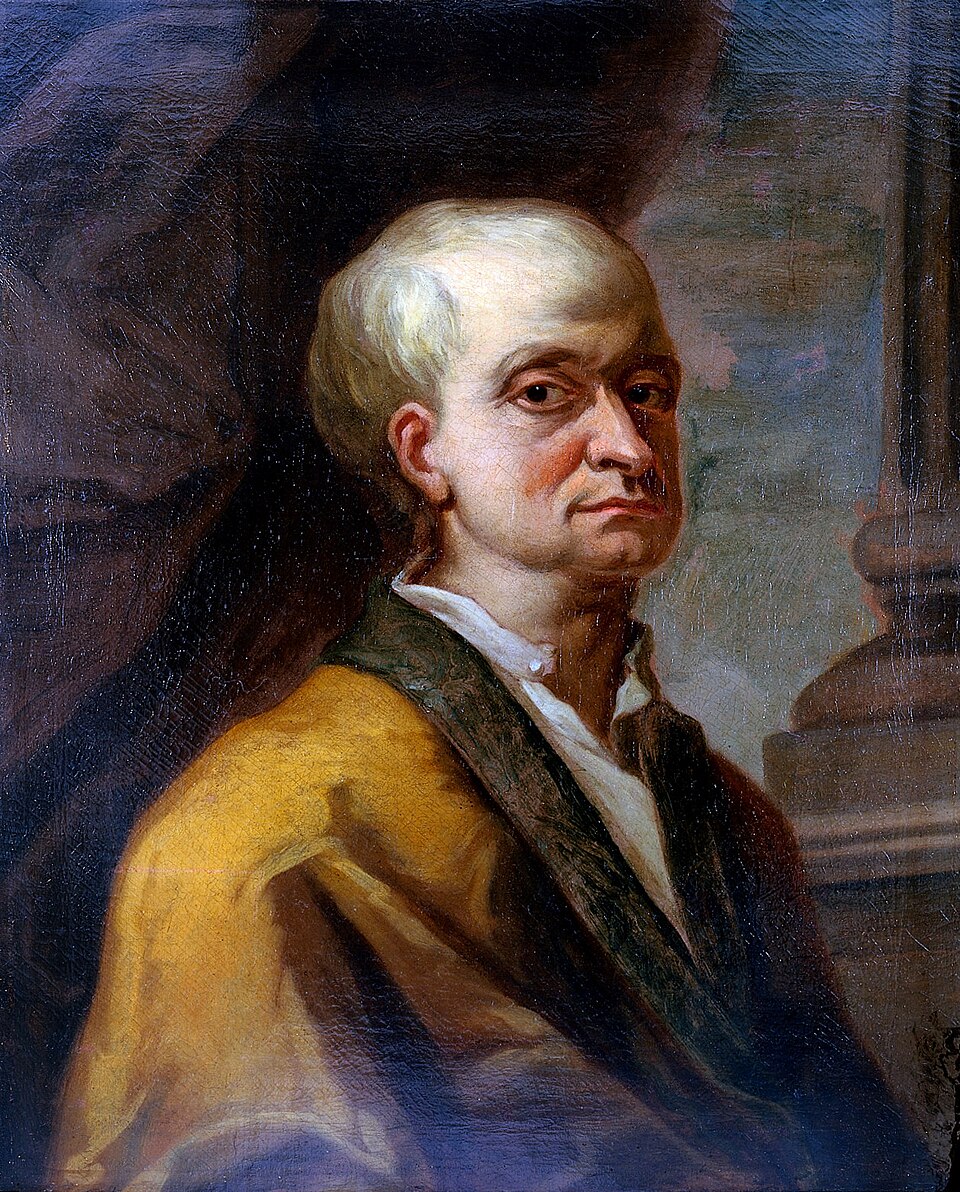
—Your contemporaries depict you forgetting to eat, sleeping little, living alone. Is this austerity the price of your work?
The price, or perhaps the condition. When a problem holds me, Edmond, I do not let it go until solved: I keep it before me relentlessly until the first glimmers gradually open into full clarity. That leaves little room for anything else. I sometimes forget a meal, let a dish brought to me grow cold, stay up by candlelight long after the college has fallen asleep. I have not married, I mix little with the world. Some think me unhappy; I am not. This solitude is my workshop. If I have appeared to bring something to the public, it is not the fruit of sudden genius, but of patient and sustained attention.
I keep the problem before me until the first glimmers gradually open into full clarity.
—Without that forced retreat at Woolsthorpe, do you think the Principia that I had the honor of publishing would ever have seen the light of day?
A fair question, and one that reverts to you, without whom that book would still sleep in my drawers. The seed was indeed sown at Woolsthorpe, in those plague years: the idea that gravity extends to the Moon, that the same law governs the heavens and the Earth. But a seed is not a tree. It took twenty years of ripening, and above all your visit, when you came to ask me along what curve a planet moves when attracted in inverse proportion to the square of the distance. Your question rekindled everything. Without your insistence, without the expenses you took upon yourself for printing, the Principia would never have appeared in 1687. That work is as much yours as mine.
The seed was sown at Woolsthorpe, but without you, the Principia would never have appeared.
—They say you are weary of Cambridge and tempted by a post in London. You, the geometer, governing the Royal Mint—do you truly consider it?
I consider it, I confess, more than I have told anyone. Thirty years I have lived within these walls, and with age, I aspire to serve the kingdom otherwise than by blackening paper. England's coinage is clipped, counterfeited, in a disorder that ruins commerce; to recoin the entire currency would be a task worthy of an exact man. And then, Edmond, hunting a counterfeiter is not so different from hunting an error in a demonstration: it requires the same rigor, the same patience to follow a trail to the end. If they entrust me with this post, I shall not be an idle dignitary. I intend to weigh every coin, pursue fraudsters before the judge, and restore the pound to its full value. The scholar can also be useful to the city.
Hunting a counterfeiter is not so different from hunting an error in a demonstration.
Read further
This imaginary interview was generated by artificial intelligence from sources documented in Isaac Newton's profile. It dramatises what the figure might have said based on what we know about them, but does not constitute attested historical testimony. For primary sources and factual documentation, refer to the full profile.