Imaginary interview with Isaac Newton
by Charactorium · Isaac Newton (1643 — 1727) · Sciences · 5 min read
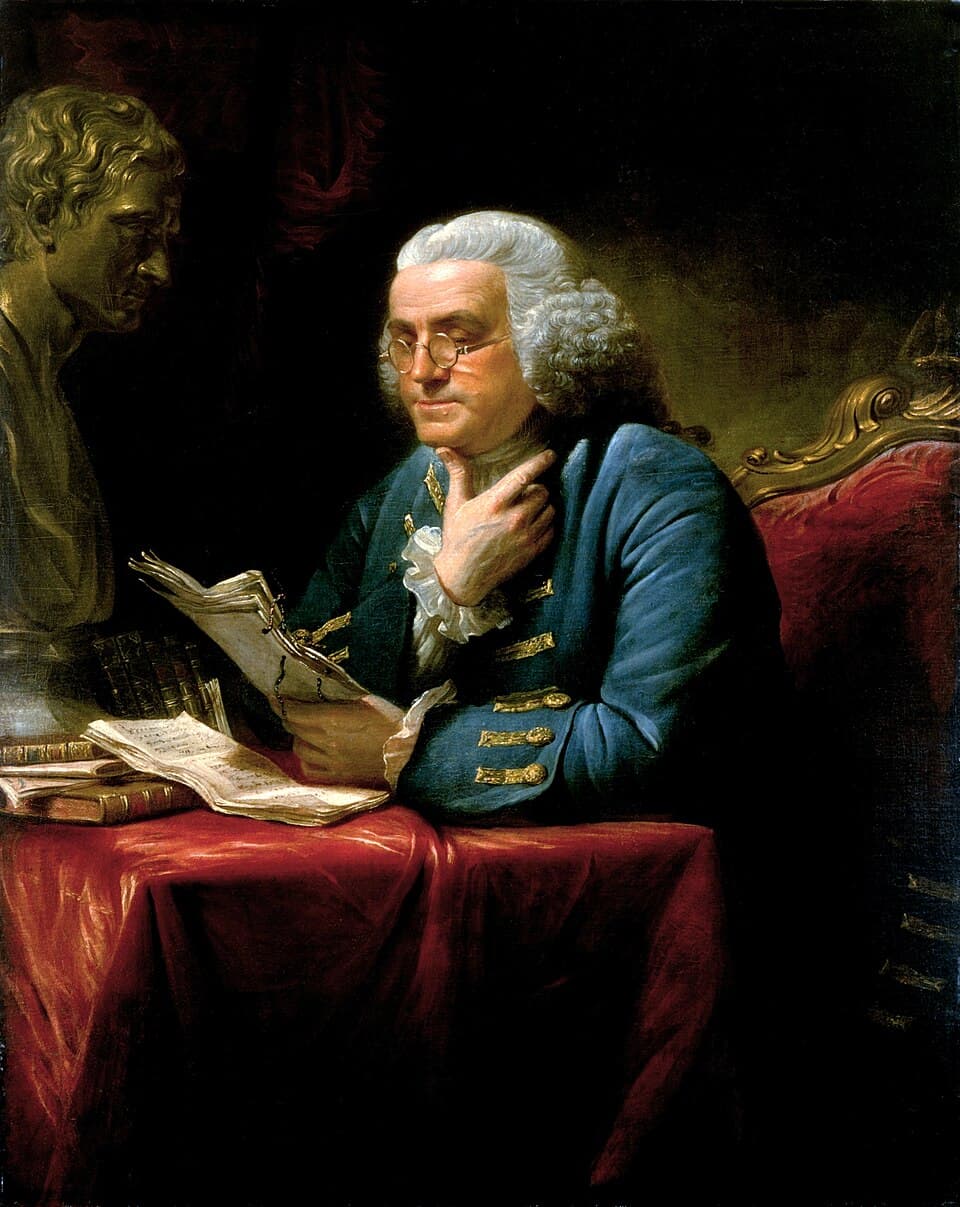
April 1726, in a house in Kensington where the fire crackles against the dampness of London. Sir Isaac Newton, octogenarian with still-sharp eyes, sets down an ink-stained goose quill and agrees to look back, for us, on a life spent interrogating light, stars, and metals. Here are his words.
—How did the idea of this gravitation that governs even the planets come to you?
It was during the great contagion, in 1665. The plague closed Cambridge and I was sent back to my mother's home, at Woolsthorpe, in Lincolnshire. Two years without masters, without lectures, without anyone — only the orchard, my notebooks, and a silence I have never found since. One evening I saw an apple detach itself and fall, straight down, toward the center of the Earth. Why straight down? Why not sideways, why not upward? That question led me to wonder if the same force that lays low the fruit does not also hold the Moon in its course. Those fruits did not reveal everything at once; they opened a meditation that took me twenty years to set in order.
Why straight down? Why not sideways, why not upward?
—What did you actually do during those two years of isolation?
Everything, and at the same time, which is unwise for a single man. I invented my method of fluxions — what others today call infinitesimal calculus —, I decomposed light, I calculated the fall of bodies. I worked by candlelight until hours my mother deemed unreasonable, often forgetting the bread and cheese left at my door. I already considered quantities not as heaps of small parts, but as generated by continuous motion, like a line traced by a gliding point. Scholars have since called that season my annus mirabilis; I saw only a young man hungry for answers, shut up in a farm in Lincolnshire.
I saw only a young man hungry for answers, shut up in a farm.
—You are presented as the man who refounded science. Do you accept that title?
I distrust it. The year of my birth, 1642, Italy mourned Galileo; without him, without Kepler who regulated the dance of the planets, without Descartes whose pages I reread in the morning, I would have traced nothing at all. I wrote it one day to Hooke, with whom I nevertheless quarreled relentlessly: “If I have seen further than others, it is because I have stood on the shoulders of giants.” That was not pure modesty — it was the exact truth of a man who only added a stone to an edifice begun long before him. The gravitation of the Principia is my stone; the quarry, however, was already open.
—How did those famous Principia finally come to see the light of day?
Through the persistence of a friend as much as my own. Without Edmond Halley, who came pressing me with questions at Cambridge and then paid for the printing out of his own pocket, the manuscript would still be sleeping in a drawer. I state there that every particle of matter attracts every other, in proportion to the product of their masses and inversely as the square of their distance — a single law for the apple in the orchard and for the moons of Jupiter. That seemed monstrous to many: to unite heaven and Earth under a single rule! I was reproached for not saying what this attraction is. I replied, and repeat: I describe how it acts, I do not imagine its hidden causes.
A single law for the apple in the orchard and for the moons of Jupiter.
—Do you remember your first experiment with a prism?
As if yesterday. I had darkened my room and pierced a small hole in the shutter, just enough to let in a ray of sunlight. I placed my triangular glass prism there, and on the opposite wall spread a band of colors, from red to violet, stretched far beyond what a simple circle of light should have given. It was then believed that the glass dyed the light; I understood the opposite — that white light already contains all colors, and the prism merely separates them by bending each in its own way. Refraction sorts what the eye thought simple. I recorded all this much later in my Opticks, written in English so that I might be read without Latin.
It was believed that the glass dyed the light; I understood the opposite.
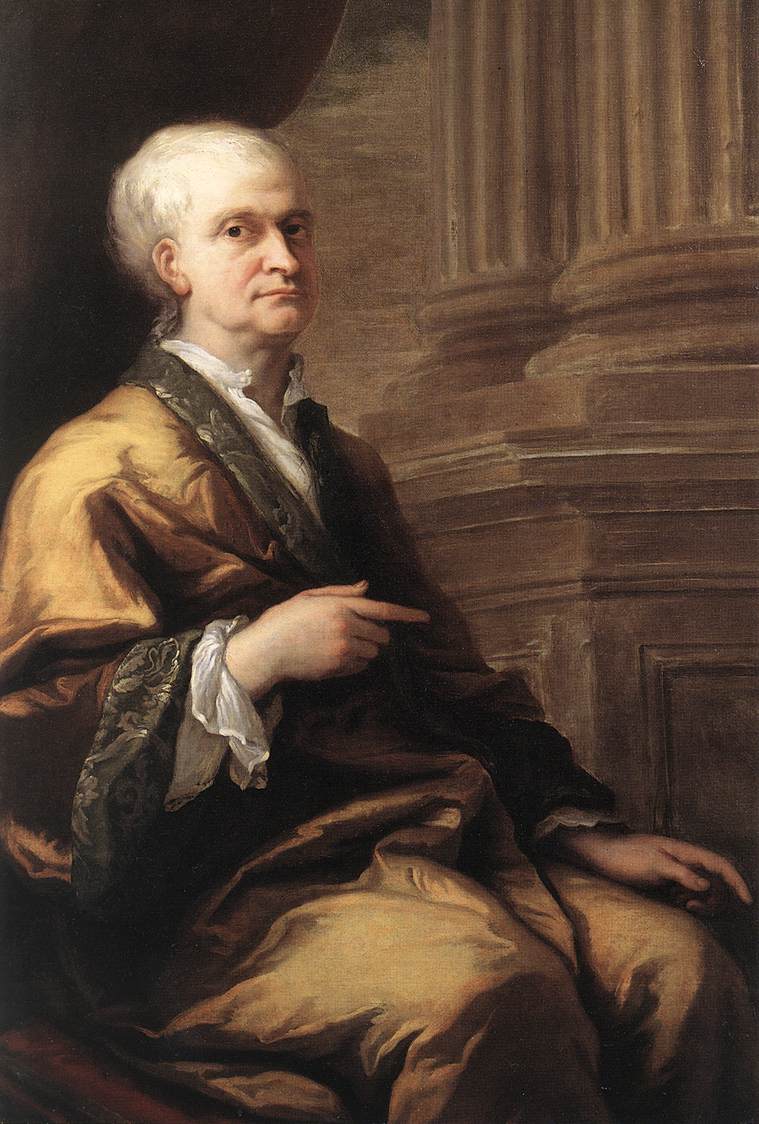
—Did this theory of colors bring you opposition?
More quarrels than glory, at first. When I presented my views to the Royal Society in 1672, Robert Hooke rose against me with an assurance that made me regret having spoken. I argued that light is made of tiny corpuscles speeding in straight lines; the Dutchman Huygens held it to be a wave, like a ripple on a pond's surface. The debate wounded me so deeply that I kept my Opticks among my papers for more than thirty years, daring to publish only after my opponent's death. I learned a bitter lesson there: one can master light with a prism and know nothing of the blindness of men.
One can master light with a prism and know nothing of the blindness of men.
—How does one go from the laws of the heavens to hunting counterfeiters?
People think I was surprised by this post; I took it very seriously. In 1696 I left my rooms at Cambridge to direct the Royal Mint, housed in the Tower of London. The kingdom was clipping and counterfeiting its coins until confidence was ruined; the whole currency had to be recoined. I brought to it the same rigor as to my calculations: precision balances, control of weight and fineness, registers kept to the letter. But I did more than weigh metal — I pursued counterfeiters in taverns through my informants, I conducted their trials, and several mounted the scaffold through my efforts. The natural philosopher had become a sleuth; I do not regret having defended the king's coinage.
The natural philosopher had become a sleuth.
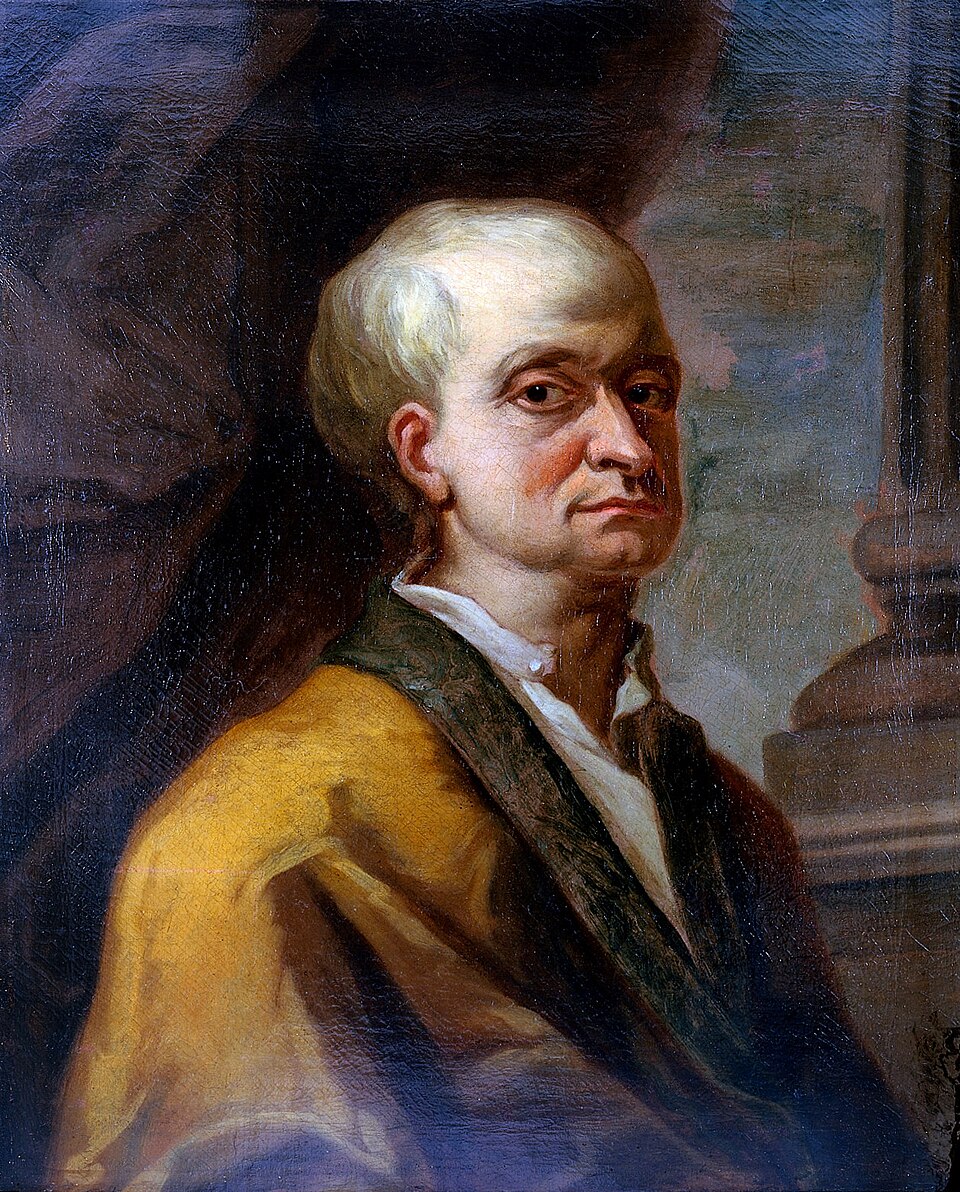
—Was that not a singular occupation for a mind devoted to mathematics?
Singular, yes, yet consistent. The same exactitude that made me verify a proof to the third decimal drove me to track a counterfeiter down to his slightest tricks. A tampered coin is a lie written in metal, and I have never tolerated lies. This post brought me a comfort that my chair at Cambridge had never given me: a fine house in London, books, instruments. And the kingdom was grateful for this zeal, for Queen Anne knighted me in 1705 — the first, it is said, ennobled for intellectual works as much as for service. I drew less vanity than surprise from it: a farmer's son from Lincolnshire, made Sir.
A tampered coin is a lie written in metal, and I have never tolerated lies.
—They say you spent entire nights on alchemy. What were you seeking?
Far more than fools dare imagine. I blackened hundreds of thousands of words on what you call alchemy — the transmutation of metals, the much-sought stone —, and I am not ashamed of it. For me it was not a hobby separate from my physics, but the other side of the same quest: to understand the secret forces by which matter acts upon matter. In the evening, by candlelight, I moved from my equations to my furnace, mixing the goose quill of demonstrations with that of hermetic recipes. Perhaps one day I will be judged as divided between two worlds; I knew only one, where God had hidden His laws for patient man to decipher.
God had hidden His laws for patient man to decipher.
—How do you reconcile this secret side with your reputation as the most rational mind of your time?
I do not reconcile it, I live it. I am painted as a pure geometer, bachelor and ascetic, forgetting to eat, neglecting dress — and all that is true. But the same man studied Scripture, computed prophecies, burned to penetrate natural philosophy in all its chambers, including the darkest. The word scientist did not yet exist; one said natural philosopher, and that name suits me, for it embraces both the heaven of the Principia and the alchemist's crucible. I have never believed that reason is the enemy of mystery; it is its humble servant. Everything I have done, from the orchard at Woolsthorpe to my laboratory, was an attempt to wrest one more answer from the world before I am buried.
I have never believed that reason is the enemy of mystery; it is its humble servant.
Read further
This imaginary interview was generated by artificial intelligence from sources documented in Isaac Newton's profile. It dramatises what the figure might have said based on what we know about them, but does not constitute attested historical testimony. For primary sources and factual documentation, refer to the full profile.