Kids interview Isis
by Charactorium · Isis · Mythology · 5 min read
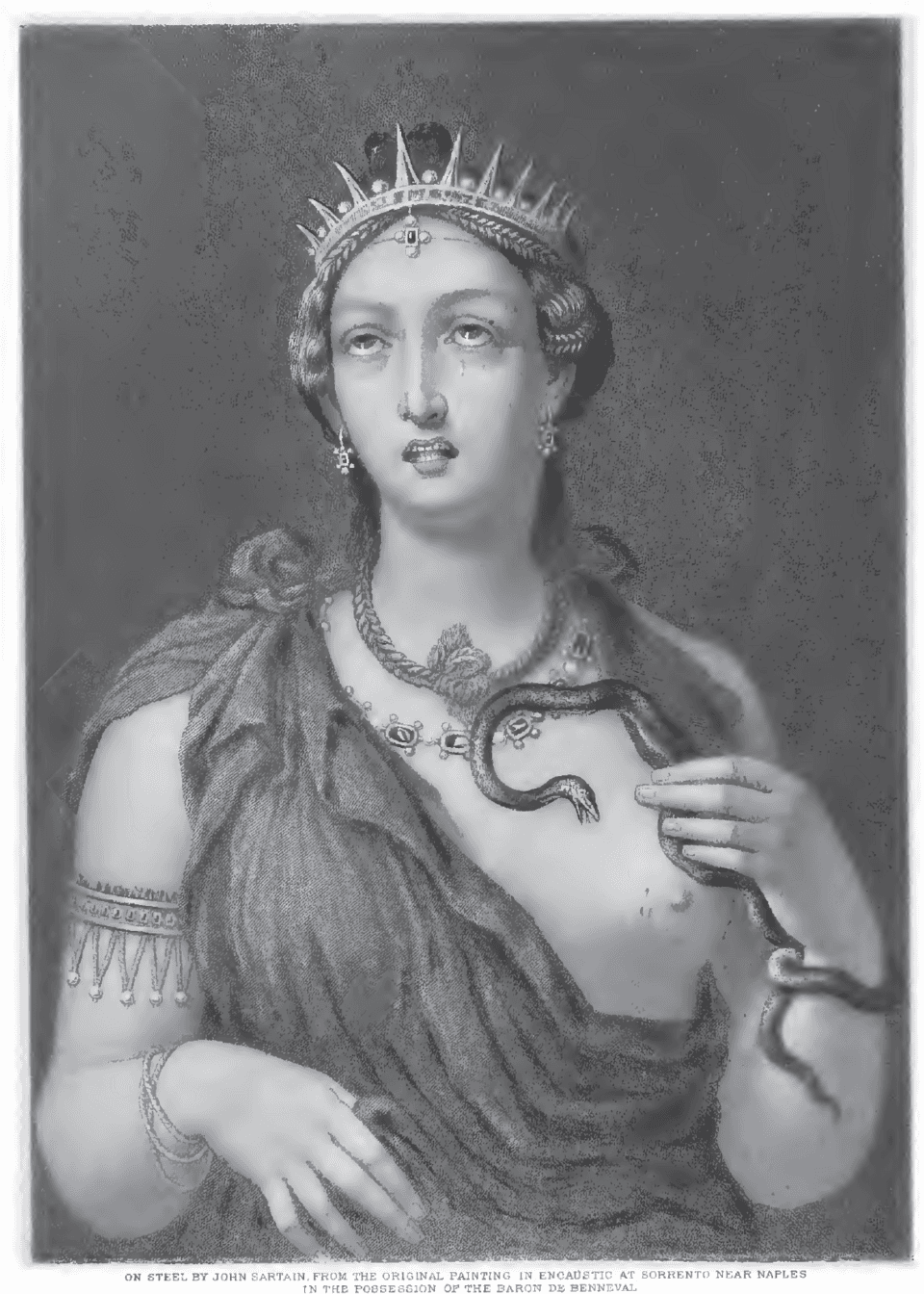
Two young visitors, twelve years old, push open the door of a temple with painted columns. Before them, a goddess wearing a strange seat-shaped sign on her head greets them with a gentle smile. Isis leans toward them, like a grandmother ready to tell her secrets.
—Is it true you brought your husband back to life? How did you do it?
Yes, my child, and it was the longest journey of my heart. My brother Set had killed my husband Osiris and then scattered his body. Imagine a mother searching, along the Nile, for every lost piece of the one she loves. With my sister Nephthys, I gathered them, one by one, all the way to Abydos. Then I spoke my formulas. Do you know what the Book of the Dead says about this? That I brought breath back into the nostrils of him whose heart had stopped. That day, I understood that love could be stronger than death.
Love can be stronger than death, my child.
—Were you sad all that time? Did it last long?
Very sad, yes. Imagine losing someone, and not even being allowed to keep their body to mourn. The ancient texts tell that I came, found my brother lying there, and cried out like a falcon. Do you know what a falcon is? A bird with a piercing cry, that soars very high. My grief rose like that cry. But weeping is not enough. To bring Osiris back to life, I also invented the linen bandages that wrap bodies. Without that patient care, no rebirth is possible. My grief became a work of the hands.
Weeping is not enough: you also need hands that repair.
—And your baby, where did you hide him to protect him?
In the marshes, my little one. Far north of Egypt, where the Nile opens into a thousand arms before the sea: the Delta. Imagine tall grasses, reeds taller than you, water everywhere, and the song of birds. That's where I raised my son Horus alone. Why hide him? Because Set, who had killed his father, also wanted to kill the child. So I laid him among the papyrus, those great plants that grow in the water. The hymns of Dendera still say it: I protect my son in the papyrus. A mother always finds a refuge.
A mother always finds a refuge, even among the reeds.
—It must have been scary, raising a child alone in the marshes!
Yes, I was afraid, I admit it. At night in the Nile Delta, you hear noises everywhere: water lapping, beasts prowling. And I watched over my little Horus, without a husband by my side. But do you know? A mother's fear becomes a strength. I learned to heal his bites, to ward off danger with my magic words. That is why Egyptian families called upon me for their own sick children. When you have watched over your son in the dark, you know how to protect all the children of the world. That is why I was called the perfect mother.
A mother's fear becomes a strength.
—They say you were a magician. What was your magic?
It was called Heka, my child. It is not a sleight of hand: it is the sacred force that runs through the entire universe. Imagine an invisible energy, present in every right word, like breath in speech. Gods, pharaohs, and priests used it to maintain the order of the world. I was said to be the inventor of this magic. In the Book of the Dead, I introduce myself thus: Isis, the great magician, whose magic is powerful. And I passed this knowledge on to priests, to heal and protect. A well-spoken formula was worth, among us, more than an army.
A well-spoken formula was worth more than an army.
—Was your magic stronger than that of the other gods?
So it was told, yes, and it made me formidable. In an old papyrus kept in Turin, a story says that my magic could defy even Ra, the sun god, the greatest of all. Imagine a child who knows a secret that even the king does not know: they suddenly become very powerful. That was my strength. I knew the hidden names of things, and among us, knowing the true name of a being meant having power over them. But be careful, my little one: I never used this power to do evil. Always to heal, to protect, to give life back.
Knowing the true name of a being meant having power over them.
—Why do you have that funny thing on your head? What is it?
Ah, you have a sharp eye! It is a seat, my child: a throne. In Egyptian, this sign is called yst, and it is even used to write my name. Imagine your first name drawn by a little object you wear on your head: funny, right? But it is no accident. The throne is the seat of kings. By wearing it, I show that I am the queen of heaven, the one who watches over royalty. When the Egyptians saw a statue with this seat, they knew at once: it's Isis. My name and my power were contained in a single sign.
My name and my power were contained in a single little sign.
—Did you carry other important objects? Magic stuff?
Yes, several, and each had a meaning. I often held the sistrum: a metal frame with rods that jingle when shaken, like little bells. It was shaken during ceremonies to call for protection. And then there is the ankh, a cross with a loop at the top. Do you know what it means? Eternal life. That is my whole symbol, I who gave life back to Osiris. The Egyptians wore small amulets in the shape of an ankh to stay healthy. When you hold a sacred object, you carry a bit of the gods' strength in your hand.
When you hold a sacred object, you carry a bit of the gods' strength.
—Is it true that people worshipped you even outside Egypt?
Absolutely, my child, and it still amazes me. At first, my great temple was at Philae, an island on the Nile, where pilgrims came from afar. Then, little by little, temples were built for me in Greece, in Rome, and as far as Gaul! Imagine: a goddess born on the banks of the Nile, worshipped in countries where they do not even speak my language. A writer named Apuleius had me say a beautiful thing: that I was called by a thousand names around the world. One same goddess, a thousand faces, according to the peoples who loved me.
One same goddess, a thousand names, according to the peoples who loved me.
—And today, what would you like us to keep from you?
A beautiful question, my little one. My great temples have fallen silent, their doors closed long ago. But what I hope is not that you remember my statues of blue faience or my sanctuaries at Abydos and Dendera. It is that you remember my gesture. A woman who seeks the pieces of the one she loves. A mother who hides her child to save him. A magician who uses her strength only to heal. If, as you grow up, you protect those weaker than yourself and refuse to abandon those you love, then a little of me still lives in you.
Protect those weaker than yourself, and a little of me will live in you.
This imaginary interview was generated by artificial intelligence from sources documented in Isis's profile. It dramatises what the figure might have said based on what we know about them, but does not constitute attested historical testimony. For primary sources and factual documentation, refer to the full profile.