Imaginary interview with Isis
by Charactorium · Isis · Mythology · 6 min read
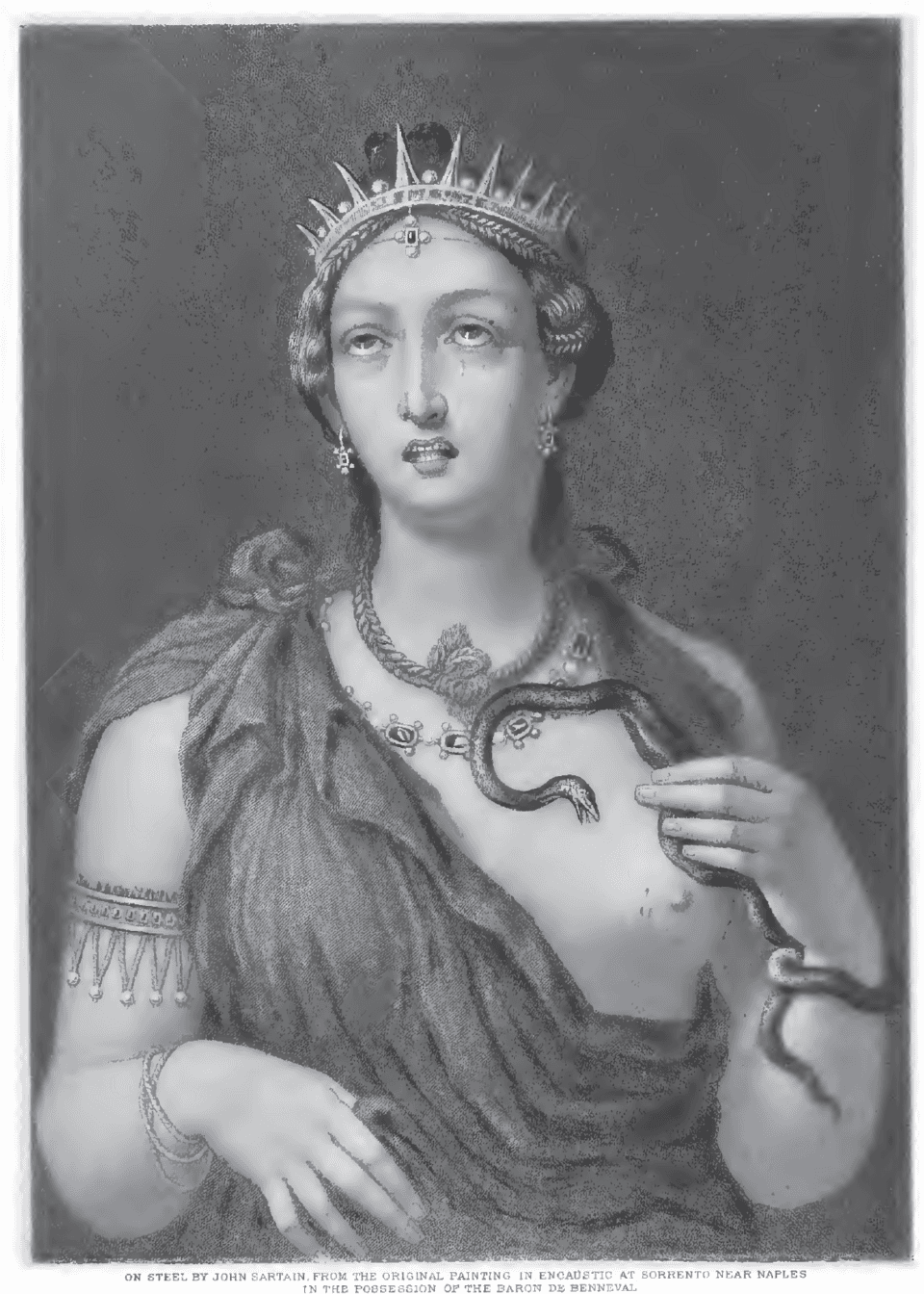
On the island of Philae, at the hour when the Nile still reflects the last torches of the sanctuary, a silhouette appears between the columns. Crowned with the sign of the throne, a sistrum in her hand, the goddess agrees to speak of what she has lost, found, and watched over. Here are her words, gathered as one gathers sacred water.
—How did you find the body of Osiris after Set's crime?
Set, my brother, had scattered the one I loved like seeds cast into an ill wind. I traveled through marshes and riverbanks, piece by piece, and each fragment of his flesh was a tear I swallowed back. My sister Nephthys walked beside me, and we both cried out like birds of prey over the reeds. At Abydos, I recomposed his body with my hands, I wrapped the linen around him, then I spoke the words that only I knew. It was not death that had the last word, but the breath I breathed into his still nostrils. They say of me that I revived a heart that had stopped beating: that is true, and I would do it a thousand times again.
It was not death that had the last word, but the breath I breathed into his still nostrils.
—What do those linen bandages with which you wrapped him mean to you?
Before me, no one had thought to preserve a body like this so it might cross the threshold. I took linen and made it a second skin, armor against dissolution. Each tied bandage was a spell, each turn of cloth a rampart against oblivion. That is why, ever since, the Egyptians wrap their dead after my example: they merely repeat the gesture I performed upon Osiris in the silence of Abydos. The mummy is not a corpse to be hidden; it is a promise kept. The ka and the ba need a body to alight upon, as a bird returns to a tree. I gave this dwelling to my husband, and through him, to all the dead of Egypt.
The mummy is not a corpse to be hidden; it is a promise kept.
—Why did you hide your son Horus in the marshes rather than raise him openly?
Because Set had not killed his brother to let his heir live. As long as Horus was a nursing infant, he was a vacant throne, a temptation for the murderer. I carried him into the Delta, where papyrus grows taller than a man and water blurs the tracks. I laid him among the reeds, I fed him trembling at every rustle, for even snakes and scorpions lurked around my child. The hymns still sing of it: she who protects her son in the papyrus, that is me. I was a queen without a palace and a mother without rest, and I knew no other law than to keep him alive until the day he would claim his father's throne.
I was a queen without a palace and a mother without rest.
—You are celebrated as the perfect mother. What would you say to that title?
The perfect mother is not she who fears nothing; it is she who acts despite fear. I raised Horus alone, without his father, in the mud of the Nile Delta, and every day was a battle against venom and against Set. When my child was bitten, I begged the heavens, I used my magic until the poison receded. The Egyptians invoke me at the bedside of their sick little ones, and they are right: I know what it is to watch over a fragile body, praying for dawn. My love is not tender and peaceful; it is fierce, vigilant, ready to defy the gods themselves. It is this face of a mother that is carved in the temples, and it is the one I claim.
The perfect mother is not she who fears nothing; it is she who acts despite fear.
—They say your magic surpasses that of all the gods. Where does such power come from?
The Heka, that force which permeates the world, I did not receive it: I learned and conquered it. I am called the great magician, and it is deserved, for my magic is powerful, I say it plainly. I understood very early that a spoken name is a key, that a correct formula opens doors that force cannot break. That is how I wrested from Ra himself his secret name, and with that name, a part of his power. Priests and pharaohs still come begging for my words of protection and healing. I am the inventor of words that act, and there is no god, be it the sun, whose will can stand against mine when I decide to undo an evil.
A spoken name is a key, that a correct formula opens doors that force cannot break.
—How was this knowledge of formulas passed on to humans?
I did not keep the Heka jealously for the gods alone. I placed it in the hands of priests, I whispered it to pharaohs who needed it to maintain world order. On papyrus, my healing words, my incantations against venom and fever were recorded. The scribe who traces these signs merely prolongs my voice. That is why, in the temples, I am honored as mistress of secrets: not because I hide them, but because I know to whom to entrust them. Magic is not a whim; it is the art of straightening what chaos has twisted. He who knows my formulas holds between his lips the power to protect a house, save a child, or recall a breath.
Magic is not a whim; it is the art of straightening what chaos has twisted.
—You wear a singular emblem on your head. What does it mean?
Look above my forehead: what you take for an ornament is a throne. In our language, this sign is called yst, and from it my name is derived. I do not wear a crown out of vanity; I wear the very seat of royalty, for I am she who makes and unmakes kings. When a scribe wishes to write my name in stone, he draws this throne, and everyone knows then that it is of me he speaks. Horus sat on his father's throne because I kept it for him; that is why I carry it on my head as others carry a burden or a promise. The kingship of Egypt rests upon my knees before it rests upon the earth.
I do not wear a crown out of vanity; I wear the very seat of royalty.
—And that instrument you hold, this sistrum, what role does it play in your rites?
The sistrum is not mere noise shaken about. When I shake it, its metal rods clatter like the reeds of the Delta in the wind, and this vibration awakens the slumbering Heka. In fertility ceremonies, in festivals where my protection is invoked, this sound drives away the forces of chaos and calls life to renew itself. The priestesses who shake it before my image are not making music: they weave a sonic rampart. I love this jingling because it mimics the rustle of the papyrus where I hid my son — a sound of leaves, a sound of life that resists. Listen in my temples: this clatter that never ceases, it is my presence watching over you.
The priestesses who shake it are not making music: they weave a sonic rampart.
—Your cult has spread beyond the borders of Egypt. How do you explain such an expansion?
Men may change their language and their shores, but they never stop dying, nor loving, nor fearing for their children. Yet I am she who answers that. That is why, from the sands of Egypt to the ports of Greece and Rome, and even to Gaul, temples have been raised to me. In Alexandria, I was united with other gods, given a thousand faces and a thousand names, and I accepted each of them, for I am called by a thousand names throughout the world. The Greeks saw their goddess in me, the Romans theirs; they were all right. I did not remain a prisoner of the Nile: wherever a heart cries out for protection and regeneration, I have planted my dwelling, long after the pharaohs had vanished.
Wherever a heart cries out for protection and regeneration, I have planted my dwelling.
—How do you feel seeing foreigners, so far from Philae, offering you initiatory rites?
Those who approach my mysteries do not come out of curiosity; they come because they have glimpsed that death is not an end. I teach them what I learned in recomposing Osiris: that what is dismembered can be reassembled, that what is extinguished can be reborn. In the sanctuaries of Philae, as in those built on lands I did not know, the initiate passes through a symbolic night before seeing the light again. I make no distinction between Egyptian and foreigner: before the threshold of the afterlife, all are my children. Their offering of bread, honey, and linen matters less to me than the trust they place in me. That trust, no border can stop.
What is dismembered can be reassembled, what is extinguished can be reborn.
This imaginary interview was generated by artificial intelligence from sources documented in Isis's profile. It dramatises what the figure might have said based on what we know about them, but does not constitute attested historical testimony. For primary sources and factual documentation, refer to the full profile.